

Basic First Aid for Horses: Emergency Care
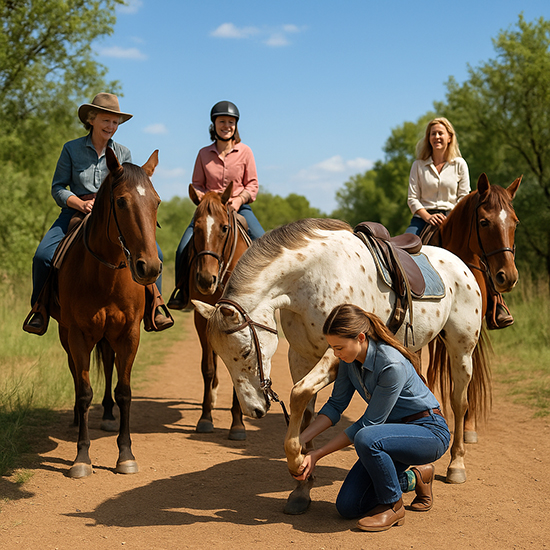
Vital Signs & Seasonal Health Tips Every Owner Must Know Article from Robert SM Pruitt - InfoHorse.com
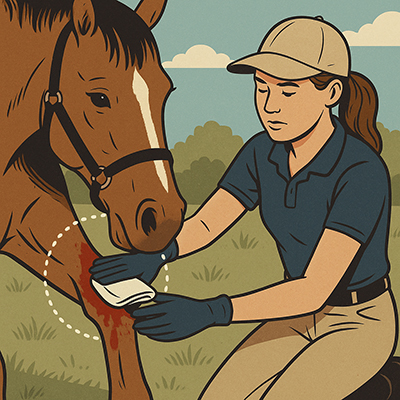
Equine first aid is about buying time—calming and stabilizing an injured horse until your veterinarian can take over. In an emergency, catch and calm the horse, get a helper, evaluate the injury, and control severe bleeding with a sterile absorbent pad and steady, even pressure; never medicate or sedate a horse unless your veterinarian directs it. Knowing normal vital signs—a temperature of 99 to 101 degrees, an adult resting pulse of 30 to 40 beats per minute, and 8 to 15 breaths per minute—gives you the baseline to spot trouble early.
Emergencies don’t wait — and neither should horse owners. From deep cuts to colic, heat stress, or dehydration, every horse is at risk for sudden health crises. Knowing how to respond in the first few minutes can mean the difference between a quick recovery and a life-threatening emergency. That’s why every horse owner needs a clear Equine First Aid Plan and a well-stocked Horse First Aid Kit. This guide will walk you step by step through the basics of horse first aid — including how to calm and stabilize your horse, when to call the veterinarian, what to pack in your first aid kit, how to check vital signs, and seasonal tips to keep your horse safe in both summer heat and winter cold.
Why Every Horse Owner Needs a First Aid Plan Horses are powerful but fragile animals. A small wound can become serious in minutes, a sudden spike in temperature may signal infection, and colic can turn fatal if not caught early. Without a plan, emergencies create panic, and panic can lead to mistakes.
A Horse First Aid Plan
gives you the confidence to act quickly and correctly. With preparation, you’ll: - Prevent minor issues from becoming major problems. - Keep your horse calm and safe until veterinary help arrives. - Save precious time by having supplies and knowledge at hand. - Protect yourself since frightened or injured horses can unintentionally harm their handlers. Remember: first aid is about buying time and stabilizing your horse until your veterinarian can take over.
Step-by-Step Guide: What to Do in an Emergency When your horse is injured or in distress, staying calm and acting in the right order is critical. Here are the essential steps every owner should follow:
1 Catch and Calm Your Horse Approach slowly and quietly
2 Get Help Never attempt to treat a serious injury alone
3 Evaluate the Situation Take a close look at the injury or condition, noting:
- Location: Leg, joint, hoof, eye, etc.
- Severity: Surface scrape vs. deep wound.
- Contamination: Dirt, debris, or foreign objects?
Call your veterinarian immediately if:
- The wound penetrates full skin thickness.
- The wound is near or over a joint.
- Underlying structures (tendons, bone) are visible.
- The lower legs or hooves are involved.
- The wound is severely contaminated.
4 Follow Veterinary Instructions Before Treating Do not clean or remove debris without veterinary guidance as some actions may make bleeding worse or cause further damage
5 Control the Bleeding If bleeding is severe, this becomes your first priority
6 Avoid Unnecessary Medication Never medicate or sedate your horse unless directed by your veterinarian
7. Special Cases: Eyes and Hooves Eye Injuries: If the eye looks cloudy, swollen, or injured, do not attempt treatment. Call your veterinarian right away.
Nail or Sharp Object in Hoof: Call your vet before removing it. If removal is advised, mark the exact depth and entry point with tape or marker so your vet can assess the damage. Wrap the hoof to prevent contamination.
8 Tetanus Protection Any horse treated for puncture wounds or lacerations will need a tetanus booster
Other Emergencies Every Horse Owner Should Prepare For While wounds are common, horse owners may also face emergencies ranging from colic to heat stroke. Here are some of the most frequent and dangerous situations and what to do until your veterinarian arrives.
Colic (Abdominal Pain)
-Signs: Pawing, rolling, looking at flank, stretching as if to urinate, loss of appetite, unusual lying down/getting up.
- Remove all feed immediately.
- Walk the horse quietly if safe, but don’t walk to exhaustion.
Do not administer medication unless specifically instructed.
☀Heat Stroke or Heat Stress
Signs: Rapid breathing, weakness, refusal to move, collapse, high temperature (>103'F).
- Move horse to a shaded, cool area.
- Offer small sips of cool (not icy) water.
- Place cool, wet towels on face and large blood vessels.
❄Hypothermia & Cold Stress
Signs: Shivering, lethargy, refusal to eat or drink, low body temperature (<99'F).
What to Do: - Move horse to shelter, blanket if wet/cold.
- Provide free-choice hay to generate body heat.
- Offer lukewarm water to encourage drinking.
Signs: Swelling (often on nose, muzzle, or legs), pain, difficulty breathing if bite near airway.
What to Do: - Keep horse calm and restrict movement.
- Do not cut, suck, or apply ice to the wound.
If bitten on the muzzle, insert short pieces of garden hose into nostrils to maintain an airway. Call your veterinarian immediately for anti-venom or emergency care.
Foaling Difficulties (Dystocia)
Signs: Active labor lasting more than 20–30 minutes without progress, foal visibly poorly positioned, or mare in severe distress.
- Moist Pink: Healthy, normal circulation.
- Rolling or getting up/lying down repeatedly.
Walk gently if horse is restless, but don’t overexert.
- Do not give medication unless directed by your vet.
- Keep a consistent feeding and exercise schedule.
- Avoid moldy feed and abrupt diet changes.
What to Do: Call your veterinarian at once as this is always an emergency.
Do not attempt to reposition foal unless experienced and directed by your vet.
Keep mare quiet in a clean, safe stall until help arrives.
Bone Fractures or Severe Lameness
Signs: Refusal to bear weight, obvious limb deformity, extreme pain.
What to Do: - Do not move horse unless absolutely necessary for safety.
- If transport is unavoidable, splint limb only if instructed by veterinarian.
- Keep horse calm and still until help arrives.
General Emergency Rules to Remember
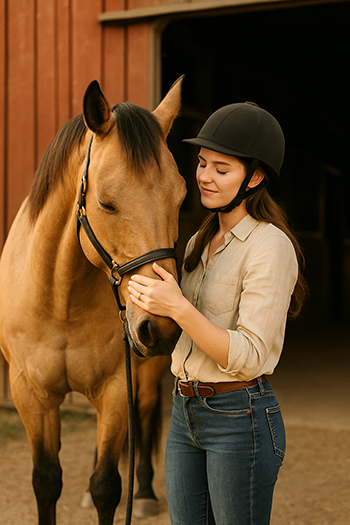
- Keep the horse calm, your quiet behavior helps lower stress.
- Move the horse to safety, away from traffic, fencing, or hazards.
- Delegate tasks - have one person call the vet, one hold the horse, one retrieve the first aid kit.
Listen to your vet and follow instructions carefully.
Avoid self-medicating - never give tranquilizers, sedatives, or painkillers unless directed.
How to Check Your Horse’s Vital Signs Knowing your horse’s vital signs gives you a baseline for health and a critical reference point during emergencies. These measurements should be practiced regularly so you’re confident in taking them when something goes wrong.
Temperature Normal Range: 99–101'F Horses may run slightly hotter in summer heat, after exercise, or during stress. A reading over 102'F usually signals infection or illness.
How to Take Temperature:
- Use a digital thermometer (faster and easier than mercury).
- Always attach a string to prevent loss.
- Stand to the side (not directly behind), gently move the tail, and insert into the rectum at a slight downward angle.
Clean and disinfect after each use.
- Normal Range for Adults: 30–40 beats per minute (bpm).
- Foals: 70–120 bpm; Yearlings: 45–60 bpm; Two-year-olds: 40–50 bpm.
- A resting heart rate above 50 bpm in adults may signal distress, pain, or disease.
- Count for 15 seconds, then multiply by 4.
- Count each “lub-dub” as one beat.
Respiration (Breathing)
- Normal Range: 8–15 breaths per minute.
- Rapid breathing at rest is a red flag, especially if the rate exceeds the pulse.
How to Check Respiration:
- Watch the ribcage rise and fall, or feel the breath at the nostrils.
- Count both inhale + exhale as one breath.
- Using a stethoscope on the windpipe can reveal abnormal sounds from mucus, allergies, or heaves.
- Normal: Continuous gurgling or rumbling in both flanks.
Warning: No gut sounds = possible colic. Excessive silence is more concerning than extra noise.
How to Check: - Place your ear or a stethoscope just behind the last rib.
- Check both sides of the horse.
Hydration (Pinch Test)
- Horses need at least 5 gallons of water daily.
- Pinch Test: Pinch skin on the neck.
- Snaps back immediately = hydrated.
Lingers or tents = dehydrated.
If horse refuses to drink, flavor the water (apple juice, Gatorade) and call your vet if refusal continues.
Capillary Refill Time (CRT)
- Normal: 1–2 seconds for gums to return to pink after pressure.
- Longer refill = possible shock or circulation issues.
- Lift the upper lip, press thumb on gums for 2 seconds, release, and watch for color return.
Mucous Membranes (Gum Color)
- The color of gums tells you a lot about circulation and organ function:
- Bright Red: Toxicity or early shock.
- Gray/Blue: Severe shock or illness.
- Bright Yellow: Possible liver problems.
Dental Health at Different Ages - Regular dental care helps horses eat, stay comfortable in the bridle, and avoid long-term health issues.
- Foals (0–2 years): Vets check for abnormalities and proper eruption. Wolf teeth may be removed.
- 2–3 years: Permanent teeth begin to erupt; vets monitor for irritation.
- 4–5 years: All permanent teeth erupt; stallions/geldings develop canine teeth. Vets trim sharp edges.
- 6+ years: Regular floating prevents sharp points, decay, or pain. Horses with consistent dental care may retain teeth 5+ years longer than those without.
Colic: What Every Horse Owner Must Know
What Is Colic? “Colic” simply means abdominal pain from mild gas to life-threatening torsions. Because mild and severe cases can look alike, all colic should be treated seriously.
- Lying down more than usual
- Looking at flank or curling lip.
- Pawing or kicking at belly.
- Refusal to eat or drink.
- Call your veterinarian immediately.
- Remove all feed until evaluated.
- Take vital signs if safe.
- Allow horses to cool before feeding or watering after work.
Final Word: Be Ready Before an Emergency Strikes Your horse relies on you for safety, comfort, and care - especially in moments of crisis. By learning the basics of Equine First Aid, checking vital signs, and keeping a well-stocked Horse First Aid Kit, you’ll be ready to act quickly when seconds matter.
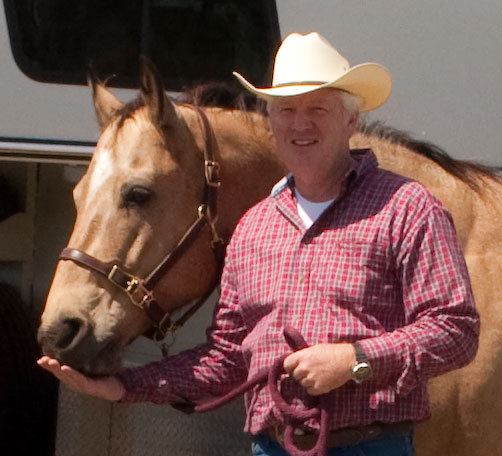
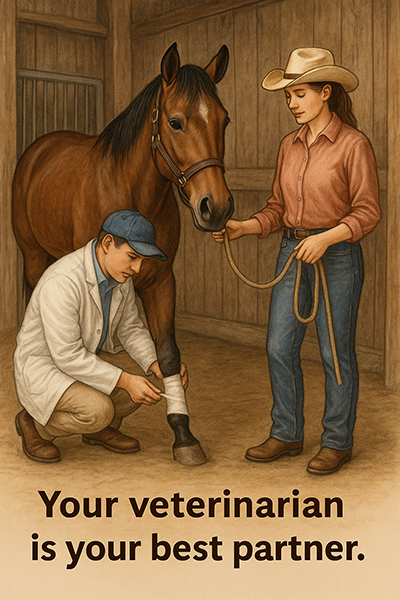
Preparation not only gives you confidence, it can mean the difference between a full recovery and a life-threatening situation. Make it a habit to practice handling emergencies, review your kit regularly, and share your knowledge with other horse owners. And always remember: your veterinarian is your most important partner in every emergency. Being prepared today is the best way to protect the horse you love tomorrow. Article by Robert Pruitt CEO InfoHorse.com
Bonus: Building a Well-Stocked Equine First Aid Kit
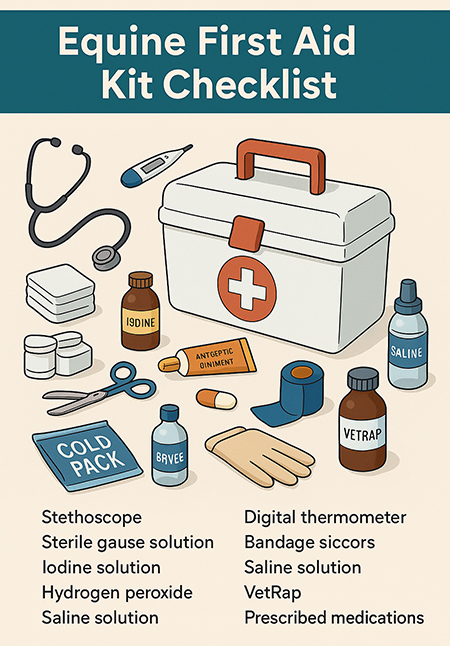
Every horse owner should keep a clearly labeled, waterproof Horse First Aid Kit in the barn, trailer, and tack area.
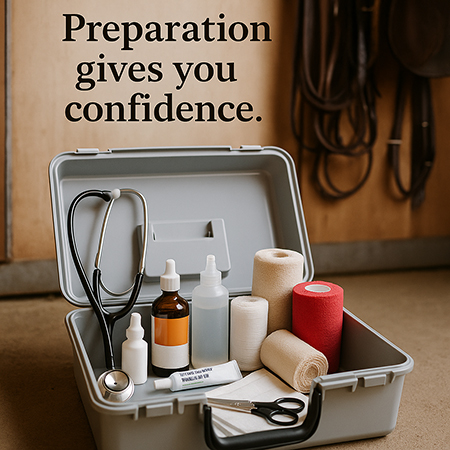
A complete kit should include:
Stethoscope (to monitor heart rate and gut sounds)
Digital thermometer with string attached
Sterile gauze pads, rolls, and Vet Wrap for bandaging
Blunt-tipped scissors and tweezers
Saline solution for flushing wounds
Diluted iodine (Betadine) & antiseptic ointments Hydrogen peroxide (only for deep punctures when directed)
Electrolytes and cold packs
Disposable gloves, duct tape, EasyBoot, hoof pick
Topical eye ointment (non-steroidal)
Knife, flashlight, and wire cutters
Any prescribed medications from your veterinarian
For the complete, in-depth reference, see our full guide: Horse First Aid, Equine First Aid.