

PRE-Planning FOR Horse Barn Fires:Helping Your Fire Department Help You! by Laurie Loveman
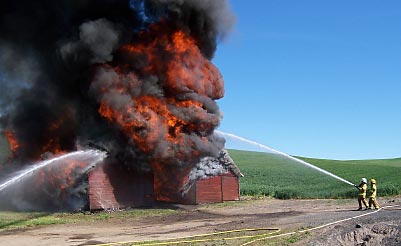
A barn fire pre-plan starts with your local fire department: work with your fire safety inspector to sketch the property—buildings, access roads, water supply, electrical panel, and any hazardous materials—so firefighters know the layout before they ever arrive. The plan should record how many horses are in the barn and what kind, which stalls hold difficult or special-needs animals, the order of evacuation, and where each horse goes once outside. Firefighters also need hands-on practice haltering and leading live horses, and running fire drills fine-tunes the plan—because in a fire, lost minutes can mean lost lives.
Does your fire department know anything about your property besides its address? If a fire starts, evacuating the horses will, hopefully, be done by you and your helpers while the fire department is enroute or just arriving at the scene. But, what if you aren’t at the scene? What if your neighbors or the firefighters are there before you? Would they know what to expect and what their “job” should be?
Along with your local fire safety inspector and other fire department members, you can work out a plan that takes everyone step-by-step through the process of knowing your property layout, your barn construction and interior design, and your barn’s inhabitants.
You and your helpers may already know this information, but firefighters also have to know, before they even reach your property what apparatus should respond, where it should be placed, and what tactics will be used.
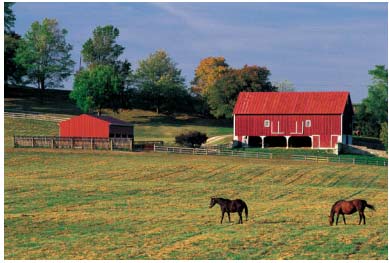
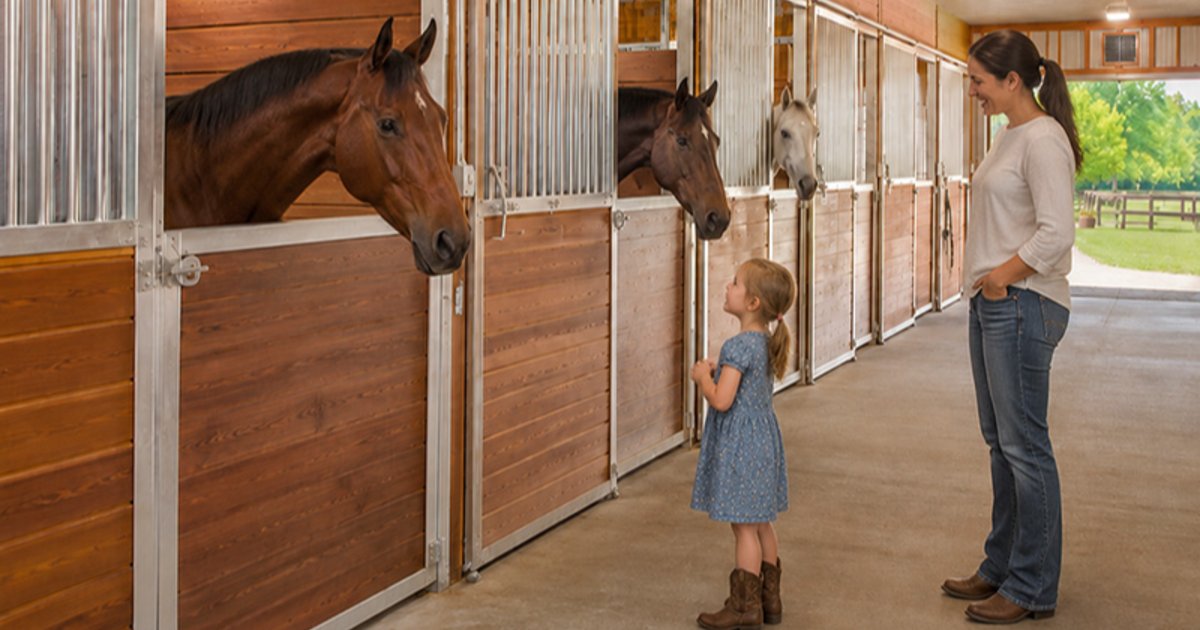
Some basic questions that must be answered are: ' What is the layout of the barn? Is there a center aisle with stalls on each side or only on one side? Are there adequate exits that can be reached in low to zero visibility by going in a straight line? What alternate exit will be used from each stall in case the primary exit is blocked?
' How many horses are in the barn and what kind of horses are they? All horses must be led out of the barn, however, a broodmare with a foal at her side will be looking out for the safety of her offspring, which means the foal must stay within her line of vision. That’s a two-person job, one handler for the mare, the other for the foal. If possible, stallions should only be handled by someone normally responsible for their care.
Weanlings and yearlings may not have had much handling and may not be halter-broke. This situation should be corrected immediately because a horse who isn’t accustomed to a halter and lead rope not only delays rescue, but also imperils you and all the other horses that need to be evacuated.
If you have a horse in your barn older than 12 hours, it should accept a halter and be taught to lead (for help on this read Cheryl Chernicky’s article on halter training babies at www.firesafetyinbarns.com.
'In what order should the horses be evacuated? Which “kind” of horse is in which stall? Is an elderly or disabled horse in the stall closest to the door so its travel distance to safety is shorter? It’s helpful to know if the horse in each stall is easy or difficult to handle or has any quirks that could impede a rapid evacuation. Keep in mind, though, that horses may not behave in their normal manner in an emergency.
' Once outside the barn, which paddocks, riding rings, indoor arenas, other barns, or neighbor’s property have you designated for emergency use? How will a handler find each of these locations in the dark?
' Will the fire department have access to the barn for apparatus placement? Will your access road to the barn support the weight of fire apparatus? Is there a problem with height clearance? What about having a turning radius large enough to allow maneuvering of fire apparatus?
' Where is your water supply and how far away from the barn is it located? If there are no hydrants, do you have a farm pond with a dry hydrant available? If not, where will the water tankers have to go to get water?
' Where is the electrical panel located? Is the panel clearly marked so power can be shut off?
' Are there any hazardous materials stored in your barn or close by, such as gasoline- or diesel-fueled farm equipment, ammonium nitrate fertilizers, hay, stall bedding, or non-barn items such as propane tanks? The easiest way to answer these questions is to make a sketch of your property. Locate the buildings on the sketch including, too, the roads, driveways, or lanes leading from the main road to each building.
Add your pens, paddocks, round pens, and pastures to the sketch. Don’t be concerned with drawing to scale; your objective at this point is answer the basic questions by adding each element to the sketch. You can add distances and dimensions later. You can do this part of the plan before you meet with your local fire inspector, or with his or her help.
If you choose to have assistance from the start, you will have the added benefit of your local fire inspector showing you changes you can make right away to increase your day-to -day fire safety. Because firefighters may have to evacuate your horses, you must make sure they know:
' How to put a halter on a horse and how to lead the horse out. If the horse does not have its halter on while in the stall, the halter should be hanging on the stall door or next to the door, along with a lead rope.
'How to cover the horse’s eyes with a blanket or towel, if needed, in order to get the horse to move.
'How to lead the horse to a secure paddock or to tie it to a rail, post, or anything else they can find to keep the horse from getting loose.
Verbal and written explanations, however, have to be augmented by hands-on training. Give your fire department members lessons on how to put the halter on, where on the halter to snap the lead rope, how to hold the lead rope, how to lead a horse who’s willing to move, and how to get an unwilling horse to move. Firefighters can’t learn these skills by merely reading about them. They absolutely must practice with live horses.
In developing any pre-plan, all of these questions, that are questions specific to your property, have to be answered, and the answers must then be fine-tuned by running fire drills to discover what changes need to be made to provide the most efficient means of rescuing your horses. In the event of a fire—where lost minutes can mean lost lives, having a pre-plan can make a big difference in the outcome.
Fire Prevention Checklist Download printable checklist. Using this checklist, walk through your barn and see what needs to be corrected. You can find help in making corrections by visiting Fire Safety in Barns at firesafetyinbarns.com.
Mark this form with Yes (Y) or No (No) next to each question to identify problem areas that need correction.
_____ Are aisle ways and doorways clear of debris or “stored” objects? _____ Are cobwebs removed weekly, if not more often? _____ Are all electric motors on both fixed and portable appliances completely sealed? _____ Have all lightweight (lamp-type) extension cords been removed? _____ If extension cords are in use (temporarily only) are they industrial or heavy duty rated? _____ Are any electrical cords hanging from or supported by nails?
_____ Is all permanent electrical wiring in conduit? _____ Are cages installed over all light bulbs? _____ Is there a master electric power switch on the outside of the barn? _____ Is there a frost-proof water hydrant at or near the entrance to the barn? _____ Is there a water hose long enough to reach the opposite end of the barn? _____ Is hay stored stored in a shed or in another building at least 100’ from the barn? _____ Is hay dry and well-cured?
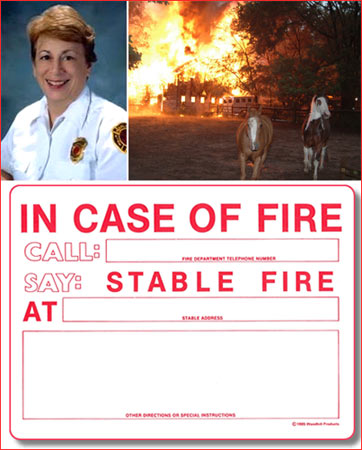
Is hay in a waterproof area? _____ Is stall bedding stored in an area away from the animals? _____ Is used stall bedding (manure pile) kept in an area away from the barn? _____ Have cleaning cloths contaminated with any petroleum product been properly disposed of? _____ Is a sign with fire department information posted by the telephone? _____ Is an emergency animal escape plan displayed? _____ If you have a “runway” exit to a pasture have all animals been trained to use it? _____ Can fire apparatus reach the barn? (Check road surface, gate and curbs) _____ Have you invited your fire department to visit your property for purposes of making a pre-plan?
© 2012 Laurie Loveman. All rights reserved.
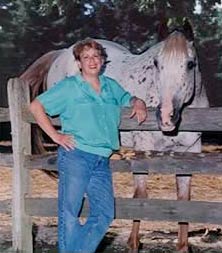
Short Biography - Laurie Loveman Laurie Loveman is an author, fire department officer, and a member of the National Fire Protection Association (Nfpa) Technical Committee on Fire and Life Safety in Animal Housing Facilities. She has a degree in Fire and Safety Engineering Technology from the University of Cincinnati and is a consultant on fire safety in equine facilities.
With more than forty years experience in the horse industry, Laurie has written many articles for equine and fire service publications, and her Firehouse Family novels, set in the 1930s, reflect her interest not just in horses, but also on topics relevant to firefighting today, such as firefighter stress, medical ethics, and arson.
In her spare time Laurie enjoys working on her friends’ horse farm, spending time with family and friends, and researching 1930s history.
Laurie Loveman 17095 Abbey Road Chagrin Falls OH 44023 440-543-1640 Phone 440-287-6045 Fax [email protected] warning sign and check list available for download- firesafetyinbarns.com/downloads/