

Beginner's Luck
What Winning With a Horse Actually Looks Like
I watched a video the other day that I have not been able to put down. A man had come back from a stretch away from social media and found people fastening children to their saddles with hook-and-loop straps. He was not gentle about it. What happened, he asked, to a kid having to learn to ride, having to get a good seat, having to be able to handle a horse and handle themselves on the back of one, before you turn them loose.
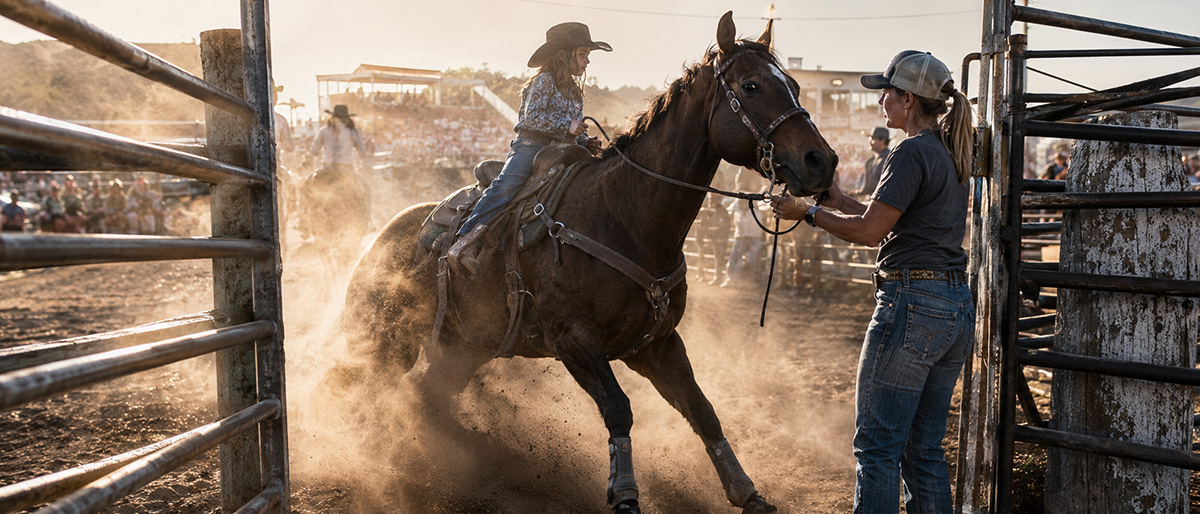
I have wondered the same thing at barrel races for years. You see it in the alley. A horse wound up so tight he is rearing, a father holding the reins and aiming the horse like a rifle, a small child on top, and then the release and the horse goes. The child comes back around the pattern still on board, the clock is good, and everybody cheers.
I am not going to name anybody and I am not going to name any product. I want to ask a simpler question, and I have been chewing on it for a while.
Who won?
Before I go any further, let me tell you what I am doing here. I am not writing to take anything away from anybody's win. If your child has a buckle on her shelf, she earned the right to keep it and I am glad for her. I am writing because I believe the prize in all of this is the relationship you build with the horse, and I think a lot of good people are being sold something a great deal smaller than that without knowing it.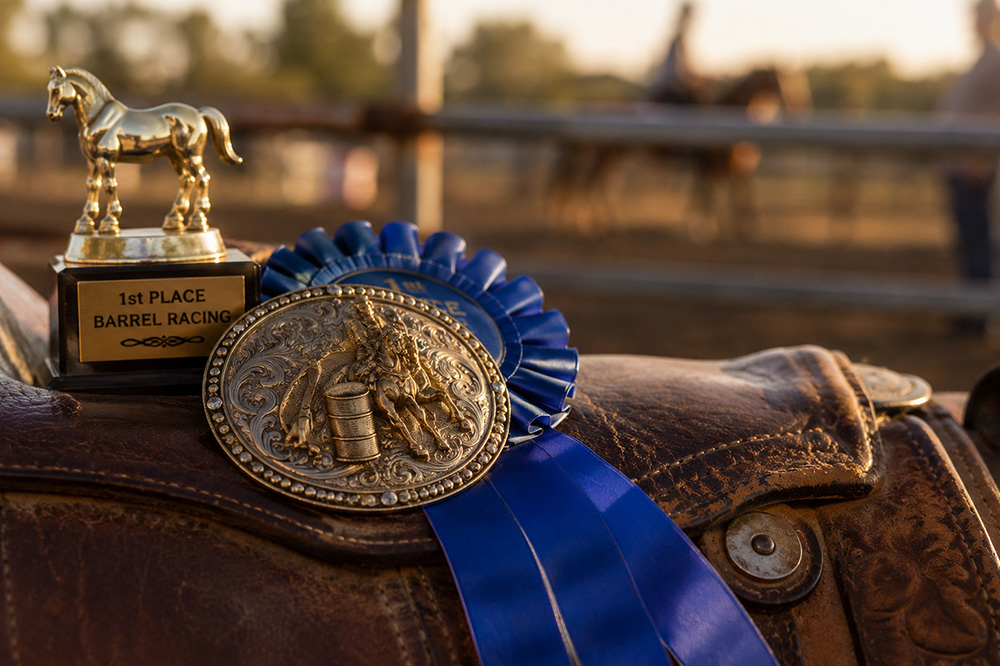
Let me say the honest part first, because it is the part people usually skip. Shortcuts win. That is the whole reason anyone takes one. A child fastened to a finished horse can absolutely go home with the buckle. A made show horse will produce the round no matter who is sitting on him. Anybody who tells you these things do not work has not been to many horse shows.
So I am not going to argue that shortcuts do not win. They do. My argument is about what they win.
A ribbon is a receipt.
It records that something happened. What it cannot tell you is whether the thing actually happened. It can be handed out for work that was done and for work that was skipped, and it looks exactly the same either way. That is why some wins sit right and some wins sit hollow, even in the hand of the person holding them. Somewhere down in there, everybody knows which kind they got.
The safety part I will say plainly, and then leave alone. The whole premise of riding is that the horse and the rider can come apart. I am not calling out anyone. I am saying that horses are prey animals, and things happen and even the quietest horse can over react, and I would not want a child attached when it happened.
And I am not blaming anyone. Parents want their children to succeed, trainers want to help them succeed, and kids naturally want to be part of something exciting. But if fastening a child to a saddle is allowed, then maybe it is worth taking another look at the practice and asking whether there is a safer way to accomplish the same thing. Horses are powerful animals, even the good ones, and anything involving a child should probably be reviewed from time to time to make sure we are doing everything we can to keep everybody safe.
Now let me talk about the other road, because that is the article I actually want to write.
Every real winner I have known in my fifty years of experience with horses, got there the same dull way. They rode. Not once a week when the weather was nice. They rode. They practiced the same thing until they were sick of it and then they practiced it some more. They learned about horses wherever they could, from trainers, from books, from videos, from magazines, from watching people who had already done it and asking questions until they were annoying.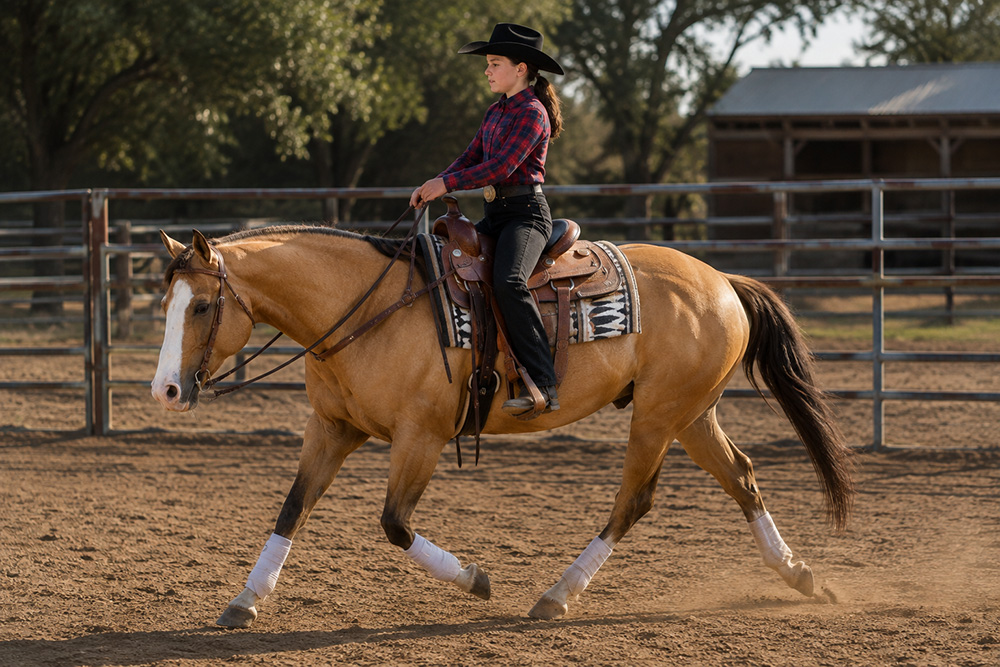
And here is what all that repetition is actually for. It is not to memorize the pattern. It is to get the riding down underneath your conscious mind, into your body, so your hands and your seat and your legs do their jobs without you supervising them. Once that happens, your attention comes free. Now you can think about the test, or the course, or the run. You can see the third barrel while you are still leaving the second one.
A rider who never builds that never gets her attention back. She spends the whole run staying on. And a rider who has been fastened to the saddle never even starts building it, because the saddle is doing the part her body was supposed to learn.
The horse has half of this too, and most articles skip it. Horsemanship is not a set of skills you perform on top of an animal. Look at the word. It has man or woman sitting right in the middle of horse and the doing of it together. The dictionary will tell you horsemanship means the skill of a horseman, and that is true as far as it goes, but I think that definition is too small. A person can perform a skill on a horse who is only putting up with him. That is not what any of us mean when we call somebody a horseman.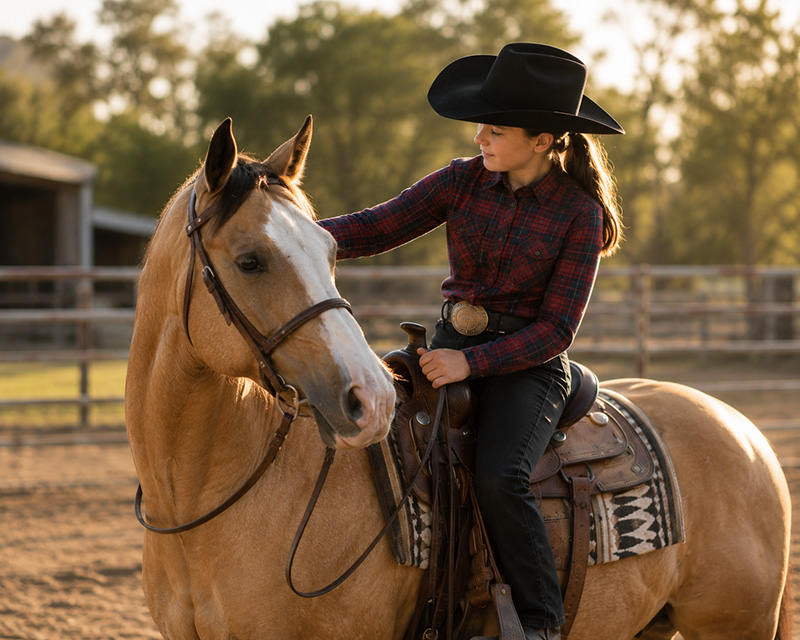
When you and your horse have put in the hours together, both of you build that same automatic knowledge. Your horse knows the job. He knows your seat, your breathing, the particular way you shift before you ask. So when the test changes at the last second, when the ground is deeper than you expected or a bird comes out of the rafters, the two of you adjust together. He is not being aimed. He is participating.
A horse who is cared for and worked with wants to do the job with you. Not because he was drilled into it, but because it is a thing the two of you do, and there is a relationship underneath it. That is worth more than any horse you could buy already finished, and there is no way to shorten the time it takes.
I want to tell you about a horse named Hank.
Years ago my daughter went horse crazy in middle school, the way girls do. I bought her a twenty-year-old Quarter Horse for a thousand dollars from an old man whose back had gone bad on him. He could not do more than walk Hank around anymore, and he thought that was not fair to the horse, so he sold him. 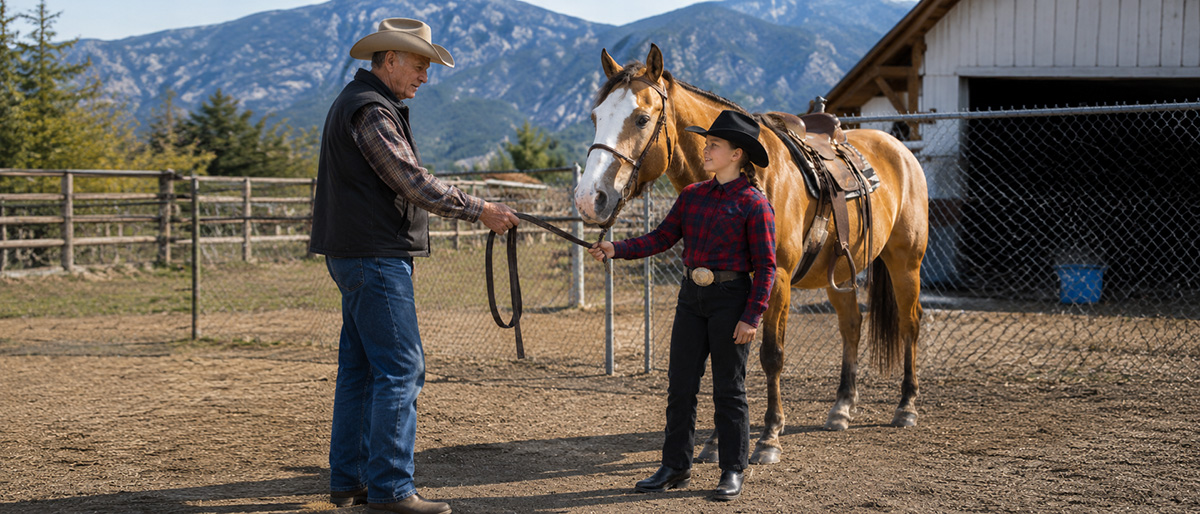
Hank had been bought and sold enough times that he did not fully trust people. What we had with Hank was mutual respect, and for a long while that was plenty.
Hank was big and stocky old working type Quarter Horse, with a white blaze down his nose. You could halter him, tie the lead rope in a circle, and any small child could steer him like he was wearing a custom bridle. He never took a false step with a child on his back. Never a quick one. Never one that might frighten anybody.
The other girls at my daughter’s stable had big warmbloods for jumping and showing, and they were happy to tell you what those horses cost. They showed my daughter their trophies and asked when her dad was going to buy her a horse like theirs so she could travel with them and win too. In middle school you want to be liked, and you want your horse to be liked, and a thousand-dollar horse is a hard thing to explain to that crowd.
There was an open show a few miles from the house. I told my daughter we ought to go get some experience close to home before we think about doing shows with her friends. She agreed, with the understanding that if she took to showing, we would start selling the losers and buying the winners like her friends. That is how it had been explained to her.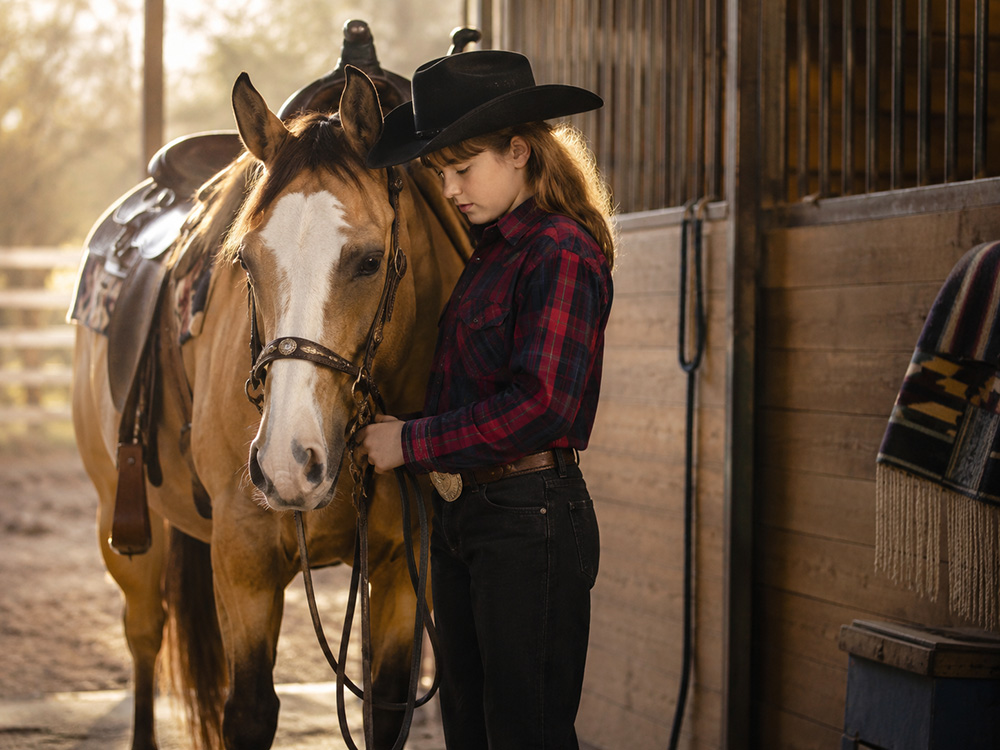
So she went to work. In a corner of that stable the real show horses did not need, with some help from her mother and some advice from a trainer, she put in the time. She was there most days. She bathed him and groomed him and learned to saddle him and learned to canter him. Nobody was watching any of it.
On show day Hank was clean, his muzzle trimmed, his hooves polished, and that blaze was bright white in the sun. She wore black pants and a red shirt and a black hat, and with her dark hair she looked like a picture on his back.
Some of the people from our stable turned up at that little show with their expensive and semi-famous trainer, which surprised me, since it was like a professional team entering a city league. They were kind to her beforehand. The trainer even gave her advice about the pattern.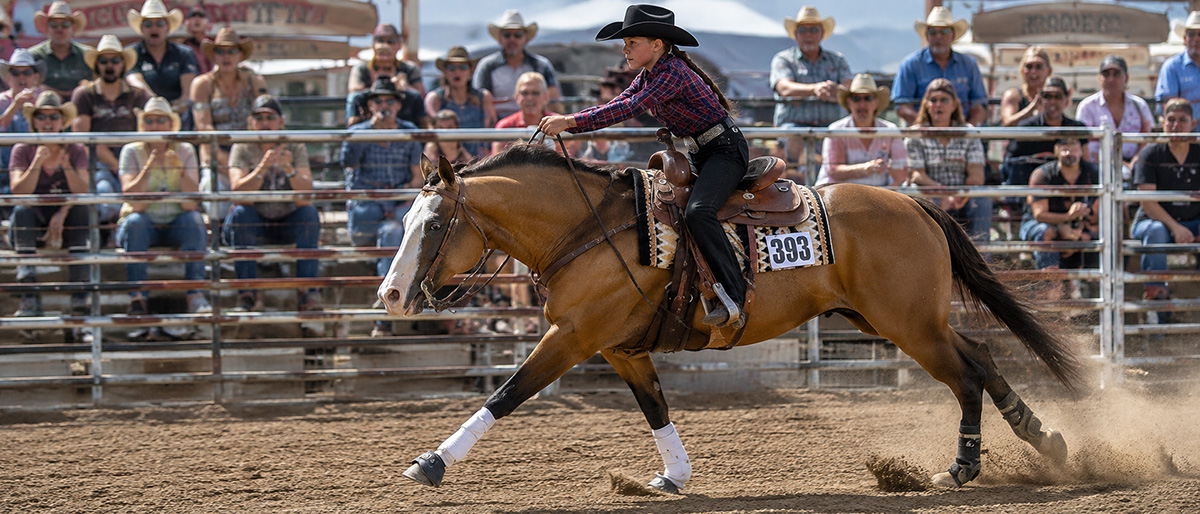
Then her class was called, and Hank walked into that arena and changed. That horse had been in a show ring before and he knew exactly what it was for. He commanded the crowd and the judge. Head at the right angle, muscles shining, little puffs of dust coming up off a perfectly executed gait. The trainer who had been so friendly a minute earlier started to look concerned, because two of his students on expensive horses were about to get beat.
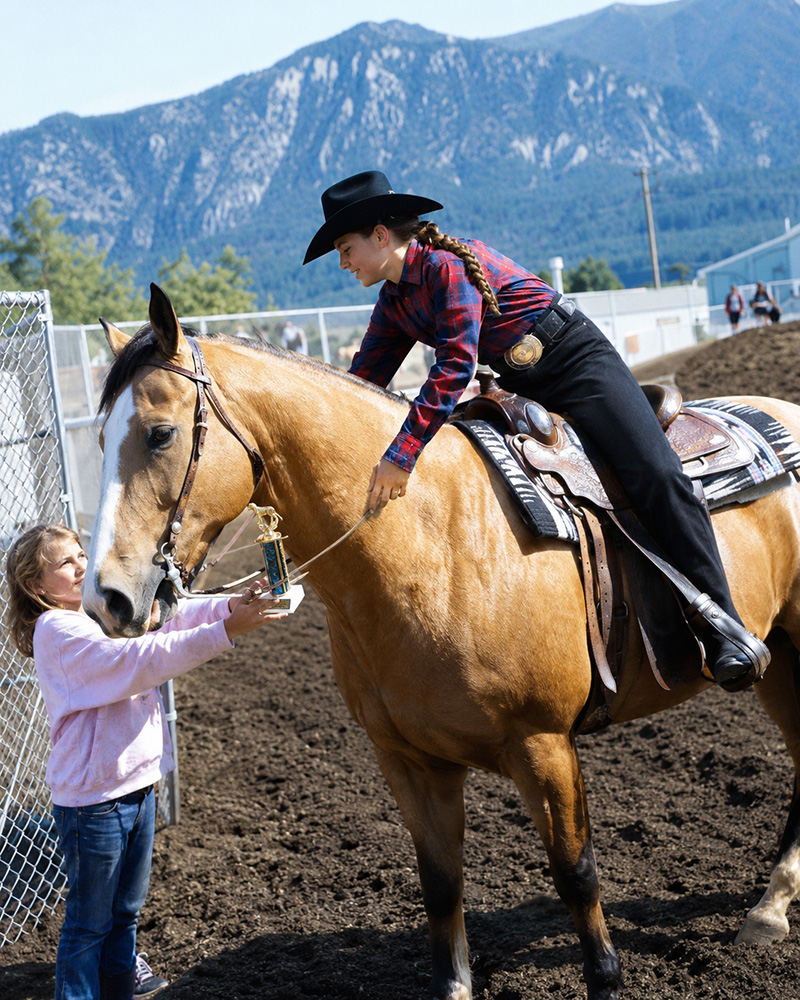 A thousand-dollar horse and a beginner won that class. She won another one after that.
They congratulated her, and then they kept to themselves for a while. Beginner's luck, is what got said. They went on and won nearly everything else that day, and once they had, they were friendly again and glad for her.
Beginner's luck.
I have thought about that phrase for a long time now.
It was not luck. It was weeks and long days of a girl showing up at a barn in a corner nobody wanted, bathing a horse and brushing a horse and saddling a horse and riding a horse. The reason it looked like luck is that nobody had seen any of it. The work happened where there was no audience, which is where all of it happens.
That is the thing about an earned win. It usually gets called luck by the people who did not watch it being built.
Now I have to be fair, because somebody is going to say it. Hank knew that job. He had been down that road before, and a person could argue that the horse won those classes and my daughter came along for the ride. I have thought about that too, and here is the difference, and it is the whole point of this article.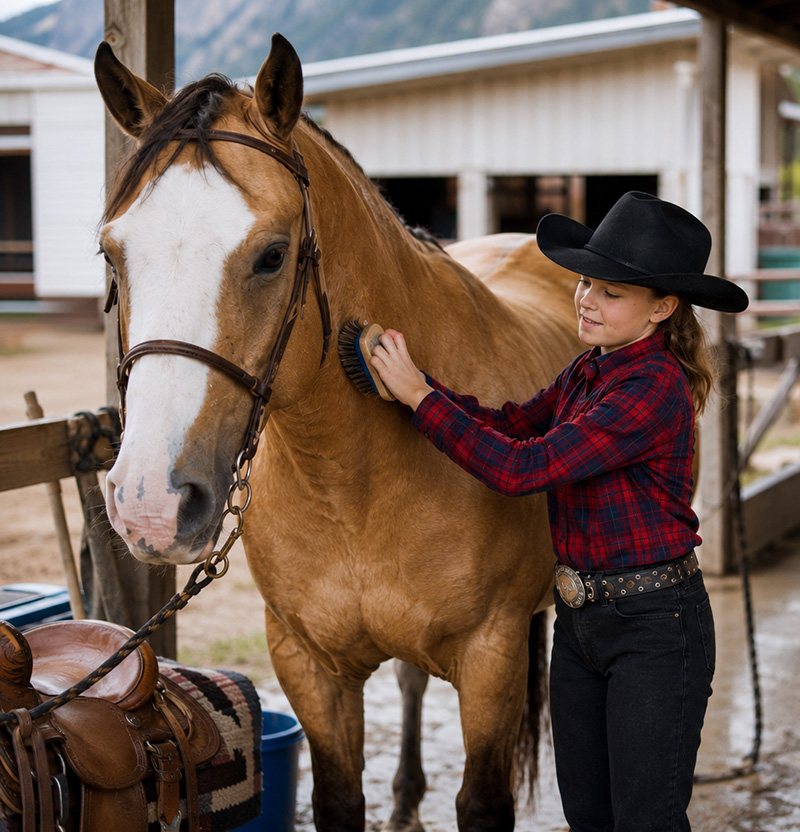
She had earned the right to ask him. Months of hands on that horse, every day, in a corner of a barn. He was not a machine she was aimed on. He was a horse she knew and who knew her, and when they walked in there, two of them went in and did a job together. That is not the same as being fastened to a horse you barely know while somebody points you at a barrel. It is not close.
I wrote that story down years ago, and I drew a lesson out of it about money. Your value has nothing to do with what you paid, I said. Hank did not know he was worth a thirtieth of the horse standing next to him, and he would not have cared. I still think that is right.
But I missed something at the time, and I only see it now that I am seventy and looking back at it.
The win did not happen in that arena. It happened in the corner of that barn, over months, where nobody was keeping score. By the time my daughter rode into that ring, the thing worth having was already hers. The judge only confirmed it out loud.
That is what winning with a horse looks like to me.
You and your horse know you can do the job before anyone hands you anything. The class is not where you find out. The class is where other people find out.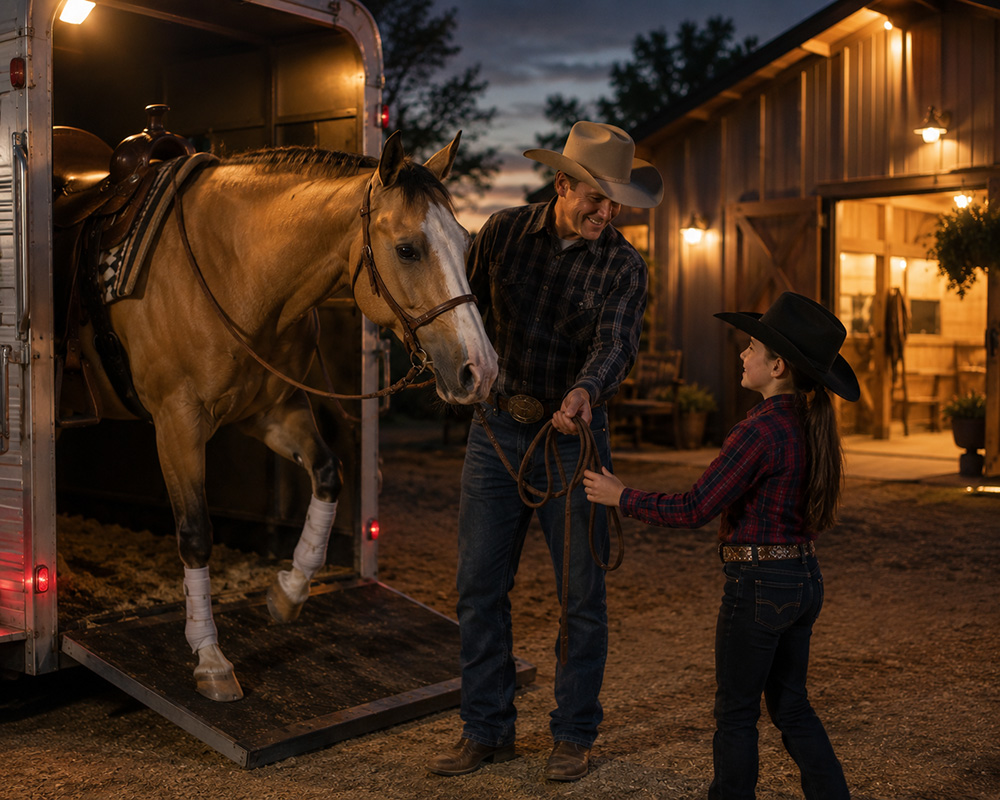
Which is why a rider who did the work can lose and drive home satisfied, and a rider who got handed a result can win and feel strangely empty about it. One of them brought the win with her. The other was hoping to be given one.
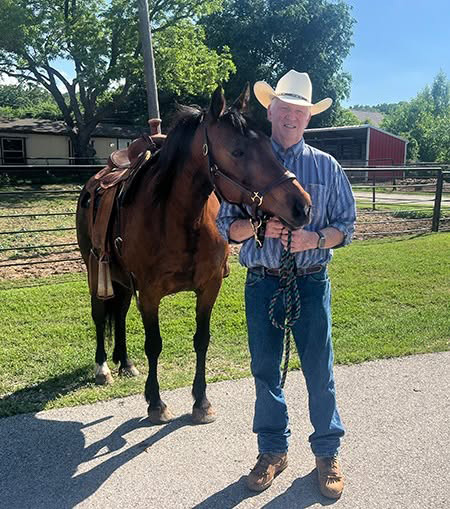 There is no shortcut to the corner of that barn. You cannot buy the hours, you cannot fasten them on, and you cannot medicate them into a horse. All you can do is go out there tomorrow and put in another ride.
Good horsemanship is good horsemanship. It has never been anything but time, and a horse who is glad to see you.
Bob Pruitt has been around horses for more than fifty years and has published InfoHorse.com since nineteen ninety seven. He rides in Texas with his Morgan Horse named Zoey