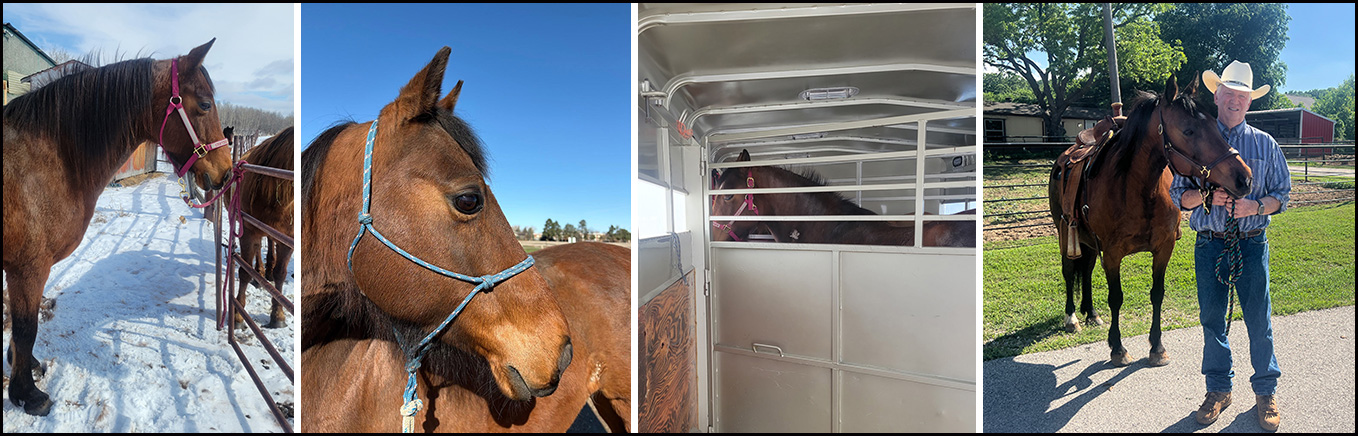


The Day My Horse Caught Me
Everyone who handles a horse, for better or worse, is a horse trainer.
I have said that for years. I am sure the idea came from horsemen I listened to a very long time ago, but after all these years the words may be my own version of a simple truth:
Every time we interact with a horse, we are teaching him something.
Not just when we are riding.
Not just when we are in a round pen.
Not just when we have a lead rope in one hand and a training plan in the other.
We are training when we walk into the pasture.
We are training when we put on the halter.
We are training when we ask a horse to stand for the farrier.
We are training when we open a stall door.
And we are still training when we lose our temper.
The horse is always learning.
The only question is whether he is learning what we meant to teach.
Zoey
Zoey came into my life about four months ago.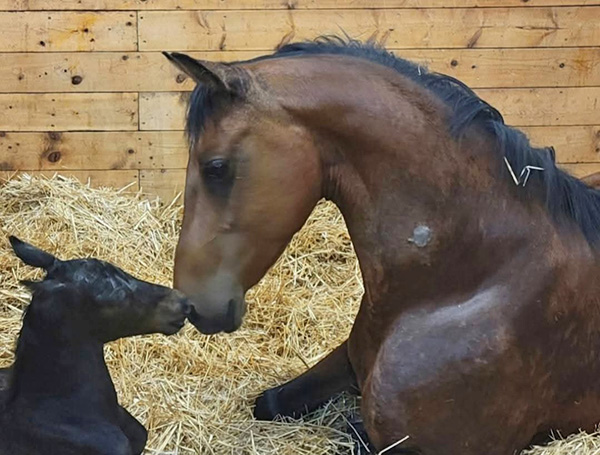
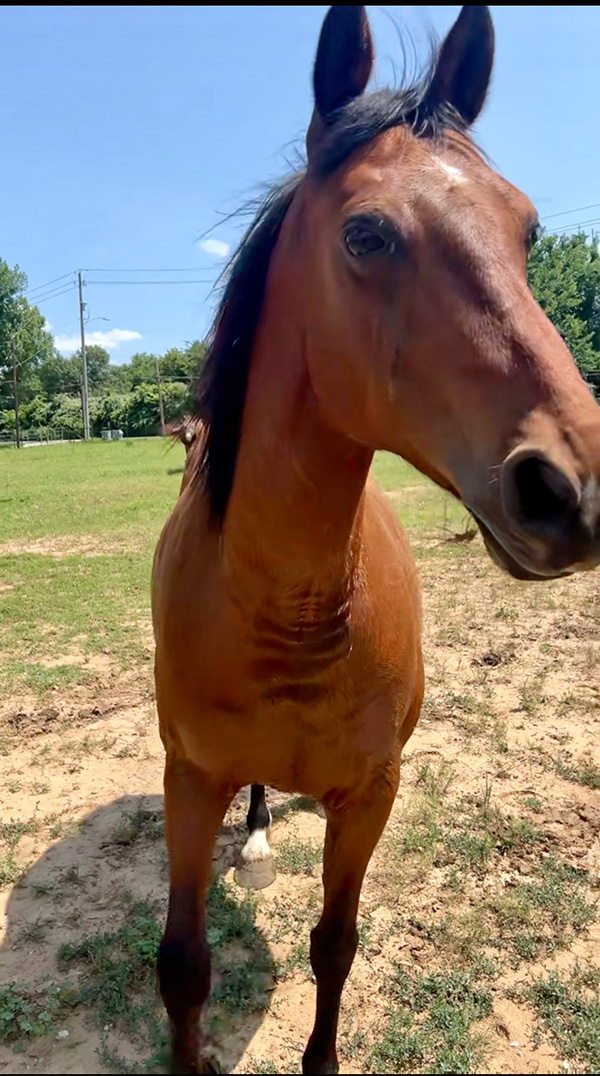
She is a 14-year-old Morgan mare, about 15.2 hands, very well bred and formerly used as a broodmare in Alberta, Canada. She had produced three foals and, because of her breeding, her babies had value.
Zoey herself had a couple of sarcoids. They were minor to me, but enough to make her less desirable as the kind of show horse her breeding might otherwise have suggested.
That helped explain why a mare who might have brought considerably more money was advertised for $6,000.
I bought her from an online classified.
From a couple of poor photographs.
She was the first horse I seriously looked at.
And I bought her while I was still in the hospital.
I am aware that this breaks nearly every piece of horse-buying advice I have ever given anyone.
I had recently lost Dream, the horse I had owned from the time he was five months old until complications from laminitis took him at age 25.
That loss hit me harder than I expected.
During the months of trying to keep Dream comfortable and finally realizing that I could not, I lost 30 pounds and eventually spent six days in the hospital.
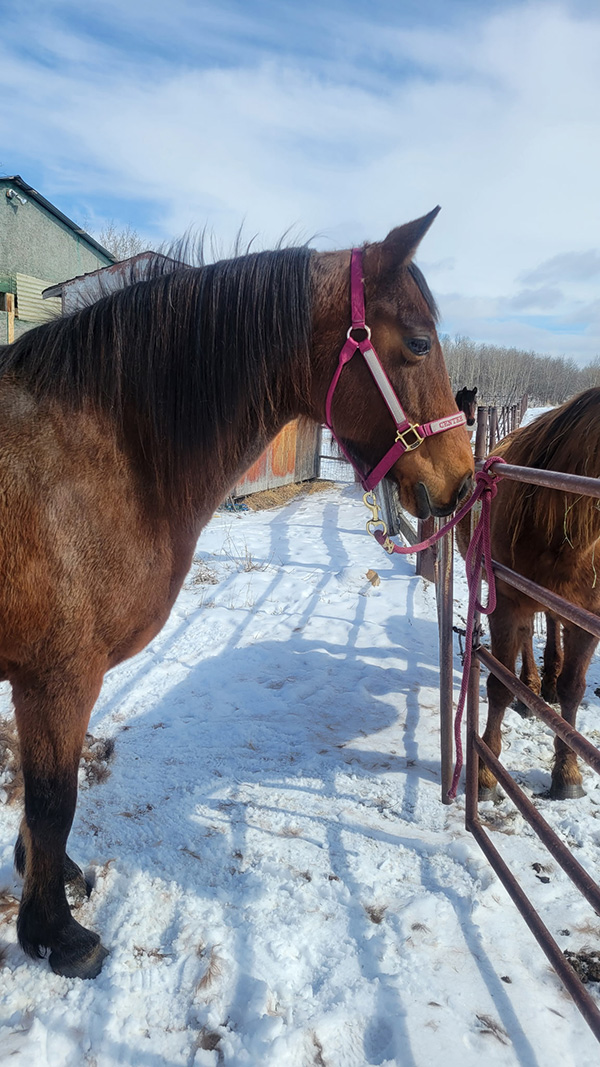 Zoey arrived from snowy Alberta to hot Texas the day before I came home.
I would never recommend that sequence of events as a horse-buying strategy.
But somehow, Zoey was here.
And we began.
A 14-Year-Old Horse Can Still Be a Beginner
One of the first things Zoey reminded me of is something horse people sometimes forget:
Age does not tell you what a horse knows.
Zoey had been around people all her life.
She had produced three foals.
She had undoubtedly been handled.
But she did not seem to know what grain was. Horse treats were new. When I saddled her, it became obvious that she had not learned many of the things I would normally expect a mature riding horse to understand.
Even “whoa” did not appear to mean very much.
That does not make a horse stupid.
It does not make a horse stubborn.
And it certainly does not mean, “She is 14. She should know better.”
A horse cannot give you an answer to a question nobody has ever taught her.
So we went slowly.
Zoey is intelligent and has a very sweet disposition. Everything we did was designed to make the right answer easy to understand.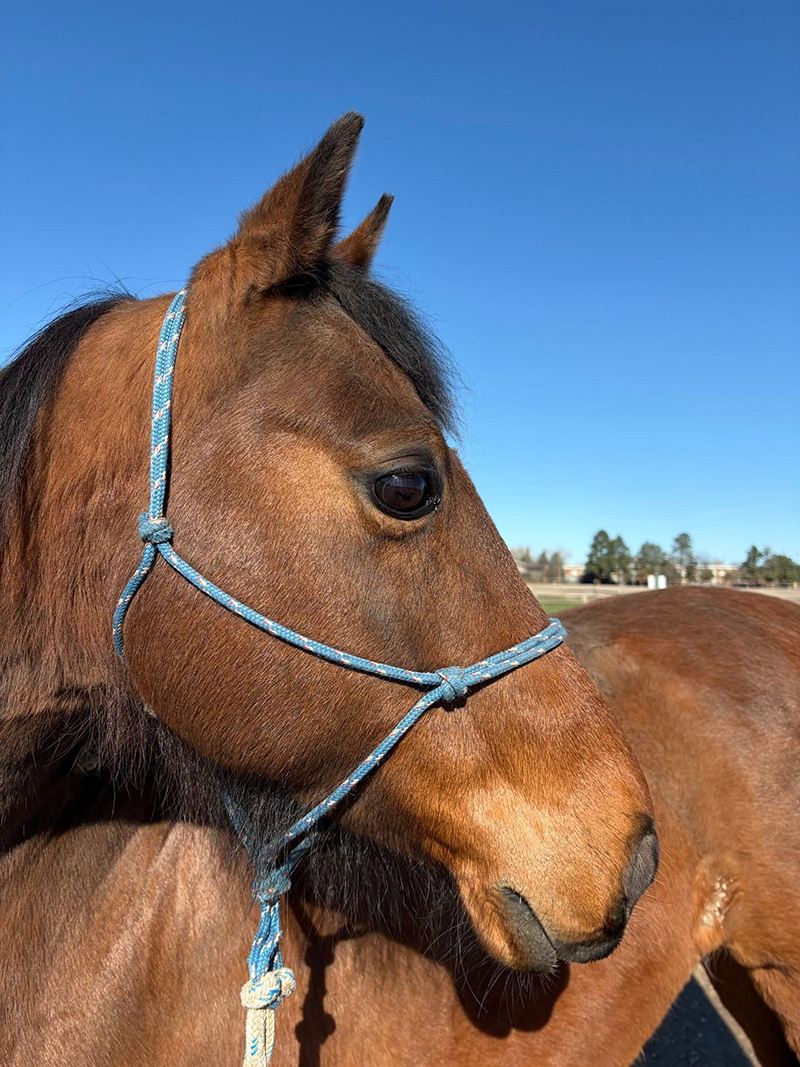
When she stopped when I asked, she got praise.
When she figured something out, pressure went away.
Sometimes there was a treat.
Nothing dramatic.
Just one small lesson at a time.
And some of the most important lessons were not happening under saddle.
They were happening out in the pasture.
Catch Me If You Can
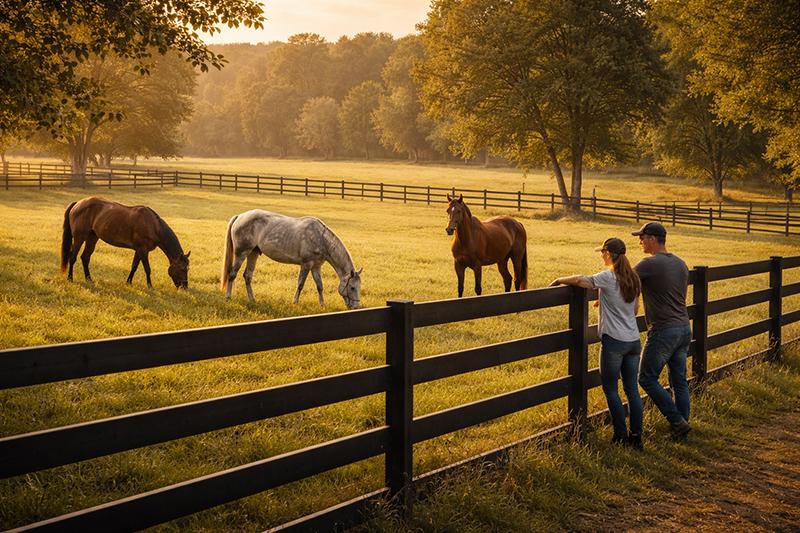
Zoey lives on about 60 acres with several other horses.
At first, when I walked out to get her, she would sometimes trot away.
I did not chase her.
I simply walked to wherever she went.
Eventually she would stand.
I would pet her, put on the halter and give her a treat.
That was enough for the first lesson.
Then I changed the assignment.
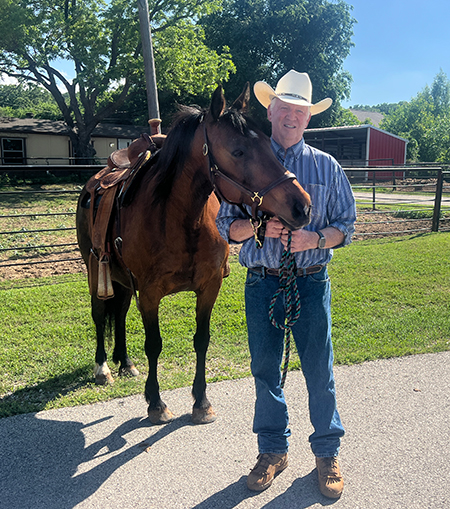 Instead of walking all the way to her, I would walk near her and call her.
At first she only had to take a couple of steps in my direction.
Those couple of steps earned a pet and a treat.
Later I asked for more.
A few more steps.
Then farther.
Eventually, when I called Zoey from almost anywhere in that pasture, she would walk all the way to me.
This did not happen because I “made” her come.
It happened because, over time, she learned that coming to me led to something predictable and pleasant.
Then yesterday something happened that made me realize how much the lesson had changed.
I went out into the pasture and called her.
I did not see her.
I assumed she must be in another area of the stable, so I turned around and started walking toward it.
A moment later, I felt breathing on the back of my neck.
Zoey was standing behind me.
She had come looking for me.
For four months, I had been teaching Zoey to be caught.
Yesterday, Zoey caught me.
The Horse That Learned the Opposite Lesson
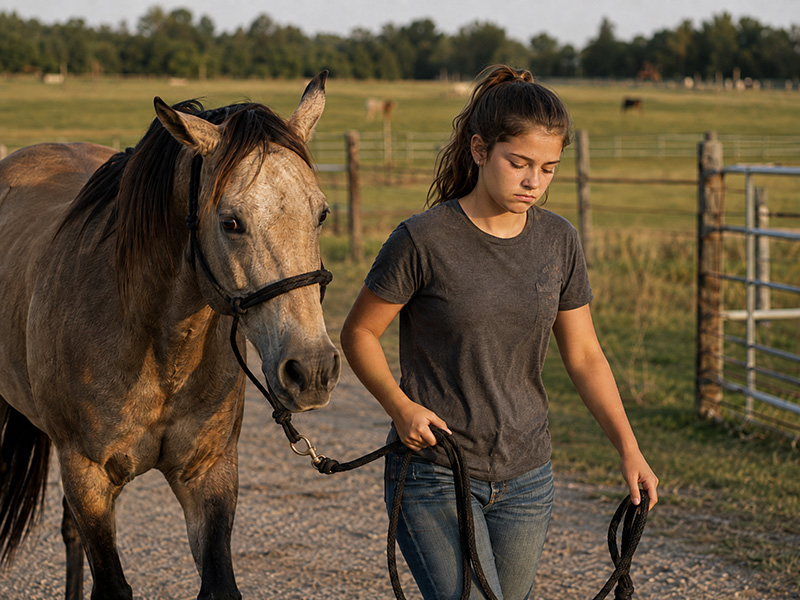 That moment reminded me of something I saw many years ago at another stable in another state.
A teenage girl would go into a pasture to catch her horse.
The horse would trot away.
She would follow.
The horse would move again.
This could continue for 15 minutes or longer.
Eventually the horse would stop and allow himself to be caught.
By then, the girl was angry.
She would put on the halter and jerk down hard on it two or three times.
I remember watching that and thinking:
That horse is going to work even harder not to be caught tomorrow.
From the girl's point of view, she was punishing the horse for making her chase him.
But what did the horse experience?
He finally stopped.
He finally allowed himself to be caught.
And immediately afterward, something unpleasant happened.
The girl may have believed the lesson was:
“Do not run away from me.”
The horse may have learned:
“Getting caught is when the trouble starts.”
That is an important distinction.
Because horses do not always connect events the way we think they should.
They learn from timing.
They learn from repetition.
They learn from what immediately follows a behavior.
And they learn whether being around us generally makes life easier, harder, safer, more confusing, or more uncomfortable.
Training Happens When We Aren't Calling It Training
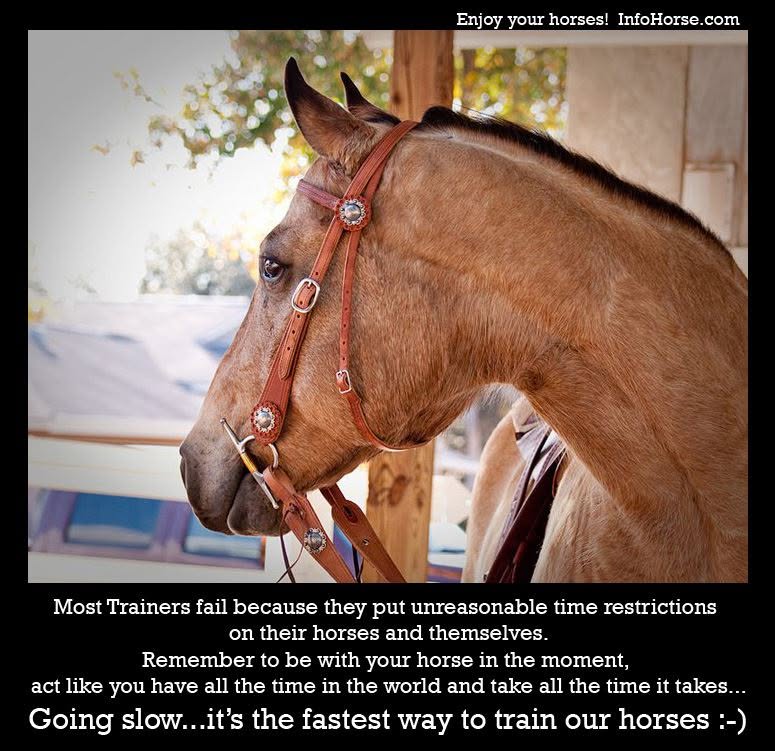 That teenage girl was training her horse.
So was I when I walked across a pasture carrying a halter and a horse treat.
Neither of us was conducting a formal training session.
But the horses were still learning.
That is why I believe everyone who handles a horse is a horse trainer.
The person who feeds the horse is training him.
The person who turns him out is training him.
The child who leads him from the pasture is training him.
The barn worker who opens the stall door is training him.
The veterinarian, farrier, groom, rider and owner are all adding something to that horse's education.
Sometimes we teach exactly what we intend.
Sometimes we accidentally teach the opposite.
A horse that pushes through a gate may have learned that humans eventually move out of his way.
A horse that paws while tied may have learned that pawing brings attention.
A horse that will not stand for mounting may have learned that the rider climbs aboard whether he stands still or not.
A horse that is hard to catch may simply be telling us what he expects will happen next.
This does not mean every unwanted behavior is caused by bad handling. Pain, fear, previous experiences, herd dynamics and simple misunderstanding can all affect behavior.
But before we label a horse disrespectful, stubborn or difficult, it is worth asking one question:
What has this horse learned happens when he does this?
And then another:
What am I teaching him right now?
The Moment After the Right Answer
One of the most important moments in horse training happens immediately after the horse gets something right.
That is when the horse discovers whether the answer was worth giving.
If you ask a horse to stop and he stops, what happens next?
If you ask him to stand and he stands, what happens next?
If you walk into a pasture and he turns toward you, what happens next?
If a nervous horse finally allows you to touch his ear, what happens next?
Those moments matter.
The horse is paying attention to the result.
Release of pressure matters.
A quiet voice matters.
A scratch may matter.
A treat can sometimes matter.
And just as importantly, avoiding anger at the moment the horse finally gives us the right answer matters.
The reward does not have to be food.
The real principle is simpler:
Make the behavior you want lead to an outcome the horse can understand.
Respect Is Not the Same as Fear
Horse people sometimes talk about a horse needing to “respect” us.
There is certainly nothing wrong with expecting safe behavior around people. Horses are large animals, and boundaries matter.
But fear and respect are not the same thing.
Neither is obedience and understanding.
I want Zoey to stop when I ask because she understands the request and has learned the correct response, not because she is worried about what will happen if she guesses wrong.
I want her to come when I call because approaching me has become a normal, reasonable thing to do.
That relationship took time.
There was no dramatic breakthrough.
No showdown.
No magic technique.
Mostly, there was a lot of walking.
A few horse treats.
A lot of repetition.
And patience.
What Is Your Horse Learning From You?
The next time you go to catch your horse, watch what happens before you ever touch the halter.
Does he look at you?
Turn toward you?
Turn away?
Walk off?
Wait?
And then ask yourself why.
Not, “How do I make him obey?”
Try asking:
What does he think is about to happen?
 That question may tell you far more.
And watch yourself after he gives you the answer you wanted.
That is often where the real training occurs.
I have spent a lifetime around horses, and I still find myself learning these things.
Zoey has only been with me for four months.
Four months ago, I walked across a pasture to catch her.
Then I taught her to take a few steps toward me.
Eventually, she would come all the way across the pasture when I called.
Yesterday I called her, could not find her and started walking away.
Then I felt her breathing on the back of my neck.
Somewhere along the way, I stopped teaching Zoey how to be caught.
She had decided to come find me.