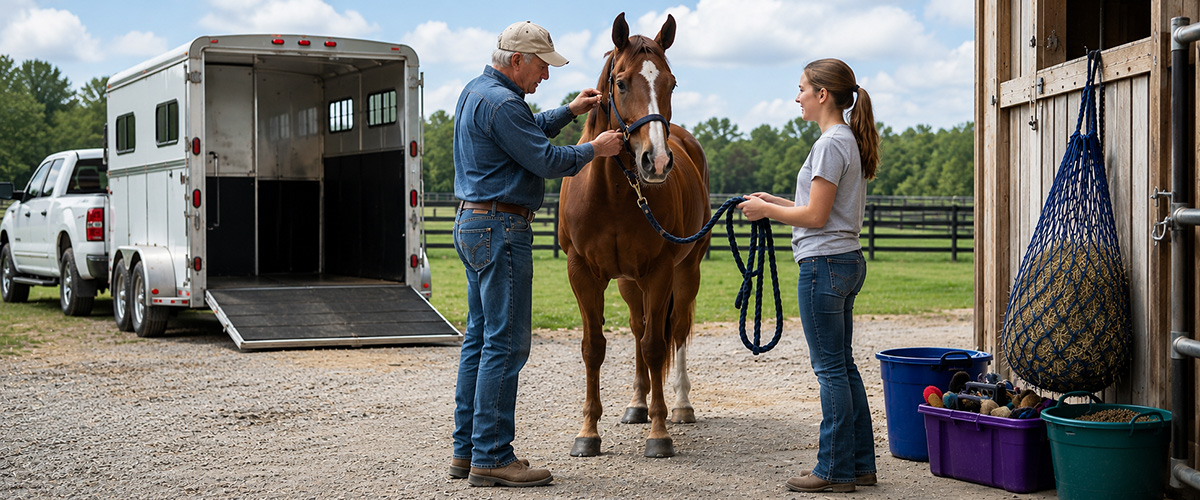


First-Time Horse Owner Guide: Supplies, Costs, Safety, and Your Horse's First Week Home
Everything You Need Before Your Horse Arrives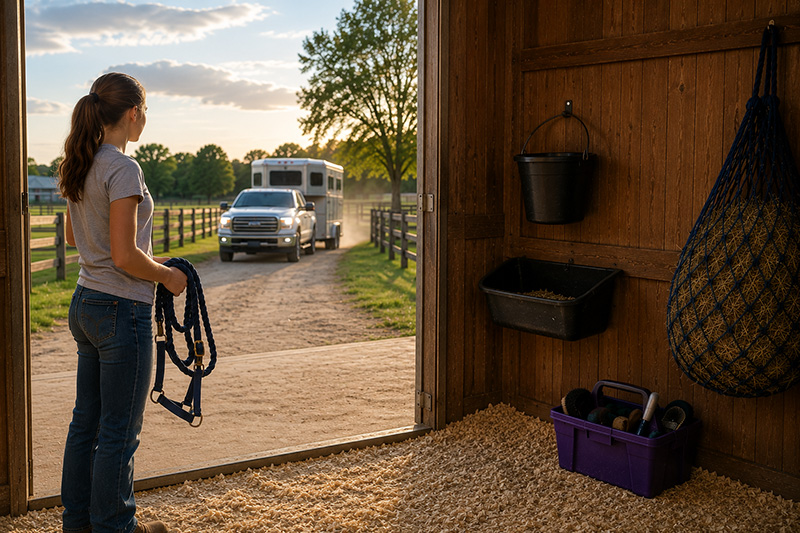
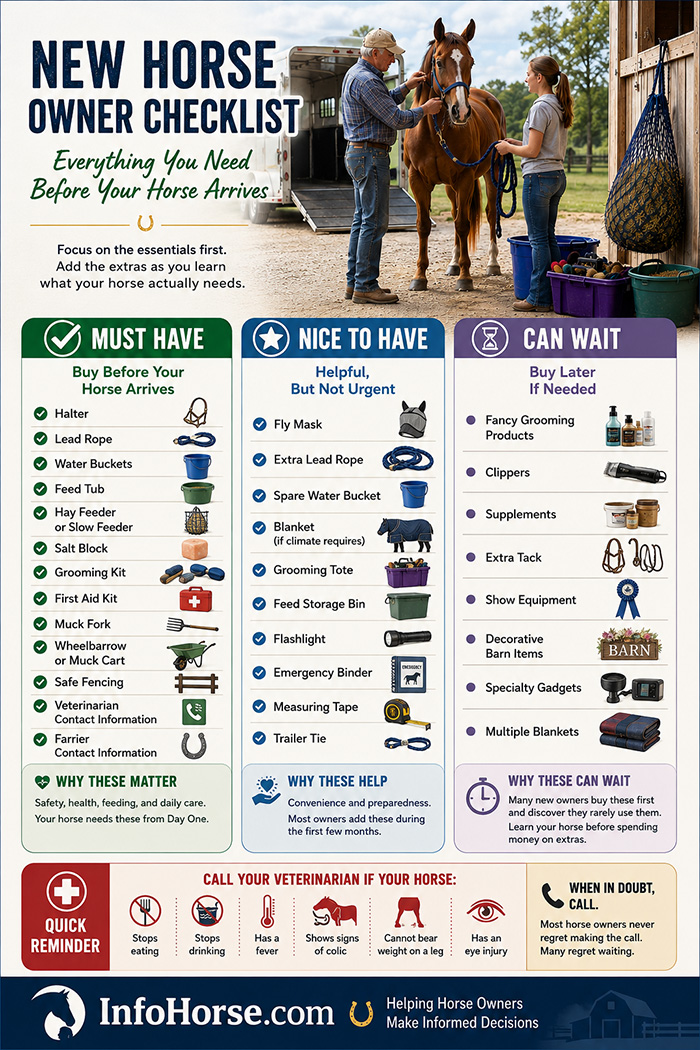
A first-time horse owner needs a surprisingly short list of true essentials before the horse arrives: safe fencing, a clean water source, a halter and lead rope, a feed tub, a hay feeder or slow feeder, a salt block, bedding if stalled, a muck fork and manure cart, a basic first aid kit, and veterinarian and farrier contact information. Everything else can be acquired over time—you don’t need everything on day one. Most owners spend $300 to $800 on a budget setup, while a typical setup runs $800 to $2,000.
There's a particular kind of overwhelm that hits the week before a new horse arrives.
You stand in the feed-store aisle—or worse, in front of a website at midnight—and suddenly every product looks essential. New horse owners quickly discover there are thousands of items marketed to horse people. Fortunately, horses themselves are much less demanding than the catalogs would have you believe.
After outfitting more than a few barns over the years, we've learned that horses need a surprisingly short list of true necessities and a much longer list of items you can acquire over time.
Take a breath.
You do not need everything on day one.
Your horse won't think less of you for showing up with a halter, clean water, safe fencing, and a hoof pick instead of a truckload of gadgets.
Let's sort the genuine essentials from the nice-to-haves so you can spend your money where it matters most.
 What Do You Really Need Before Your Horse Arrives?
One of the biggest mistakes new horse owners make is waiting until the horse is standing in the trailer before realizing they forgot a water bucket, hay feeder, or feed storage container.
Before your horse ever steps onto your property, make sure these basics are ready:
✓ Safe fencing
✓ Clean water source
✓ Halter and lead rope
✓ Feed tub
✓ Hay feeder or slow feeder
✓ Salt block
✓ Bedding (if stalled)
✓ Muck fork and manure cart
✓ Basic first aid kit
✓ Veterinarian and farrier contact information
If those items are in place, you're ahead of many first-time horse owners.
Day-One Essentials Checklist
|
Zone |
Day-One Essentials |
Why It Matters |
Handling & Safety |
Halter, lead rope, quick-release snap |
Safe daily handling |
Grooming |
Curry comb, brushes, hoof pick |
Daily health checks |
Feed & Water |
Water buckets, feed tub, hay feeder, salt |
Basic horse health |
First Aid |
Thermometer, bandages, wound supplies |
Emergency preparedness |
Stall & Barn |
Bedding, stall mats, muck fork, cart |
Comfort and cleanliness |
Turnout |
Safe fencing, shelter, water |
Safety and welfare |
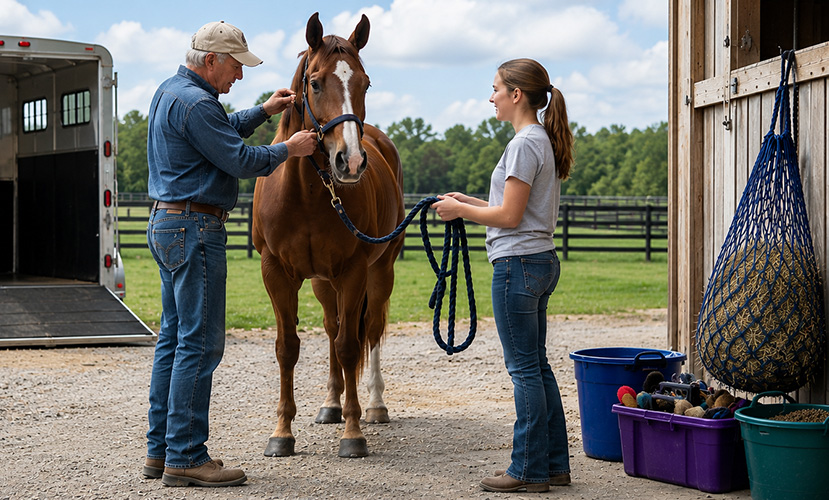 Halter, Lead Rope, and Safe Handling Equipment
Start here because you can't do much without it.
A properly fitted halter and sturdy lead rope are true day-one necessities. Fit matters more than many people realize. A halter that is too loose can catch on fencing or equipment. A halter that is too tight causes painful rubs.
For turnout, many horse owners prefer leather or breakaway halters because they are designed to release under pressure if a horse becomes entangled.
A quality lead rope approximately 9 to 10 feet long gives enough room to safely handle a horse without excessive slack dragging on the ground.
If your barn has an aisle, cross-ties can make grooming and tacking safer and easier. Always use quick-release snaps or panic snaps so a horse can be freed immediately if necessary.
New owners often spend more money on brushes than on safety equipment. That's backwards. A quick-release snap may be the most important ten-dollar item you'll ever buy.
— Ann Pruitt, InfoHorse.com
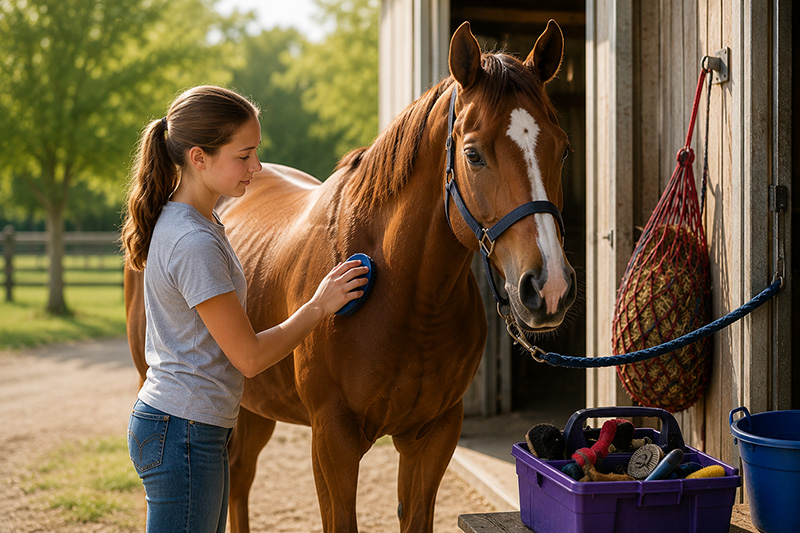 Grooming Supplies: More Than Just Appearance
Grooming isn't about making a horse pretty.
It's one of the most important daily health checks you'll perform.
Every time you run your hands over your horse, you're checking for:
✓ Cuts
✓ Swelling
✓ Heat
✓ Tick bites
✓ Skin problems
✓ Weight changes
✓ Soreness
A basic grooming kit should include:
• Curry comb
• Stiff brush
• Soft finishing brush
• Hoof pick
• Mane and tail comb
• Sweat scraper
• Grooming tote
Of all these tools, the hoof pick may be the most important. Picking out all four feet daily helps prevent thrush, stone bruises, and other hoof problems before they become serious.
Everything beyond these basics—specialty shampoos, clipping equipment, detanglers, and show products—can wait.
Feed and Water: The Most Important Supplies You Will Buy
Ask experienced horse owners what matters most and many will answer with one word:
Water.
A healthy horse may drink 5 to 10 gallons of water daily and significantly more during hot weather, heavy work, illness, or lactation.
Plan your feeding and watering system before your horse arrives.
At minimum you'll need:
✓ Two water buckets per horse
✓ Feed tub or bucket
✓ Hay feeder or slow feeder
✓ Salt block or loose mineral source
✓ Rodent-proof feed storage container
✓ Dry hay storage area
One of the most expensive mistakes horse owners make is storing feed in open bags. Mice, raccoons, insects, moisture, and even horses themselves can quickly ruin valuable feed.
A good feed bin often pays for itself within the first year.
Stall and Turnout Essentials
If your horse will spend time in a stall, comfort and cleanliness matter.
A standard stall is typically 12 feet by 12 feet and should provide adequate room for a horse to comfortably lie down, stand, and move around.
Most stall setups include:
✓ Stall mats
✓ Bedding
✓ Muck fork
✓ Wheelbarrow or manure cart
✓ Water source
✓ Feed containers
Rubber stall mats require a larger upfront investment but often reduce bedding costs and improve comfort for years.
For turnout areas, the list is much simpler:
✓ Safe fencing
✓ Clean water
✓ Shelter
That's the foundation of a safe paddock.
Many new owners are surprised by how little equipment is actually required outside.
What Goes in a Horse First Aid Kit?
You hope to never use it.
You absolutely need one anyway.
Every horse owner should have a basic first aid kit containing:
✓ Digital thermometer
✓ Stethoscope
✓ Gauze pads
✓ Non-stick wound dressings
✓ Self-adhesive bandage wrap
✓ Standing wrap materials
✓ Saline solution
✓ Antiseptic wound cleaner
✓ Disposable gloves
✓ Bandage scissors
✓ Flashlight or headlamp
✓ Veterinarian contact information
✓ Emergency clinic phone number
Check supplies every few months and replace expired products immediately.
My rule of thumb after forty years: if it touches a safety latch, a horse's feet, or the horse's back, buy quality. If it only affects your convenience, buy it used or buy it later.
Usually not. Start with quality forage, clean water, salt, and veterinary guidance.
Learn Your Horse's Normal Vital Signs
The best time to learn vital signs is before an emergency.
Typical adult horse values include:
Temperature:
99°F to 101.5°F
Heart Rate:
28 to 44 beats per minute
Respiration:
8 to 16 breaths per minute
Knowing your horse's normal values may help your veterinarian assess an emergency more quickly.
When Should You Call the Veterinarian?
Every horse owner eventually asks this question.
Contact your veterinarian if your horse:
✓ Refuses feed
✓ Refuses water
✓ Has a fever above 101.5°F
✓ Shows signs of colic
✓ Cannot bear weight on a limb
✓ Experiences significant swelling
✓ Develops severe diarrhea
✓ Suffers an eye injury
✓ Has difficulty breathing
✓ Experiences sudden unexplained lameness
When in doubt, call.
Most horse owners never regret making the phone call. Many regret waiting.
The 10 Things New Horse Owners Forget Most Often
Even experienced horse owners occasionally overlook simple items.
Commonly forgotten supplies include:
✓ Spare lead rope
✓ Extra water bucket
✓ Fly mask
✓ Salt block holder
✓ Flashlight
✓ Hose nozzle
✓ Measuring tape
✓ Emergency contact sheet
✓ Trailer tie
✓ Backup halter
These inexpensive items often become surprisingly valuable.
How Much Does It Cost to Outfit a Horse?
This varies tremendously depending on your situation, but most first-time owners appreciate having a realistic estimate.
|
Item |
Typical Cost |
Halter |
$20-$60 |
Lead Rope |
$15-$40 |
Grooming Kit |
$30-$100 |
Water Buckets |
$10-$30 each |
Feed Tub |
$10-$40 |
First Aid Supplies |
$75-$250 |
Stall Mats |
$50-$150 each |
Muck Fork |
$20-$60 |
Wheelbarrow |
$75-$200 |
Approximate startup costs:
Budget Setup:
$300-$800
Typical Setup:
$800-$2,000
Premium Setup:
$2,000-$5,000+
Fortunately, you don't need the premium version to provide excellent horse care.
Where Should You Spend Money—and Where Can You Save?
Spend money on:
✓ Safety equipment
✓ Fencing
✓ Halters
✓ First aid supplies
✓ Hoof care
✓ Veterinary care
✓ Farrier services
Save money on:
✓ Grooming totes
✓ Extra buckets
✓ Blankets
✓ Storage containers
✓ Non-essential gadgets
✓ Decorative barn accessories
— Bob Pruitt, InfoHorse.com
Create a Horse Emergency Binder
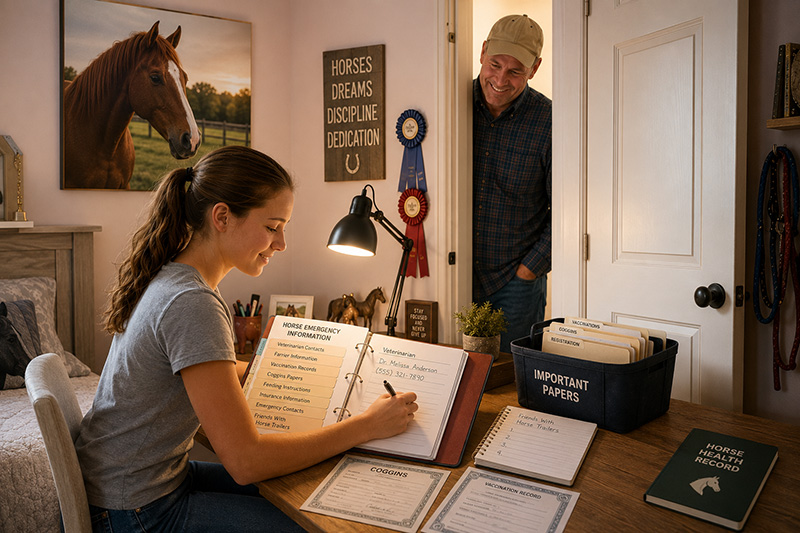 Every horse owner should maintain an emergency binder containing:
✓ Veterinary records
✓ Vaccination records
✓ Coggins paperwork
✓ Registration documents
✓ Insurance information
✓ Feeding instructions
✓ Medication records
✓ Emergency contacts
✓ Trailer and transportation contacts
In an emergency, having everything in one location can save valuable time.
Frequently Asked Questions
Do horses need blankets?
Not always. Many healthy horses grow adequate winter coats and may not require blankets depending on climate and management.
Should I buy supplements immediately?
How many water buckets should I own?
At least two per horse.
Should I buy a saddle before my horse arrives?
Not unless you already know the horse and saddle fit properly. Saddle fit is individual to both horse and rider.
What's the most important supply a horse owner can provide?
Fresh, clean water.
Nothing affects horse health more quickly than inadequate access to water.
A Starter List You Can Print
If you want the simplest possible checklist:
✓ Halter
✓ Lead Rope
✓ Quick-Release Snap
✓ Grooming Kit
✓ Hoof Pick
✓ Two Water Buckets
✓ Feed Tub
✓ Hay Feeder
✓ Salt Block
✓ Stall Mat and Bedding
✓ Muck Fork
✓ Wheelbarrow
✓ First Aid Kit
✓ Veterinarian and Farrier Contacts
Get these essentials first.
Then spend your first few months learning your horse.
Most experienced horse owners will tell you the same thing: good horsemanship doesn't come from buying equipment. It comes from spending time with your horse, learning his habits, noticing small changes, and building trust one day at a time.
When you're ready to compare products, supplies, and trusted manufacturers, InfoHorse.com provides horse owners with one of the largest directories of horse products, tack suppliers, barn equipment companies, and educational resources available anywhere.
Welcome to horse ownership. You're about to begin one of life's greatest adventures.
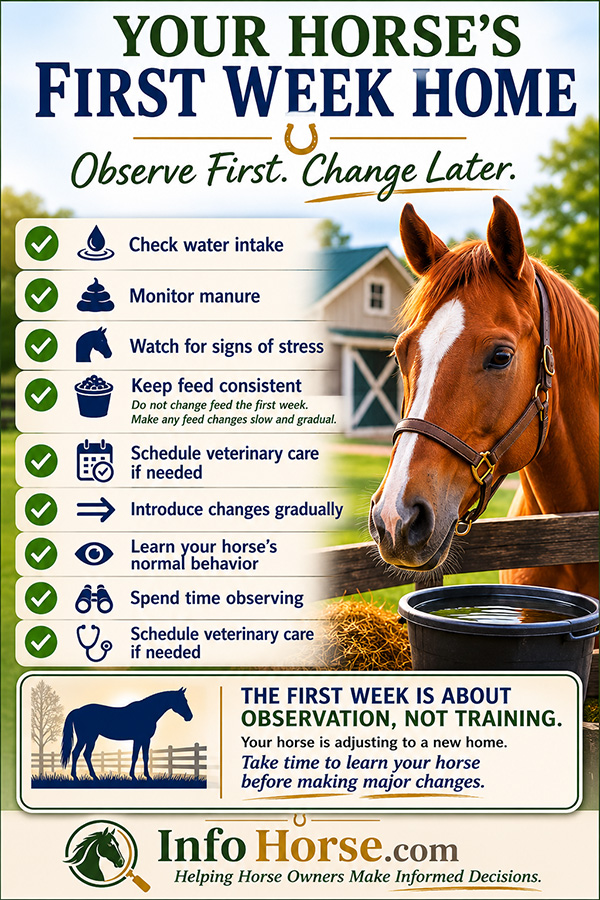
Your Horse's First Week Home
The first week with a new horse is exciting, but it's also a time for observation. Resist the temptation to immediately change everything. Your horse is adjusting to a new environment, new people, and new routines.
During the first week:
✓ Check water intake daily
✓ Monitor manure production
✓ Watch for signs of stress
✓ Establish a feeding routine
✓ Do not change feed during the first week. If changes are needed, make them slowly and gradually over time.
✓ Schedule veterinary care if needed
✓ Introduce any changes gradually
✓ Spend time observing your horse
✓ Learn what is normal for your horse
Remember
The first week is about observation, not training.
Your horse is learning a new environment, and you are learning a new horse.
The Most Important Thing You Can Bring
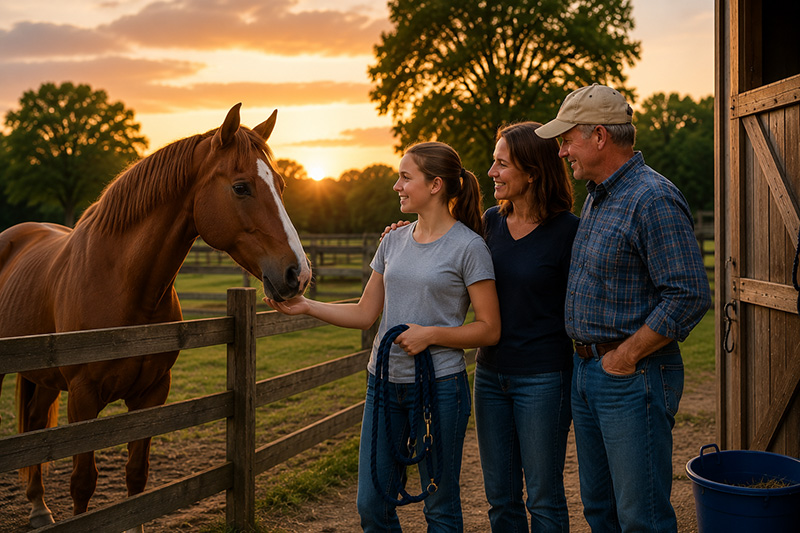 A horse doesn't care whether your bucket is expensive.
He doesn't care whether your grooming tote matches your halter.
He doesn't care whether your barn is fancy.
What he notices is consistency.
Fresh water.
Regular feeding.
Gentle handling.
A familiar voice.
A person who shows up every day.
The supplies help make horse ownership easier, but the relationship you build with your horse is what makes it rewarding.