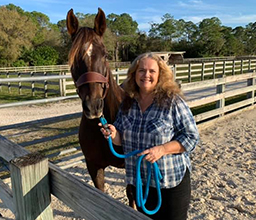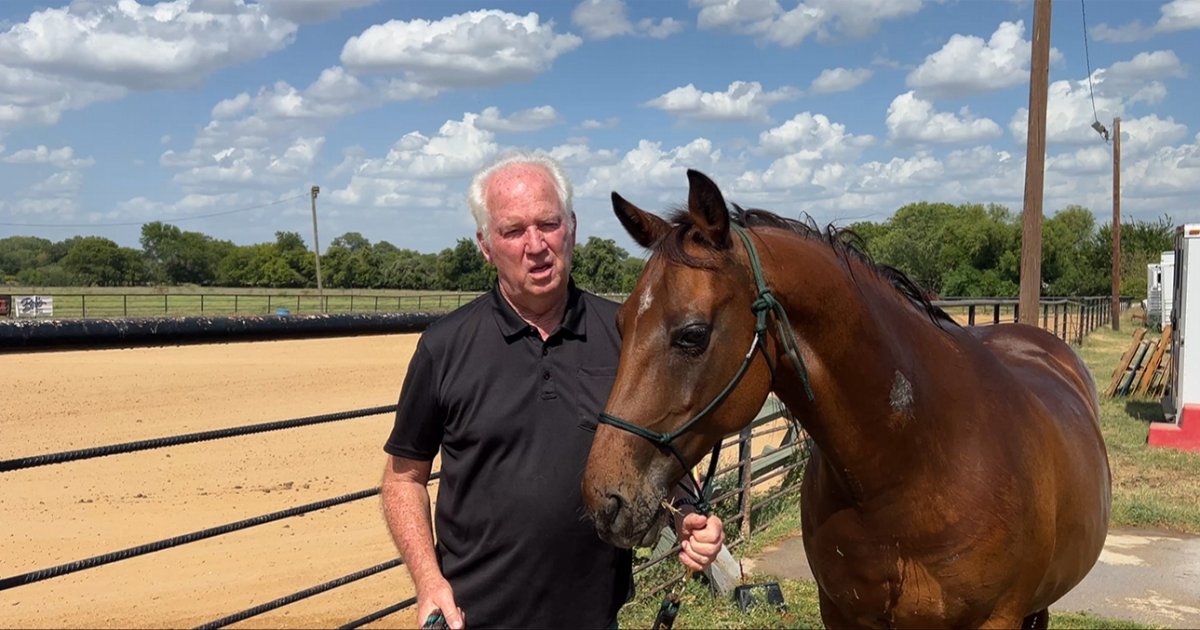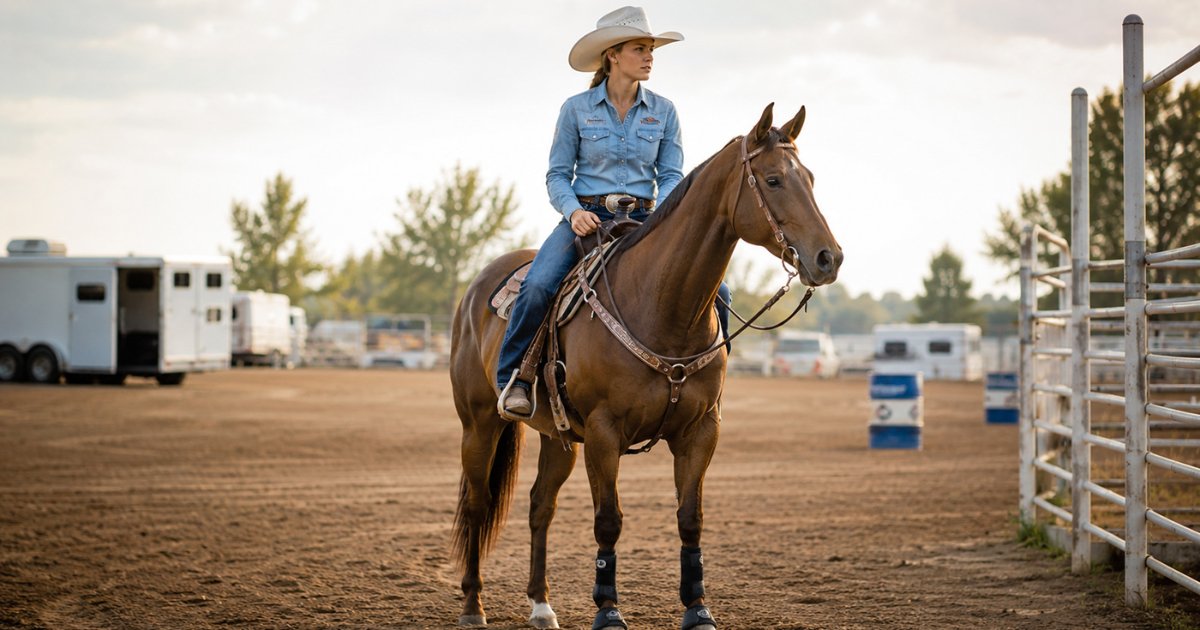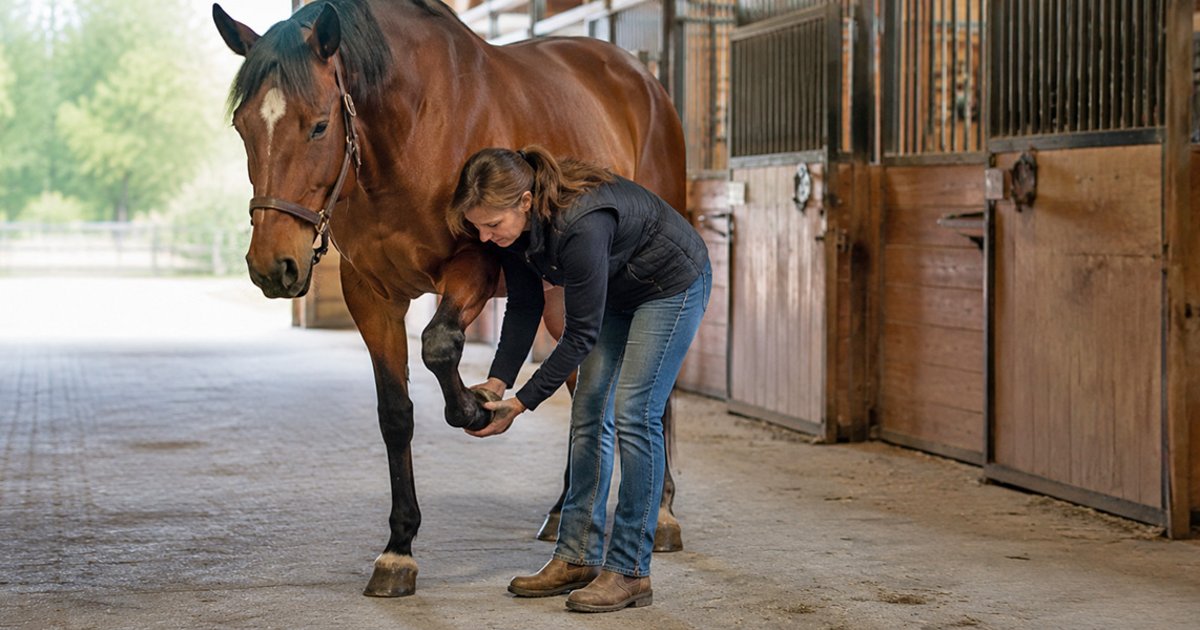


A horse can be sound one day and ouchy the next. A fresh trim, a week of rain, a long ride over gravel, and suddenly the same animal is picking its way across the yard like the ground is made of marbles. The sole and frog are the horse's first line of defense, and when they are thin, soft, or shelly, every step becomes a gamble. Durasole was built for exactly that horse.
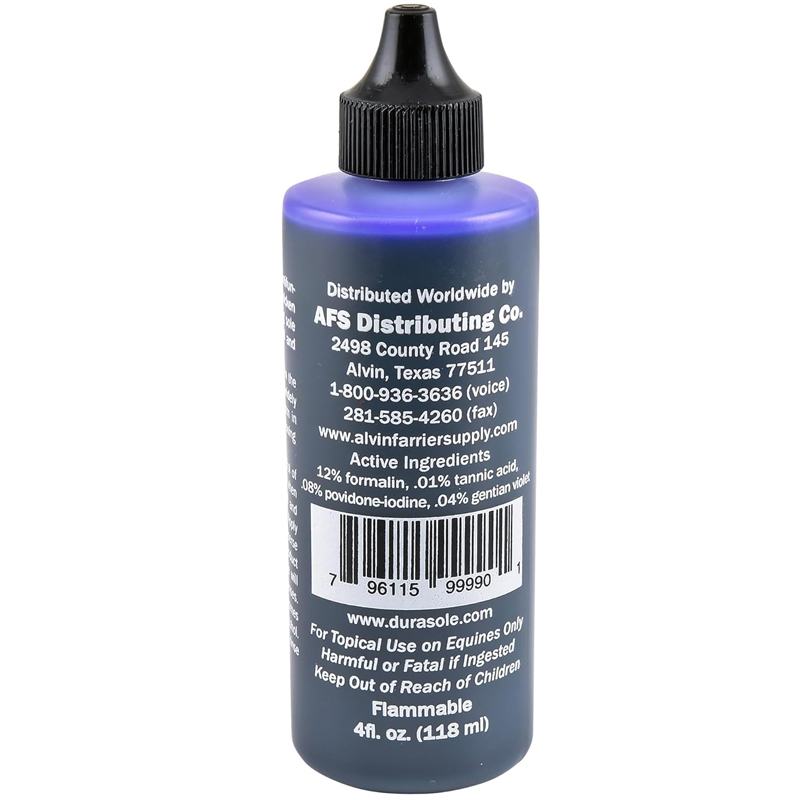
Durasole is an aldehyde-based sole dressing that has been hardening equine soles and frogs since 1978. It does not coat the foot in oil or seal it under wax. Instead it works inside the exfoliating sole and insensitive frog, where it crosslinks the proteins and swells and thickens the cell membranes. The result is a denser, tougher layer of horn that the maker describes as a living pad — protection the foot grows for itself rather than something strapped on top of it.
The active blend — formalin with small amounts of tannic acid, povidone-iodine, and gentian violet — acts as a fixative. It disables the enzymes that break down the exfoliating sole and frog, and it binds the smaller proteins of that horn into larger, more stable molecules. Farriers can feel the change happening: after a few applications a wire brush starts to skid across the sole instead of biting into it. That skid is the sole hardening. Because Durasole is not oil-based, it firms the foot up without drying it out, so it can be used on chronically thin-soled horses over the long haul.
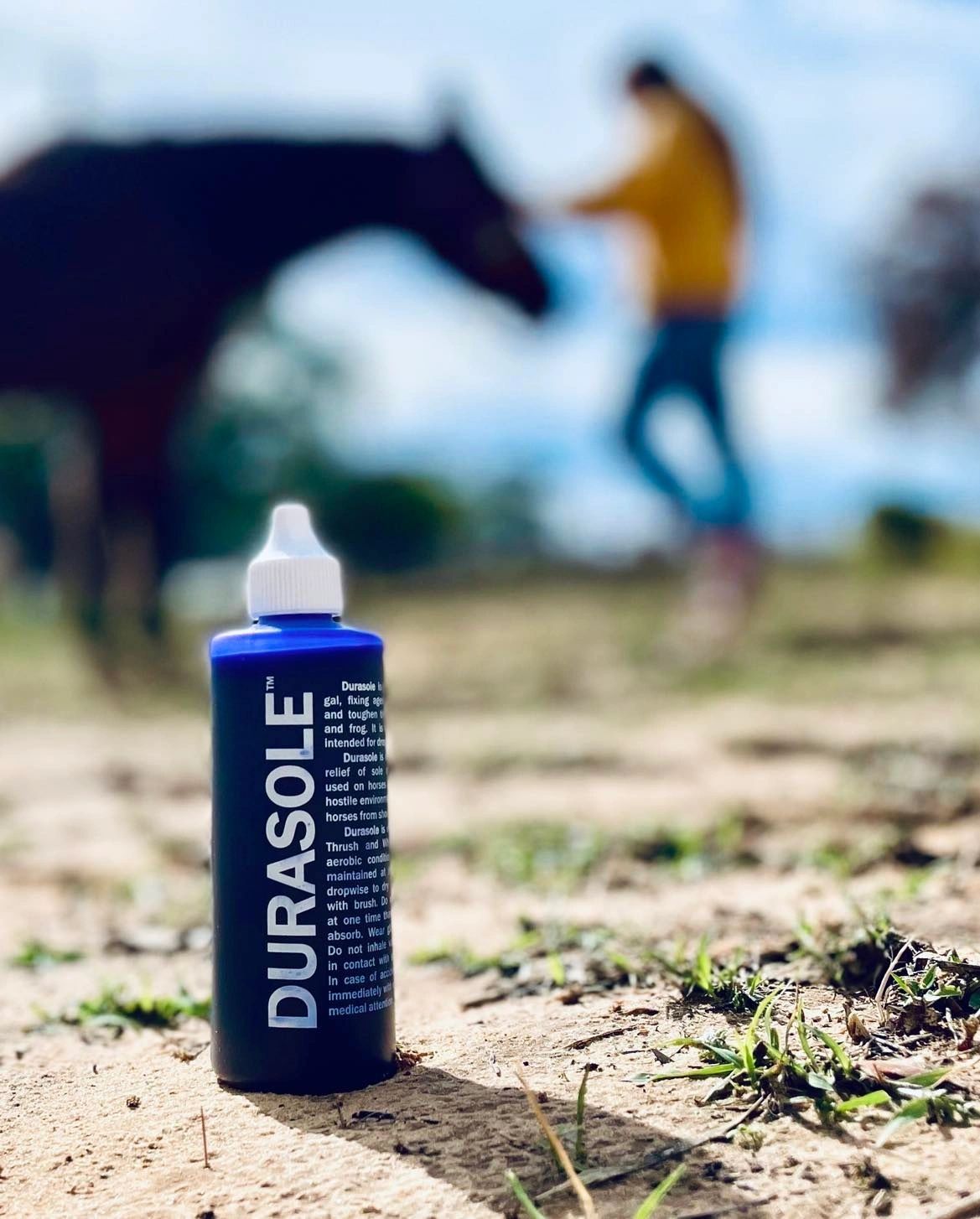
If your horse is tender-footed after a trim, sore the morning after a hard trail ride, or walks gingerly once the paddock turns to mud, those are the textbook cases. Durasole is reached for on thin or weak soles and frogs, on horses transitioning out of shoes and going barefoot, and as part of managing thrush and white line disease, where its iodine component works against infection in the soft tissue. It has earned its place across racing, showing, eventing, rodeo, endurance, and polo barns, and it travels just as well in a backyard tack box as it does in a professional farrier's truck.
Start with a clean, dry foot: pick it out, give the sole and frog a vigorous wire brushing, and make sure the surface is dry. Then apply Durasole dropwise and work it in with an old toothbrush or brush until the sole and frog darken. A typical toughening schedule runs twice daily the first week, once daily the second week, then twice weekly to maintain. Horses coming out of shoes get a heavier early protocol, tapering down over about a month.
As a standing habit, many farriers brush it on at every trim or shoeing to stay ahead of thrush and keep the sole tough. Keep the product on the sole and frog only, below the hairline, wear gloves and eye protection, and don't breathe the vapors — it is a topical equine product, harmful if ingested, and should be kept away from children.
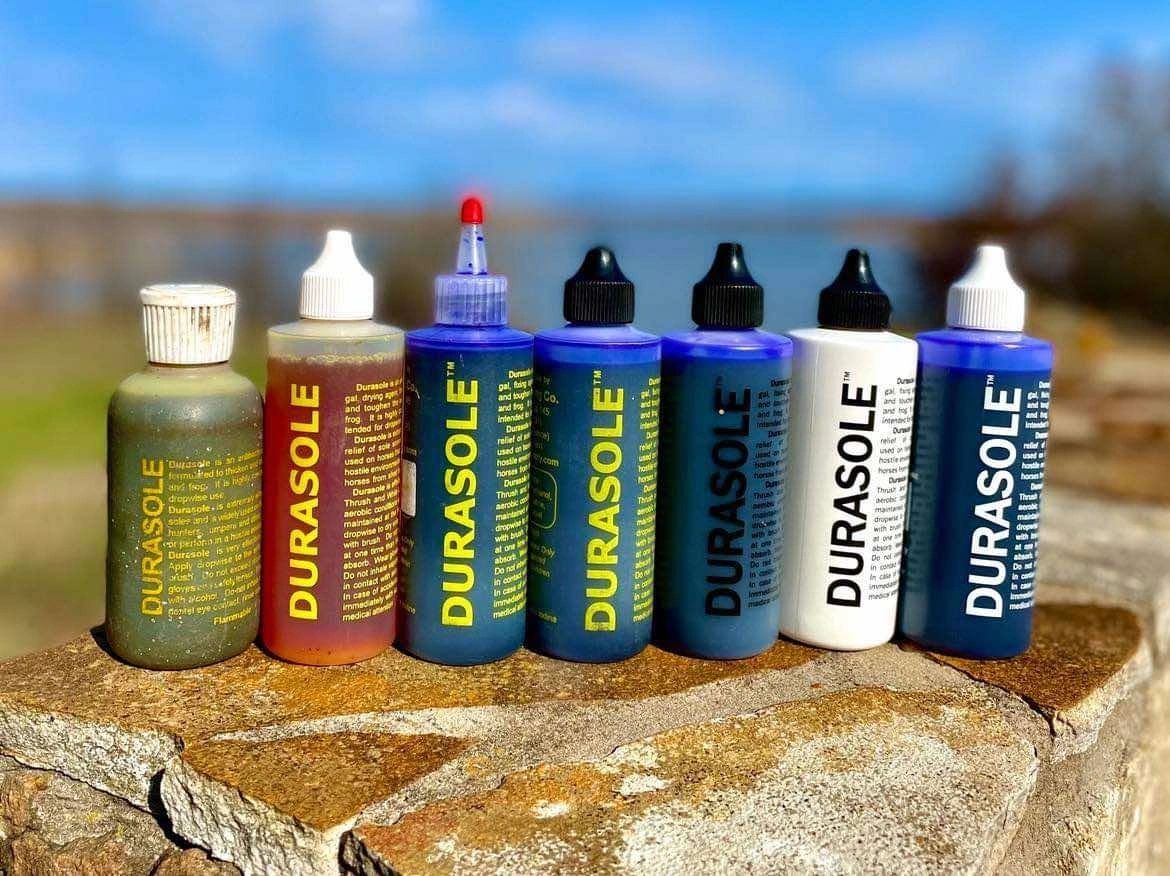
Durasole is distributed by Alvin Farrier Supply (AFS Distributing Co.) out of Alvin, Texas, a hoof-care supplier that has kept this formula in farriers' hands worldwide for decades. It carries no copper naphthenate and no essential oils, just the working chemistry that hardens horn without sealing or souring the foot. For the owner of a flat-footed trail horse or the professional managing a string of thin-soled performers, that long track record is the point: a sole hardener that has been proven, foot by foot, since 1978.
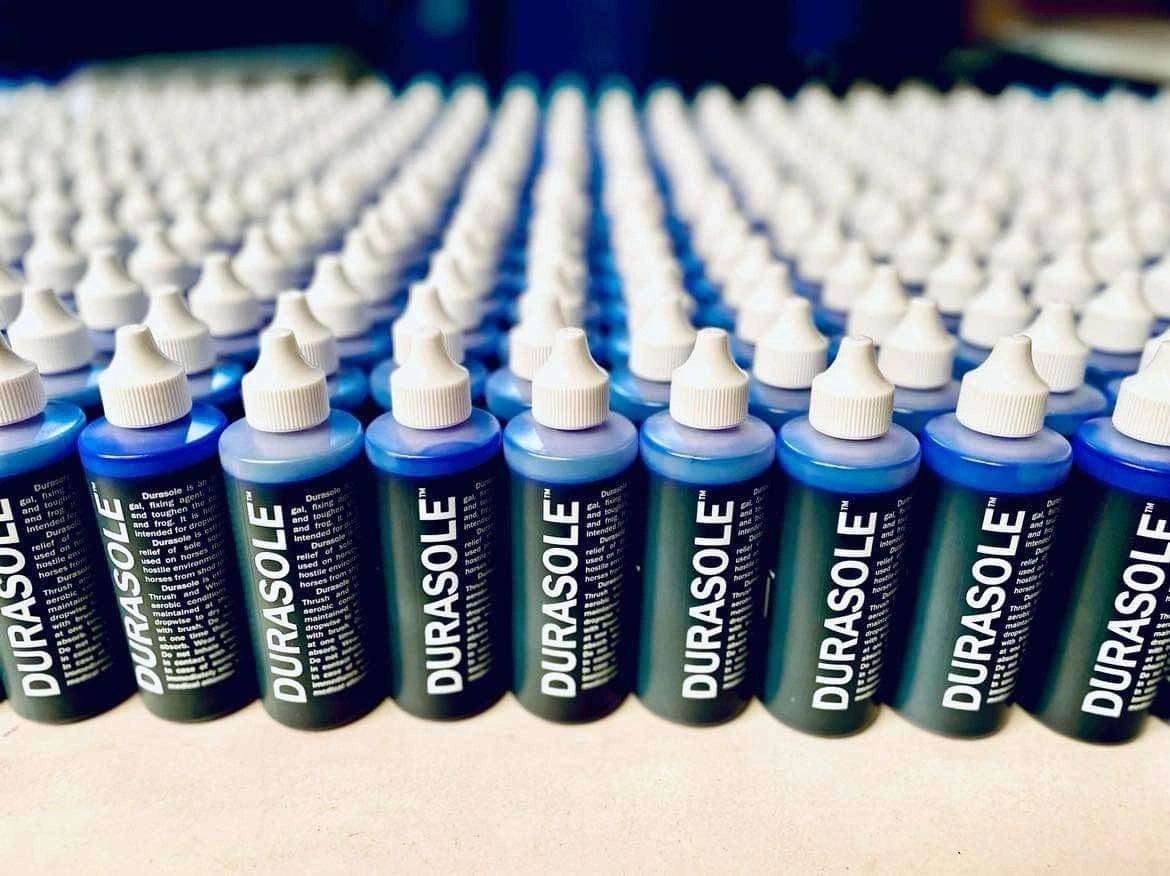
Durasole is an aldehyde-based topical sole dressing. The active ingredients are formalin (the working hardener) with small percentages of tannic acid, povidone-iodine, and gentian violet. It contains no copper naphthenate and no essential oils.
Rather than coating the hoof in oil, Durasole works inside the exfoliating sole and insensitive frog, crosslinking proteins and swelling and thickening the cell membranes. That builds a denser, tougher layer of horn — a living pad — while keeping the foot's natural moisture balance, so it is safe for long-term use on chronically thin-soled horses.
Reach for it when a horse is tender-footed after a trim, sore following hard rides over rock or gravel, or ouchy after wet, muddy footing. It is also used on thin or weak soles and frogs, during barefoot transitions, and as part of managing thrush and white line disease.
Pick out and wire-brush the foot, make sure the sole and frog are dry, then apply dropwise and spread with a brush or old toothbrush until the horn darkens. A common toughening schedule is twice daily for week one, once daily for week two, then twice weekly to maintain. Apply to the sole and frog only, below the hairline.
After a few applications, your wire brush will start to skid across the sole instead of roughing up its surface. That change in feel means the cell membranes of the exfoliating sole are thickening and the horn is hardening into a protective pad.
Yes. Alongside hardening the sole and frog, Durasole's povidone-iodine component works against the soft-tissue infection involved in thrush and is used to help fight and prevent white line disease as part of a regular hoof-care routine.
Because it firms the foot without drying it, Durasole can be used over the long term on chronically thin-soled horses, and many farriers apply it at every trim or shoeing. It is for topical use on equines only, is harmful or fatal if ingested, and is flammable — wear gloves and eye protection, avoid breathing the vapors, keep it below the hairline, and store it out of reach of children.
Durasole is distributed by Alvin Farrier Supply (AFS Distributing Co.) of Alvin, Texas, and has been in use across racing, showing, eventing, rodeo, endurance, and polo since 1978.
About this listing: Product and service details on this page, including any results described, are provided by Durasole by Alvin Farrier Supply. InfoHorse.com verifies the business behind every listing — for decisions about your horse's health, talk with your veterinarian.
Explore more from the InfoHorse.com directory

Explore expert guides on topics related to your business
By Bob Pruitt
By InfoHorse Editorial Team
By Bob Pruitt
By Bob Pruitt
By Ann Pruitt
By Bob Pruitt