

Feral Horse or Domestic Horse: Aren’t They the Same Animal?
Feeding Our Horses- Written By Walt Friedrich for Omega Fields
Feeding a domestic horse well means recreating what nature gives the feral horse: a varied, well-balanced forage diet paired with as much daily exercise as you can provide. Start by having your hay analyzed by a laboratory, then supplement only what’s lacking—a good general supplement is rich in Omega-3s, magnesium, zinc and copper but contains little or no iron, since a horse gets all the iron he needs from grazing. Today’s lightly worked horse rarely needs the extra carbohydrates in grain, and an overload rushing through the digestive system risks serious complications like colic, laminitis and founder.
Feral Horse or Domestic Horse: Aren’t They the Same Animal? Biologically, yes, of course. And yet if either were to find itself in the other’s domain, we’d truly have a stranger in a strange land. Every horse is either wild/feral or domestic, and though the biology and appearance are identical, the lifestyles are completely different. We’ll refer to American ferals in what follows, though much of their condition is mirrored in the world’s true wild horses.
We, in America, can thank the Spanish of 500 years ago for reintroducing the horse onto this continent after an absence of tens of thousands of years. Columbus brought several dozen domestic horses with him, leaving them on the island of Puerto Rico when he returned to Spain, so they might reproduce and, later, serve future Spaniards in quest of wealth on this continent. Those explorers and gold-seekers used them quite handily.
Thus, over time, they found their way to northern South America and Central America, ultimately into Mexico, thriving everywhere on their journey. Of course, there were escapees into wild country, notably into what is now southwestern United States, where the fugitives did what horses do – they organized themselves into bands and continued to thrive, but without aid from humankind.
These were the progenitors of the modern feral western mustang. The “training” they had received while in captivity was quickly forgotten, as they gained competence in the free but dangerous lifestyle of American ferals. Learning literally “on the run”, over time these magnificent creatures thrived as a transplanted species, developing into very large herds with distinct social orders.
Then, as fate would have it, the tables turned somewhat as our West gradually became populated. Settlers tapped this now-vast resource for animals that provided transportation as well as labor – and there we were, with domestic horses as part of our lives, but with a twist. Our society lived closely enough with both domestic and feral horses that we could easily recognize their differences in lifestyle and behavior.
Good thing, that; by bringing horses into our families in a very real sense, we are easily able to compare them with their feral counterparts. Very convenient – but by taking him from his natural environment, we also take on the responsibility for his well-being. It’s a huge responsibility, since the Caretaker of the ferals is Mother Nature herself, who can do a much better job of it than we can. Fortunately, when we hit a snag, as we often do, we can look across the way and maybe see how Nature does it.
Many of those snags we hit sort of come with the territory. The life of a feral is rather simple, and the needs are generally rather easily met. For instance, as grazers, food for feral horses consists primarily of growing plants, but stands of growing plants are often scattered in our western wilderness, causing feral herds to move constantly in quest of suitable and sufficient sustenance.
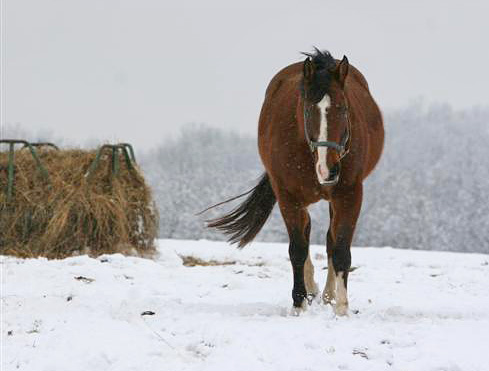
It is estimated that ferals typically move 20 or more miles every day as they seek out food. Sounds like a tough life, but that’s what it makes these horses…tough. That’s a lot of exercise, it keeps them healthy and fit, burning the energy coming from the sugars in the grasses. Pretty simple – eating a variety of growing plants, lick at mineral deposits, drink fresh water, and move, move, move. The entire species’ success is based upon that simplicity.
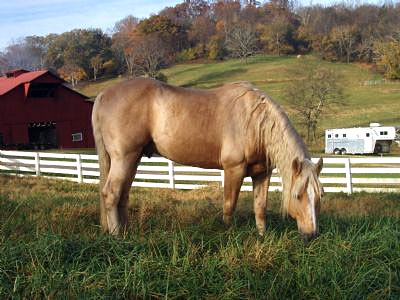
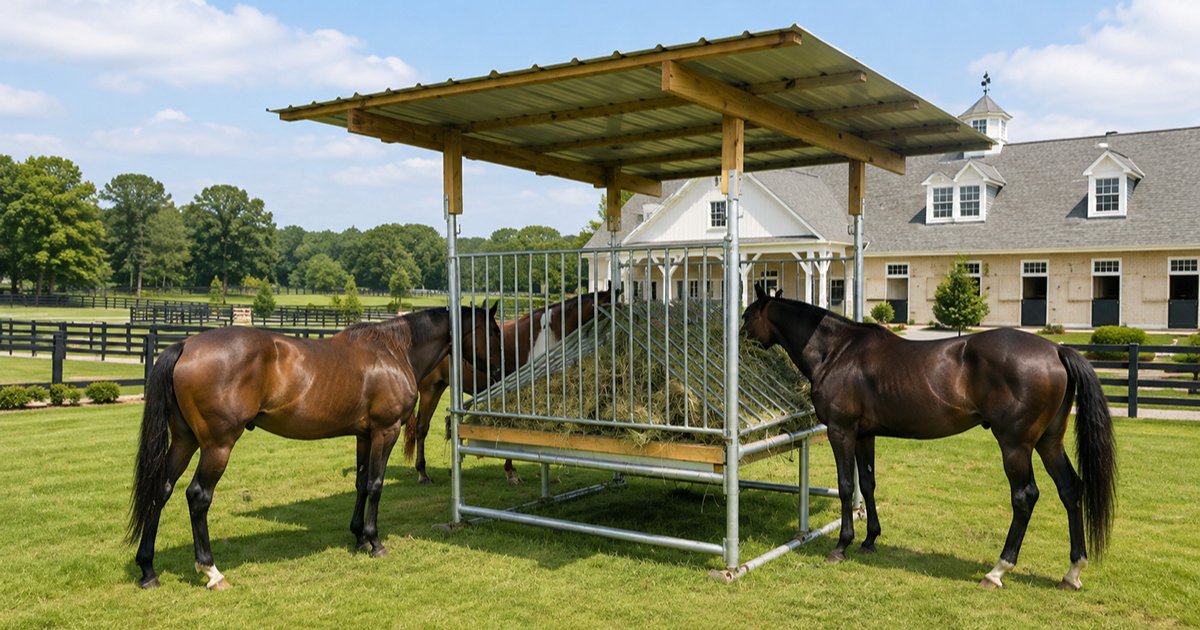
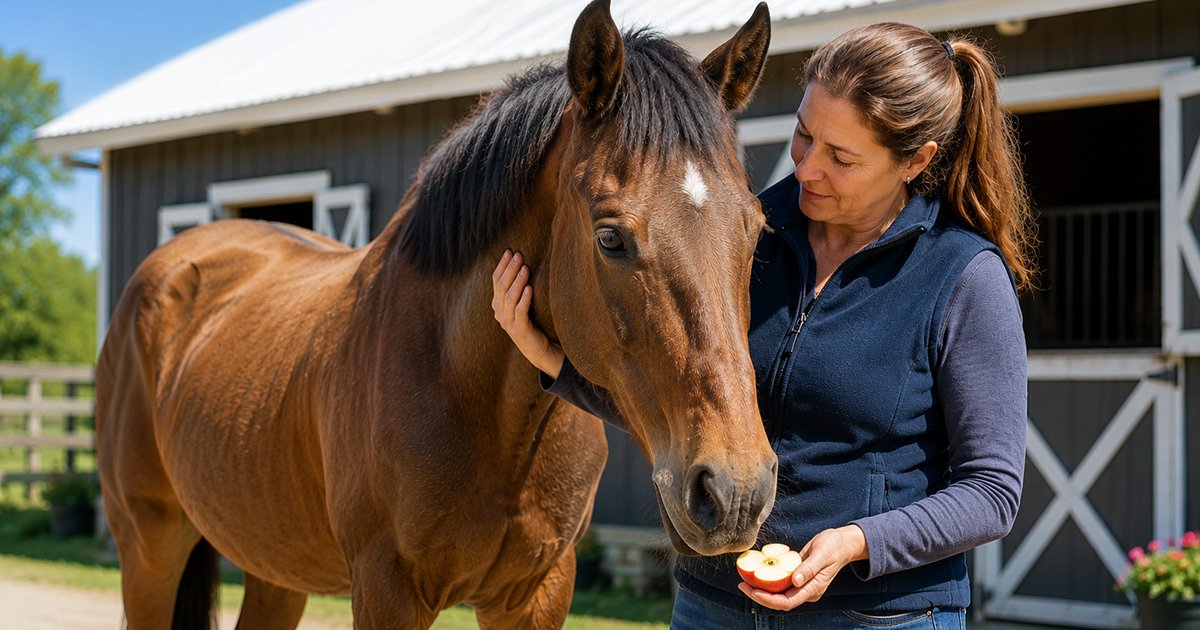
But now consider their brothers, the domestics. Rather than in the freedom of the open range, many live fetlock-deep in relatively lush grass in our pastures, and in addition, we provide hay and grain. So they typically have little problem getting food, and they need do practically no work to get it.
What about shelter?
For the feral, it’s whatever and wherever he can find it – a stand of trees, thick brush, a rockpile to act as a windbreak. Now, that’s “roughing it”. The domestic, on the other hand, often has a stable with stalls, or at least a run-in shed
Food and shelter, the basics of life. So it would appear that the advantage goes to the domestics.
But not so fast, there’s a price to pay for those benefits. The combined results of Mother Nature’s nurturing and their own genetics supports the ferals’ ability to survive and prosper in their simple but sometimes harsh reality, and Darwin’s survival of the fittest – natural selection, actually -- precept keeps the gene pool healthy. Domestics, however, often live their privileged lives within the confines of a fence. A horse has evolved to move, almost constantly, and with the fenced-in restriction, it’s up to his humans to see that he gets some work – but rarely 20 miles per day!
The less-fortunate domestic finds himself living in the confines of a stall for much if not all of the time – this poor fellow misses not only movement, but also fresh air and sunshine, and, importantly, the ability to keep something in his stomach all the time by grazing. Now, who would think that an empty stomach can lead to an ulcer? Yet that seems to be the case; a stall-bound domestic, unable to feed sometimes for hours, compared to a feral, grazing a little all the time, is much more likely to develop ulcers. It is claimed by some that gastric ulcers are very common in domestics, often going undetected or undiagnosed, to the horse’s detriment.
All horses are created, designed and built to eat a variety of growing plants, and thrive on them. Grain never was on his original menu – yet it’s standard for most domestics, largely, some believe, out of habit. When a horse pulled a plow all day, he needed more energy than forage provided, and grain – carbohydrates -- filled the bill. But today’s typical domestic, whose biggest workload amounts to carrying a rider from time to time, rarely needs help from extra carbs. And when an overload rushes through his digestive system and into his cecum, he’s in danger of serious complications, like colic, laminitis, founder.
The natural diet of a feral is rather nicely balanced, thanks to the variety of plants he ingests along with the mineral licks he visits for that extra “punch”, and he takes in water untampered by civilization, then tops it off with constant exercise. The result is a naturally healthy horse, rarely afflicted with common ailments of domestics, such as colic, ulcers, laminitis, founder, navicular disease, Cushings, Insulin Resistance, even rain scald, just to scratch the surface of a long list.
Though lacking the benefits of a free lifestyle, domestics can do almost as well as long as they are properly fed and cared for. Grazing the same variety of grass every day, eating the same type of hay, hardly qualifies as a well-balanced diet, resulting in horses “old” before their time.
What can we do about it?
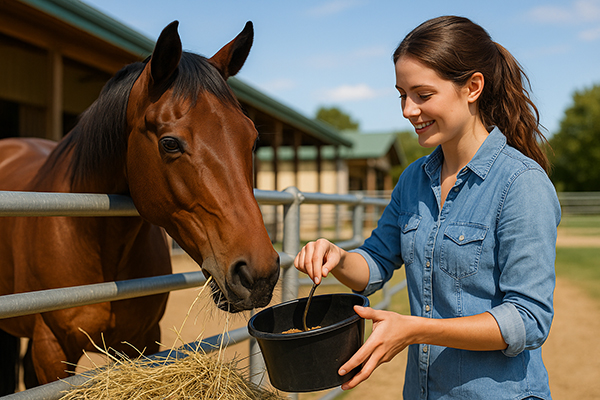
It’s not rocket science -- feed healthy and well-balanced diets, and ensure as much exercise as we can provide. The exercise part is easy and fun for both ourselves and our horse – riding! -- and get him out of his stall and into the field as much as possible. The diet part means back off on the store-bought feed, then take that first, giant step: get his hay analyzed. Armed with that list of nutrients he takes in, we can supplement what’s lacking easily. But be selective, and read the labels carefully. It’s not just what’s in it, how much of each nutrient and how they balance is equally important.
A good general supplement will be rich in Omega-3s, magnesium, zinc and copper, but contain little or no iron (the horse gets all he needs from grazing) – these minerals are often deficient in pasture grasses and hays, but they are vital for good equine health. One of the best such supplements is Omega Fields’ Horseshine.
There are many laboratories that will analyze your hay. Contact your local Ag Extension for names. One of the best is Dairy One in Ithaca, New York (www.dairyone.com).
There is a great little book you can buy or borrow from your library – it’s entitled, “Beyond the Hay Days”, written by Rex Ewing. It’s an excellent, easy-to-read reference on equine nutrition. It belongs on your shelf for quick reference if you’re serious about feeding your beloved equine companion properly. It’s available at Amazon (www.amazon.com – do a search on the home page) as well as through many book stores.