

Slow feeding…. What it Means for the Health of Your Horse.
Slow feeding regulates a horse’s intake so it eats slower and more continuously, preventing long stretches with nothing to eat or do—a pattern that simulates natural browsing and foraging and keeps a constant flow of digesta moving through the digestive tract, a major factor in stabilizing the hind gut. It suits all horses, but especially those that are metabolically challenged with insulin resistance or Cushing’s disease, prone to eating too fast, stabled or shipped for long periods, recovering from illness, or exhibiting behavioral vices.
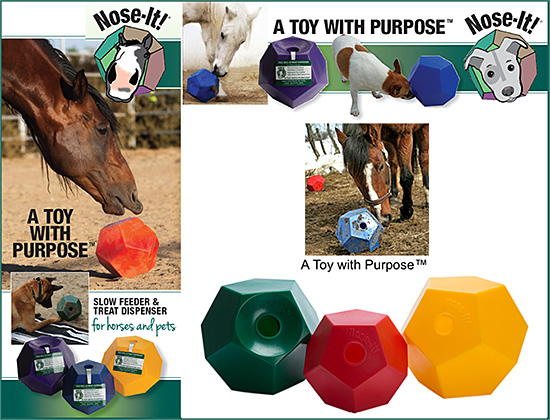
Systems range from grated hay tubs and durable hay bags to slow grain feeders like the Nose-It!, whose patented twelve-sided design dispenses small rewards while providing much-needed mental stimulation.
Though it’s not really anyone’s fault per se, today’s modern horse keeping practices have unfortunately forced horses into sedentary lifestyles where free ranging and getting plenty of exercise foraging for foodstuffs has essentially become a thing of the past. Article by Dr.
Amy M Gill forRS Bioceuticals
To compound the problem of too little exercise, many horses are often fed excessive amounts of concentrated rations and high calorie, nutrient dense forages. Horses have evolved by nature to store energy (fat) and nutrients in times when feedstuffs are in abundance in order to survive when food is sparse. This may well be protective under conditions of feast-and-famine where efficient fat deposition is advantageous. While this survival mechanism may have been effective keeping horses alive during the ice age, it is wreaking havoc with the physiological well-being of the twenty first century horse!
The modern, domesticated horse does not face winter without food anymore and
some horses, when presented with an abundance of feeds on a regular basis, quickly develop an obese stature, especially when coupled with limited physical activity. Many of these horses have then become resistant to the effects of Insulin, the hormone released from the pancreas in response to an increase in blood glucose following the ingestion of a starch meal. Insulin resistance and aberrant carbohydrate metabolism play a role in disorders such as Cushing’s disease, Insulin Resistance, Laminitis, Recurrent Exertional Rhabdomyolysis, and Polysaccharide Storage Myopathy.
These disorders may be directly linked to the inability of certain individuals to metabolize large amounts of starch over long periods of time. Over time, they all have deleterious effects on the health of the horse and in most cases require intense medical and nutritional intervention to avoid premature death.
Nutritionists are now recommending that most horses be fed a diet low in soluble carbohydrates, high in fiber and lower in calories. To achieve this, many horses are now offered grain-free rations and lower quality forages that can be consumed in higher amounts and more continuously for both the mental and physical health of the horse. These contemporary diets have helped immensely with cutting down on calories, starches and sugars, but another problem still persists.
Because these feeds are so concentrated and are fed in large meals, usually only once or twice daily, many horses are eating too much food, too fast, and all at once. By gobbling up the entire ration in a short period of time, they spend the rest of the day with nothing to eat, or do…which can lead to stables vices and many physical problems that stem from an unhealthy hind gut.
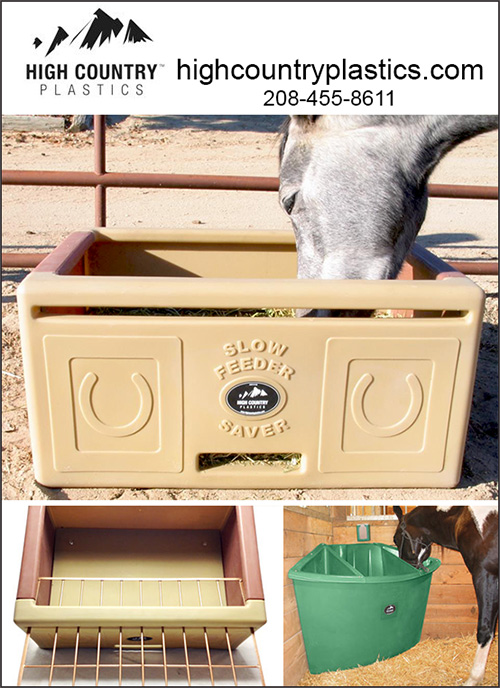
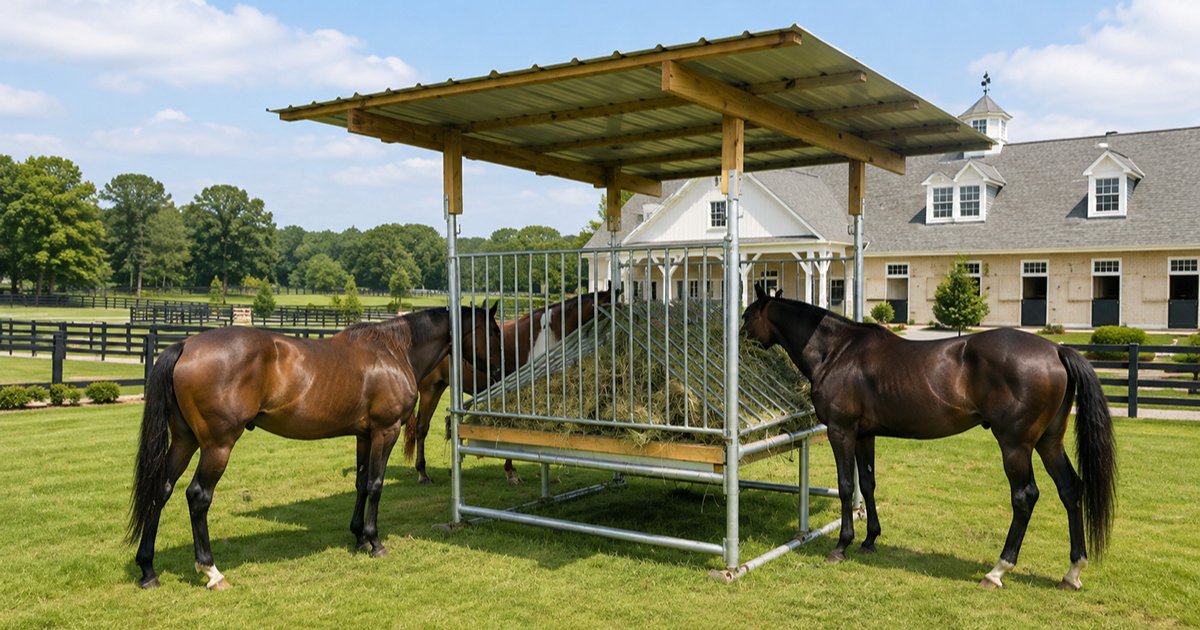
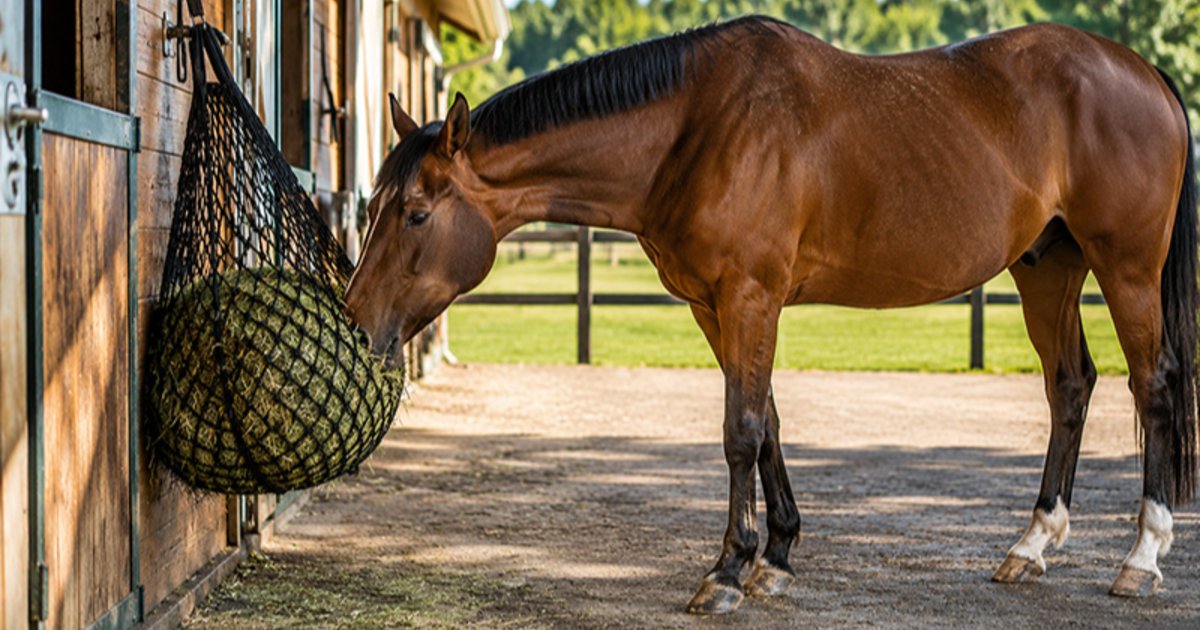
Slow feeders are popping up in the market place and are certainly one way of forcing a horse to eat slower and more deliberately. Many variations of hay feeding systems have become available, from tanks or tubs with grates and small holes that the hay sits under, to large durable bags that can hold a few flakes or entire bales. Many people have devised their own systems that work well in their individual situation. However, it is achieved, slow feeding forage helps regulate feed intake and prevent horses from spending long periods of time with nothing to eat or do.
But what about slow feeding of the concentrate portion of the ration? Years ago, a couple of mechanized grain feeders came on the market. They were programmable to feed small amounts multiple times per day. The concept was brilliant but unfortunately, may have been before its time. The price of the technology probably did not help create lift off in the equine world either. Nowadays however, the concept of slow feeding grain is starting to take a hold in barns across the globe.
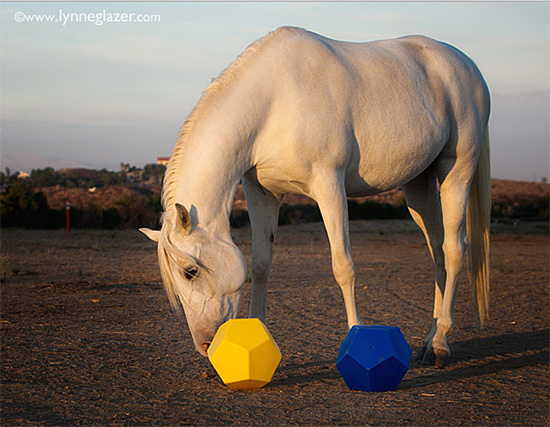
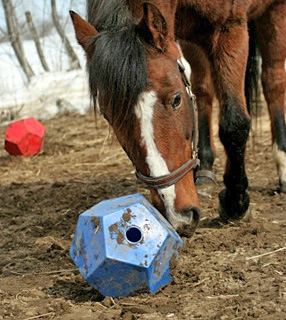
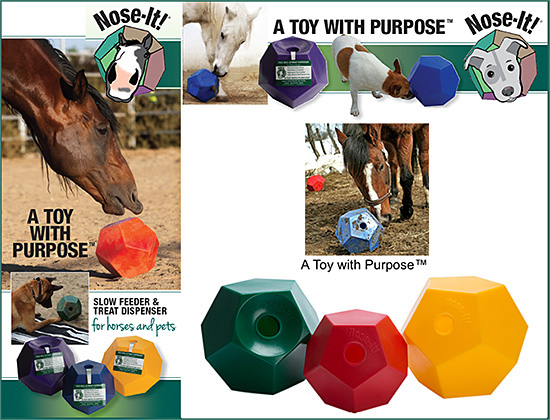
One particular slow grain or treat feeder, the Nose-It! helps not only deliver feed in small amounts but also provides much needed mental stimulation for the stalled or paddocked horse. The unit is not round, it has a unique and distinct patented twelve (12) sided "Slow-Roll ONE Edge AT A Time™" design so the problem of it rolling out of bounds is minimized. The ability of the horse to push the Nose-It™! and receive a small grain or treat reward is not only mentally stimulating but also simulates natural browsing and foraging patterns. This feeding pattern will help keep a constant flow of digesta in the digestive tract which is a major factor in maintaining stabilization of the hind gut.
So which horses should be fed with “slow” feeding methods? All of them, but especially horses that are: 'Metabolically challenged with: Insulin Resistance, Cushing’s Disease, Tying-up, muscle disorders and intolerance to exercise 'Prone to eating too fast and risk choking on feedstuffs 'Stabled or paddocked for long periods of time 'Shipping long distances 'Recovering from illness or surgery 'Require a lot of feed to maintain body condition, such as show horses, race horses, competitive driving and trail horses 'Horses that exhibit behavioral vices 'Young, growing horses and broodmares that must consume a lot of feed for high rates of growth Does your horse need a slow feeding system?