

Hay or Cubes?
That is the Question
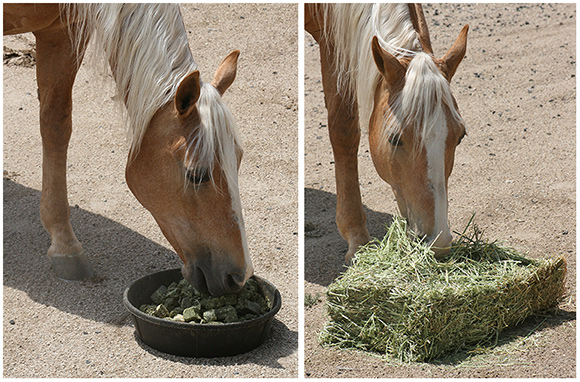
With Richard Winters Horsemanship
Hay cubes—regular hay chopped and compressed into bite-size pieces—are a practical alternative to baled hay, sold by the pound in straight alfalfa or alfalfa blended with oat or grass hay, with the minimum protein level printed on every bag. Because moisture is monitored during processing, mold is not a problem and there is little to no dust, and cubes deliver a consistent amount of feed at every meal where hay flakes vary in size and weight. As for the common worry about choke and colic, horseman Richard Winters watched roughly one hundred horses eat cubes over multiple years without a single choking episode he was aware of, and colic was rare.
I travel extensively throughout the United States, with my horses, conducting horsemanship clinic's and seminars. It's not unusual for us to load up two or three horses and be gone for two months at a time. Keeping my horses on a consistent diet and feed regiment can be a challenge. I load up as many bales of hay as I can before leaving home. However, after a couple weeks I'm running low and need to find a new source of feed and I’m thousands of miles away from my original hay source. With that in mind, I've done some research and have made a decision to share this information with you.
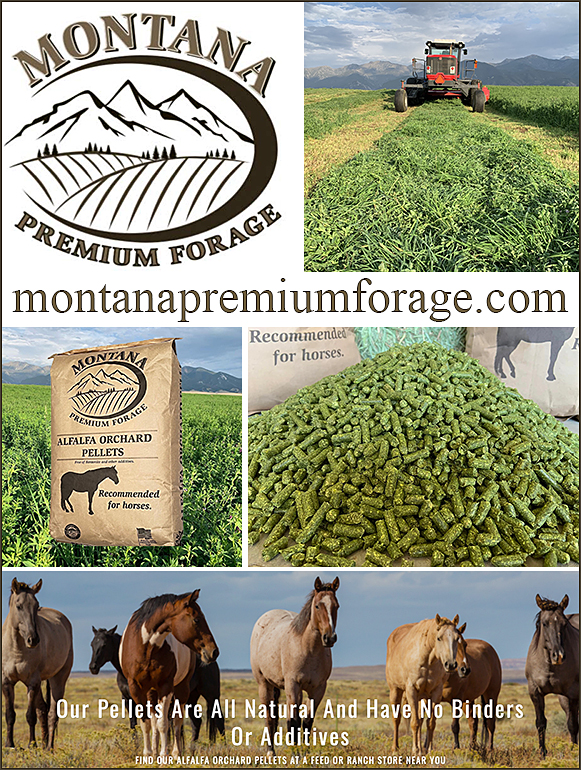
Over the years, I have literally fed hundreds of tons of baled hay. Starting this month, I'm switching over to hay cubes. Hay cubes are simply regular hay that has been chopped and compressed into small bite-size pieces. Hay cubes can be purchased by the bag or in bulk. They are often available with straight alfalfa or a blend of alfalfa and oat or grass hay. The minimum protein level is printed on each bag allowing the consumer to decide what forage mix is appropriate for the horses they feed.
When I'm on the road, finding hay that is consistent with what my horses have been eating is always a challenge. Now, when I am three states away from home, and out of feed, I can go into almost any feed or Tractor Supply store and purchase hay cubes that are very similar to what my horses have been eating. Even at home, it is often difficult to consistently purchase the same type and quality of hay throughout the year. Hay cubes will give me the consistency that I'm looking for.
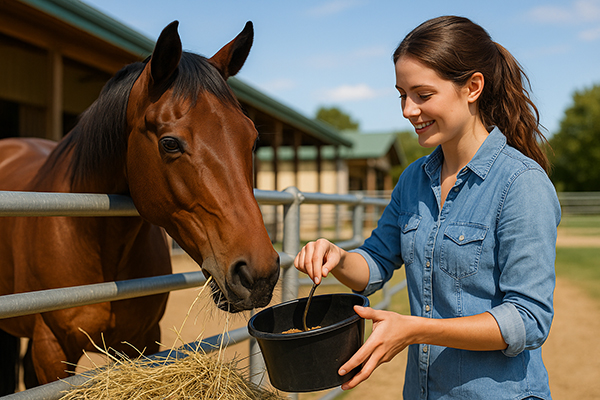
I was first introduced to feeding large numbers of horses hay cubes during my ten years at The Thacher School. Over 100 horses were fed hay cubes twice daily where each young person was responsible for feeding their own horse. A huge benefit of feeding cubes was the ability for each horse to get a consistent amount of feed each time. As you know, baled hay is fed in flakes that vary in size and weight. Feeding two flakes from one bale might mean ten pounds. Two flakes tomorrow might equal fifteen pounds. With inexperienced young people the hay cubes filled to a certain level in a bucket insured consistency for each feeding.
My daughter and son-in-law are professional reined cow horse trainers who also feed hay cubes. Horses are constantly coming and going at their facility. With over forty head of horses, they have had no problem with horses transitioning and doing well with the cubes. Traveling to horse shows throughout the year, they also like the availability of cubes, no matter where the need arises.
Cost-effectiveness is important. I've been concerned that hay cubes are generally a little more expensive per pound then baled hay. However, when I realistically look at all the wasted hay around my haystack, in the stalls, and ultimately in my maneuver bin, I think I'll be money ahead. Even if my horses are good about cleaning up all of their hay, just moving baled hay around for transport and feeding leaves a lot of waste on the ground that gets raked up and ultimately discarded.
No matter how careful I am it seems there's always a portion of my baled hay that gets wet and moldy, especially in the winter months. That's money down the drain. Not only is it costly, it is also dangerous should my horses eat hay that has gotten rain damaged and moldy. Hay cubes are processed in a manner where the moisture level is constantly monitored. Mold is not a problem. There's also little to no dust with the cubes, which is a big plus with my horses.
Hay purchased at the feed store is generally sold by the bale. However, bales vary greatly by weight. I might buy a bale of hay for $18 that weighs 125 pounds. The feed store down the road advertises hay at $15 a bale. That sounds like a better deal. However their hay bales only weigh 100 pounds. This is something you have to watch closely if you're trying to get the best deal. Hay cubes are always purchased by the pound so you know exactly how much you are getting for your money, that's important to me.
People are often concerned about the possibility of choke or colic with horses that are fed processed feeds such as cubes. In my own experience, I observed approximately one hundred horses being fed cubes over multiple years. I'm not aware of ever seeing a choking episode. Colic was also rare. I also looked for research that indicated increased physical problems with feeding cubes. I was unable to come up with any information to validate that assumption.
Now you know my plan of attack moving forward. You might have a feeding regiment that works very well for you. If you're happy with your feeding program, and its results, then there's probably no need to change. If you can relate to some of my experiences, than switching to this alternate feed source might be an option for you as well. This is a major change for us. I would be curious to know your experience.
Richard Winters Horsemanship WintersRanch.com