

Nutrition Tips for Stallions and Broodmares
A breeding stallion should carry a Henneke body condition score of about six or seven and needs, on average, 40 grams of crude protein per mega calorie of digestible energy, with total daily feed running 1.5 to 2.5 percent of his body weight. Broodmares should enter the breeding season with a body condition score of at least five, preferably six, and pregnant mares almost always need a supplement providing major and trace minerals—while tall fescue should be avoided because endophyte infection can cause lack of milk production, abnormal placentas, and even obstructed labor.
For stallions, mares, and growing foals alike, the key is a balanced ration of good quality hay, grain, and supplements.
All horses need the proper balance of vitamins and minerals, but for breeding stock, nutrition is a critical component to producing strong and healthy foals.
Article written by Karen Elizabeth Baril
Breeding Stallions The first thing you’ll want to do before making any nutrition changes is to assess your stallion’s current body condition. Using the Henneke Body Condition Scoring System, your stallion should score somewhere between a six or seven, or slightly higher than normal to be sure he doesn’t get too thin during the breeding season. He should have enough fat to cover his rib. Ribs should not be visible. His withers should be rounded and his shoulder and neck should blend smoothly into his body.
Protein On average, the breeding stallion requires 40 grams of crude protein per mega calorie of digestible energy. Avoid feeding too much protein---not only is this wasteful, but the extra protein will be excreted in the urine, contributing to a foul smell in the barn and the risk of decreased renal function. Your stallion’s total daily feed consumption should total 1.5% and 2.5% of his body weight per day.
Vitamins and Minerals A properly formulated stallion feed will have a balanced calcium to phosphorous ratio. There is no evidence to support that extra Vitamin A or E supports stallion fertility, but we do know that Vitamin E is the primary antioxidant in seminal cell membranes and acts as a major protectant against oxidative stress. Fats-DHA-Omega 3’s There are two common lipids found in semen--- docosahexaenoic acid (DHA---an Omega 3 fatty acid) and docosapentaenoic acid (DPA- an Omega 6 fatty acid).
A recent study at Texas A&M University’s Department of Animal Sciences showed that supplementing stallions with omega 3 fatty acids has numerous benefits. The study showed that omega 3’s increase the number of sperm per ejaculate, increase the motility of sperm, and decrease dead and abnormal sperm. DHA is found in stabilized rice bran, flax seed, and stabilized fish oil.
Your veterinarian or equine nutritionist can recommend a quality supplement.
Energy Think of your stallion as a performance horse, but keep in mind that just like a performance horse, his energy needs vary depending on his breed, his metabolism, his exercise program, and how active he is in the breeding shed.
Broodmares Mares should enter the breeding season with a BCS (body condition score) of at least five, preferably six. Veterinarians warn, however, about the dangers of too high a score. Obese mares can have trouble in the breeding shed. If your mare has spent the winter outside and is on the thin side, keep in mind that most mares tend to lose weight during lactation. Your mare should start with a body condition score above five or above.
A surplus of fat stores can buffer nutritional demands in late gestation and early lactation. After foaling total feed consumption should increase. Some lactating mares can eat between 2.5 to 3.lbs. of total feed (forage and concentrates) per 100lb. of body weight. The actual amount will vary. For example, some mares produce a lot of milk, others produce less. The higher the milk production the higher the nutritional needs of the mare.
Vitamins and Minerals A pregnant mare must consume enough calcium to meet her needs as well of those of the developing fetus. Pregnant and lactating animals will mobilize calcium from their own bones if the diet is lacking. Keep in mind that many forages do not provide enough copper for pregnant mares, particularly in late gestation. Pregnant mares may not need a lot of concentrates, but they almost always need some type of supplement that provides major and trace minerals in adequate amounts.
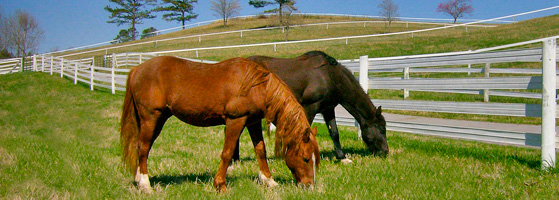
Forage In one study at the University of Kentucky, Thoroughbred mares in mid to late gestation were able to maintain weight and fulfill their protein requirements on forage alone. The mares were fed high quality alfalfa hay. If you’ve got an easy keeper, consult your vet before adding concentrates—you may only need to add a supplement. A mare getting early maturity grass legume mix hay will usually need fewer pounds of concentrate than a mare getting late maturity grass hay.
Do not feed tall fescue which can be infected with an endophyte that produces compounds that affect pregnant mares. Common signs of tall fescue toxicosis include lack of udder development and milk production, abnormal placentas, and even dystocia (obstructed labor) and foal morbidity.
Foals; from Birth to Weaning.
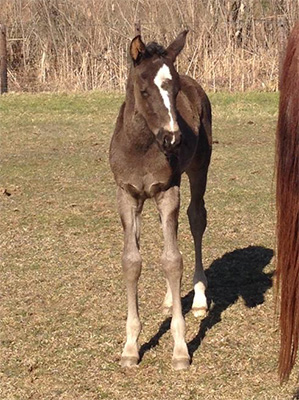
When it comes to feeding the youngsters, think balance. It’s almost impossible for a foal to obtain all the nutrients he needs from dry forage alone. A common observation of foals kept mostly on pasture is slow growth in winter followed by rapid growth in spring when pasture increases and weather becomes mild. But, those kinds of uneven growth rates put the foal at risk for developmental orthopedic diseases. Achieve a moderate, even paced growth through feeding good quality forage and a concentrate designed for your youngster’s growth stage.
Keep in mind that as early as 10 weeks of age, mare’s milk alone may not be enough to meet your foal’s nutritional needs. Always consult your veterinarian or equine nutritionist on when to add concentrates. Use a weight tape to help you estimate your foal’s growth and re-assess weekly. If you do feed concentrates be sure to divide rations into three or four small feedings and feed each foal separately.