

Slow Feeding for Better Horse Health
How to make your horse happy mentally and physically with automatic multiple horse feedings!Article from Equine Automation
Slow feeding means spreading a horse’s daily allowance over many small meals—eight or more feedings a day instead of the typical two or three—because horses are grazing animals built to nibble all day long. Small, frequent rations avoid the sugar spike and insulin blast of a dinner bucket consumed in five minutes, and this diet management can help correct, control, or eliminate ulcers, colic, insulin resistance, weight problems, and metabolic syndrome disorders, while reducing vices like cribbing, weaving, and stall pacing.
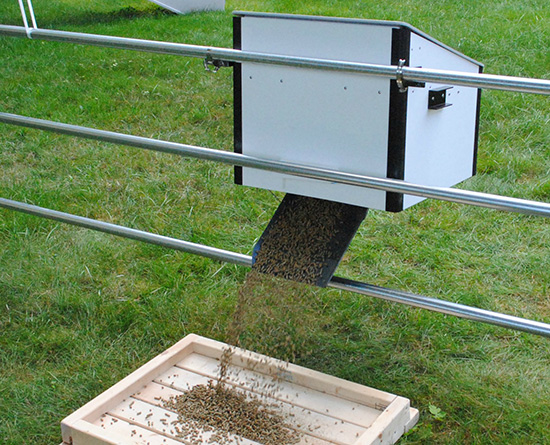
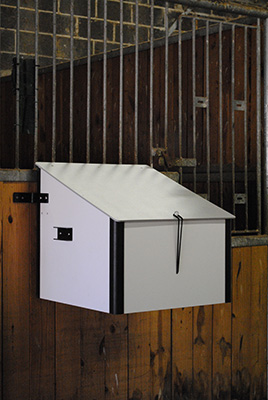
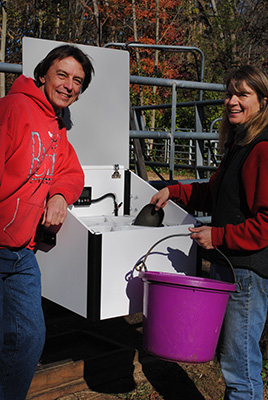
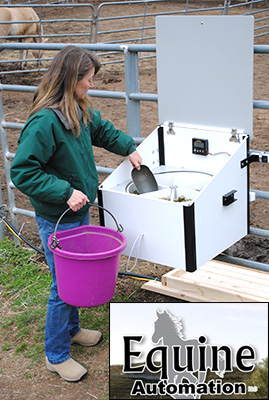
An automatic feeder such as Equine Automation’s CD-X5 delivers those extra feedings on a pre-programmed schedule—day or night—without any change to your current lifestyle.
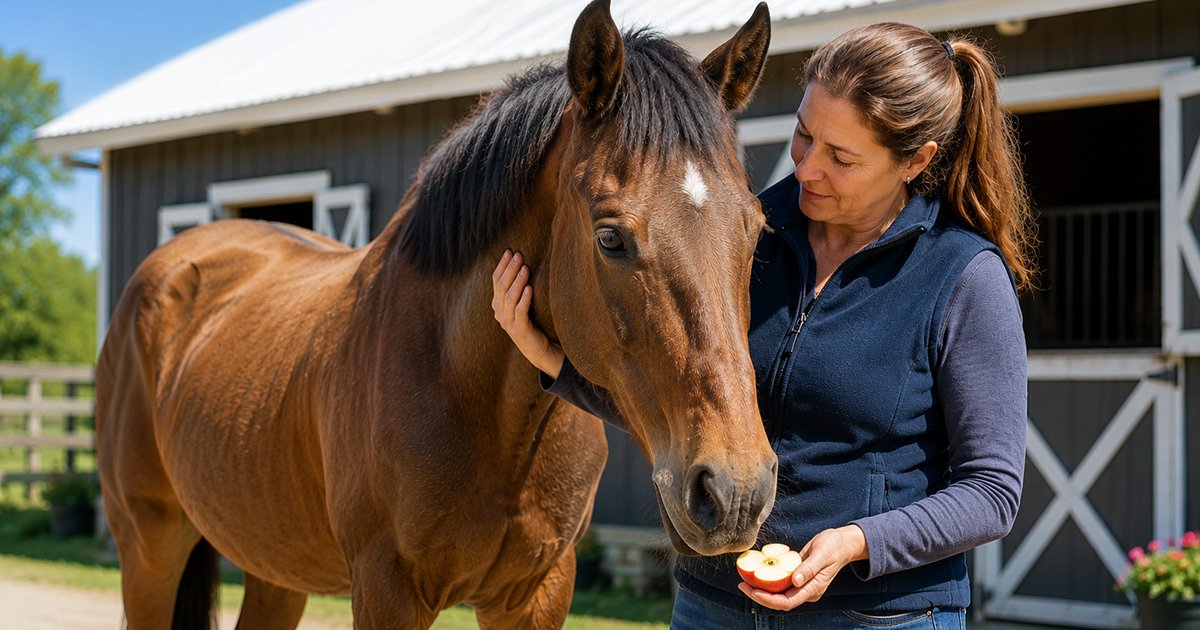
We all want a happy horse, but how do you accomplish that? Toys and ice cream work great for kids. New cars work great for adults. But what event in your horses’ life creates this same emotion? The answer is Food! Your four legged friend gets most excited when you throw that bale of hay in or dump his dinner feed bucket, right? Typically this event only occurs 2 or 3 times a day if you are the average horse owner. Now there’s a way to have that happen 8 or more times a day without any change in your current lifestyle!
The benefits to this type of diet are numerous. They can include one or more of the following. Lets first look at “What makes your horse happy” If you agree it’s food then you can count on him getting happy up to eight times more often a day without any addition visits to the barn from you! This feed regiment also promotes less social anxiety; cribbing, weaving, stall pacing. Horse owners have also witnessed higher quality play time, riding time, improved manners and longer attention spans. The following common health issues are correct, controlled or eliminate; Ulcers, Colic, Insulin Resistance, Weight Gain, Weight Loss and a variety of Metabolic Syndrome Disorders.
Any doctor, for humans or animals, will tell you that as a general rule many small rations are always better for you then 2 or 3 large rations. On top of that horses are a grazing animal, nibblers, pick all day long. Imagine the sugar spike that occurs when your horses dinner bucket is consumed in five minutes or less. The flip side of that is a giant insulin blast, followed by a metabolic crash.
Colic Colic simply means pain associated to the abdomen. As casual as that sounds Colic can lead to your horses death. Many conditions bring on Colic. Most disorders which are responsible for abdominal discomfort can be controlled and regulated by good diet management. Diet management translates to being consistent. You do not need to feed your horse more, just more often, distributing his daily allowance over more feed times. This can make his meals more satisfying, more productive, and minimize the chance of a colic occurrence.
Ulcer How about preventing or curing ulcers? Yes this new diet can do that too. Ulcers begin by the acids from the lower stomach being allowed to pass into the upper stomach. In a normal healthy horse there is a natural cap or barrier created by fresh food intake to separate the two. When this is compromised by a poor feed schedule the acid transferred to the upper stomach will create an irritation and eventually leads to an ulcer which may or may not be reversible.
Senior Care Senior horses bring on a particular set of there own challenges. Many times a special feed is required to help with digestion or to ease chewing demands. When baled hay can no longer be ground up a pre-processed substitute needs to be implemented. The automatic feed regiment we are discussing here lends itself perfectly. It is the only product of its’ kind able to dispense soaked feeds!
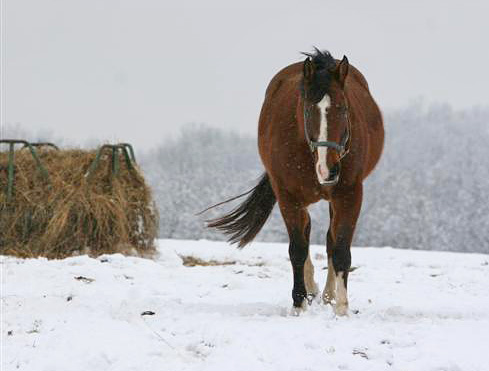
Weight Gain/Loss Since we are talking diet let’s talk weight gain or weight loss. By giving yourself full control of your horse’s intake gives you the ability to control his weight without starving or gouging. By having the ability to mix and match exact portion of multiple types of feed in one feeder you can create a custom diet for any horse is your horse will never know he’s’ on a diet!
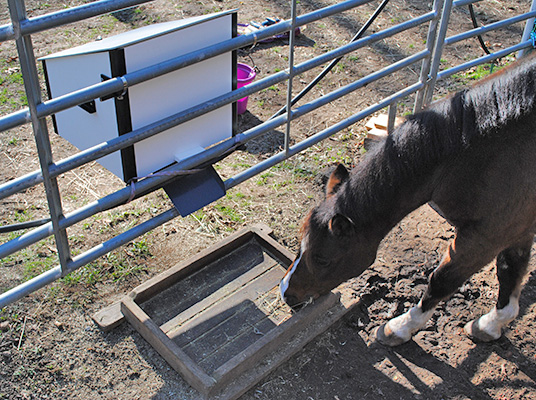
Insulin Resistance Insulin resistance is a condition in which the horse’s body cannot regulate the production of insulin properly. The internet is full of articles to help identify and treat this disorder. No matter what feed, supplement or medication you end up with they will all emphasize small, frequent rations, basically all day grazing.
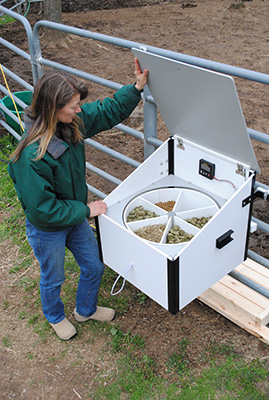
Equine Automation built its first feeder in 2009. The original unit was designed to aid in the treatment of our own horse who suffers from Insulin Resistance and Cushings Disease. At that time we were unable to source a feeder that met the requirements we desired for optimal feeding media and schedules. Now, over four years later, the CD-X5 Feed Dispenser is available for sale as a fully engineered, field tested and proven device for use by anyone wishing to care for their animal in the best way possible.