

FeedingGuidelines for Equine Health
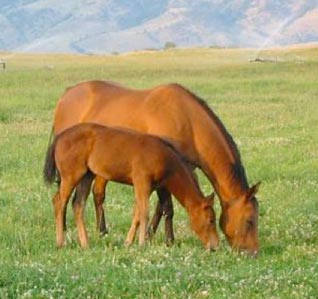
Horses need a diet which maximizes their health, both physically and mentally. Dr.
Kristina Hiney, PhD – Omega Fields® Equine Nutrition Advisor
Feed a horse at least 1 percent of its body weight in forage per day—and ideally closer to 2 percent, so a 1200-pound horse gets about 24 pounds of hay rather than the 12-pound minimum. Because the equine digestive system is built for small amounts of food taken in continuously, avoid leaving a horse with nothing to eat for more than five to six hours, since repeated drops in stomach pH make him susceptible to ulcers. Grain meals should never exceed 0.5 to 0.6 percent of body weight at one feeding—about 6 to 7 pounds for that same horse—with larger rations split into multiple smaller meals.
Horse owners are continually being barraged with information concerning the dangers of grazing, metabolic syndrome, obesity and ulcers. Sometimes it is easy to get lost in the conflicting information and one might almost be afraid to even feed their horse. Hopefully we all know that our duty as horse owners is to feed our horses a diet which maximizes their health, both physically and mentally.
Therefore we will discuss strategies for feeding horses that will optimize not only the health of their digestive system, but keep them mentally sound as well. To understand how best to feed horses, we first need discuss the true nature of a horse prior to its domestication and modern management practices.
Back to the Beginning Horses certainly didn’t evolve on the lush pastures of Kentucky behind beautiful wooden fences. They were plains animals who drifted about continuously looking for sources of food. Horses successfully existed through times of rapid growth of grasses in the spring but also through the dormancy of fall and winter, times of drought etc. Compare that idea to horses who now have laminitis issues when they graze lush pastures! Of course the horse has come a long way since he first grazed on North American plains.
If we examine how horses naturally forage, they are selective grazers who seek out the most nutritious plants at particular stages of growth. Thus they move continuously as they look for plants with greater palatability and nutritional value to the horse. Feral horses will typically spend from one half to two-thirds of their day grazing, moving continuously as they graze. That means horses are meant to eat small nutritious amounts continuously and to travel extensively as they do so.
Studies on grazing horses have shown that typically horses will cover 1-3 miles per day as they forage. Fresh, live, natural forage contains essential fatty acids at the ratio of 4 parts Omega-3 to 1 part Omega-6. Stabilized ground flaxseed contains that same ratio of 4:1 Omega-3 to Omega-6. This makes it an effective natural alternative for horses who are not allowed fresh live forage.
What is Omega-3 important for? Cutting-edge research from facilities all over the world indicates that Omega-3s play a crucial role in maintaining health. Omega-3 fatty acids make up the molecules in the membranes of every one of the billions of cells throughout the body -- especially in all the organs (skin is the largest organ of the body), eyes and brain. They have been found vital in new tissue formation. Their anti -inflammatory properties may be useful in treating immune dysfunctions and arthritis.
Too much grass?
The amount of time foraging is dependent upon the nutrient density of the pasture. The more sparse the vegetation, the more need for grazing time. Imagine wandering on the open plains searching for feed compared to grazing on well manicured pastures in Kentucky! On modern pastures that are managed well and improved with fertilization and seeding, it does not take as much time for the horse to meet its nutrient requirements.
That is why we often see horses managed on pastures which are able to get fat, compared to feral horses. They are also confined to a greater extent, and thus may not be getting the amount of exercise a feral horse would receive. Additionally, many breeds of horses were originally selected from individuals who were more efficient at using feed. Think of our more docile breeds who have an easy going temperament.
This personality type is often linked with the “thrifty” genotype. These guys (think ponies, Quarter Horses, Morgans, etc.) often have more problems with obesity and obesity related issues. These types of horses, especially ponies, are often the most commonly afflicted with pasture-induced laminitis.
What’s going on inside! From what we stated previously about the “normal” life for a horse, the horse’s digestive system is designed to deal with small amounts of food taken in continuously throughout the day. When we look at a horse’s digestive system, this easily makes sense. In comparison to dogs, or cats, a horse’s stomach makes up a relatively small percentage of its entire tract.
The stomach makes up about 10% of the entire tract, while the hind gut of the horse comprises 65% percent of the horse’s digestive capacity. While carnivores are considered to be opportunistic meal feeders (Eat as much as possible when you catch something because you never know when your next meal is coming!) horses are designed to eat small amounts (or continuous steady intake) throughout the day. The rate of passage, or how fast food moves out of the stomach, is fairly rapid.
Two hours after eating, half of the solid particulate matter has passed out of the stomach, with ingested food reaching the hind gut within 5 hrs, while the stomach will be completely empty 10 hours post feeding.
So what does this mean for the horse?
Interestingly, the horse’s ability to salivate is directly tied to mouth movements. In other words, they salivate when they chew. In other species, such as cattle, the salivary glands continuously produce saliva, of which a significant component is sodium bicarbonate. This continuous salivation buffers the rumen (or the foregut) of cattle and helps to prevent a drop in pH (or preventing an acidic environment).
Compare this again to our meal feeders, (dogs, cats, and us), which salivate when we anticipate a meal. This helps the food slide down the esophagus with greater ease. Horses in the natural state have a relatively steady supply of saliva entering their stomach, with buffers included, as they graze throughout the day. However, compare the natural state to what happens when we manage horses in the typical box stall setting.
Horses are provided with feed twice a day, with sometimes a prolonged period of time between their evening meal and the morning feeding. When the horse has not been provided with feed after 5-6 hours, the pH of their stomach begins to drop. This is why feeding strategies can directly impact our horse’s health. With a repeated drop in pH, the horse becomes susceptible to ulcers. Couple this with other risk factors for ulcer development and we can get a pretty unhappy horse. So our first rule of feeding horses is to provide enough forage to prevent the horse from being without anything to eat, ideally for less than six hours but at least avoiding a completely empty stomach 10 hrs post eating.
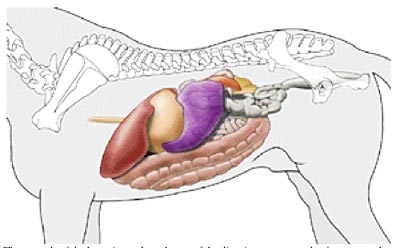
The stomach of the horse is not the only part of the digestive tract we need to be concerned with. As horses are designed to graze, their natural diet consists of long stem forages. While they possess the digestive capacity to utilize grains such as corn and oats, these would not make up a significant portion of the horses’ natural diet. However, we sometimes need to supply our horses with more energy dense sources of feeds when their energy requirements go up, such as moderate or intense exercise.
We may also find ourselves sometimes short of hay due to prices, drought, supply shortages etc. Thus we may need to look at alternative feed sources than our typical baled hay. However, as horses are designed to ferment forages in their cecum and hind gut, it is important that we keep that fermentation functioning properly.
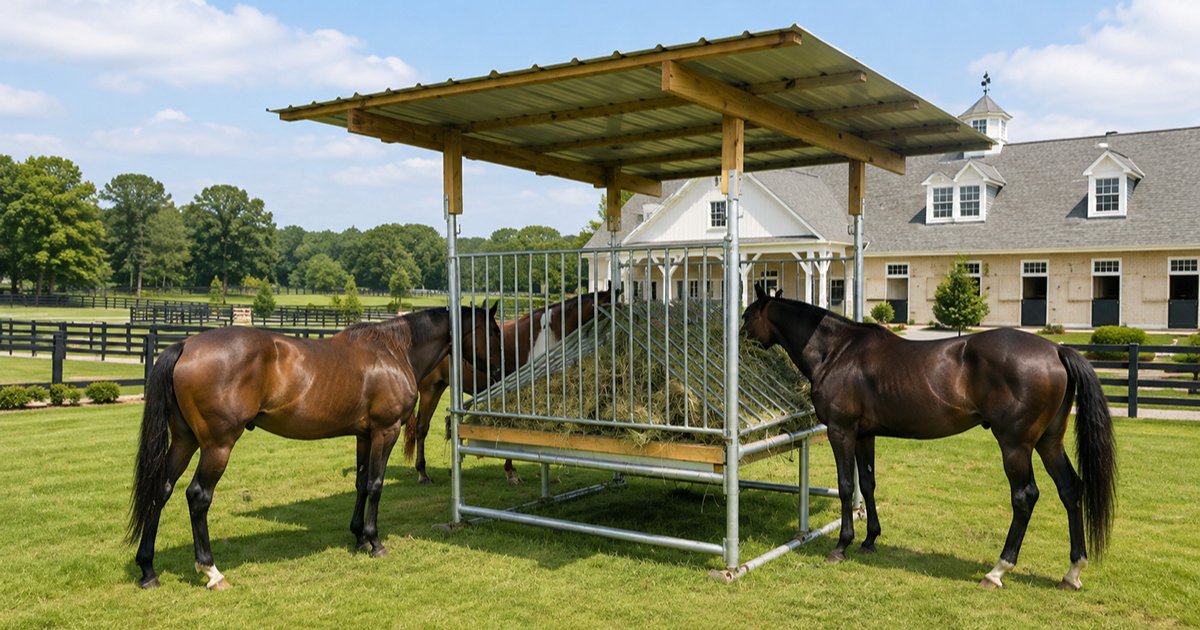
To ensure this proper function, we need to feed horses at least 1 % of their body weight in forage per day. That means if your horse weighs 1200 lbs, it should never receive less than 12 lbs of hay or forage per day. Now if you actually weigh that out, you would see that really isn’t that much at all. Ideally, the horse should receive closer to 2% of their body weight in hay per day. So double that 12 lbs to 24 and you will be much closer to what the horse would naturally consume. On their own, horses will consume about 2-3% of their body weight per day. How we provide that amount, or if we provide that amount of feed, is up to us.
For horses that have high energy requirements, it may be necessary to provide them with extra concentrate. However, large meals of concentrates may not be great for gut health. If the rate of concentrate intake exceeds that of the horse’s ability to digest it in the small intestine, it escapes to t
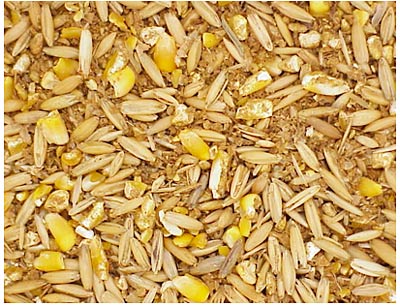
he hindgut of the horse. Here, there are types of bacteria that will thrive on this meal of simple carbohydrates. Unfortunately, these carbohydrate fermenting bacteria will produce more acidic by products. The lowering of pH in the hindgut can set off a chain of unhealthy events, including laminitis, colic, diarrhea etc. Thus, horses should never be fed concentrate meals (the grain portion) in levels of over 0.5 to 0.6% of their body weight at one time.
Beyond this point, we exceed the capacity of the horse’s small intestine to digest and absorb the meal. For our 1200 lb horse, that means that his grain meal should never be over 6-7 lbs. If the horse truly requires that much grain (12-14 lbs per day), the best solution would be to split the concentrate into multiple, smaller meals, rather than just two meals per day.
Following these simple guidelines can get you much further down the path of having a content and happy partner, with less health issues to worry over. Omega Fields® is a wonderful recommended source of highest quality, Omega-3 rich, stabilized ground flaxseed products. The preferred supplements are Omega Horseshine® and Omega Grande® Complete . Omega Nibblers® has the most Omega-3 in any treat on the market (one half of the formula!). The selection is rounded out by Omega Antioxidant and Omega Stabilized Rice Bran
For information on premium stabilized ground flax supplements that are rich in natural Omega-3 to help maintain a shiny healthy coat, strong solid hooves, and top performance – and for clear and concise labels – for horses in all life stages – please click on Horse Health Products .
Omega Fields® provides premium, stabilized ground flax products for equine, canine, feline, poultry, and human nutrition. Online-based consumer distribution includes OmegaFields.com and OmegaFieldsHealth.com .
Contact Omega Fields’ mission is to offer the finest quality, most nutritious products at a fair price and provide outstanding customer service. We want our customers to have exceptional experience with our products, our staff, our websites, and our retailers. Order online 24/7/365 – omegafields.com or call toll-free – 1-877-663-4203.