

How to Effectively Treat or Care For Horse Wounds

We at Ranch Remedy want to see your horse healed as soon as possible! by Daryl Tanner of Ranch Remedy
To treat a cut or scratch on a horse, first wash and dry the wound with tap water that isn’t too cold, then apply an antiseptic spray or ointment. Simple wounds above the knee and hock generally do fine uncovered, but most full-thickness wounds heal better under a bandage changed daily, and a small wound typically takes two to four weeks to heal. Call your veterinarian if the wound is large or deep, bleeds heavily, causes lameness, or sits near a joint or eye—and watch for infection signs such as unusual heat, increasing pain, reddened skin, or odor.
“A horse is a horse of course of course and no one can talk to a horse of course!” If you remember what show that line is from then you are as old as I am and probably also love horses. Mister Ed! We all loved how smart Mister Ed was as he tricked Wilbur and well, we all loved how Mister Ed could talk. Would that not be great if our horse could tell us what was wrong. How they felt or what mood they were in when we saddled up?
However that is just wishful thinking when it comes to real life and real horses.
I mean our horses sometimes drive us crazy because of them acting crazy. I would just love to hear about what they were thinking. What scared them, what spooked them or what they thought they saw or heard. Well Ed, tell me, just why did you jump against the barn door and put that scratch on your leg? We would all love to hear those stories. However, we cannot so we show up in the morning to feed and water them and there is a big cut and they are just lovingly staring at us. Then we need to swing into action.
So what do you do when you see a cut or scratch on your horse?
The first thing would be to wash and dry the wound with some tap water that is hopefully not too cold. Then you should apply some antiseptic spray or ointment on the wound. Some people believe it is critical for the wound to heal with natural air but I would urge caution unless it is a very small scratch. It is always important to keep a watchful eye on any wound on your horse and how they act after the wound.
In general, simple wounds above the knee and hock do just fine without bandages, but most full-thickness wounds heal better with bandages. New skin formed under bandages may still require surface antiseptic sprays or ointments and potentially a loose covering until it toughens up enough to face the elements.
Is it best to cover a wound or leave it open?
Leaving a wound uncovered helps it stay dry and helps it heal. If the wound isn't in an area that will get dirty or be rubbed by clothing, you don't have to cover it.
A small horse wound takes 2-4 weeks to heal depending on the size of the wound. During this period the wound is still susceptible to infection and the horse should be confined from moving around in a yard or stable. Remember to reapply antiseptic, a bandage and antibiotics may need to be given if infected.
What does an infected horse wound look like?
Signs that an injury is becoming infected include unusual heat (warmer than the surrounding tissue); pain (discomfort should subside in the days following an injury, so increased pain is a danger sign); color (reddened skin, or red streaks radiating from the injury); and odor (anything out of the ordinary).
Should you change a horse’s bandage?
Yes. Even with a stabled or stalled horse a bandage will loosen in 24 to 36 hours. Changing a bandage every day is necessary to treat wounds with antiseptic, check suture lines for infection and re-apply pressure to decrease swelling.
When should I call the vet for a horse wound?
When deciding if your horses' wound needs to be seen by a vet are both wound size and depth, amount of bleeding, if there is lameness associated with the wound, and importantly, the wound's proximity to any important structures such as a joint or eye.
Enabling your horse to heal properly
A critical process to enable your horse to heal is slowly letting your horse get used to walking around as the cut heals. Walk your horse without riding your horse each day. When you head back to the stall then recheck the wrap and make sure it is snug.
We at Ranch Remedy want to see your horse healed as soon as possible. We offer our Topical First Aid spray. It is an antiseptic and it will open, cleanse and help in quickly healing your horse scratch or wound. You can find us at yourranchremedy.com or on Amazon . If you go to our website use our first time purchase discount code of IH22 for 20% off on your first purchase.
We look forward to helping you get back in the saddle very soon! Happy Trails my friends. Sincerely, D at Ranch Remedy
More About Topical First Aid Spray! We made Ranch Remedy to be an all around solution for your horse using a natural, plant-based cleansing compound that is quick, safe, and no mess relief for many topical issues.
For over 40 years, we've been utilizing this antibacterial and anti-fungal solution on ourselves and our animals (we tested it on ourselves before we ever put it on our pets!). When we set out to partner with InfoHorse we gave our product out to several of our close friends to test on their horses and they found Ranch Remedy to help with:
- Mange - Abrasions - Cracked Heals & Hooves - Shoeing Sores - Scratches (Pastern Folliculitis) - Insect Bites / Stings - Warts - Ringworm - Rain Rot (rain scald) And it didn't stop there - it even tackled a bunch of horse hoof issues. Since many hoof products contain ingredients like iodine that will cauterize and burn the infected area, it only half treats the issue - allowing surface problems to heal but sealing in the deeper infection.
Ranch Remedy does not cauterize tissue, and promotes the progression of both surface healing and healing deep within the wound. There is nothing more frustrating or more dangerous for a farrier than dealing with a horse that is in pain, not from its hoof condition, but from the product being used to treat it. Because Ranch Remedy does not harm healthy tissue, causes no pain, and works so effectively, it has become a favorite with farriers!
Ann Pruitt, from InfoHorse.com said: "I have now used Ranch Remedy to completely cure my Morgan's bout of whiteline AND keep her hooves healthy and protected during the rainy "mud" season that always caused me so much trouble. It also worked wonders with my little dog's chronic ear infection! This is now my "go to" product to help prevent bacteria or fungus. I highly recommend this amazing product!"
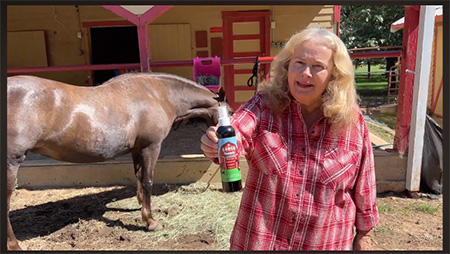
Once you use our natural formula (spray or lotion!) you'll see why clients come back to us year after year. Nothing brings us more joy than to hear as people tell us how Ranch Remedy restored their horses, dogs and cats back to health and happiness. (And most of our clients enjoy Ranch Remedy for themselves too! Double win!)
Easy to use, extremely effective, affordable and safe enough for every day, Ranch Remedy Topical First Aid is a no brainer!