

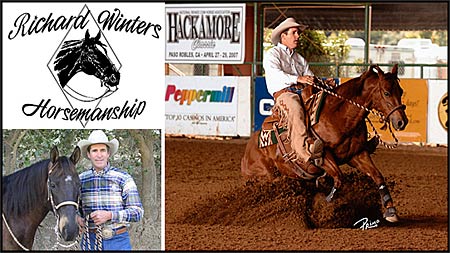
From Sour to Sweet - Performance Horsemanship Fixing the Gate Sour, Buddy Sour, Barn Sour Horse with Richard Winters
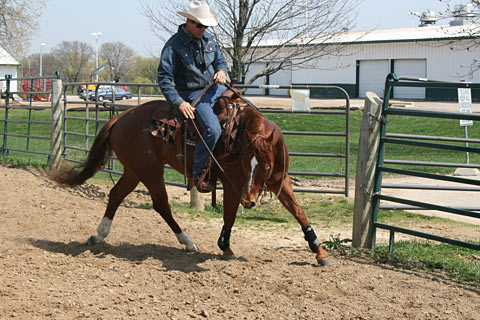
You cure a sour horse by reversing his comfort map—make the right thing easy and the wrong thing difficult. Work the horse where he wants to be and rest him where he normally works: trot figure-eights in front of the gate and then rest at the far end of the arena, dismount at the far end and lead him back to the barn instead of riding straight to it, or trot tight circles around his stable mate and then rest somewhere else. Horses are creatures of habit that quickly learn where work and comfort happen, so this reverse psychology reprograms the horse and gets him mentally balanced.
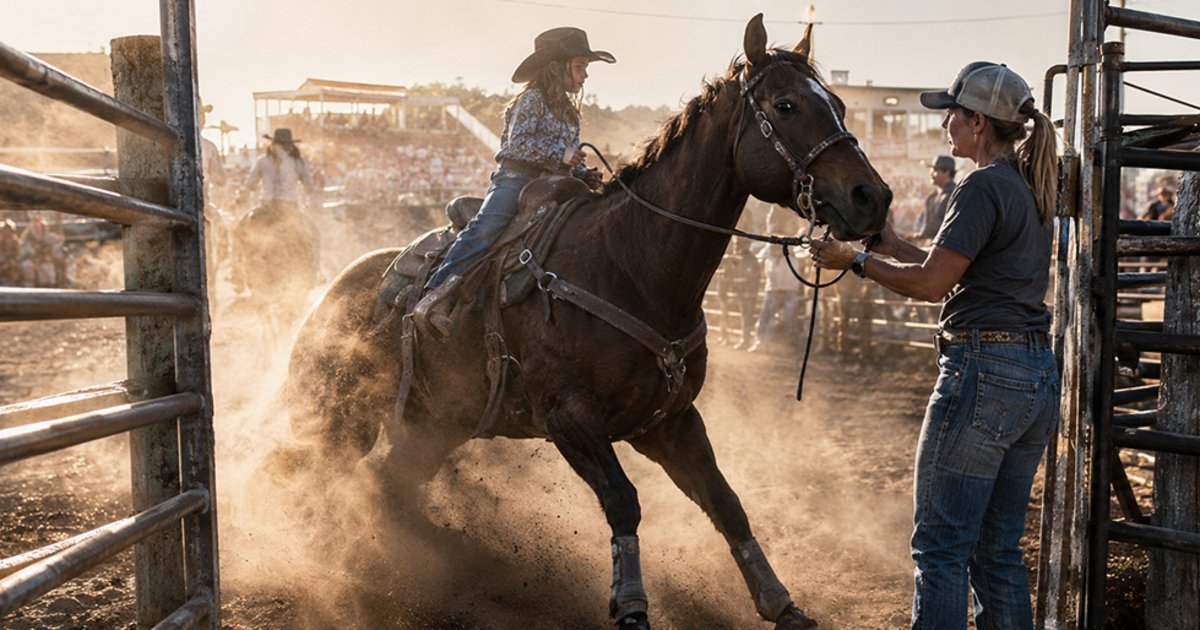
Being at the gate is a lot of work. Have you ever found yourself in one of the following real life scenarios? You and your husband have paid good money to ride in a clinic and both horses get frantic every time you attempt to ride in opposite directions. You’re riding in an arena and every time you start back toward the gate your horse speeds up. You are out on a long trail ride and as soon as you turn back toward home, your horse becomes excited and jigs all the way back to the barn. You want to ride out from the barn and go for a leisurely trail ride but encounter a horse that will not go forward and is attempting to rear, whirl, and run back to the barn. Maybe you have asked your reining horse to do a run-down through the center of the arena but rather than run in a straight line, it feels like there is a magnet pulling your horse off the line and toward the gate. Barn sour, gate sour, or buddy sour. No matter the label, it’s no fun! Let’s talk about what causes these behaviors and see if we can try to counteract them.Horses are creatures of habit and they quickly pick up on routines. They soon realize where they experience discomfort and where they can be comfortable. They understand that the arena means work and that the gate leads back to comfort. A horse learns quickly that heading back home from a trail ride means that work will soon be over. Of course, they’re right! We subconsciously train them to understand where they have to work and where they can rest. The following suggested training tips will probably not be the most convenient. However, they are simple and can go a long way in balancing out your horse.
1 Don’t make a habit of riding out the arena gate and going directly to the barn after a workout
2 If your arena has more than one gate, exit from a different gate than which you entered
3 When completing a ride, continue to ride past the spot where you would normally dismount and unsaddle
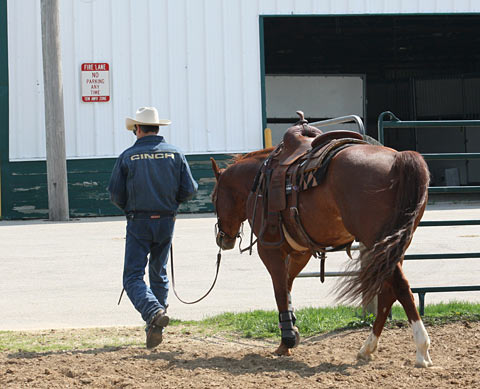
Leading my horse out of the arena, rather than riding, will keep him more balanced. 4. If your horse speeds up when going toward the gate, trot multiple figure-eights in front of the gate and then trot to the other end of the arena. Now, stop and rest there for a few moments.
5 If your horse is resistant to leaving the barn area, begin a training session right there
6 When schooling, at a horse show, allow your horse to stop, rest, and relax at the farthest point from the gate that he gravitates towards
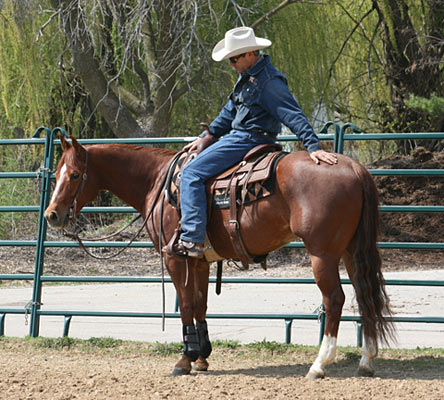
Being at the other end of the arena is where my horse gets to rest. 7. When your horse starts looking for his stable mate, head right over to his pal and trot about a dozen tight circles around him and then take off and rest somewhere else. Repeat this as often as necessary. After a while your horse won’t be so inclined to want to be with his buddy.
I imagine that you’re getting the idea! As with any training scenario, you simply make the right thing easy and the wrong thing difficult. If your horse wants to go to the gate, make him work at the gate. If he won’t leave the barnyard, make your horse work at the barnyard. Rest where your horse thinks he should be working and work where your horse would generally rest. Whenever I feel “magnets” drawing my horse to a certain spot – I begin using reverse psychology to reprogram my horse and get him mentally balanced.
A conscientious rider feels these things and begins to nip it in the bud before it becomes a serious issue. Paying attention and taking a little extra time can turn your sour horse back into something sweet.
For more information about Richard Winters Horsemanship please go to wintersranch.com.