

Fitting your Horse’s Bit, Resisting vs. Responding: Could It Be The Bit?
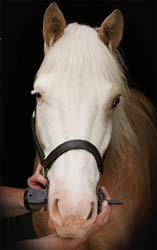
First, you need to check that the size of the bit fits your horse’s mouth. By Kim Newell - The Original BitFit
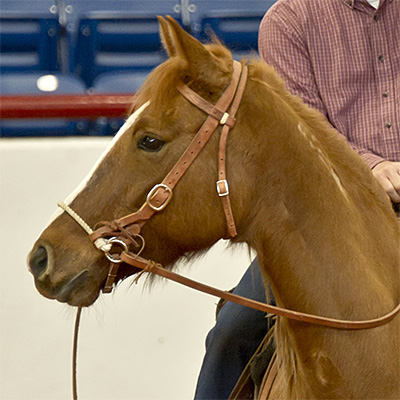
Fitting a bit starts with checking that its size matches your horse’s mouth—many experts agree an incorrectly sized bit not only causes pain and discomfort but cannot work effectively—so measure the width of the mouth from lip to lip, and measure the bit itself, since manufacturers size differently. Common signs of bit resistance include chomping or an open mouth, head shaking or tossing, leaning or running away, staying behind the bit, carrying the nose high, or hanging the tongue out. If the size is already correct, the next step is bit style, because the horse may be experiencing too much tongue, bar, or palate pressure with its current bit.
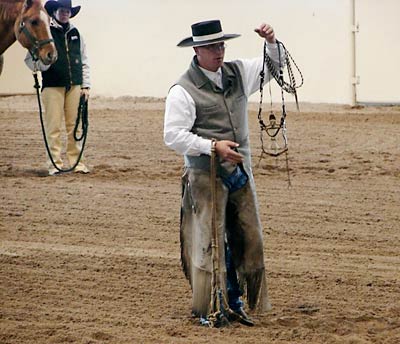
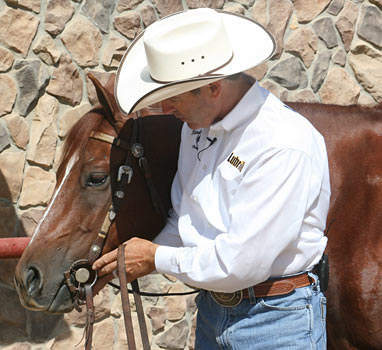
For years I have struggled with a horse that I have affectionately referred to as obnoxious. It was only after a visit with Dale Myler, founder of Myler Bits USA, in which we observed him bitting horses, that I realized my obnoxious horse was most likely not obnoxious at all. Instead my frustrated horse was trying to avoid pain and discomfort from an improperly fitting bit.
Upon our return from the Myler clinic, I put a larger bit on her bridle, and rather than fighting me, she responded much better to my requests. It was an instant improvement. I couldn’t believe it! How simple! How could I have not known this? I knew about saddle fit, dental care and many other issues that affect a horse’s comfort. Why didn’t I know about bit fit?
Perhaps it is because it is easier for the large manufacturer, wholesaler, and retailer to sell as few bit styles and sizes as possible. We all know that less inventory means less cost for everyone involved. We know that overseas manufacturers require very large quantities on each item . No wonder we are caught in the belief system that all horses wear a five-inch bit or that most horses do well in a five inch bit. But, this way of thinking has a price – and who’s paying that price? Our horses.
After my investigation I have new found respect for bit manufacturers, large and small, who are willing to manufacture multiple sizes and styles of bits, as well as tack stores who make the extra investment and stock multiple sizes. All custom bit makers will ask before placing the order, “What size is your horse’s mouth?” They know its importance. I believe the mass producers know the importance too, but it just doesn’t fit into their business model.
There are many custom bit makers in this country – large and small. Among the well known are Myler Bits USA and Reinsman Equestrian Products. They ALL deserve our support. Yes, you will pay more for your bit, but the benefits far exceed the costs—and may save valuable training dollars!
Dr. Joyce Harman, DVM, has written about the effect of tongue, head and neck anatomy on movement of the whole horse. If we all knew how the tongue affects the entire horse, I’m sure we would put a lot more effort into insuring that our horses’ mouths and tongues were comfortable. Indeed, the bit truly is the most important piece of equipment that you put on your horse. How much money do we spend on saddles, pads and hoof products in order to keep our horses comfortable? Yet, the bit has just as much, if not more, impact on safety and performance.
Recognizing bit resistance is quite simple once you understand what to look for. The most common resistance behaviors are:
1 Bit chomping or open mouth
Of course, any problem behavior could indicate a bitting issue, but the above are the most common. It only makes sense to take a look at bitting whenever there is a behavioral issue under saddle, just like you would assess the saddle and overall soundness of the horse. A bit change very often gives immediate, dramatic results. I recently sold a an Original BitFit™ equine mouth measurement tool to an east coast trainer who said, “Ninety percent of the problem horses people bring to me have bit issues.” I don’t know if that holds true with trainers nationwide, but I do find that observation quite interesting.
First, you need to check that the size of the bit fits your horse’s mouth. Many experts agree that a bit that is not sized correctly not only causes pain and discomfort, but it cannot work effectively. Just take notice of the flurry of recent articles in national publications about sizing a bit correctly.
Dr. Hilary Clayton, veterinarian at MSU, conducted a yearlong bit study, funded by the Usea, that examined and compared the position and movements of different types and sizes of bits in the horse’s mouth using fluoroscopy, which provides a moving radiographic view. A Horsecity.com article states, “Dr. Clayton believes many factors need to be taken into consideration—namely the size and shape of the horse’s mouth. Dr. Clayton believes bit size is a more crucial measurement than most people think. She advises measuring the width from lip to lip on your horse, and adding '” to get the proper measurement for your bit.”
In order to make the measuring process accurate, simple, and safe, we have invented and manufacture the patent pending Original BitFit™, an equine mouth measurement tool.
Once the measurement is obtained, you must also measure your bit, as bit manufacturers do size differently. Some are '” larger or smaller than the labeled size. For a jointed bit, the bit should be approximately '” larger than the mouth. For a non-jointed bit, you can use the exact mouth size or up to '” larger.
If you are already using the correct size, next investigate bit style. It is very possible that your horse is experiencing too much tongue, bar or palate pressure with his current bit. There are resources available to help you determine what your horse needs in terms of a bit, however, my recommendation is to consult a true bitting expert.
Choosing the correct style is not a science, and requires knowledge that most of us do not have. Trying to do it yourself could result in a lot of frustration and wasted money, since tack stores don’t usually allow the return of used bits. Unfortunately, there are currently very few bitting experts. Do not assume that every trainer is experienced and knowledgeable about bitting. There are many wonderful, talented trainers who may know more than you about bitting, but that still are not an expert in that area.
Check with a custom bit manufacturer. They may have recommendations for bit fitting experts in your area or they may offer advice. For example, Myler USA offers a free phone consultation. They have bitted thousands of horses successfully, from the novice to the Olympic level.
If we put as much thought and effort into bitting our horses as we do into purchasing a saddle or choosing a trainer, there’d be a lot more “really good” horses out there. Please email me your thoughts, and by all means, if you are a bitting clinician, let me know and I’ll add you to my website. Visit www.theoriginalbitfit.com for more bitting articles and additional resources.
Contact: BitFit- Kim Newell 1018 Pickney Rd Saranac, Michigan 48881 Phone: 1-888-8BITFIT Email: [email protected] Website: www.theoriginalbitfit.com