

Inhibiting Mold and Mildew
by Anna Carner Blangiforti President and Founder, Unicorn Editions, Ltd.
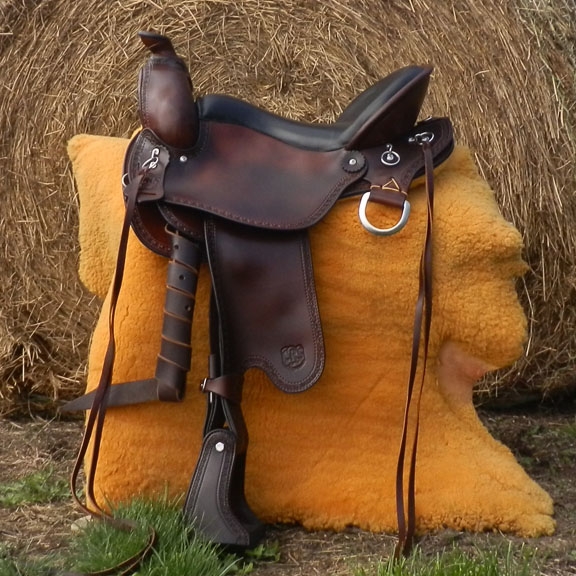
To treat moldy saddles and tack, take the leather out of the tack room and clean it outdoors—so spores don’t spread to everything else—wipe away surface mold with wet rags you throw away after use, finish with a water-based, pH-neutral cleaner, and dry the tack in the sun, whose ultraviolet light acts as a disinfectant. Skip old remedies like vinegar, household bleach, or alcohol, which can damage the leather’s fiber matrix, and avoid glycerin saddle soaps that attract atmospheric moisture and set tack up for future mold growth.
Then condition with a penetrating, pH-neutral product that inhibits regrowth—Leather Therapy Restorer and Conditioner is the only product in the equine market whose claim to inhibit mold and mildew has been tested and accepted by the Environmental Protection Agency.
Oldwick, NJ--One consequence of the recent outbreak of hoof and mouth disease in Europe is that leather prices are shooting sky high. With whole herds slaughtered to contain the disease, worldwide hide supplies have tightened and prices have risen. More than ever, it behooves us all to take the best possible care of what leather tack we already have. Mold and mildew are one of the most frustrating problems in leather care.
Generically, mold and mildew are fungi, relatives of the mushrooms you slice up for salads and sauces. Like mushrooms, they grow rampantly under the right conditions. As the tiny "fruiting bodies" at their tips mature, they bloom and burst to spew billions of microscopic spores into the air. Rub a patch of mold or mildew and you send those spores forth to multiply throughout everything in your tack room.
Once mold and mildew spores get into leather fibers, it is almost impossible to completely destroy them without destroying the leather, too. Inhibiting their growth takes diligent care with the right products. If mold and mildew invade your tack room, take these steps to limit its damage:
Leather--Take moldy leather out of the tack room and clean it outdoors. That way, you'll avoid filling the air in the tack room with mold spores that will simply 'infect" other items in the confined space.
Have a supply of old rags that you're willing to throw out. Start wiping away any surface mold with a wet rag. Wipe and capture as much of the mold as you can then throw the rag away. Don't rinse and reuse your rags. That only spreads the mold spores. Use an old toothbrush to clean stitching lines and crevices.
You can find old cavalry manuals and books of Victorian household hints that recommend using vinegar, household bleach or alcohol to remove mold and mildew from leather. While these may have fungicidal properties, they can all damage the leather's fiber matrix, especially in concentrations strong enough to actually kill mold and mildew spores. Wiping with dilute solutions is a superficial effort no more effective than the plain water you've already used.
Finish cleaning the leather using a water-based, pH neutral product to float away any remaining organic surface dirt that could support mold and mildew growth. Dry the tack in the sun to allow the water to evaporate and to take advantage of the disinfectant properties of the sun's ultraviolet light.
Some traditional leather cleaners, notably those translucent bars of saddle soap that smell so good , are not good choices for moldy leather. For starters, they contain glycerin. Glycerin acts as a "humectant" which means it tends to attract and hold atmospheric moisture. While that property may help the leather fibers remain flexible, it also sets your tack up for future mold and mildew growth. Second, because soap is alkaline, overuse can begin to reverse the tanning process (vegetable-tanned leathers have an acidic pH) and ultimately can weaken the leather.
Instead of using saddle soap, condition your leather with a penetrating, pH-neutral product that will lubricate the leather without introducing moisture and which will inhibit mold and mildew growth. Leather Therapy Restorer and Conditioner is the only product currently in the equine market whose claim to inhibit mold and mildew has been tested and accepted by the Environmental Protection Agency.
The EPA declares Leather Therapy Restorer and Conditioner a "stand alone product," meaning that there is no other product in its category. Products which contain a little vinegar or another surface wiping additive in order to support a claim of mold and mildew resistance are not much more useful than wiping with plain water.
Textiles & Other Washables--If mold and mildew have invaded saddle pads, blankets or other washables, thoroughly clean these items in hot, soapy water. Add household bleach to the wash water if the items are colorfast. Adding 2 ounces of Leather Therapy Restorer and Conditioner to the wash water will remove moldy odors and inhibit future mold growth. Dry everything thoroughly before returning the items to storage. Non-washable fabrics may need to be dry cleaned, sponged with a disinfectant solution. Discard them if they are badly mildewed.
Wipe down the insides of storage trunks or closets with a solution of water, detergent and 10 percent household bleach to disinfect them and allow them to dry completely before filling them back up again. A light bulb left on in a closet (making sure no item is close enough to heat up and burn) may provide just the right amount of drying heat. Place bags of desiccant materials inside large trunks and renew them periodically according to the manufacturer's directions.
Overall Environment--Mold and mildew typically thrive where it is dark, warm and damp (they flourish when the humidity ranges from 65 to 85 percent). If your tack room tends to be dark and damp, consider installing a window to provide sunlight and ventilation. Install a dehumidifier, leave a light bulb or two burning, or install low wattage heating bars like those used by boat owners to reduce dampness. Hang several large bags of desiccant and renew them periodically.
Preventative Maintenance--Be proactive to keep mold and mildew at bay. After each use, clean dirt and sweat off of tack and allow the undersides of saddles and headstalls to dry thoroughly before they go back into the tack room. Dry saddle pads and blankets, preferably in the sun, before folding them and putting them away. _________________ Anna Carner Blangiforti's hand-raised Arabian gelding Justinian provided the inspiration for her Leather Therapy line which includes Leather Therapy Wash, original Leather Therapy Restorer & Conditioner and new Leather Therapy Water Repellant. She is founder and president of Unicorn Editions, Ltd. (1-800-711-Tack).