

Saddle Pad Choice, The Saddle Pad Dilemma
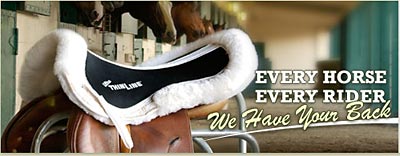
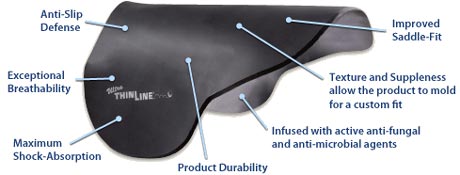
Choosing a saddle pad comes down to three jobs—breathability, saddle fit, and shock absorption for a comfortable ride—yet most riders end up with a barn full of foam, neoprene, air, wool, and synthetic pads that never quite deliver. Thick padding actually works against you, creating pitch and yaw that rolls the saddle with every step, while a thin pad built like a marathon running insole absorbs impact rapidly and keeps horse and rider connected. ThinLine takes exactly that approach, coupling its shoe-insole material with cotton, sheepskin, and felt to add the moisture-wicking the original material lacked.
The consumer is inundated with complicated and often opposing messages. Riders try foam, neoprene, air, wool and synthetic fibers. Most riders have a barn full of pads, meaning they have not found the real McCoy. by ThinLineGlobal.
Riders purchase saddle pads to attempt to solve several problems at once: moisture control (breath ability), saddle fit, and most importantly shock absorption resulting in a comfortable ride for both horse and rider.
Unfortunately saddle pad sales are made in a static environment. The sales information in the store often has little to nothing to do with what will actually happens when you are in motion.
Take for instance a runner. He wants to make contact with the track with just enough shock absorption to protect his joints and tendons but with not enough flex to cause him to sink into the footing or provide excessive rebound so he winds up higher in the air or feeling he is stuck in the mud instead of receiving forward propulsion that allows him even productive steps. Imagine the runner running on a track and instead of hurdles he has in front of him a series of saddle pads.
First the memory foam. His weight takes a moment to compress the foam then he bottoms out onto the hard surface. Next a denser foam, he springs onto it and it in turn springs him into the air reducing his traction and balance. Next he steps on an air filled product where he feels the track not at all but is sent bounding up again loosing his footing and balance.
Now place these products in his shoes. Air works well for basketball players, they are trying to be air born. We as riders are trying to do the opposite; stay connected to our horses.
Now imagine adding 2 inches of foam to the bottom of your running shoes. The foam will give and pitch with every step. The runners’ foot will roll front, back and left, right giving him such an unstable feel he will most likely give up running in the search for safety. Unknowingly, this is what we do to our horses as we add thick layers of padding under our saddles. We create what is defined as pitch and yaw.
Now try a marathon running insole. It is designed for athletes in motion. It is thin, breathable and absorbs impact rapidly without any cush. It keeps the runners foot stable and he knows the feel of the next step will be just like the last. He can move forward with strength and confidence.
About a decade ago a worker in a shoe insole company took home a piece of marathon running material and gave it to his wife, a rider. The shoe insole company had developed a very low profile, breathable, shock absorbing, anti-fungal and anti-microbial insole. Oddly enough, the same features of an insole are also the same features sought by riders in a saddle pad.
In 2005 Elaine Lockhead, discovered a piece of ThinLine in a barn. Riding a Lipizzaner and fighting constant saddle slippage she tried it. Amazingly the saddle never budged, her horse grew daily in his back, worked more happily and those historically difficult trots were now possible to sit. She became so committed to the product she sold her horses and put everything into ThinLine.
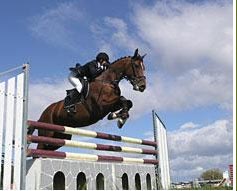
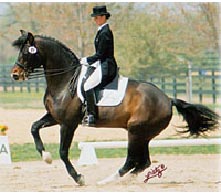
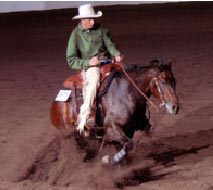
Dozens of Olympic and international riders agreed. Everywhere we sent the product, whether to Jumpers, Endurance Riders, Western Riders, Dressage, Polo….every imaginable discipline they all replied with the same result: Our horses are happier, more comfortable and our riders sit better. All ThinLine endorsements are unpaid and the chat room logs read like advertisements. In 2005 ThinLine began designing new products.
The shoe insole material answered 90% of the desires of the equestrian, except that it did not whick moisture so ThinLine, always ridden over another thin pad, was coupled with cotton, sheepskin, and felt. Now there is a saddle pad that finally does what riders have been seeking for decades.
It solves every saddle pad requirement regardless of breed or discipline and has No drawbacks.
We are all searching for the same thing: a pad that augments saddle fit: (ThinLine is endorsed and vended by over 80% of the UK master saddlers), A Pad that breathes (ThinLine is ridden by the top endurance riders passing countless vet checks), a pad that Stabalizes the rider position: something no other product has ever achieved and is there for endorsed by spinal surgeons for riders with sore backs and endorsed by riding programs across the globe for helping riders to sit more quietly giving their horses the trust and confidence to work with their backs up.
A pad that absorbs more shock than any other product on the market: it absorbs so much shock and equally distributes so much weight it is vended and endorsed by Veterinarians, equine chiropractors and equine massage therapists for horses with sore or sensitive backs.
Even with unpaid endorsements from most of the Olympic show jumping and dressage teams the real testament to the product is the way it has remained on the market for more than a decade just by riders telling riders.
At the end of the day we are all just looking for one thing: a saddle pad that both the horse and rider can feel creates a great difference in comfort and contact. A saddle pads that maximizes the communication between us and them ands increases the comfort and confidence of both horse and rider. Finally that product is here. Join the revolution!
Contact: Our Friendly Staff 105-6 Hood St Durham, North Carolina 27701 Phone: 888-401-9101 Website: ThinlineGlobal.com