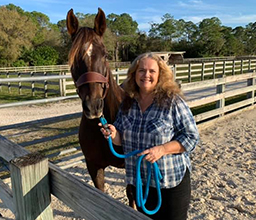
Testimonial from Linda Brown A Wizards Spell Gypsy Horse Ranch in Burleson, Texas.
She has imported from England over 30 of these magical creatures as breeding stock, directly from the Romani nomadic Gypsy people.
After 17 years of raising several breeds of horses you can assume I have seen it all as far as new techniques, medicines, tack, etc.
In 17 years I have never seen such a hassle free and quick response to colic.
Linda Brown is the owner of the largest, most prestigious Gypsy Horse breeding ranches in the United States.
Testimonial from Linda Brown
A Wizards Spell Gypsy Horse Ranch in Burleson, Texas.
Linda Brown is the owner of the largest, most prestigious Gypsy Horse breeding ranches in the United States. She has imported from England over 30 of these magical creatures as breeding stock, directly from the Romani nomadic Gypsy people. She now has the finest representations of the breed, went on to win more accolades repeatedly at the Gypsy Horse World Shows and the Fort Worth Stock Show. Residing on her ranch is the world's top producing stallion and top three producing mares.
Their progeny have won in everything from driving, halter, Western Pleasure, English Pleasure, trail/obstacle, and more, under all judges at the most prestigious shows.
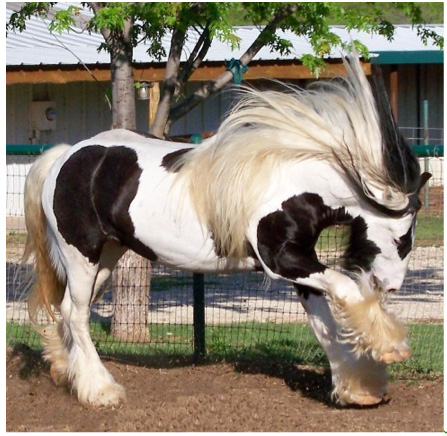
After 17 years of raising several breeds of horses you can assume I have seen it all as far as new techniques, medicines, tack, etc. Although I was curious about SayWhoa, I certainly wasn't going to just blindly assume it works. I did buy a bottle just to keep around assuming I really wouldn't need it. I was wrong. Worthington, one of those incredible Gypsy Horse stallions in this breeding program, began his "drop and roll discomfort" as I was heading to bed.
I instantly recognized what was causing his distress; would be a night of no sleep for me. I remembered about the bottle of SayWhoa ( but couldn't immediately remember where I had put it ). I located it and gave it to him, frankly not really having high expectations. I was wrong again. In 17 years I have never seen such a hassle free and quick response to colic. I am happy to report that he is well and ready to continue producing those award-winning foals.
And I have ordered more SayWhoa by Stops Colic and now put it exactly where I can find it quickly - now that I have seen that it definitely works. Call with questions 817-297-9292 GypsyHorsesInTexas.com
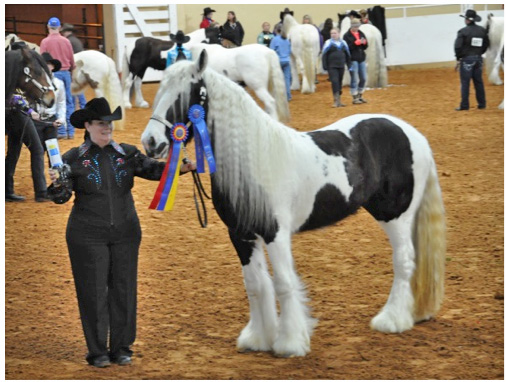
Patty Reller of Gainesville, TX with her 3 year old Gypsy Horse mare, A Wizards Spell Worthingtons Jessamy at the Gypsy Horse World Show at the Fort Worth Stock Show and Rodeo. Jessamy won Three and Four Year Old Mare Halter class and then went on to win the Champion Junior Mare class, and then went on further to win Reserve Champion Mare of all ages! Thank You for the Say Whoa! donations to the winners.
Your contribution as prizes was well used at our show. Patty is holding a SayWhoa! by Stops Colic, LLC product in her hand. And just so you know, I have talked to contestants about SayWhoa! and the response I get is this “ Oh YES, we have that in our barn and wouldn’t go anywhere without it.” Thanks Again for your generous contributions to the Gypsy Horse World Show at the Fort Worth Stock Show and Rodeo.
Please note that this is a Worthington daughter we might not have if it wasn’t for using SayWhoa! on him in the past.
Linda Brown - Owner/Breeder A Wizards Spell Ranch in Burleson, Texas gypsyhorsesintexas.com
Sponsored Content — Contact information provided by the sponsor
💬Questions Readers Commonly Ask (FAQ)
How do I recognize the early signs of colic in my horse?
Per Linda Brown of A Wizards Spell Gypsy Horse Ranch: the recognizable early sign of colic is what experienced horsekeepers call “drop and roll discomfort” — a horse who suddenly drops to the ground and rolls in a way that signals abdominal pain rather than ordinary rolling for comfort.
The pattern is recognizable once you’ve seen it. Per Linda Brown: she instantly recognized what was causing her stallion’s distress when he began that behavior at bedtime — she knew, before any veterinary diagnosis, that this would be a night of no sleep without intervention. Other early flags experienced owners watch for include pawing, looking at the flank, sweating without exertion, and absence of manure in the stall. The combination of any of these with the drop-and-roll pattern is your cue to call your vet, not to wait and see whether the horse settles on his own.
What should I do at the moment I think my horse is colicking?
Per Linda Brown: the moment of colic onset is not the moment to be hunting through cabinets. Call your vet first — colic can range from mild gas pain to a surgical emergency, and only veterinary assessment determines which.
While the vet is en route, the article’s practical lesson is about emergency readiness:
Know where your colic supplies are — literally. Per Linda Brown: she had bought a colic remedy “just in case” but couldn’t immediately remember where she had put it — an avoidable delay in an emergency. After her experience, she now keeps it where she can find it quickly.
Don’t experiment with feed or water mid-episode.
Walk the horse if your vet advises it; some types of colic respond to gentle movement, but others don’t — let the vet make that call.
Per Linda Brown: confirm any treatment with your vet before administering products at home.
How quickly should I expect a colic episode to resolve once treatment starts?
Per Linda Brown: when an emergency colic remedy works on a mild episode, response can be measurable within the hour — she described her stallion’s pulses returning to normal within a half hour and his feet cooling off and the horse seeming fine within an hour.
Two cautions on that timeline.
Mild gas colic and impaction colic resolve on different timelines. A horse who isn’t materially better within the window your vet specifies needs reassessment, not more home treatment.
“Seems fine” doesn’t mean “is fine” — monitor manure output, water intake, and behavior for the next 24-48 hours. A horse who appears to recover but stops passing manure or refuses water needs a follow-up call to your vet.
Per Linda Brown: in 17 years of raising several breeds she had never seen such a hassle-free and quick response — but the framing is about her readiness, not a guarantee. Your vet’s assessment is what determines next steps.
How can I reduce the chance my horses colic in the first place?
Per Linda Brown: the testimonial frames emergency readiness as a complement to, not a replacement for, day-to-day prevention. Experienced breeders — the contestants she talked to at the Gypsy Horse World Show all said they keep a colic remedy on hand — aren’t casual about gut health; they layer prevention and preparedness.
The standard prevention habits that reduce colic frequency:
Free-choice clean water year-round — dehydration is one of the most common impaction triggers.
Gradual feed changes over weeks, not days.
Regular dental care so horses can chew forage properly.
Frequent small meals over fewer large meals when possible.
For long-term gut maintenance, supportive products like SUCCEED® Digestive Conditioning Program (a current InfoHorse advertiser) target the broader gut-health environment alongside daily management. The structural rule: prevention is a feeding-management habit, not a supplement decision — confirm any program with your vet.
📋
Recommended Products
Curated picks from across InfoHorse.com — most relevant first