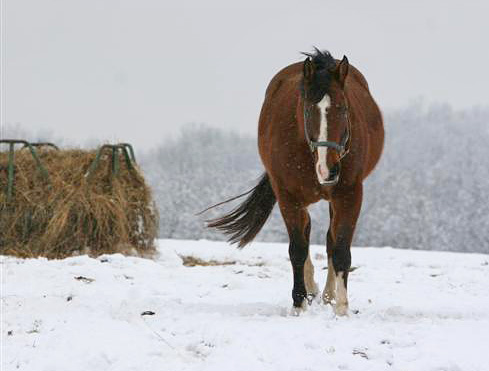
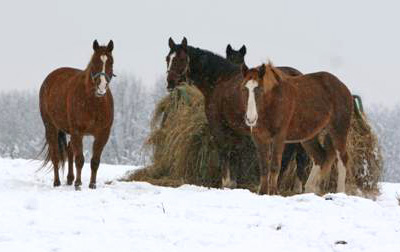
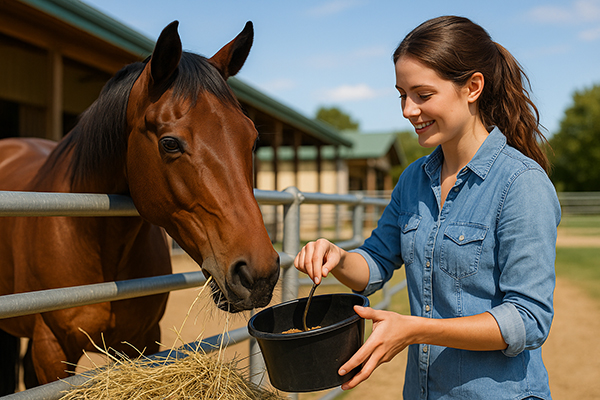
Begin to feed additional forage at least 24 hours prior to periods of extreme cold or winter storms.
Feeding Horses in Cold Weather 10 feeding tips to help your horse get through the cold winter months Article written by Kentucky Performance Products 1.
Ensure your horse is drinking enough water in the cold weather.
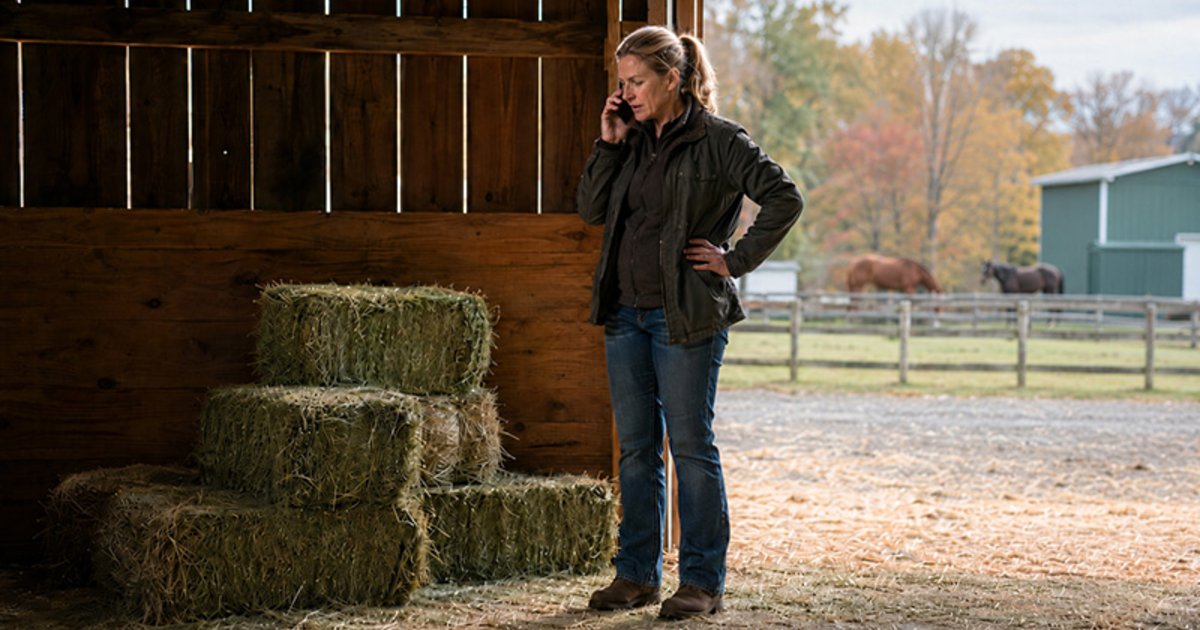
Keep an eye on the weather forecast so you can be prepared in advance for cold periods and storms.
Check the expiration dates on the supplements you currently have.
Feeding Horses in Cold Weather 10 feeding tips to help your horse get through the cold winter months
Article written by Kentucky Performance Products
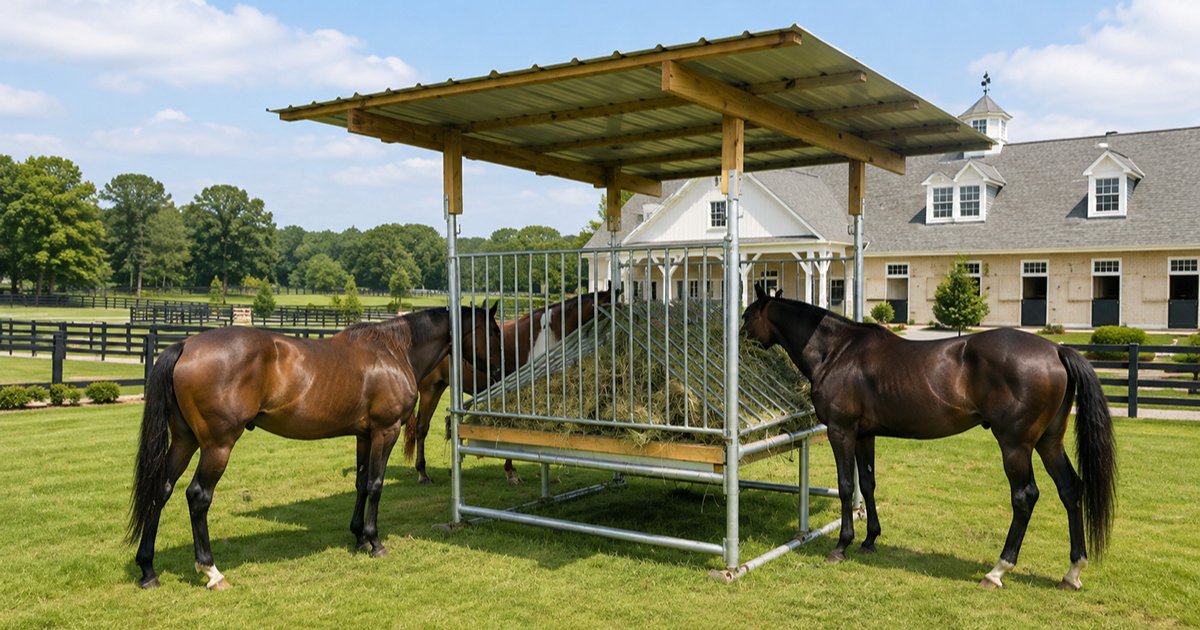
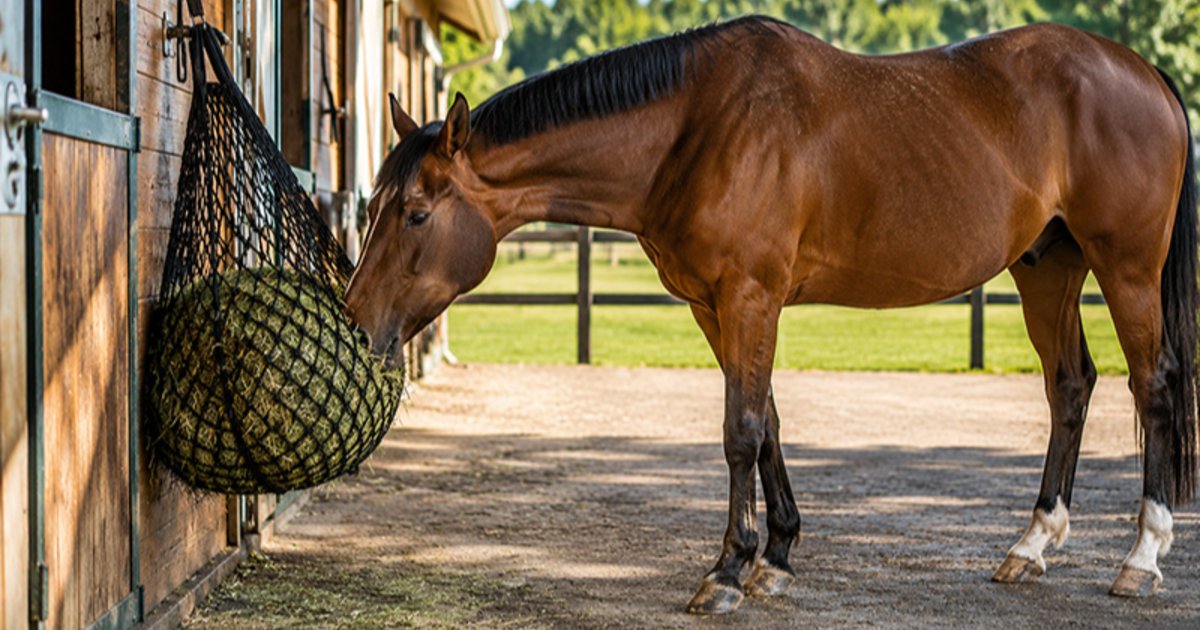
Feeding additional good-quality forage is the best way to warm a horse up in cold weather—hay supports an increase in body temperature better than concentrates do. A sedentary mature horse needs about 2% more high-quality forage for every degree the temperature falls below his lower critical temperature, which is roughly 41 degrees F for a clipped horse or one with a summer coat and 18 degrees F for a horse with a thick winter coat. Make sure your horse also drinks a minimum of 10 to 12 gallons of water a day and gets about 2 oz of salt daily, which stimulates the thirst response and keeps him drinking.
1 Don’t rely on pasture as your horse’s sole source of nutrition in the winter, as it lacks adequate vitamins, minerals and, in some cases, energy
2 As pastures fade, switch from green grass to dried hay slowly
3 The best way to warm your horse up in cold weather is to feed additional good quality forage
4 Winter pasture and dried forages lack essential vitamin E
5 Ensure your horse is drinking enough water in the cold weather
6 Provide adequate levels of salt
7 Help your horse stay warm when the temperature drops
8 Keep an eye on the weather forecast so you can be prepared in advance for cold periods and storms
9 Begin to feed additional forage at least 24 hours prior to periods of extreme cold or winter storms
10 Try your best to stick to your normal feeding schedule during inclement weather
Getting your feed room ready for winter Here are five tips to make sure your feed room and hayloft are ready for winter.
1 Clean out your feed room
2 Stockpile concentrates (sweet feed and pellets)
3 Fill your hayloft with good quality fiber
4 Take a supplement inventory
5 Protect medications
💬Questions Readers Commonly Ask (FAQ)
What's the best way to feed my horse in cold weather?
Per Kentucky Performance Products: cold-weather feeding comes down to four habits, ranked by leverage:
Feed more good-quality forage, not more grain. Hay supports an increase in body temperature better than concentrates do, and it's healthier. The benchmark: a sedentary mature horse needs about 2% more forage for every degree the temperature falls below the lower critical temperature (41°F for a clipped horse, 18°F for a horse with a thick winter coat).
Don't rely on winter pasture as the sole nutrition source — it lacks adequate vitamins, minerals, and sometimes energy.
Switch from grass to hay slowly — the digestive tract takes about two weeks to acclimate.
Begin extra forage 24 hours before a cold snap or storm, not the morning of.
Per the article: stick to your normal feeding schedule during inclement weather, and make any feed changes slowly over several days to reduce digestive upset.
How long does it take to transition my horse from pasture to winter hay?
Per Kentucky Performance Products: the digestive tract takes about two weeks to acclimate to new forage. Switching abruptly from green grass to dried hay raises the risk of digestive upset, so the practical move is starting hay before the pasture is gone, not after.
The structural recommendation is to begin offering hay alongside fading pasture as the grass quality drops in late autumn. Per the article: "As pastures fade, switch from green grass to dried hay slowly." During cold periods, the article recommends beginning additional forage at least 24 hours prior to extreme cold or winter storms — that lead time lets the horse generate the metabolic heat that hay digestion produces, rather than playing catch-up after the temperature drops. The same gradualism applies to any concentrate or supplement change: stretch transitions over several days.
How do I keep my horse drinking enough water in winter?
Per Kentucky Performance Products: horses need a minimum of 10 to 12 gallons of water per day — more if they're working — and winter dehydration is what tips marginal horses into impaction colic. Three habits move the needle:
Manage the water temperature. Per the article: ideal drinking water is between 45°F and 65°F; senior horses or poor drinkers will accept up to 90°F.
Wet the grain. Add warm water to a normal textured or pelleted meal — but the article specifically cautions against the occasional bran mash, which can do more harm than good.
Provide adequate salt — about 2 oz per day at rest, in feed or from a block, to stimulate the thirst response.
Per the article: hay contains much less moisture than grass, so unlimited clean water is essential. Soaking hay in room-temperature water (where weather permits) and offering pre-soaked forage products like Hydration Hay (a current InfoHorse advertiser) raise total water intake on horses who under-drink in cold weather.
Does my horse need supplements in winter that he doesn't need in summer?
Per Kentucky Performance Products: yes — most importantly, vitamin E. Winter pasture and dried forages lack essential vitamin E, and that gap leaves the horse's antioxidant status compromised at exactly the time of year when respiratory and immune challenges are higher. Per the article: natural vitamin E is absorbed and retained in tissues at a much higher rate than synthetic vitamin E.
Targeted supplementation like Daily, Natural Vitamin E (a current InfoHorse advertiser) is structured around exactly this winter gap. Beyond vitamin E, the article flags two other categories worth a winter inventory: vitamins and minerals for horses who lose pasture access entirely, and energy and digestive support for horses that need more calories during cold months. Confirm specific dosing with your vet — and check expiration dates on what you already have, since stale or freeze-damaged supplements are a common winter waste.
How do I prep my feed room before winter hits?
Per Kentucky Performance Products: there are five winter-prep tasks for the feed room, and the cost of skipping them is running out at exactly the wrong moment.
Clean out the feed room — reduces insect and rodent damage and frees up storage capacity.
Stockpile concentrates — sweet feed and pellets — so a winter storm doesn't force a treacherous-road run to the feed store.
Fill the hayloft with good-quality fiber, or line up a reliable winter hay source ahead of time.
Take a supplement inventory — order what you need, discard expired bottles, and check storage instructions to prevent freeze damage.
Protect medications from freezing or expiring; inclement weather causes injury and illness upticks, so the medicine cabinet matters.
Per the article: "There is nothing worse than running out of feed in the middle of a winter storm." Prep is cheaper than improvising in 5°F at 9pm.
📋
Recommended Products
Curated picks from across InfoHorse.com — most relevant first