Horse Hoof Care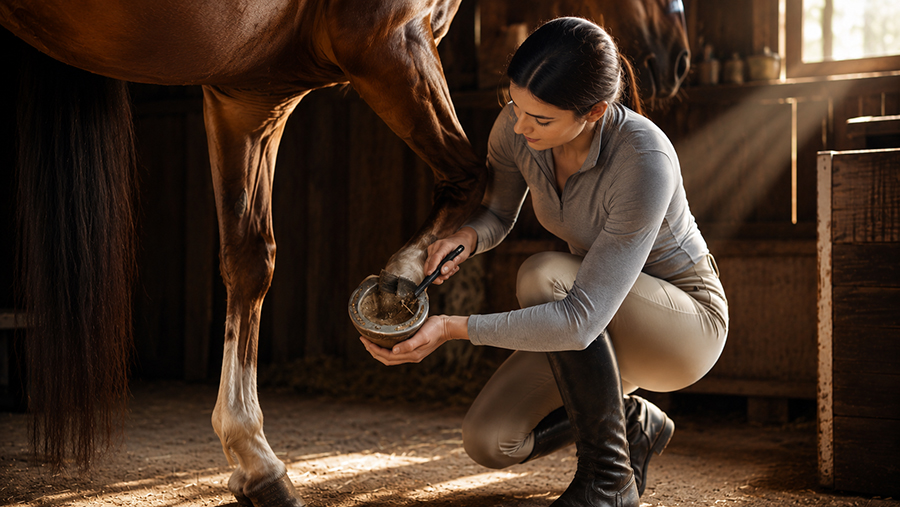
Looking Beyond Dirt: How Smart Horse Owners Protect Their Horses From the Ground Up
There is an old saying in the horse world:
“No Hoof, No Horse.”
As horse owners, we hear it often—but the older I get and the more horses I have owned, the more I realize how painfully true that statement really is.
We lose far too many horses—not because people don’t care—but because we miss early warning signs, make small mistakes that turn into larger ones, or simply don’t realize how much influence we have over hoof health.
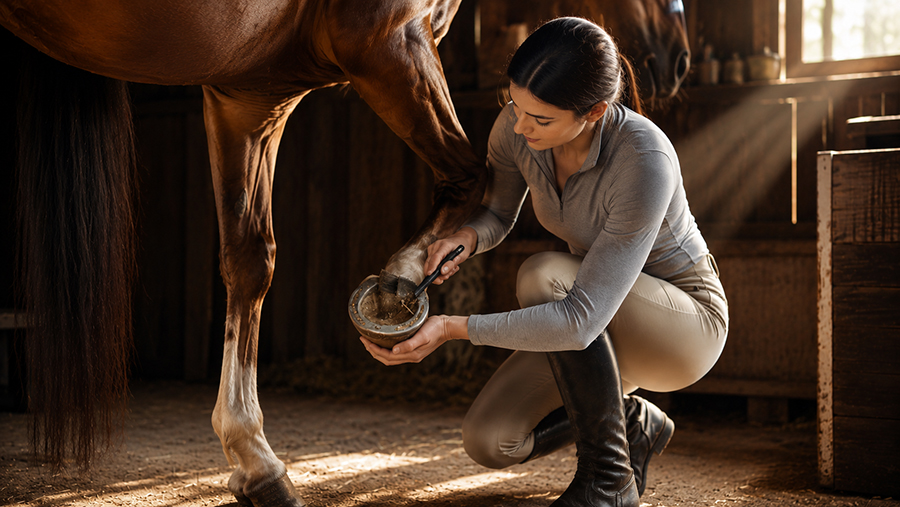
Picking up your horse’s feet each day should never be just about removing mud, manure, or rocks.
That simple daily habit can become one of the most valuable health checks you perform.
Your horse’s hoof tells a story.
If you learn to read it, you may catch problems before they become serious.
Horse Hoof Care Is a Team Effort—And You Are the Captain
Good hoof care rarely comes from one person.
The best outcomes usually happen when horse owners build a team.
That team often includes:
- A trusted and experienced Farrier
- Your Veterinarian
- Your Nutrition Expert (which may also be you)
- Trainers or experienced horse professionals when needed
Personally, I often ask my veterinarian:
“If this were your horse… who would you trust for difficult hoof work?”
Veterinarians tend to know which farriers stay calm under pressure and which ones regularly help solve difficult hoof situations.
Horse owners make daily decisions.
That means whether we realize it or not—we are usually the captain of the hoof care team.
The Horse Hoof Is More Than a Foot—It Is a Living Circulation System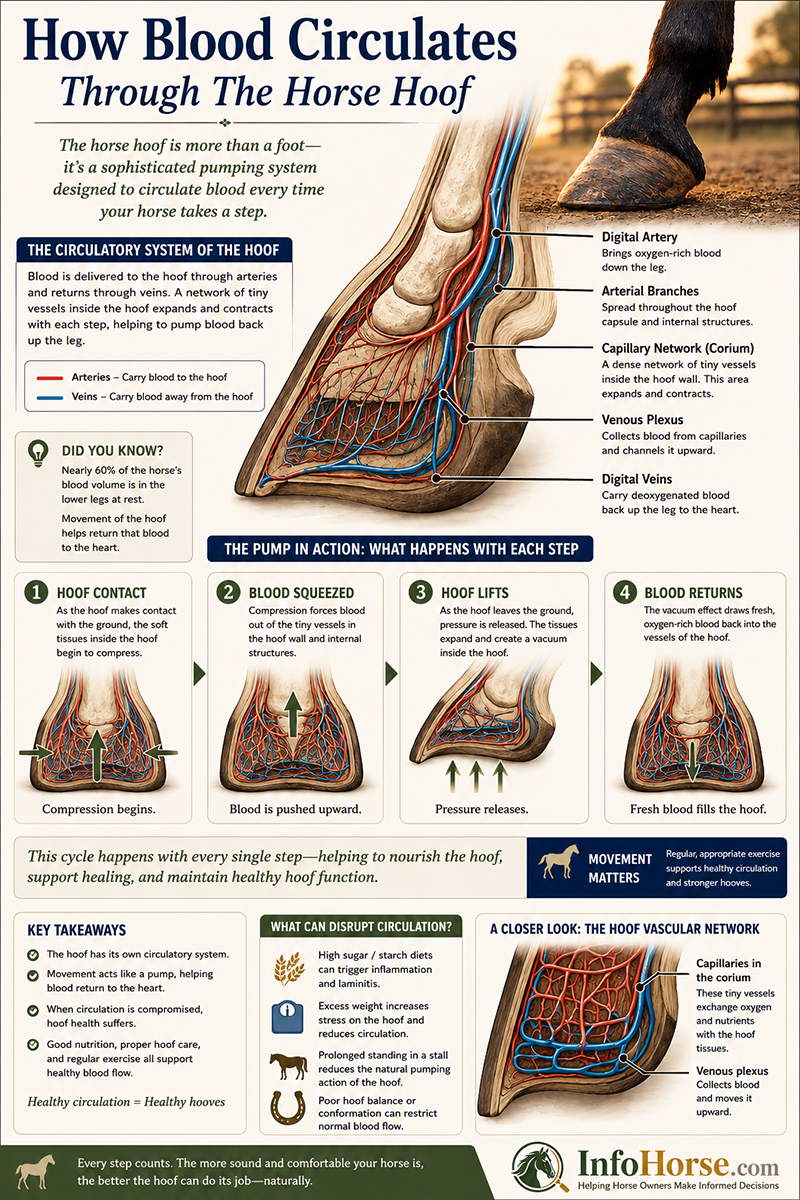
Many horse owners think of the hoof as a hard shell.
It isn’t.
Inside that hoof is an incredibly sophisticated structure of:
- Bone
- Tendons
- Ligaments
- Sensitive tissue
- Blood vessels
- Shock-absorbing structures
Every time your horse takes a step, the hoof slightly expands and contracts.
That movement helps pump blood through the lower limb.
Movement matters.
This is one reason regular, appropriate exercise can be such a valuable part of hoof health.
A horse standing still for long periods receives less of the natural circulation support that movement provides.
That doesn’t mean exercise cures hoof problems—but proper movement often supports healthy function.
What To Look For Every Time You Pick Up A Hoof
Cleaning feet is important.
Observing feet is even more important.
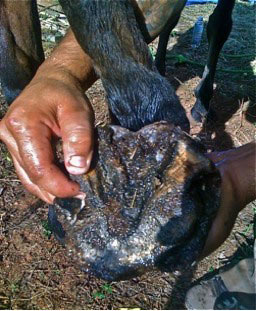
When lifting your horse’s hoof, take a few extra seconds and look for:
Changes In Color
- Red or purple discoloration (possible bruising)
- Dark spots
- Unusual rings
Changes In Texture
- Cracks
- Separation
- Soft areas
- Crumbling hoof wall
Heat
Compare one hoof to another.
A warm hoof by itself may not mean trouble—but heat combined with soreness deserves attention.
Digital Pulse
Many experienced horse owners learn to gently feel for the pulse near the fetlock.
A stronger-than-normal pulse can sometimes accompany inflammation.
Sensitivity
Notice whether your horse:
- Pulls the foot away
- Flinches
- Resists standing
- Seems uncomfortable turning
Changes In Growth
Horizontal rings can sometimes reflect stress, dietary change, illness, or hoof disruption.
Early detection matters.
Hoof issues discovered early often have the best chance of a successful outcome.
What Is Laminitis? What Is Founder?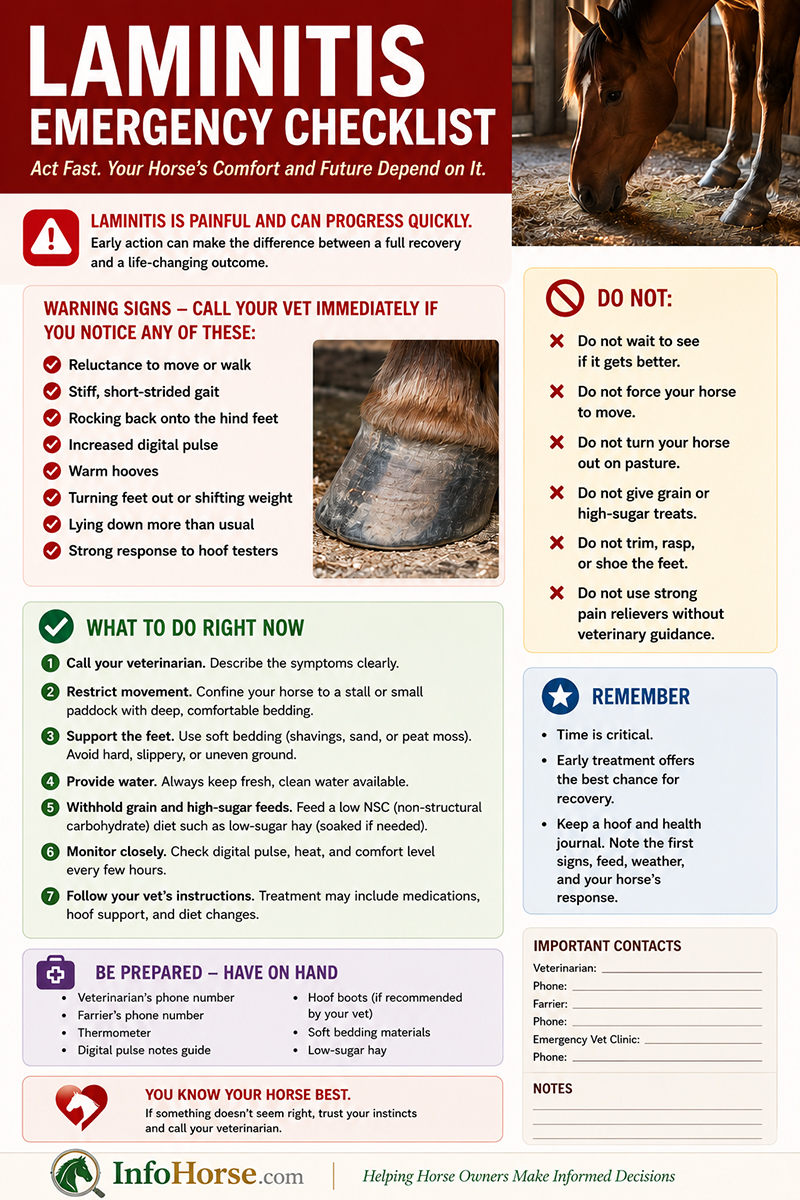
These two words are often used interchangeably—but they are not exactly the same.
Laminitis
Laminitis is inflammation and damage affecting the sensitive structures that connect the hoof wall to the coffin bone inside the hoof.
This condition can become extremely painful and potentially life-changing.
Founder
Founder generally refers to the consequences of severe laminitis.
In advanced situations, the coffin bone may rotate or sink inside the hoof capsule.
That is why horse owners react so strongly when they hear these words.
Common Causes That Increase Laminitis Risk
Dietary Triggers
- Grain overload
- Sudden feed changes
- Large amounts of lush pasture
- Excess sugar and starch intake
Metabolic Conditions
- Equine Metabolic Syndrome (EMS)
- Pituitary Pars Intermedia Dysfunction (PPID / Cushing’s)
Mechanical Stress
- Excess concussion
- Overloading one limb due to injury elsewhere
Weight Concerns
Extra body weight increases mechanical stress on the feet.
Early Signs Horse Owners Should Never Ignore
- Reluctance to move
- Walking carefully or stiffly
- Rocking back onto hind legs
- Shortened stride
- Increased digital pulse
- Warm hooves
- Turning difficulty
- Lying down more than normal
Waiting to “see if it improves” can sometimes cost valuable time.
Why One Sore Foot Can Become Four Sore Feet
This is something many horse owners don’t think about.
Horses are large, heavy animals.
If one hoof hurts, they naturally shift weight to the others.
Unfortunately, that compensation creates more stress.
Soon the overloaded feet begin carrying forces they were never designed to handle.
That is why early intervention matters.
Small hoof problems can create a cascade effect.
Nutrition Matters More Than Many Horse Owners Realize
Healthy hoof growth starts from inside the horse.
Consider discussing with your team:
- Overall diet balance
- Sugar and starch intake
- Mineral balance
- Protein quality
- Omega support
- Body condition management
Remember:
A hoof grown today reflects nutritional decisions made months ago.
Patience is part of hoof improvement.
Daily Habits That Support Healthy Hooves
You do not need expensive tools to improve hoof care.
Simple habits matter.
✓ Pick feet daily
✓ Provide consistent movement
✓ Maintain clean footing
✓ Avoid sudden feed changes
✓ Schedule regular farrier visits
✓ Watch body condition
✓ Address soreness early
✓ Keep records and photos
Small observations repeated consistently often prevent big problems.
The Lesson Of “For Want Of A Nail”
This old poem has survived for generations because horse owners understand its meaning.
For want of a nail, the shoe was lost;
For want of a shoe, the horse was lost;
For want of a horse, the rider was lost;
For want of a rider, the battle was lost;
For want of a battle, the kingdom was lost—
And all for the want of a horseshoe nail.
 The message is simple.
Small problems become big problems when ignored.
Horse hoof care is rarely about one dramatic event.
It is usually dozens of tiny observations and decisions made over time.
Pick up the foot.
Look closely.
Ask questions.
Your horse is counting on you.
Bob Pruitt CEO InfoHorse.com
Helping Horse Owners Make Informed Decisions