

Is Icing Still a Valid Treatment for Injuries?
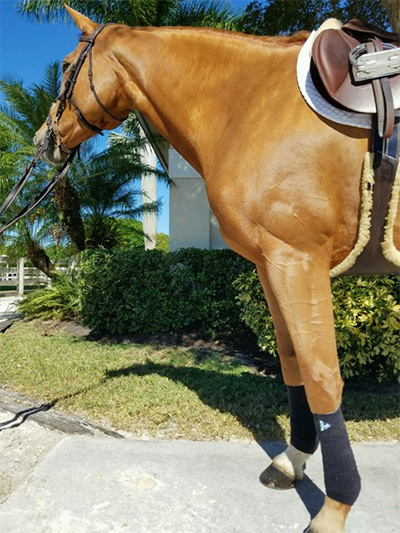
EyeOn® Far Infrared Compression and Support, Breathable, four way stretch Leg Wraps by Douglas Spatz, President, EyeOn Equine Care
The case made here is that ice itself doesn’t reduce swelling—the lymphatic system does—and cited research shows prolonged icing can actually reverse lymphatic drainage, pushing fluid back into the injured area and worsening edema. While icing offers temporary pain relief, it delays the natural inflammatory response that begins tissue repair. The alternative presented is far infrared therapy: breathable, non-ceramic wraps such as EyeOn® Far Infrared Compression and Support Leg Wraps, which increase blood flow, improve lymphatic flow, and reduce swelling without shutting down circulation.
I had a discussion the other evening with a family member about the pros and cons of icing and was told it’s used to treat horse’s legs and is recommended by so many professionals. My response was “Ice does not reduce swelling; the lymphatic system does.” Actually, ice has been shown to reverse lymphatic drainage, causing backflow of fluid into the injured area and worsening edema . What is needed is anything that promotes circulation and movement of fluids that will help the lymphatic system do its job.
Icing damaged tissue does sometimes give temporary pain relief. However, it also delays healing, causes additional damage, increases swelling, and, perhaps most importantly, shuts off the nerve signals that alert you to which movements are harmful to your recovery process. Since good movement is an essential part of the healing process (and bad movement is harmful), you need (and want!) the feedback more than you need (want) a short-term distraction that ultimately makes your problem worse, not better.
The natural inflammatory response is the initial process to the repair and remodeling of tissue, inflammation, repair and remodel. In a healthy healing process, a proliferative phase consisting of a mixture of inflammatory cells and fibroblasts naturally follows the inflammatory phase . Researchers headed by Lan Zhou, MD, PhD, at the Cleveland Clinic, found that in response to acute muscle injury, inflammatory cells within the damaged muscle conduct phagocytosis, contribute to accumulation of intramuscular macrophages, and produce a high-level of Insulin-like growth factor 1, (IGF-1) which is required for muscle regeneration , IGF-1 is a primary mediator of the effects of growth hormone and a stimulator of cell growth and proliferation, and a potent inhibitor of programmed cell death.
Similarly, in 2010, Cottrell and O’Conner stated “overwhelmingly, NSAIDs inhibit or delay fracture healing ”. And you want to stop this critical process of healing by applying ice, because inflammation is “bad”?
The concept that ice facilitates healing became conventional wisdom, which is understandable because from what we could see it was working. However, that wisdom is wrong. I was then told, “We need to ice, because we need to get the swelling out and all the professionals have been doing this for a long time.” Really? Do you believe ice facilitates the movement of fluid out of the injured area? I don’t think so. The lymphatic system is responsible for the removal of swelling and as the Textbook of Medical Physiology states: “The lymphatic system is a ‘scavenger’ system that removes excess fluid, protein molecules, debris, and other matter from the tissue spaces.
When fluid enters the terminal lymphatic capillaries, any motion in the tissues that intermittently compresses the lymphatic capillaries propels the lymph forward through the lymphatic system , eventually emptying the lymph back into the circulation.” Lymphatic drainage is facilitated by contraction of surrounding muscle and changes in compressive forces that push the fluid back to the cardiovascular system.
Ice actually reverses lymphatic drainage and pushes fluid back to interstitial space! There was a study published in 1986 that found when ice is applied to a body part for a prolonged period of time; lymphatic vessels begin to dramatically increase permeability. As lymphatic permeability increases fluid will pour from the lymphatics into the injured area, increasing the amount of local swelling .
Ice can increase swelling and retard debris removal! Ice essentially stops the free flow of blood and fluids; it causes the contraction of local blood vessels and soft tissue. This may inhibit the restoration of normal circulation, which is critical for healing. Extensive use of ice is believed to cause an arthritic type of pain down the line that is worse with weather changes (especially cold and damp) and is difficult to treat.
Ice is considered a major culprit in joint injuries that don’t heal properly.
If your primary goal is to resume intense training or racing immediately, then ice mighty help you do these things. If however, your primary goal is to speed healing, restore full function, and maintain the long-term health of that injured tissue then you need to skip the ice.
This doesn’t mean we should consider using NSAIDs such as bute and Banamine to reduce pain and inflammation either. When your horse is injured, the damaged tissue releases many different types of chemicals into the surrounding tissue and blood stream, some of which cause inflammation while others attract white blood cells to fight infection.
One of the chemicals released at an injury site is called prostaglandin. There are a variety of types to perform a wide range of functions such as cause tissue swelling, inflammation and pain, etc. Some prostaglandins are needed for day-to-day organ function, maintenance and some for reproductive purposes. Without going into detail, NSAIDs inhibit enzymes called cyclooxygenases the body needs to make prostaglandins. If your horse isn’t making as many prostaglandins, then pain, fever and inflammation are reduced. Always consult your veterinarian before administering any NSAIDs.
The question is what can be used to reduce pain, swelling and inflammation without inhibiting the lymphatic system process if we decide not to us NSAIDs or ice? The answer is one that has been used through the ages but until recently might not have been as readably available or possess the traits necessary to offer enough safety, far infrared. Far infrared itself is not dangerous but the methods used to promote far infrared healing need to be taken into account.
If using a material that reflects heat and far infrared one must limit the use to ensure heat doesn’t build up so much that cell survivability is reduced. Far infrared products made of synthetic fibers that reflect heat and can be irritating to the touch should have a limited period of use and extreme care should be taken when exercising a horse while using such products.
Your best options are breathable products that don’t contain any heat reflecting and trapping ceramic material. EyeOn® Far Infrared Compression and Support, Breathable, four way stretch Leg Wraps
Infrared is known as the heat realm of the electromagnetic spectrum. Its wavelength is longer than visible light but shorter than microwaves, the next realm on the electromagnetic spectrum. Infrared light/radiation has varied wavelengths with the shortest of the infrared being the “coolest” or emitting little discernible heat, although electromagnetic waves of any frequency will heat surfaces, which absorb it.
Infrared radiation is defined by water absorption and is often subdivided into: NIR – near infrared (0.75-1.4μm) well suited for fiber optic communication Swir short wavelength infrared (1.4-3μm) increased water absorption Mwir mid wavelength infrared (3-8 μm) objects at room temperature will emit radiation at this length.
Lwir long wavelength infrared (8-15μm) military & industrial applications FIR far infrared (15-1,000μm) soft tissue resonates at this length Far infrared tests conducted on animals and people have shown the following effects: Infrared radiation penetrates deeply, up to 2” – easily passes through the dermal layers. Increases blood flow – bringing oxygen and nutrients to cells facilitating oxygen exchange rate while preventing thrombus formation.
Particularly beneficial to soft tissue injuries. Musculoskeletal Improvements with Infrared heat – of particular relief to those with rheumatoid arthritis. Reduce swelling and inflammation by improving lymphatic flow Relief of muscle spasm Serves as a natural anti-toxin
Our tissues normally produce infrared energy for warmth and tissue repair. Tissue production of infrared energy is associated with a variety of healing responses. The Far-infrared travels the path of fresh water between the cells thus correcting the water molecules bond angle to a perfect hexagonal shape that then collects a total of 6 water molecules to form a collective microtubule of water.
The microtubule then creates a fiber optic response that aligns all the molecules to respond to the correct mechanisms of the blueprint of the DNA. Once far-infrared is within the body at its total capacity, it is repealed. This occurs in all living forms of life and in any material that has moisture or a water molecule within its pores. The US National Library of Medicine, National Institutes of Health lists the benefits of far infrared, which include the following:
Improved cell viability and prevented lactate dehydrogenase release under hydrogen peroxide (H2O2)-mediated oxidative stress and also elevated the intracellular levels of NO and calmodulin Could increase the generation of intracellular NO in breast cancer cells and inhibit growth of murine melanoma cells Increased calmodulin and NO production in RAW 264.7 macrophages Increase the viability of murine macrophages with different concentrations of H2O2 FIR significantly inhibited intracellular peroxide levels and lipopolysaccharide (LPS)-induced peroxide production by macrophages
Blocked ROS-mediated cytotoxicity (shown by measurements of cytochrome c and the ratio of Nadp+/Nadph) While it may be difficult to break old habits one only needs to try a non-ceramic, far infrared product on their own injuries, aches and pains to better understand the effects and provide a better idea how well they will work on your horses and other animals.
Here are some of the most recent experiences people had using EyeOn products:
Naomi Preston whose horse Mustang lady is in the AERC Hall of Fame just finished another race after using EyeOn Far Infrared Compression and Support Wraps.
We used the wraps and after 155 miles, 3 days, deep sand, rocks, and climbing, no swelling in our two boys' legs! Amazing!!
Lee absolutely Loves his back patches. He's put some hard wear on them. Definitely helps his sciatica! What a huge blessing!
The interesting thing at the ride was after using the wraps for a couple days early in the week, their legs never got swollen. Is there a residual effect from using them? It really was amazing, because the rides were difficult, lasting 9-10 hours a day, and lots of deep sand, of which we have none to train in at home. So lee and I expected a fair amount of stocking up. But none.
Naomi Preston on Mustang Lady
Her husband Lee is a farrier and has been seeing a doctor to discuss back surgery. Every time we receive one of their letters we are also thanked again for how we helped him.
That's just one part of what we mean when we say Feel THE Difference!
I was at the Fair Hill International Event in Elkton, MD last month and before finishing my setup Carla Geiersbach the FH

Executive Director informed me Ann Haller, the Competition Manager had a nasty ligament injury to her arm and to see if I could help her. Her arm was swollen, painful and she couldn’t move her thumb . I placed an EyeOn wrap on her forearm and within two minutes she was moving her thumb. Two hours later I saw here opening and closing large barn doors with the very same hand, something she stated "I couldn't do this two hours ago."
Ann pointing to how large the vein is in her healed arm after using and EyeOn wrap for people. The vein simply demonstrates how well EyeOn increased her blood flow.
Pam Wiedemann, another show manager probably in her seventies used EyeOn pads on her shoulder Saturday night and I was informed the following morning by Ann that Pam was curry combing her horse that night and pleased as could be with the results. Even Colleen Martin, another show aid with her reconstructed elbows benefited from
EyeOn wraps after wearing them as she slept. When I asked her what she thought of her trial she raised her arms in the air showing off her pain free flexibility. This apparently was a difficult task for her previously.
Colleen showing how pain free and flexible her elbows were after using EyeOn wraps with this pose, apparently something she couldn’t do previously.
I had show judges, stewards, riders and trainers making purchases and expect many more. I believe all that saw how bad Ann’s arm was were really amazed by her recovery in such a short period of time, especially all the show management, judges and volunteers. One woman who purchased a set of people wraps for her knees and is 84 years of age has around 160 horses under her and by that I assume she’s talking about her horses, family member horses and horses of riders she teaches. The top judge from Kentucky was the very first one to purchase wraps for a horse he has with I believe a suspensory ligament issue.
This is the type of reaction I’ve been getting from all these events with these wraps and new products.
Oh, and you might enjoy reading this message I received from Naomi Preston along with her late mustang horse is in the National Endurance Hall of Fame.
Hi Doug, Another thank you for the back patch!! Indeed a blessing. Lee is amazed! Is the patch the same material as the leg wraps, or is there something extra in the patch? Are they available for purchase? What kind of life are you seeing on these patches before they need to be replaced?
Lee is her husband and also a farrier. He’s been seeing a doctor about his bad back and seriously considering back surgery. Obviously the idea of surgery is no longer being considered. This is actually the second message from her thanking me for the product that helped Lee, a new product under development, an EyeOn patch with the self adhesive. Find out more about Therapeutic Products and other resources in EyeOnEquineCare.com