

Supplement Tips That Help Keep Horses Healthy While Traveling
When the need arises to haul our horses to shows, clinics, vet offices or distant trails, it is our job to ensure that they stay as healthy and stress-free as possible. A combination of proper management and the right nutritional support can ensure your horses’ travels are stress-free! Article by Becky Young for Kentucky Performance Products, LLC
The best way to keep a horse healthy on the road is to change his diet and feeding schedule as little as possible, keep hay in front of him at all times, and start digestive-support supplements a couple of weeks before departure. Research has shown a disrupted routine can produce gastric ulcers in a matter of days and throw the hindgut’s microbial balance off in a matter of hours, so electrolytes to replace what’s lost in sweat—plus natural vitamin E begun 30 days ahead—round out a sound travel plan.
Your truck is gassed up and ready to go. You have gone over your trailer’s safety check list and it passed with flying colors. Your horse’s vaccinations are up to date; you have a negative Coggins and health cert tucked in the glove box. Your equine first-aid kit is fully stocked. Your tack is clean and in good repair. Your horse is fitted out with head bumper, tail wrap and shipping boots. You are ready to go. Or are you? What about your horse's nutritional needs while you are away from home? Sure, you packed some hay and enough pellets for the weekend, but did you consider just how stressful traveling is on your horse's system?
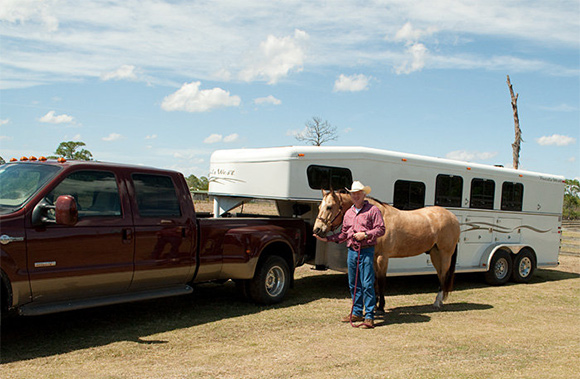
Traveling is stressful for horses Research has shown that when a horse's routine and diet are disrupted, he can develop gastric ulcers in a matter of days. The sensitive microbial population of your horse’s hindgut can be thrown out of balance in a matter of hours. If the balance is disrupted enough it can cause colic, diarrhea or laminitis. Excessive sweating and poor water intake can lead to dehydration.
Ohio State University conducted a research trial in which horses were transported in trailers. Blood samples collected during and after the shipping period revealed suppression of the immune system. Regardless of how careful you are, some change and stress is inevitable; therefore, horses on the go can benefit from added support through nutritional supplementation.
Plan ahead and make all diet changes slowly While traveling, it is important to change your horse's diet and feeding schedule as little as possible. If you know you won’t be able to stick to your normal feeding schedule, begin to acclimate your horse to the new schedule seven to ten days prior to your departure. If your horse is normally out on pasture all day, you will need to start slowly weaning him off grass and start adding hay to his diet so his digestive tract has time to adapt to the change.
It is best to take enough hay and concentrate (grain or pellets) to last the entire trip, but that isn’t always practical. If you can't take all of your hay and concentrate with you, be sure to take enough so that you can slowly introduce new feedstuffs (both hay and concentrates) over a five- to seven-day period. Begin by replacing some of the old feed with some of the new feed.
Do this each day until the transition is complete. Plan for the same transition when you get home; to accomplish this you may need to bring some of the new feed back to your farm with you.
Feed free-choice hay or several hay meals throughout the day One of the best ways to keep a horse healthy on the road is to keep hay in front of them at all times. While munching on hay, horses produce saliva that naturally buffers their stomachs and reduces irritation from excess acid. Eating hay stimulates the thirst response and keeps horses drinking. A full belly of hay acts like a water reservoir and helps maintain good hydration levels. A constant flow of fiber through the hindgut ensures your horse's microbial population stays balanced. Also, horses with a full belly are less likely to bolt their food, which can lead to choking.
Ensure a healthy digestive tract through supplementation When you are traveling, it is more important than ever for your horse to remain in top condition. While keeping your horse on schedule and making feed changes slowly will help ensure digestive health, it may not be enough to ward off stress-related digestive problems. Adding supplements such as Neigh-Lox (for healthy stomach) or Neigh-Lox Advanced (complete digestive tract support) help maintain proper pH levels, support good microbial populations, and sustain healthy tissues.
This will greatly reduce the risk of colonic/gastric ulcers, colic and laminitis that can be caused by travel-related digestive tract challenges. It is recommended that you begin adding the digestive supplements to your horse's diet a couple of weeks before you plan on departing.
Continue to feed it throughout the trip and for several weeks after returning home. As with any feedstuffs, introduce the new supplement slowly.
Protect your horse from dehydration When horses sweat they lose precious fluids and electrolytes. There are many reasons that traveling horses sweat. It can be from anxiety, excitement, or just because they are enclosed in a warm trailer. Some horses sweat a little and others become ringing wet. In certain cases, stressed horses relieve themselves of excessive manure that has a cow flop consistency.
Such behavior will also contribute to fluid and electrolyte losses. Regardless of how much your horse sweats or poops, the lost fluidsand electrolytes will need to be replaced if your horse is to remain healthy. Supplementing with electrolytes is highly recommended for horses on the go . A well-balanced electrolyte supplement such as Summer Games will encourage drinking and replace lost electrolytes. Horses should be offered water frequently throughout their trip.
We don't recommend dissolving electrolytes in your horse’s drinking water as this may reduce his or her water intake. It is best to dose electrolytes with an oral dosing syringe or mix them in the feed so you know exactly how much you are providing and how much your horse is consuming! Summer Games Plus is an electrolyte paste: a combination of electrolytes and Neigh-Lox in a dosing syringe.
It is easy to use and convenient. If you have a picky horse that isn’t fond of strange water, bring water from home or acclimate your horse to flavored water before you leave on your trip so he will continue to drink on the road. Remember, eating hay encourages drinking and a belly full of hay acts like a water reservoir. When taking short trips or when you have a layover, make sure to feed your horses a full hay meal and give them time to eat and drink before loading up.
Add some helpful vitamins While your trailer is traveling down the road you are sitting comfortably in your seat, but your horse is getting a workout. He is expending muscle energy to keep himself upright in the trailer. During the process of producing energy (muscle metabolism), byproducts called reactive oxygen species (ROS) are released. The body calls on antioxidants to neutralize the ROS’s damaging effects.
If your horse’s antioxidant reserves become exhausted, the ROS begin to accumulate and cause damage to cell membranes. This damage can lead to muscle soreness and other muscle-related problems. Providing extra antioxidants such as the natural vitamin E found in Elevate will bolster your horse’s antioxidant reserves and reduce the risk of muscle damage.
Protect the immune system Your horse’s immune status is also greatly impacted by stressful situations. Whether traveling to a remote ride in the mountains with friends or participating in a local show, your horse will undoubtedly be coming into contact with germs he’s not encountered before. Traveling with a compromised immune system is not an ideal situation, so supporting the immune system with natural vitamin E is always a good plan of action.
Natural vitamin E supplementation should be started 30 days prior to traveling, especially for horses that are not grazing full-time on fresh pasture (the best source of natural vitamin E). Horses should remain on natural vitamin E as long as they are traveling or anytime they are not grazing on fresh green pasture for the majority of the day.
Keep high-strung horses calm Some horses are just more excitable than others. Whether they are young and green or just high-strung, they see you getting ready for a trip and they start to pace their stalls. Nervous horses are harder to handle and more likely to become injured or develop stress-related illnesses. Tranquilizing your horse for purposes of shipping is never a good idea.
Horses need all their senses to stabilize their shifting weight as they bump down the road (or in the air). Therefore, providing calming aids with researched nutrients such as thiamine (vitamin B1), magnesium, and alpha-lactalbumin is a great alternative. A calming paste such as Trouble Free should be fed a few hours prior to travel. Some horses react sooner than others to calming substances, so it is a good idea to set up a trial run before you hit the road.
That way you will know just how long the supplement will take to impact your horse.
When the need arises to haul our horses to shows, clinics, vet offices or distant trails, it is our job to ensure that they stay as healthy and stress-free as possible. A combination of proper management and the right nutritional support can ensure your horses’ travels are stress-free. And when your horse is happy, you are happy!\
Contact: Becky Young Kentucky Performance Products, LLC P.O. Box 1013 Versailles, KY 40383 PH: 800-772-1988; 859-873-2974 FAX: 859-873-1163 KPPusa.com KPPvet.com