

Your Truck Says It Can Tow That Horse Trailer. But Should It?
How to Match Your Truck, Trailer, Horses and the Trip You Didn't Plan to Take
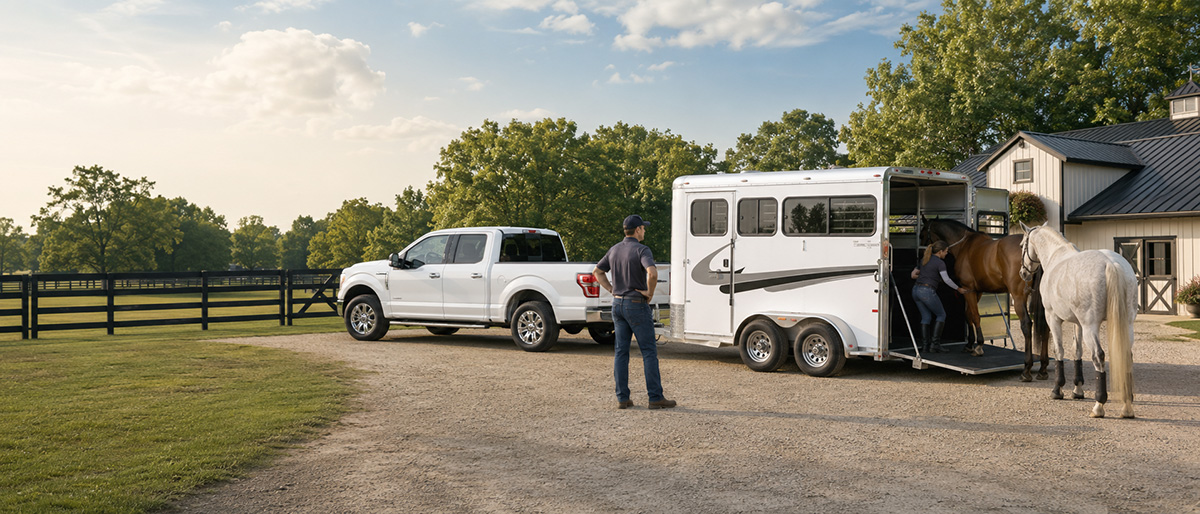
A truck’s advertised towing capacity alone can’t tell you whether it should pull a given horse trailer—the real test is whether your specific truck can pull, carry, stop and control the combination as it will actually be loaded. That means adding horses, tack, hay, feed, equipment and water (about 8.3 pounds per gallon) to the trailer’s empty weight, then checking that total against your truck’s GVWR, Gcwr, rear-axle, payload and tongue-weight limits; tongue weight on a bumper-pull trailer generally runs about 10 to 15 percent of loaded trailer weight.
The safest approach is to buy for your hardest reasonable trip—not your easiest—and leave a comfortable margin between your loaded weight and the truck’s limits.
Ann thought she had a fairly simple question.
Can our truck pull a three-horse bumper-pull trailer?
We have a 2025 Chevrolet Silverado 1500. Most of the time, we would be hauling only two horses. Sugar weighs about 1,050 pounds. Zoey is a bigger mare, probably at least 1,300 pounds.
Our typical trip isn't particularly demanding. We might haul eight or ten miles down the road. We can avoid the freeway. We aren't planning to cross the Rocky Mountains or haul horses from Texas to Florida.
So, can our truck pull a lightweight three-horse trailer?
Possibly.
But after looking more closely at the question, we realized something.
Can my truck pull this trailer?" may be the wrong question. The better question is: "Can my truck safely and comfortably handle this trailer, my horses, my equipment, and the hardest reasonable trip I might someday need to make?
Those are two very different questions.
And understanding the difference may be one of the most important things a horse owner can do before buying a trailer.
Start With the Horses - Not the Trailer
Most of us shop for horse trailers by looking at trailers.
That seems logical.
Two-horse or three-horse?
Bumper pull or gooseneck?
Aluminum or steel?
Slant load or straight load?
But perhaps we should begin somewhere else.
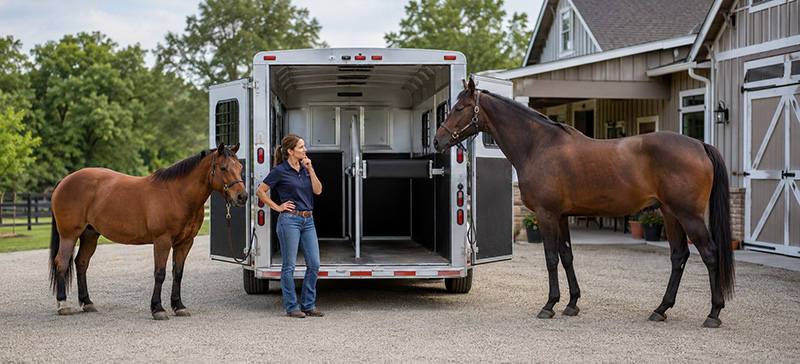
Start with the horses who will actually be standing inside it.
How much do they weigh?
How tall are they?
How long-bodied are they?
Are they Quarter Horse-size horses, smaller Morgans, large Thoroughbreds, or 17-hand Warmbloods?
Does one horse need an unusually wide stall?
Does one scramble while traveling?
Does an older horse have difficulty stepping up?
Does one become nervous in a confined space?
How many horses will you actually haul—not just occasionally, but most of the time?
These questions matter because the words "two-horse trailer" or "three-horse trailer" don't tell you nearly as much as you might think.
A three-horse trailer is not one standardized size.
One three-horse trailer may be substantially taller, wider, longer and heavier than another. Stall dimensions can differ. Construction materials can differ. Axles and GVWR can differ. Tack-room configurations can add size and weight.
A trailer designed to comfortably accommodate large Warmbloods may be very different from one purchased to haul smaller horses.
So don't begin with:
I want a three-horse trailer." Begin with: "I need a trailer that safely accommodates these horses.
Then start doing the math.
The Number on the Brochure Isn't the Weight Going Down the Highway
This is where horse trailer shopping can become confusing.
We have a helpful tool here to help you figure this out. Nothing replaces your good judgement!
You find a beautiful trailer advertised at a certain empty weight.
Great.
Except that's not what your truck will actually be towing when you leave the barn.
Now add the horses.
Then add the saddles.
Bridles.
Grooming supplies.
Buckets.
Hay.
Feed.
Portable panels.
Blankets.
Emergency equipment.
Everything that somehow migrates into the tack room and never seems to come back out.
And what about water?
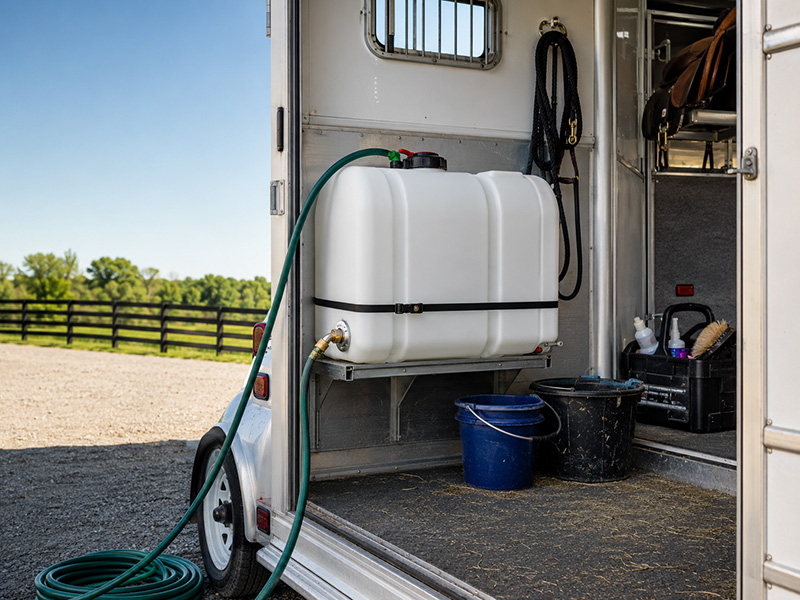
Water weighs approximately 8.3 pounds per gallon. Put 30 gallons of water aboard and you've added roughly 250 pounds before considering the weight of the tank itself.
Suddenly, the trailer that looked comfortably within your truck's towing capacity on paper has gained thousands of pounds.
This is why I think every horse owner should calculate what I call the:
Real Traveling Weight
Start with:
Trailer empty weight
Add:
Horse #1
Horse #2
Horse #3, if applicable
Then add:
Tack
Hay and feed
Water
Equipment
Anything else carried in the trailer
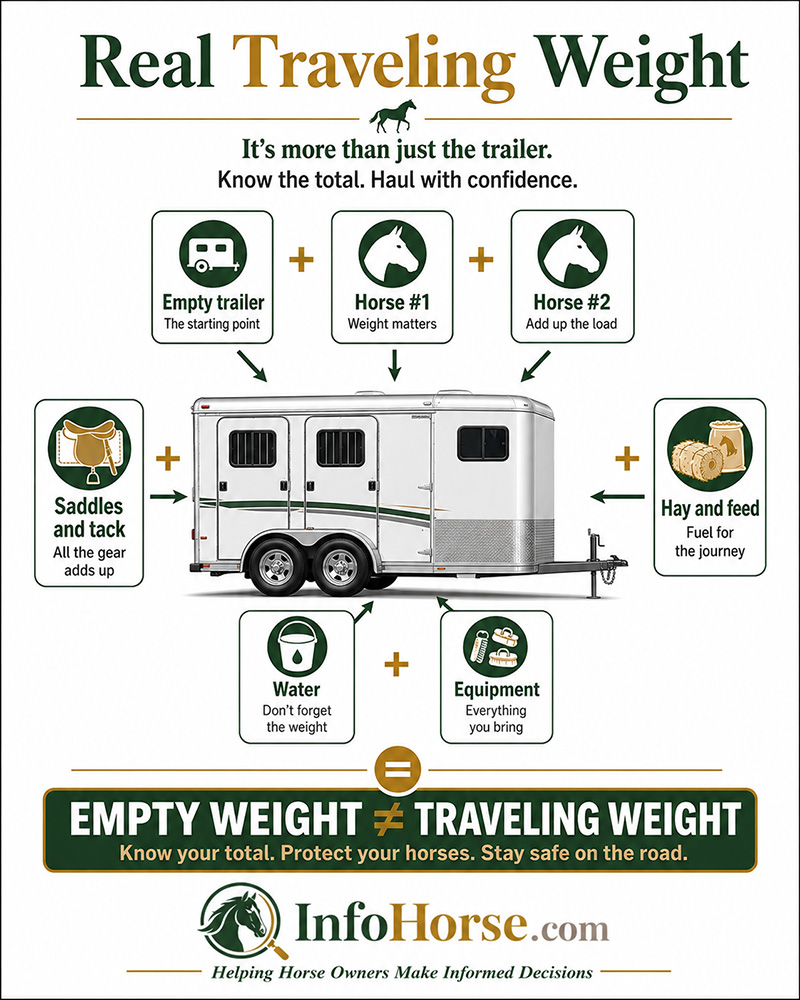
Now you are getting closer to the number that actually matters.
Better yet, once you have the truck and trailer, weigh the entire combination when it is loaded the way you really travel.
Truck manufacturers themselves warn that published maximum trailer ratings are not the whole story. Chevrolet, for example, explains that passengers, cargo, equipment, trailer tongue weight and the configuration of the individual truck all have to be considered, and that the tow vehicle and trailer combination must remain within applicable GVWR, Gcwr, rear axle and trailer-weight limits.
This brings us to the next problem.
Your Truck Has to Do More Than Pull
When someone asks:
"Can my truck pull this trailer?"
We tend to think about horsepower.
Can the engine get the load moving?
Can it climb the hill?
But your truck actually has four jobs.
Pull
Can the truck move the loaded trailer without exceeding its rated capabilities?
Carry
Can the truck handle the people, cargo and the portion of the trailer's weight that is transferred onto the truck through the hitch?
This is where payload and tongue weight can become critical.
With a conventional bumper-pull trailer, Chevrolet's current trailering guidance notes that tongue weight is generally expected to be about 10 to 15 percent of loaded trailer weight, while also warning that tongue weight cannot cause the vehicle to exceed its GVWR, rear axle rating or maximum tongue-load limit. The exact requirements of the tow vehicle and trailer should always be followed.
Stop
Can the truck and trailer braking systems safely control and stop the entire combination?
A horse trailer isn't carrying lumber.
It is carrying animals that stand high above the road, move their weight, react to braking and turning, and cannot anticipate what the driver is about to do.
Properly functioning trailer brakes and a correctly set up braking system matter.
Control
Can the truck maintain stability if you have to brake hard?
Change lanes suddenly?
Encounter strong crosswinds?
Drive in heavy rain?
Have another driver pull out in front of you?
The question isn't simply whether the truck can get the trailer moving down a flat road on a pretty Saturday afternoon.
Pull. Carry. Stop. Control.
Your truck needs to do all four.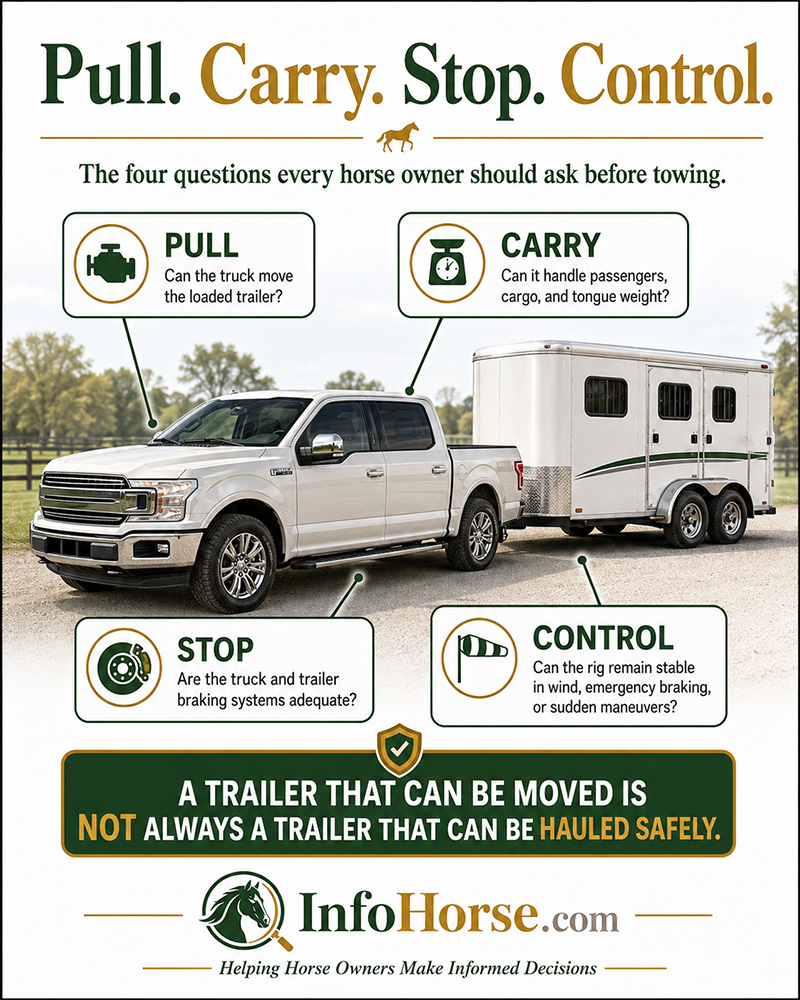
The Two-Horse vs. Three-Horse Question
Our own situation is a good example.
Ann liked the flexibility of a three-horse trailer.
We normally have two horses to haul, but a third stall sounds useful. Maybe someday another horse comes along. Maybe we need the extra space.
And depending on the exact trailer and the exact configuration of the truck, a lightweight three-horse bumper pull could potentially work for the kind of short, local hauling we normally do.
But here's where we changed our thinking.
We were trying to determine whether we could make the three-horse trailer work.
Maybe the better question was:
Why were we trying so hard to make it work?
We really need to haul two horses.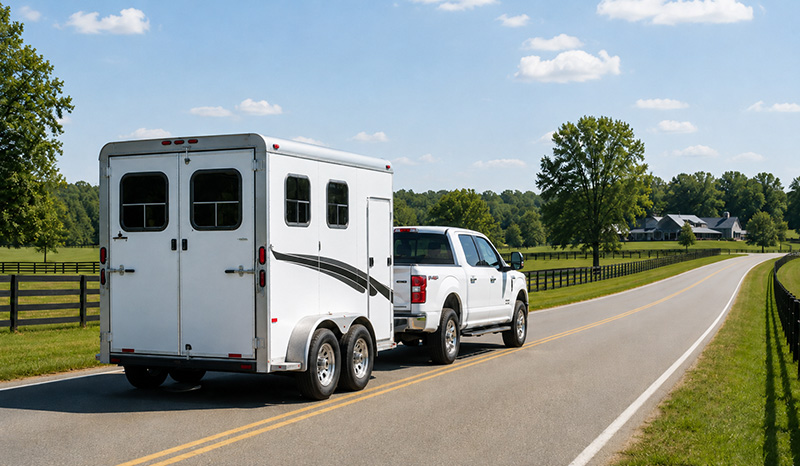
A properly matched two-horse trailer would weigh less and potentially leave us with a greater margin between what we're asking the truck to handle and the truck's actual limits.
That margin has value.
You may never see it.
You may never need it.
Until the day you do.
Don't Buy for Your Easiest Trip
This may be the most important advice in this article:
Don't buy for your easiest trip. Buy for your hardest reasonable trip.
On a normal day, Ann might put Sugar and Zoey in the trailer and drive eight miles.
Maybe there are two saddles in the tack room and a little equipment.
Fine.
But what happens two years from now?
Maybe we decide to take the horses somewhere several hours away.
Maybe we move.
Maybe we have a family emergency.
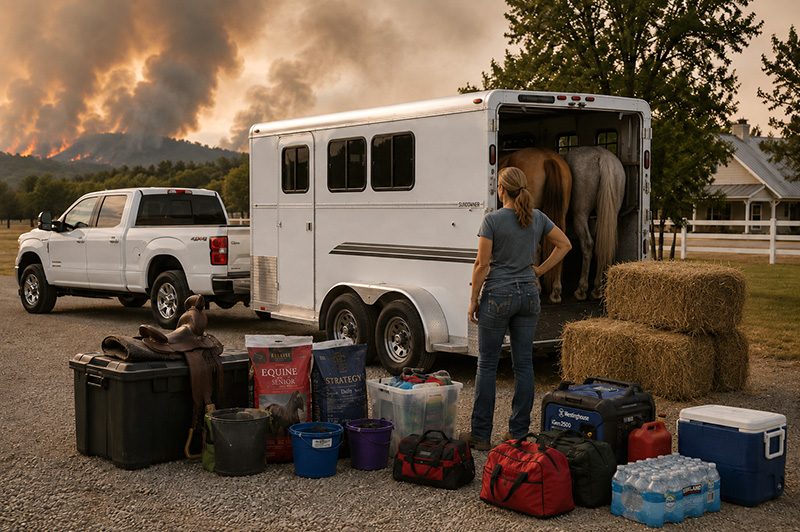
Or maybe we're told we need to evacuate.
Suddenly, we're not packing for an afternoon.
We're packing for a week or two.
Now the trailer may be carrying hay.
Feed.
Buckets.
Extra tack.
Blankets.
Emergency supplies.
Possibly a full water tank.
The truck may be carrying additional people, luggage, pets and supplies.
And instead of driving eight miles on familiar roads, we could be driving for hours in heavy traffic, possibly in bad weather, surrounded by thousands of other people trying to leave the same area.
That's not the day I want to discover that the truck-and-trailer combination we chose was already close to its limits.
This is where safety margin becomes important.
At InfoHorse, we're not interested in helping you figure out the absolute biggest horse trailer your truck can possibly tow.
We're interested in helping you choose a truck-and-trailer combination that can comfortably and safely handle your horses on the trip you planned—while leaving enough margin for the trip you didn't.
If one choice leaves your combination close to the edge and another gives you a comfortable margin, we suggest taking a serious look at the safer choice.
Not because the larger trailer is necessarily impossible to tow.
Because your horses are standing inside it.
Can I Tow It? Is Not the Same as Should I Tow It?
This gives horse owners three different questions to ask.
1. Can My Truck Tow It?
This is the numbers question.
What is the truck manufacturer's rating for your specific truck?
Not the television-commercial number.
Not the maximum available towing capacity for the model line.
Your truck.
Your engine.
Your cab.
Your bed.
Your drivetrain.
Your axle configuration.
Your equipment.
Your tires.
Your hitch.
Look at the truck's labels and owner's manual. Know the GVWR, Gcwr, rear axle limits, payload considerations and hitch limitations that apply to your particular vehicle.
Then compare those numbers with the trailer as it will actually be loaded.
2. Can My Truck Comfortably Handle It?
Now we move beyond the basic ratings.
How much safety margin remains?
Are you routinely going to be near the upper limits?
Will you be traveling through mountains?
At interstate speeds?
In strong winds?
In extreme summer heat?
How far will you usually travel?
Are you carrying one horse or three?
Do you travel light, or does your tack room look like a small feed store by the time you leave home?
The trailer that works beautifully for one horse owner may be the wrong choice for another—even behind the same model truck.
3. Should I Tow It?
Here's where judgment enters the picture.
Maybe the numbers technically work.
But are they comfortable?
Are you buying a trailer based on everything going perfectly?
What happens when you add another 300 pounds?
What happens when your plans change?
What happens when the trailer isn't as lightly loaded as you expected?
What happens when you have to travel much farther than usual?
If you keep finding yourself saying:
It should be okay as long as..." ...pay attention to everything that comes after those words. "As long as I don't carry much water.
As long as I only haul two horses." "As long as I don't go very far.
As long as the tack room isn't full." "As long as I stay off the highway.
Maybe you have found the limit.
Or maybe you've found a sign that you should consider a different trailer—or a different tow vehicle.
When horses are involved, being comfortably within the limits is a much nicer place to be than barely underneath them.
Then There's One More Question: Should I Tow It Today?
You could have a perfectly matched truck and trailer and still have no business pulling out of the driveway this morning.
Especially when you're using an older truck—or a used trailer that's new to you—roadworthiness matters.
Before hauling horses, consider the condition of the entire rig.
How are the trailer tires?
Are they properly inflated for the trailer manufacturer's and tire manufacturer's requirements?
Have they been inspected for damage, deterioration and abnormal wear?
What condition is the spare tire in?
Nhtsa emphasizes that correct tire pressure is fundamental to tire safety and durability and recommends checking tires, including the spare, regularly when they are cold.
When was the trailer last serviced?
Have the wheel bearings, brakes and running gear been inspected and maintained according to the manufacturer's recommendations?
Is the trailer hitch in excellent condition?
Is the receiver on the truck in excellent condition?
Is the coupler properly secured?
Are the safety chains correctly attached?
Is the breakaway system working?
Plug in the electrical connector.
Do the running lights work?
Brake lights?
Turn signals?
Are the trailer brakes actually working?
Does anything feel different from the last time you hauled?
And don't forget the truck itself.
A safe trailer attached to a poorly maintained tow vehicle does not create a safe rig.
This isn't meant to replace a proper professional trailer inspection or scheduled service.
It's simply a reminder:
The towing capacity printed on a truck doesn't know that one trailer tire is losing air.
It doesn't know the trailer hasn't been serviced.
It doesn't know a light isn't working.
It doesn't know the hitch has been damaged.
Those things are your responsibility.
Technology Can Help—but It Doesn't Replace Good Decisions
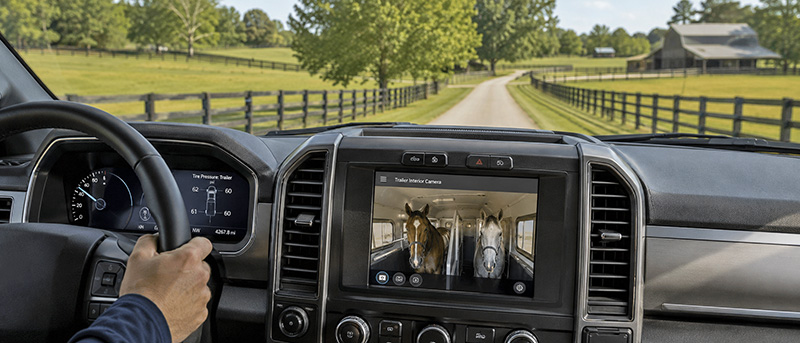
Modern trailering technology gives horse owners tools we simply didn't have years ago.
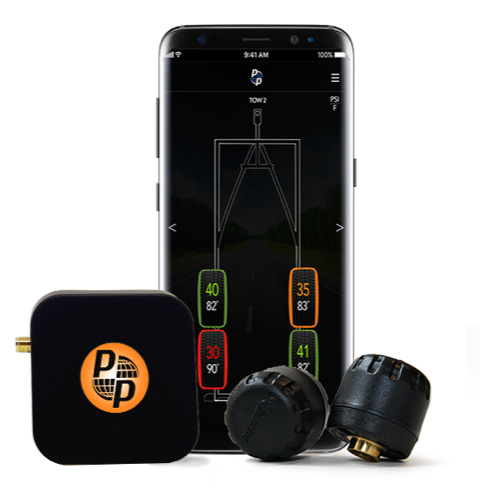
A trailer tire-pressure monitoring system can help the driver keep an eye on tire pressure while traveling.
An interior trailer camera can let you see whether a horse is standing quietly—or whether something is happening behind you that requires attention.
Rear and hitch cameras can make connecting and maneuvering a trailer easier. Some newer trucks offer sophisticated trailering camera systems and other driver-assistance features. Chevrolet, for example, currently offers multiple available camera views and trailering aids on certain Silverado configurations.
These are valuable tools.
But technology can't make an overloaded combination safe.
A camera can't increase your payload rating.
A tire monitor can't compensate for a worn-out tire.
A more powerful engine can't fix inadequate tongue-weight capacity.
Technology should be another layer of safety—not a reason to ignore the fundamentals.
What About Trailer Features?
Ceiling height, stall width, ramps, step-ups, escape doors, tack rooms, windows, roof vents, water tanks and other options absolutely matter.
But rather than simply checking features off a shopping list, ask why you need them.
Your 16.3-hand horse technically fits in the trailer—but does he have enough room to balance comfortably?
Your older horse can step into the trailer—but would a properly designed ramp make loading easier for him?
Your horse is difficult to unload—would the trailer's configuration make an emergency situation harder or easier?
 You live in a hot climate—does the trailer provide adequate ventilation through windows, roof vents and other openings?
You want a large water tank—have you included the weight of that water in your loaded-trailer calculations?
You love the enormous front tack room—but how much equipment will eventually end up in it?
The best horse trailer isn't the one with the longest list of features.
It's the one whose design makes sense for your horses, your truck and the way you actually travel.
The Four Questions I Think Every Horse Owner Should Ask
Before buying a trailer—or before hitching up a combination you aren't sure about—stop and ask four questions.
Can my truck tow it?
Do the manufacturer's ratings for my specific vehicle support the fully loaded combination?
Can my truck comfortably handle it?
After I add my horses, people, tack, feed, hay, water and equipment, do I still have a reasonable safety margin?
Should I tow it?
Am I choosing this combination because it is genuinely well matched—or because I am trying to make a trailer I really want fit a truck that is right on the edge?
Should I tow it today?
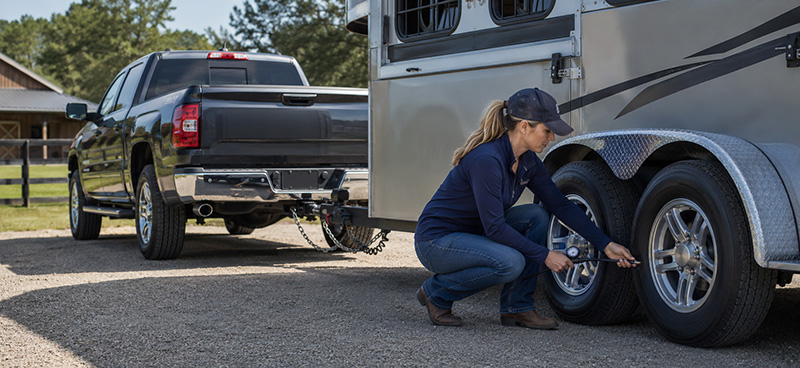
Are the truck, hitch, trailer, tires, brakes, electrical system and other critical components ready for the road right now?
Those may be four of the most important questions you ever ask about a horse trailer.
Because when you pull out of the driveway, you aren't simply towing a trailer.
You're towing your horse.
And at InfoHorse, we think the right question isn't:
What's the biggest trailer I can get away with pulling?
The better question is:
What's the safest trailer for my horses, my truck and the places life may someday ask us to go?
When the answer is close-when the numbers are on the bubble-our advice is simple.
Choose the safer option.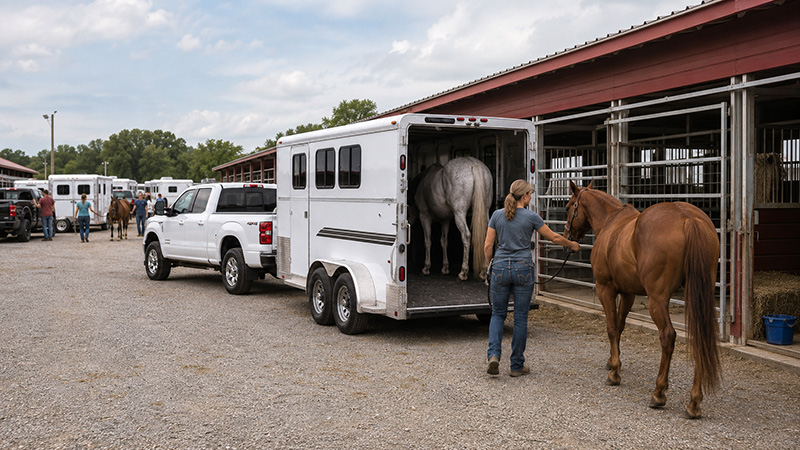
You may never need that extra margin.
But someday, you might be very glad it's there. Here is your Horse Trailer Buyers Guide!