

Turnout; necessary for your horse's good health Article by Karen Elizabeth Baril
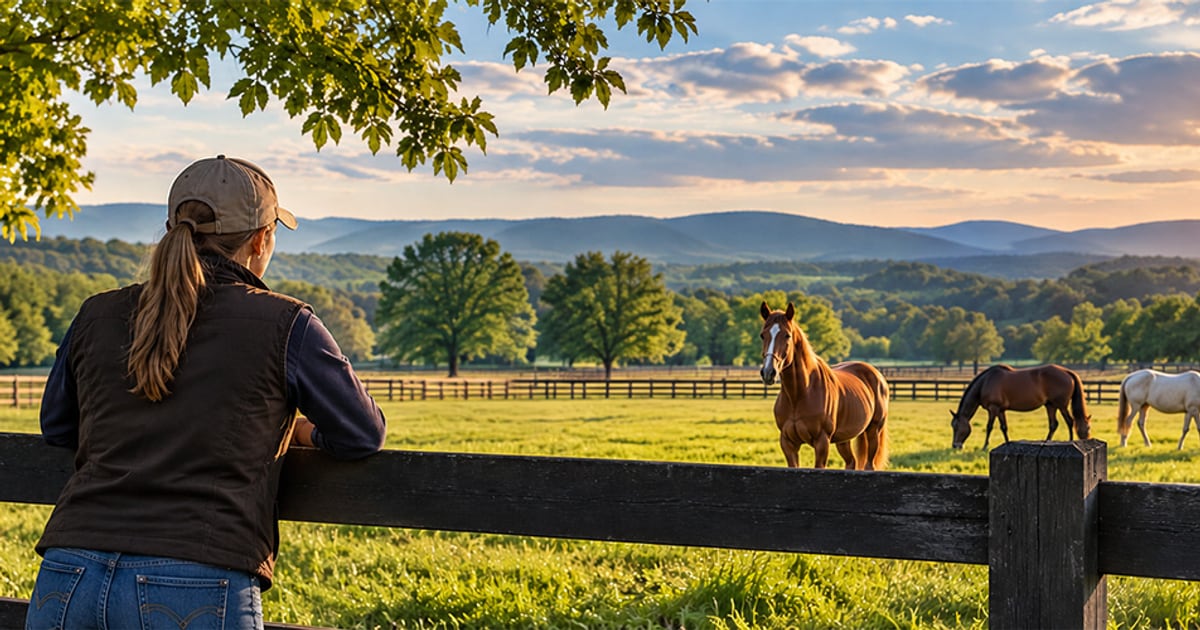
Daily turnout is essential to a horse’s physical and mental well-being—study after study shows it should never be treated as an optional extra. Free movement keeps the whole horse working efficiently: a 2009 Animal Health Trust study found that turnout on uneven terrain decreased lameness and improved bone, tendon, and muscle structure, while grazing on the move supports digestion, time out of the stall protects the respiratory system from dust and ammonia, and group turnout heads off confinement vices like weaving and cribbing.
My horse is in competition. I can’t risk him getting hurt in turnout. My horse is a stallion. He can’t be turned out safely. I board at a barn that doesn’t offer daily turnout. Over the years, I've heard many practical reasons for keeping horses confined in stalls. Risk of injury, sun-bleached coats, or potential nicks and scrapes on the show horse's coat. Limited turnout space can be a problem as is time or a lack of helpers to swap horses mid-day.
But research shows that unlike treats or blanket removal, daily turnout should never be considered an a la carte item. In fact, study after study shows that daily turnout is essential to your horse's physical and mental well-being. Not only does it make him happier, but it also prevents injury.
Your veterinarian more than likely recommends turnout to protect your horse's joint health, respiratory health, and digestive well -being. Think of your horse's body as a well-oiled machine - it's designed for movement. In fact, the more freedom of movement your horse enjoys, the more efficient the following four systems work for him:
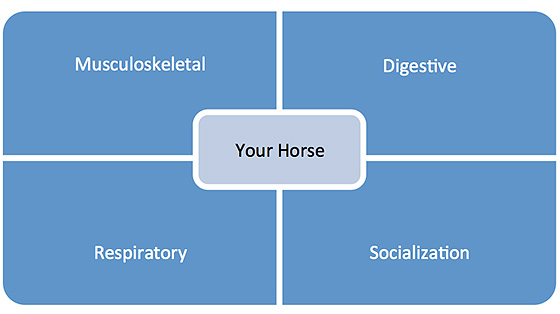
Musculoskeletal System: Whether you compete with your horse or not, he’s designed for athleticism. If your horse is in good health, you know he can run, buck, kick, and gallop all at a moment's notice. But, he needs turnout to keep himself fit. In a 2009 study conducted by Dr. Rachel Murray of The Animal Health Trust, researchers found that turnout on uneven terrain decreased lameness and improved bone, tendon , and muscle structure.
Other studies show that turnout for young horses strengthens and balances the entire musculoskeletal system- -also known as the locomotor system. Furthermore, horses that were turned out showed more coordination, balance, rhythm, and cadence than horses confined to a stall. Better balance and coordination in the young horse shapes their future health.
These horses suffer fewer joint problems throughout their lives because they’ve learned how to stay on their feet - even on uneven terrain.
Digestive Health: Your horse's digestive system works best if it has two things---small, frequent meals and motility. As your horse grazes or chews hay, he produces saliva which works to buffer his stomach's gastric acid. Horses are designed to graze anywhere between 16-22 hours a day. As he does so, he moves from place to place - it's that movement that creates gentle muscle contractions to keep his tummy and his digestion in good shape.
Respiratory System: RAO (recurrent airway obstruction) is a common problem in stalled horses. It's often compared to asthma in humans and while scientists don't know exactly what causes RAO, they do know that environmental triggers---like ammonia particles and dust---cause flare-ups. Every barn has antigens like mold, organic dust particles, and endotoxins, all of which are present in hay, straw, bedding, and even your horse's own dander. Bottom line? The less time your horse spends in his stall, the better his respiratory system will perform.
Socialization and Mental Well-being: The more your horse engages with other, compatible horses, the easier he’ll be to handle. Horses that enjoy daily turnout in small or large groups tend to be more focused and less spooky. Think of being forced to stay in a cubicle all day. After 40 hours a week/52 weeks a year, you might start doing mischievous things---like tossing wadded paper at your co-worker when the boss wasn't looking .
Or you might get a little obsessive, biting your fingernails or even start to pull your hair out. Your horse, designed to be on the move, feels even worse. Vices like weaving, cribbing, stomping, grinding teeth, and wood chewing often are the side effects of confinement.
Here are few of the most common reasons for keeping your horse stalled and a solution or two:
Problem - Solution My horse is a show horse and the sun will dull or fade his coat. 'Try turning your horse out only at night to avoid UV rays ' Use a light-weight UV protectant sheet.
My horse is insulin resistant and can't be turned out on grass. ' Establish a sacrifice or dirt paddock. ' Use a grazing muzzle if approved by your veterinarian.
My horse gets picked on by other horses. ' Some bumps and scrapes are a normal part of turnout, but you can keep your horse in a separate paddock. ' Decrease the number of horses in the turnout.
My horse gets too wild in turnout. I’m afraid he’ll injure himself. ' The more turnout your horse enjoys, the less likely he’ll be to run wild, but try turning out after you exercise him so that he has less pent up energy.