

How Grazing Benefits Your Horse's Health
Remember, horses do not eat to be full but only enough to not be hungry, thus the term trickle feeder. Article from Walt Tharp Grazing Feeders Inc. Porta-Grazer™
Grazing keeps a horse healthy because his digestive system is built for it—he’s a hind-gut fermenting trickle feeder who secretes stomach acid continuously, up to 16 gallons a day, whether he’s eating or not. The steady flow of well-chewed forage and saliva from near-constant grazing buffers that acid and keeps the stomach’s pH in balance. When a horse can’t graze, an empty, acidic stomach opens the door to gastric ulcers, colic, and stall behaviors like cribbing—and colic is the largest cause of premature death in equines.
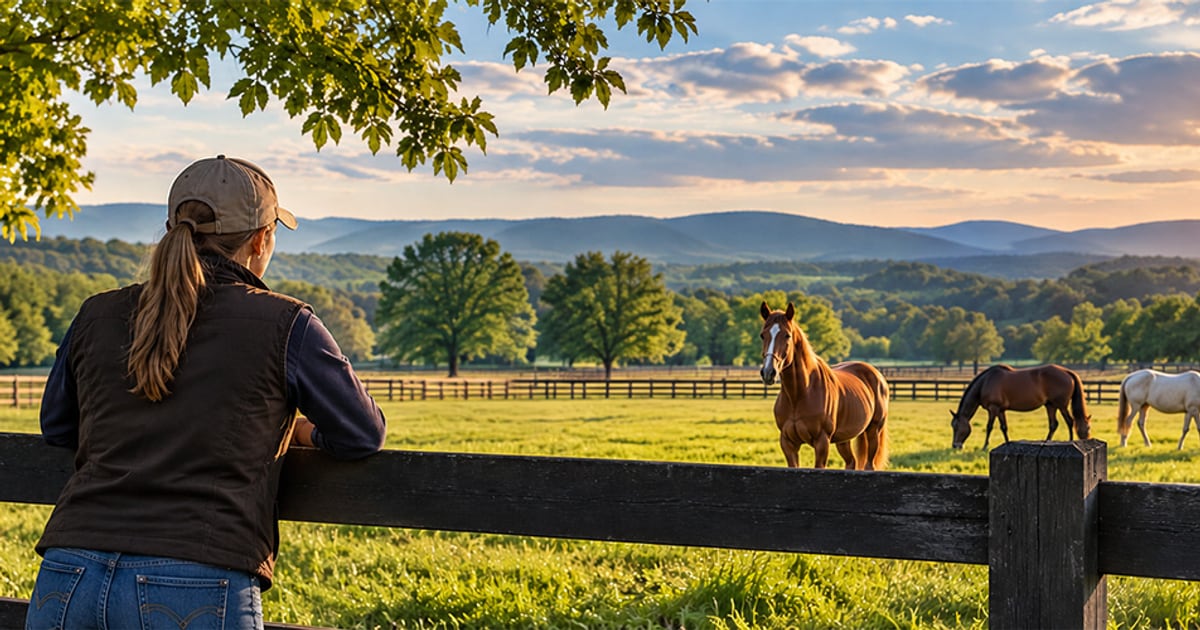
Take a minute to look at your horse's world through his eyes. He has evolved from the beginning of his time to be on the move, twenty-four hours a day if necessary to survive. He is agile and fleet of foot to evade the always present predators looking for him to be their next meal. He travels light, having a small stomach carrying little food constantly eating and moving. This is the mind and body of the pet in your paddock. Compare his natural feeding routine to the one you have provided him and you will see why he is not as healthy and contented as he should be.
It is natural for a horse to travel and search for his food constantly. Everywhere he looks there is food. He stands in it, walks in it, and lies on it. This is his world, he is a hind gut fermenting grazer. Meaning he searches, pulls, tears, chews and swallows in a continuous manner whenever he is hungry eating only enough to be satisfied and never to be full. Unlike humans that produce stomach acid when we eat, horse secrete a constant supply of stomach acid (up to 16 gallons a day) to digest the constant supply of forage they require to survive.
Horses also do not have a gall bladder like humans to infuse large quantities of bile into their small intestines as they eat a meal. A horse's liver supplies a constant supply of bile (approx 10 liters per day) to the small intestines whether they are eating or not.
When grazing horses search and tear each bite to a size that can be chewed thoroughly. Well chewed forage mixed with saliva is the beginning of the digestive process. Saliva production (approx 10 gallons a day) is dependent on the movement of the jaw muscles. He relies on the PH balance in the stomach to indicate when he has eaten enough. Remember, horses do not eat to be full but only enough to not be hungry, thus the term trickle feeder.
The following is a list of some of the complications horses face when not able to graze.
Laminitis-
When a horse is fed loose hay he will pick through it, searching out the raw fructose (sugar) and eat it first. This will raise his sugar levels in the blood and may result in or aggravate insulin resistance (IR) issues such as laminitis. High amounts of sugar in the blood can also result in hypertensive behavior.
Copd- While searching through loose hay horses may inhale dangerous amounts of dust, pollen, and molds which can lead to an allergic reaction and Copd (Chronic obstructive pulmonary disease).
TMJ-Not being able to tear his bites when eating loose hay the horse is forced to eat with his lips, not his incisors causing uneven wear to all dental surfaces, thus impairing the function of the TMJ (temporomandibular dysfunction)
Choke-
Hay is pressed into clumps when it is processed forcing the horse to take unnaturally large bites. The large mouthfuls cannot be sufficiently chewed and adequately lubricated with saliva to be easily swallowed.
Impaction Colic-
A horse's food must be moist when leaving the stomach in order to flow smoothly and allow the nutrients to be absorbed by the digestive system. This moisture is obtained from the saliva created while chewing. Large unregulated bites with low moisture content will lead to intestinal impaction stopping the digestive process.
Bad Stall Habits-
Misleadingly referred to as "boredom". When the stomach is empty (This can be as soon as 20 minutes after finishing the meal) the hydrochloric digestive acid is still being produced. Acid alone in the stomach without the alkalinity of food and saliva to buffer it causes discomfort. with no forage available the horse will do unnatural behaviors to create saliva to buffer the acid in an effort to soothe the pain.
Behaviors may include cribbing, eating manure, destructive chewing, licking, or constantly grazing bare ground for anything that may be eaten. Many behaviors such as pawing, kicking walls and banging the feeder are to get your attention to bring food which relieves the pain. Horses will bolt their feed when overly hungry, eating quickly in an attempt to soothe the pain of an overly acidic stomach.
Sand Colic-
When hay is processed it must be moist in order to compact correctly. the process creates dust which adheres to the hay and is compressed into the bale. When the hay is eaten in large compressed bites or fed on the ground dust and sand particles are ingested. These particles settle in the digestive track causing a blockage that is usually fatal if not immediately treated. Colic is the largest cause of premature death in equines.
Ulcers-
There are lots of kinds of ulcers and many causes for ulcers. Most common are gastric ulcers. One of the main cause of gastric ulcers is the hydrochloric acid build up in a horse's empty stomach. The horse produces gastric acid (approx 16 gallons a day) in a never ending flow. This is to match the continuous flow of forage the horse is designed to take in. This constant intake of forage and saliva has a buffering affect on the stomach acid bringing the ph back into balance.
When the acid level rises to an uncomfortable level the horse will want to graze. The bottom of the stomach is thick and glandular while the top is a thin sensitive membrane. Acid in an empty stomach can burn a hole in the upper stomach in as little as 15 minutes while exercising. Autopsies of horses that die of colic almost always reveal a history of ulcers.
Many digestive ailments such as listed above can be prevented simply by feeding your horse like his digestive system requires.
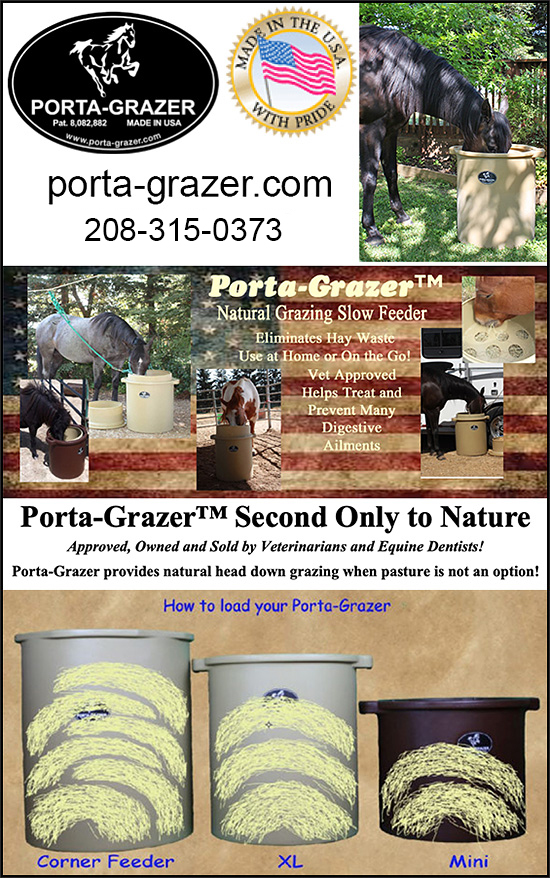
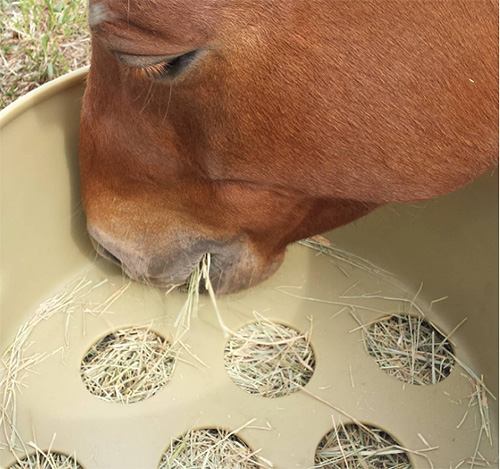
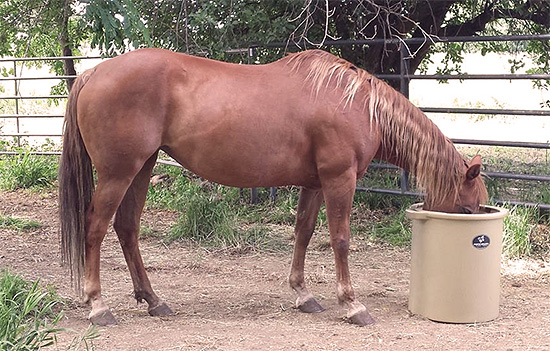
Porta-Grazer is designed to allow your horse to graze in a natural slow continuous manner in the correct body posture. Restrictive hay feeders are designed to force your horse to slow down by making it hard to get to the feed. Being restricted and forced heightens anxiety and can result in gastric ulcers and an unhappy unhealthy lifestyle.
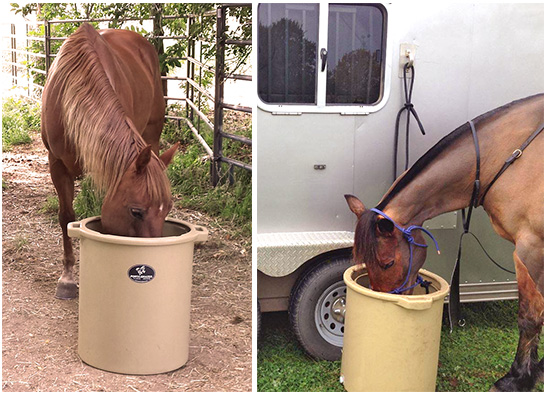
Horses are the only ones who know how fast or slow they should eat and each one has individual needs. Porta-Grazers patented design offers hay to the horse in such a manner that each bite is pulled an torn to size resulting in a slower rate of consumption. Searching, pulling, tearing, while chewing and swallowing is natural.. And that is Porta- GrazerTM
For More Information on the Porta-Grazer Product Line-