

Treating a wound on a horse starts with one decision: if there’s any doubt about how serious the injury is, call the veterinarian—early intervention is more likely to give better, faster results. Once the wound is superficial or vet-attended, keep it clean with a gentle hose stream or a spray bottle of slightly warm water, then treat it with a water-based product that lets the wound breathe and contains no alcohol, hydrogen peroxide, iodine, or tea tree oil. As delicate new tissue forms, avoid strong hose pressure and apply a moisturizing salve to maintain skin elasticity, which makes scarring and hair loss less likely.
Article from the Experts at Banixx Horse and Pet Care Products First, determine if you need to call for your Veterinarian. If in doubt, then the answer is YES. If that approach doesn’t work for you, just briefly check out the choices that we outline below.
1 Call the Vet and find out that this wound is much more serious than you imagined
2. You don’t call your Vet and you find out later that the wound is much worse than you had guessed and now, the treatment option is much more expensive and …it may be too late for a good or rapid result.
3 You call the Vet and find out that the wound is not serious and, with keeping it clean, your horse will be back to work in a matter of days… or…less
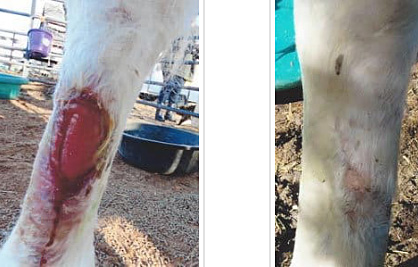
Assuming that we are past the initial trauma and either the wound is superficial, or your Vet has attended to it. Now you need to keep it clean. This may mean a gentle hose stream against the wound or, use a sprayer bottle with some slightly warm water to clean up the wound and remove any debris. Once you’ve cleaned the wound, assess how and when you are going to take care of it until it is healed. It may need to be cleaned on a twice daily basis for the first few days…it may need to be wrapped. These are time commitments that you need to be aware of in order to make a plan for your equine friend’s recovery
Moving on. At this point, you have cleaned the wound and now its time to treat it. It’s best to be looking for a product that contains none of these irritating compounds listed below (alcohol, peroxide, tea-tree oil or iodine). It’s also important to locate a product that lets the wound “breathe”. Any water-based product meets this criteria.
There are many products on the market for the cleaning and healing stages. Some are not helpful to wound healing such as hydrogen peroxide that harms healthy tissue. Other formulations burn and cause much discomfort to your horse such as preparations that contain iodine, alcohol, hydrogen peroxide and tea tree oil. Some contain sulfur that may be an irritant to your horse so test a small area first before applying any sulfur-based products.
Then there are cure-alls that are powder-based. White blood cells are the cells that trigger healing, and they need a moist environment in which to “move”, so if the wound is dry, this process is slowed down. Thick creams have a similar effect on white (healing) blood cells and can cause your horse’s immune system to launch a foreign-body reaction from the damaged tissue, whereas a thin cream generally will not do this.
Now that progress is being made, you’re into the visible healing stage. In order to work in cooperation with your horse’s natural repair process, resist the urge to apply pressure from, say, a strong hose stream to keep the wound clean. The new tissue that is being generated is extremely delicate and a rude hose treatment will destroy this fine, soft new tissue and slow down healing. If you still need to clean up the wound from time to time consider using a really fine, gentle spray to keep the area moist and clean. Another approach is to hold the hose Above the wound and let the water very gently and slowly trickle down over it.
As the horse heals, dead cells slough away naturally from the wound and new (granulation) cells develop to grow inwards to “draw” the edges of the wound together and also fill in the depth of the wound. There is a danger of proud flesh at this point, particularly if you are dealing with a lower leg injury. Proud flesh slows or halts the recovery process. If you suspect this condition, you will need to call your Vet.
Once you’re at the place of the tissue “drawing together”, the use of a moisturizing salve helps the tissue continue its recovery by maintaining skin elasticity. A more pliable tissue is stronger and more functional than a dried-out counterpart. If the wound tissue is dry, a scar is more likely as is the chance of no regrowth of hair.
Moreover, dried out tissue is more likely to be itchy and tight and this will cause your horse to rub it and cause additional problems or even set you back close to the beginning of the healing process.
So, now you have some general information regarding Wound Healing in horses. This is intended as a general summary/guide and is by no means meant to replace any directions given to you by your Veterinarian. For the irrigation of wounds in the initial process of wound care, we might use a gentle hose but follow its use with the application of Banixx Horse & Pet care.
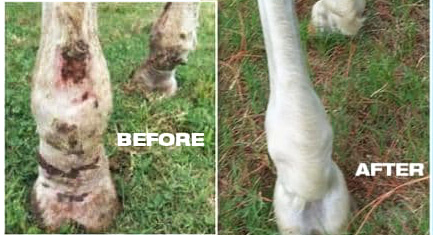
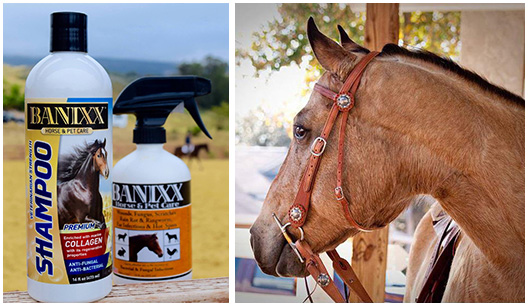
This spray is water-based and is a unique pH formula that is contradictory to any bacterial or fungal growth. It’s completely safe around the eye and contains none of the harmful ingredients listed earlier in this article. Simply spray It on and let it air dry. As a nourishing, medicated salve, use Banixx Wound Care Cream that is chlorhexidine-based and rich with moisturizing Marine Collagen along with aloe vera, eucalyptus, arnica, chamomile, calendula and a touch of oil of peppermint (a natural bug repellant). See our website for more detail. https://www.banixx.com/wounds-punctures-injuries-horse-dog-cat-pets-how-to-treat/