

Keep Your Horse Hydrated in Every Season
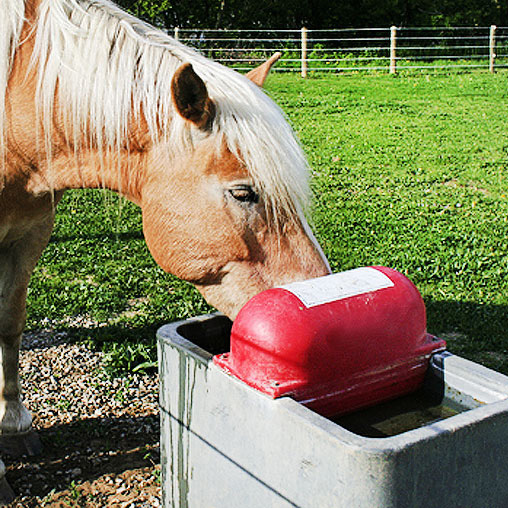
We know that fresh, clean water is essential to our horse’s well-being. In fact, water is the foundation of our nutrition plan. Article by Karen Elizabeth Baril
The average horse drinks 7-8 gallons of water per day in moderate temperatures, and that need rises in hot, humid weather—and again in winter, when a dry-forage diet increases the body’s demand for water even though the horse feels less thirsty. Dehydration is a year-round risk: the number one veterinary emergency call in winter is impaction colic brought on by dehydration, with most cases seen between December and March. Automatic waterers such as the non-electric, frost-free Drinking Post Waterer keep fresh, clean water available at an ambient temperature in every season.
The average horse requires 7-8 gallons of water per day in moderate temperatures. That need increases when the weather is hot and humid. The same is true for very cold temperatures; your horse may feel less thirsty in cold weather, but because dry forage is his winter mainstay, his body’s demand for water actually goes up. Water does more than just quench your horse’s thirst; it balances his electrolytes, helps to regulate his body temperature, keeps his mucous membranes in his lungs, eyes, and mouth moist, lubricates his joints, aids in digestion, and even carries important nutrients and oxygen to his cells.
Senior horses, lactating mares, and foals require more water pound for pound than other horses. Seniors may already have digestive challenges---getting enough water into them is critical to their well-being. Although we tend to think of dehydration as a summer problem, dehydration can occur in any season, In fact, the number one veterinary emergency call in winter is for impaction colic, brought on by dehydration. Veterinarians see most of their impaction colics between the months of December through March.
Signs of dehydration include: ➢Dry mucous membranes ➢Sunken orbits ➢Flank and belly tucked up and tense ➢Lack of skin elasticity ➢Pale gums and slow capillary refill time ➢Listless expression and behavior If your horse exhibits any of these symptoms, call your veterinarian immediately.
Of course we try our best, but it’s not easy keeping fresh water available all year round, especially when we factor in weather challenges. Ask ten horse owners to name their biggest horse-keeping challenge and getting water to pastures or keeping water from freezing tends to land on everyone’s list. Recent innovations, however, have made getting water to our horses easier.
Pastures and paddocks: 'Plastic troughs or galvanized stock tanks work reasonably well, but present the age-old challenge of keeping the water clean in all types of weather and preventing a deep freeze in winter. Electric coils are an option, but all of these represent shock hazards and are not cost-effective in the long run. Algae is a constant problem in hot weather and though we tend to think of it as more of a nuisance, algae can be toxic to horses.
Leaves, branches, dirt, and even small animals can all make their way into the horse trough, so if you do choose the trough option, plan on draining and scrubbing every few days. Choose an area that drains well; mud and water pooling around the trough will attract vector-carrying mosquitoes.
'Natural ponds or streams in pastures seem like a viable option, but horses tend to congregate near streams, quickly turning banks into muddy mires and damaging riparian wildlife. Ponds, unless carefully managed, can become overgrown with toxic blue-green algae in a matter of days. Hot weather, fertilizer runoff, and urine and manure create the perfect recipe in a stagnant pond for blue -green algae which contains dangerous hepatotoxins (attack the liver) and neurotoxins (attack the brain and nervous system.) All are lethal to horse, humans, domestic pets, and wildlife.
'Automatic waterers. Arguably one of the best innovations since quick-release stirrups, automatic waterers have revolutionized horse -keeping. If you’ve been on the fence about automatic waterers for your pasture, now is the time to reconsider. Automatic waterers for the pasture provide fresh, clean water at an ambient temperature year round. The water is safer and cleaner than water from troughs and heated buckets. After the initial installation, the cost of heating water in the winter is entirely eliminated.
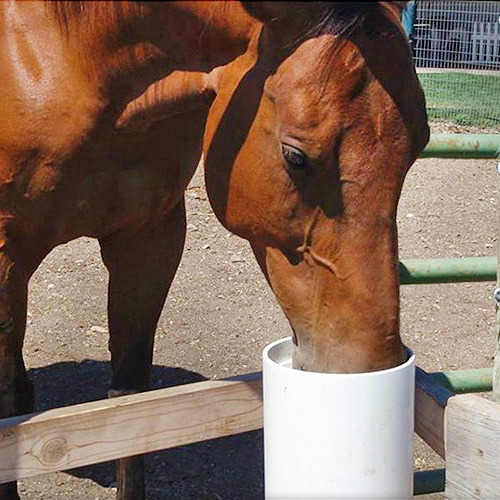
The Drinking Post Waterer is hands down the best solution for keeping fresh water in the pasture in any kind of weather. The Drinking Post Waterer is a non-electric, frost-free horse and livestock waterer, operating on the same principle as a frost-free hydrant. It uses no electricity so you don’t need a back-up plan if the power goes out. Install them anywhere there’s a pressurized water line; in the stable, paddock, or field and pasture.
The Drinking Post Waterer: ➢Operates like a frost-free hydrant. A stop and drain valve below the frost line allows water to flow up the riser pipe and out through the head of the hydrant. When the valve closes again, the flow stops and water drains into the gravel bed below. No puddling around the unit. No freezing. No algae growth. ➢Because the valve is installed below the frost line, it uses no electricity and requires no insulation.
➢There is zero risk of electric shock. ➢Always a fresh supply of water at 50' year round no matter what the outside temperature may be. ➢Low cost investment with a big return. No more hoses, no more lugging water buckets, no more chopping ice, no more worries. ➢Pays for itself in unused kilowatt hours in just a few years.
Customers who have installed the Drinking Post Waterer sing its praises, but one comment rings louder than all others. “I only wish I’d installed them years ago!”