

Herd Dynamics; Keeping Our Domestic Horses Safe
by Karen Elizabeth Baril Understand domestic herd dynamics to keep your horses safe!
The key to keeping a domestic herd safe is managing the resources horses compete over and planning for the day a horse tests the fence. Set out at least two more hay stations than there are horses with ample space between them, give the herd enough room that submissive horses aren’t forced into a dominant horse’s personal space, use catch pens at gates, and avoid fence layouts with trap points like right-angled corners. Safe fencing matters most of all—high-impact flex fencing flexes 6-12 inches on impact with 4,860 pounds of break strength per rail, so a spooked horse bounces off instead of breaking through.
It’s hard to believe that we’ve been in business for twenty-six years. The time, of course, has flown by, but during those twenty-six years we’ve raised a family, worked hard to build a reputable business, and listened carefully to our customers. Their questions have become our questions as we seek to educate and respond with solid information and products that the larger horse community can use with confidence.
Recently a customer asked us - Why does her alpha horse picks on her submissive gelding? Should she separate them? It’s a good question and one that needs exploration. As horse owners we want our horses to have buddies, but we must also protect them from unnecessary injury.
We can look at feral horse herd behavior for part of the answer, but we shouldn't make horse-keeping decisions based only on what we know about wild or feral horse herds. In fact, the two herd types, though they share similar characteristics, think and behave very differently. It’s those differences that we should keep in mind when we make decisions about fencing, feeding patterns, housing, and when to separate a horse that's getting bullied.
The Feral Herd vs. the Domestic Horse Herd
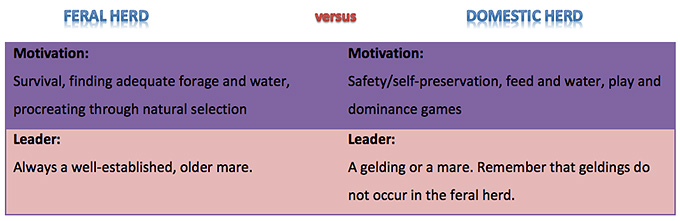
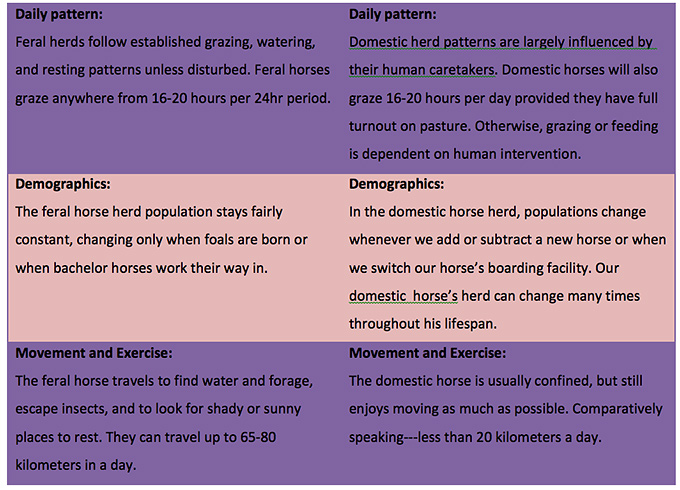
Contrary to what we see in the Hollywood movie, most feral herds spend their days in peaceful harmony. Herd hierarchy is accepted and understood at a very young age, apart from occasional scuffles between mid-level herd members and sometimes the stallion. On the other hand, in the domestic herd, we see horses that push, shove, bite, or kick at other horses---sometimes things never seem to settle down. The situation goes on for any length of time, it’s not something to be ignored. In fact, if your herd spends its days fielding attacks from a dominant horse or scowling at each other, here are a few steps you can take to restore harmony.
'Separate feed and water stations. The domestic horse will use hay stations and water troughs as battles for dominance. Sometimes just increasing the hay piles will eliminate most battles. Place at least two more hay stations than there are horses and be sure to put ample space between them. Consider using slow-feeder stations to keep horses happy on dry paddocks.
'Give horses enough space. Horses kept in areas that are too small will have no choice but to get in the ‘personal space’ of the more dominant horse. Reduce the number of horses or increase the size of the paddock or field. 'Use catch pens to take horses out of field. A catch pen at your entrance/exit gate allows you to funnel a less dominant horse away from those who might push through the gate.
'Install safe gates and fencing to protect your horses should they test the fence. Every horse will test the fence eventually, whether it’s because he’s trying to escape another horse or he’s spooked. Plan for the inevitable and install safe fencing that won’t harm your horse should he test it.
Fencing for safety
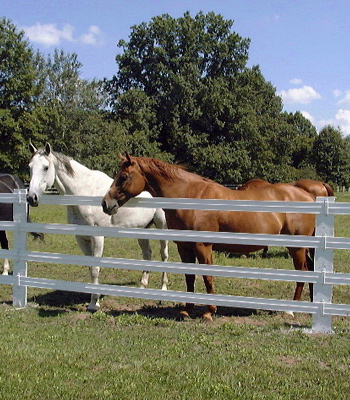
The better you understand domestic herd dynamics the easier it will be to keep your horses safe. Provided there is enough space, most dominant horses rarely make contact with a submissive horse unless there’s a lack of space or the fence layout includes areas that can trap a horse, like right angled corners. Always design layouts with this in mind. If the layout is good (and please call us---we can help you design a layout that works for your situation), we need to be sure the fence materials are safe for horses, even when they get a bit fractious. New products on the market make this easier than it’s ever been.
High-impact flex fencing was designed to be the safest choice over traditional fencing systems. It consists of high-tensile wire molecularly bonded to polyethylene plastic. It absolutely won’t splinter on impact, nor will it break. It’s designed to flex 6-12 inches on impact and has a 4,860 pounds worth of break strength per rail. It is the safest fence on the market and won’t warp or fade. Available in white, black, or brown to fit any farm’s color scheme.
Shockline Electric Coated Wire is the newest in our lineup of safe fencing. The 5/16” electric coated wire is safe for high-traffic areas and it’s a fence that horses respect. Shockline Electric Coated Wire boasts a 1400 lb. minimum break strength per rail and is also available in white, black, or brown. Customers give this fence high marks for safety even in a spook situation.
“I purchased the coated wire and within just a few days of having the fence up, my horse was spooked by a guy and his dog coming out of the woods. He ran from 0-60 right into the fence and just bounced off. I love the fence.” Kim M.---TN. It’s high visibility makes it a great choice as a stand-alone fence or to use in combination with High-Impact flex fencing. Stories like these mean a lot to us. We’re a family here with a shared goal of keeping horses safe and owners satisfied.