

5-Tips to Tame Winter Horse Chores
We love the seasons, but as horse owners, winter weather makes horse-keeping challenging. Article by Karen Elizabeth Baril
The biggest winter horse-keeping challenges are fresh water, shorter days, adequate ventilation, fence worries and farm repairs in cold weather—and what helps is breaking them down into manageable bites. The five chores to tackle are keeping water from freezing, adding daylight-quality lighting designed for the barn environment, keeping air flowing with open doors and barn fans, replacing worn or shifting stall mats, and checking fencing, gates and chargers before winter strikes. Water matters most: veterinarians report that winter colic, due to dehydration, is their most common emergency call.
It happens every year, but we never feel ready for it; the return of Old Man Winter. We love the seasons, but as horse owners, winter weather makes horse-keeping challenging. Between the bitterly cold temperatures, frozen water buckets, and limited daylight, we know we have our work cut out for us. What helps is to break winter challenges down into manageable bites. What are winter’s biggest challenges? Fresh water, shorter days, adequate ventilation, fence worries, and farm repairs in cold weather.
1 Fix
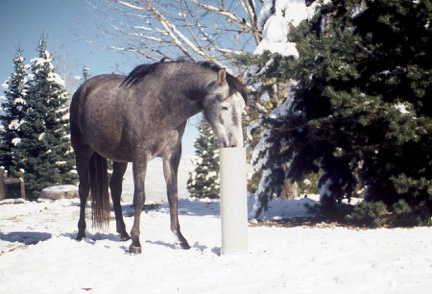
Winter Water Worries Providing fresh water to our horses, whether in their stalls, paddocks, or pastures, is our biggest challenge in cold weather. Unheated water freezes in minutes, yet we know that water is the most important ingredient in any equine nutrition program. In fact, veterinarians report that winter colic, due to dehydration, is their most common emergency call. Let’s take a look at our fresh-water options:
'Stock tank de-icers that rest either on the bottom of the tank or float keep the water in the trough or bucket from freezing. There is a risk of electric shock with these if they are not properly grounded so follow directions explicitly or hire an electrician. Even a small shock or buzz will discourage horses from drinking water and may keep them from using that trough forever.
'Automatic heated field waterers are usually made of a heavy duty polyethylene construction and work well to keep water from freezing. However, they fail whenever the power is interrupted.
'Livestock post waterers have made keeping cattle in cold weather easy and work even better for horse owners. The post hole waterer operates like a frost-free hydrant so horses have a constant supply of fresh, clean 50' water year round with no standing water as you’d find with a trough. This is the most economical, safest, and reliable option for keeping a constant supply of fresh water to horses kept in fields and paddocks.
'Stall options include automatic stall waterers and poly-insulated buckets, both of which work well inside the barn.
2 Add
Daylight Quality Light to the Barn and Arena Fewer daylight hours and lower light is another winter challenge. Good, daylight quality lighting is essential for veterinarian and farrier visits, but also it makes those winter horse chores safer and less tedious. While it’s tempting to go to your local home improvement store to purchase fixtures and bulbs for the barn, it’s a bad idea. Commit to using bulbs and fixtures specifically designed for the dusty and often, damp barn environment.
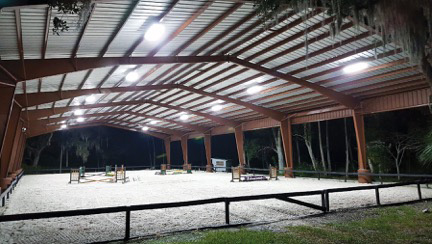
'Invest in full spectrum lighting designed for the agricultural and barn environment. A full spectrum bulb consumes just 36 watts of energy yet produces up to 200 watts of light. The lamps last up to 13 times as long as a standard incandescent bulb. Better lighting, a safer environment, and a more welcoming barn. Full spectrum lighting is often used to treat seasonal affective disorder in humans and it certainly provides a crisper, clearer, more natural light for all those winter barn tasks.
3 Keep
the Air Flowing
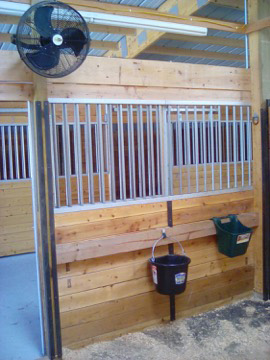
Barn ventilation becomes even more important in the winter as we close doors and windows and or horses spend more time indoors. Recurrent airway obstruction (RAO) is now one of the most diagnosed respiratory diseases in horses. Exposure to respirable particles in the barn, including mold spores, dust, pollens, and ammonia particles can aggravate or even initiate a problem.
'Leave windows and doors open. We might be cold, but our horses are well equipped to handle cooler temperatures without feeling uncomfortable. Ventilation is far more important to their health than avoiding the chill of winter. 'Install barn fans. If you have room, consider ceiling fans which move air throughout the interior space, including hard to reach stall corners. Intake/Outtake fans also help to keep the air moving. Quality fans operate efficiently, using less energy than a 100 watt lightbulb. Never use a store-bought house fan for the barn.
4 Replace
worn or shifting stall mats Studies show that horses stalled on mats or stall mattresses lie down for
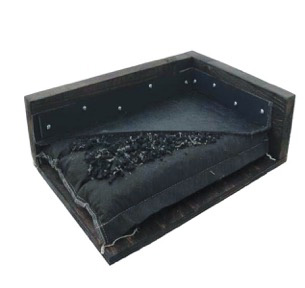
longer periods of time, thereby improving joint health. The ThuroBed™ Mattress system’s 12 cells on each mattress are filled with rubber crumb, so no foam to break down or compact. They are easy to install with just one or two people and they won’t shift in the stall. Horse owners love them. The advantages to using stall mats or the ThuroBed™ Mattress system are many:
'Minimize ammonia and dust.
'Use less bedding which results in a smaller manure pile.
'No urine seepage so stalls are easier to clean and smell fresher.
'Relieves joint strain.
'No holes or cavities where horses like to stand.
5 Check
Your Fencing, Gates, and Chargers It’s a good idea to check your fence lines
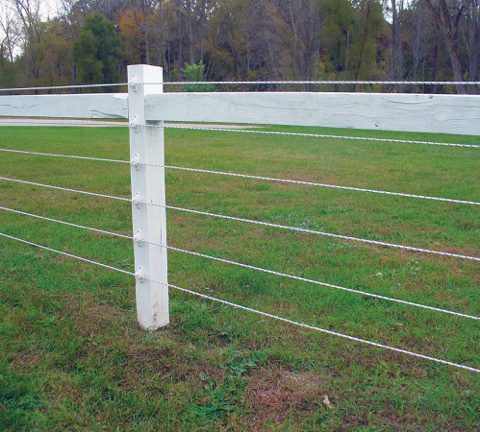
for repairs before winter strikes. There’s nothing worse than struggling to repair fences or gates with frozen fingers.
'Check your grounding system. Add more ground rods if needed, experts say at least 3 or more 5’ ground rods placed approximately ten feet apart all along the perimeter of your electric fence should be sufficient depending on the terrain and soil.
'Replace frayed or worn tape with quality electric fencing like Pro-Tek Braided Electric Horse fence or Shockline Flex Fence® from Ramm.
'Check fence lines for weeds, sticks, and low hanging branches that might fall in a storm.
' Replace your old charger with a low impedance charger. Acreage limits will be listed on the charger unit. Use a unit that is powerful enough for the job.
Ramm Horse Fencing and Stalls is committed to providing quality products and solid information to farm owners.