Check out the benefits of massage, chiropractic care, and gentle stretching.
Check out MSM, methylsulfonylmethane (a chemical compound that is believed to support joint health), and hyaluronic acid.
7-Tips to Protect Your Horse’s Joints Article by Karen Elizabeth Baril If only we lived in a perfect world.
Our horses would enjoy good health throughout their lives.
Unfortunately, that’s just not the world we live in.
7-Tips to Protect Your Horse’s Joints
Article by Karen Elizabeth Baril
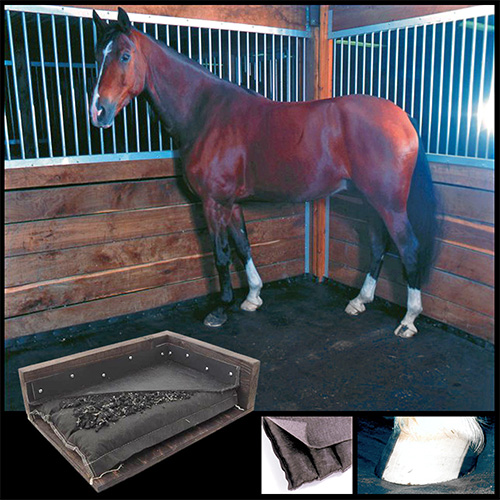
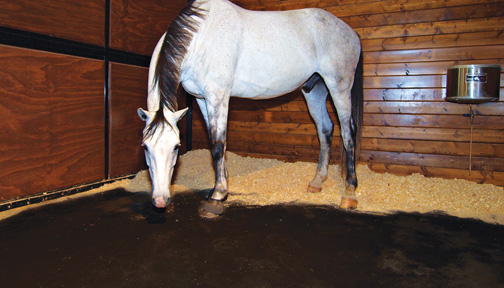
Protecting a horse’s joints starts with daily movement — joint cartilage works like a sponge, and it’s motion that lets it absorb fresh nutrients from the fluid surrounding it. From there, feed high quality forage and limit processed grains, exercise in moderation on appropriate footing with real warm-up and cool down periods, add therapeutic body work like massage and chiropractic care, keep the teeth and TMJ checked, and consider supplements such as glucosamine, chondroitin, MSM, and hyaluronic acid. Finally, provide a comfortable place to rest — horses stalled on mattresses lie down for longer periods, and sleep deprivation is the leading cause of joint pain.
If only we lived in a perfect world. Our horses would enjoy good health throughout their lives. Unfortunately, that’s just not the world we live in. My own Haflinger gelding suffers from an arthritic knee. He was born with poor conformation and over the years, it’s taken its toll on him.
Horses boast three different types of joints; there’s the cartilaginous joints which are connected by cartilage, like those found in the spinal column. These joints may move, but only in a limited way. Fibrous joints are fixed, but join large bones like those found in the plates of the skull. Finally, the one we’re most familiar with, the synovial joint, is a joint that offers the widest range of motion.
Synovial joints come in several unique designs, including the ball and socket found at the hip and femur junction, hinge joints like those found in the elbow or knee, and the pivot or rotary joint like the one that allows your horse’s head to move from side to side and up and down. Synovial joints are the most prone to injury because of their range of motion and the amount of work that’s asked of them. There are several preventative measures you can take to keep his joints healthy.
1 Keep him moving
2 Tweak his diet
Most horses fare well on a simple diet of high quality forage, free choice minerals (that include micro and macro nutrients), a good pre and probiotic, with a quality vitamin supplement. And, of course, provide him access to a salt block and plenty of fresh water.
3 Exercise is a great preventative in moderation
4 Therapeutic body work is an important ingredient in any joint care program
5 Check his teeth
6. Consider supplements. Glucosamine and chondroitin are the front runners, but there are others. Check out MSM, methylsulfonylmethane (a chemical compound that is believed to support joint health), and hyaluronic acid. Hyaluronic acid (HA) occurs naturally in the equine joint so the theory is that fed in supplement form, HA can improve joint function by helping to lubricate the joints. HA can also be administered in an intravenous or intra-articular form.
How do I know if my horse is starting to develop joint problems?
Per Karen Elizabeth Baril: the everyday tell is a horse who comes out of his stall a little stiff but goes back in feeling pretty good — exactly the pattern her own arthritic Haflinger gelding shows. Stiffness that loosens up with movement is the signal to take seriously, because it means the cartilage isn't getting the nutrient flow it needs while the horse is standing still.
Synovial joints — the hip, elbow, knee, hock, and the rotary joint at the head — carry the widest range of motion and take the most work, so they're the most prone to wear-and-tear and the first places stiffness shows up. Conformation matters too: a horse born with poor conformation (the article's example horse was) puts uneven loading on those joints over years and accelerates the timeline. Don't wait for outright lameness — early stiffness is your window to start protecting what's still healthy.
What should I do to protect my horse's joints day to day?
Per Karen Elizabeth Baril: the practical program is built around seven habits, not one silver bullet. Keep him moving — turnout and consistent light work matter because cartilage is a sponge that absorbs nutrients only when it's compressed and released through motion. A stalled horse loses that pump.
Then layer the supporting pieces:
Diet — high-quality forage as the foundation, limit processed grains, free-choice minerals, salt block, and clean water.
Conditioned exercise on footing that matches the job, with proper warm-up, cool-down, and leg protection.
Body work — massage, chiropractic, and gentle stretching as a regular part of the program, not a crisis intervention.
Dental care — TMJ misalignment cascades to the sacroiliac joint, so floating teeth is a joint-health investment.
Comfortable rest — stall surfaces that let him actually lie down (Q5).
What does the right diet look like for joint health?
Per Karen Elizabeth Baril: nutrition is the foundation everything else relies on. Free access to high-quality forage — a good timothy/brome grass mix is what the article's farm uses — beats almost any other intervention.
Alfalfa is a judgment call: higher protein, mineral, and calcium content than grass hay, which can be useful for some horses but upsets the biochemical balance for others (founder-prone types in particular). Talk to a nutritionist before adding it. Limit processed grains where you can — studies cited in the article link high-carbohydrate diets to a higher incidence of bone problems like Osteochondritis Dissecans (OCD). The article's recommended baseline: high-quality forage, free-choice minerals (micro and macro), a good pre/probiotic, a quality vitamin supplement, salt block, and plenty of fresh water. Pre-soaked forage products like Hydration Hay (a current InfoHorse advertiser) help horses that won't drink enough on their own stay hydrated, which supports the interstitial fluid flow that feeds cartilage.
Which joint supplement should I actually use — glucosamine, chondroitin, MSM, or hyaluronic acid?
Per Karen Elizabeth Baril: the article doesn't pick a winner among them — and that's the honest answer.
Glucosamine and chondroitin are the front-runners and the most-studied combination.
MSM (methylsulfonylmethane) is a chemical compound believed to support joint health and is often stacked with the front-runners.
Hyaluronic acid (HA) occurs naturally in the equine joint; the theory behind feeding it is that supplemental HA helps lubricate the joints. HA can also be administered intravenously or intra-articularly, but those routes are veterinary procedures, not feed supplements.
Practical sequence: start with diet and movement, add a quality supplement matched to your horse's specific issues with input from your vet, and don't expect any single supplement to work without the foundational pieces in place.
Is investing in better stall flooring really worth it for joint health?
Per Karen Elizabeth Baril: equine sleep deprivation is the leading cause of joint pain, per the research cited in the article — a striking claim that reframes stall flooring as joint-care infrastructure, not just bedding choice.
The argument runs through how rest works for horses: a comfortable surface invites a horse to lie down and stay down longer; horses stalled on quality surfaces lie down for longer periods and stay down for longer durations, per the studies referenced. A lumpy mattress is the human analogy — you've felt what a bad night does to your back, and a horse standing on hard rubber or thin shavings over concrete experiences a worse version of that, every night. For horses already managing joint issues, upgrading stall surfaces alongside free-choice mineral programs (SOURCE Micronutrients is a current InfoHorse advertiser in this space) is one of the higher-leverage changes an owner can make.
📋
Recommended Products
Curated picks from across InfoHorse.com — most relevant first