

What Makes a Good Horse Stall?
By Bob Pruitt
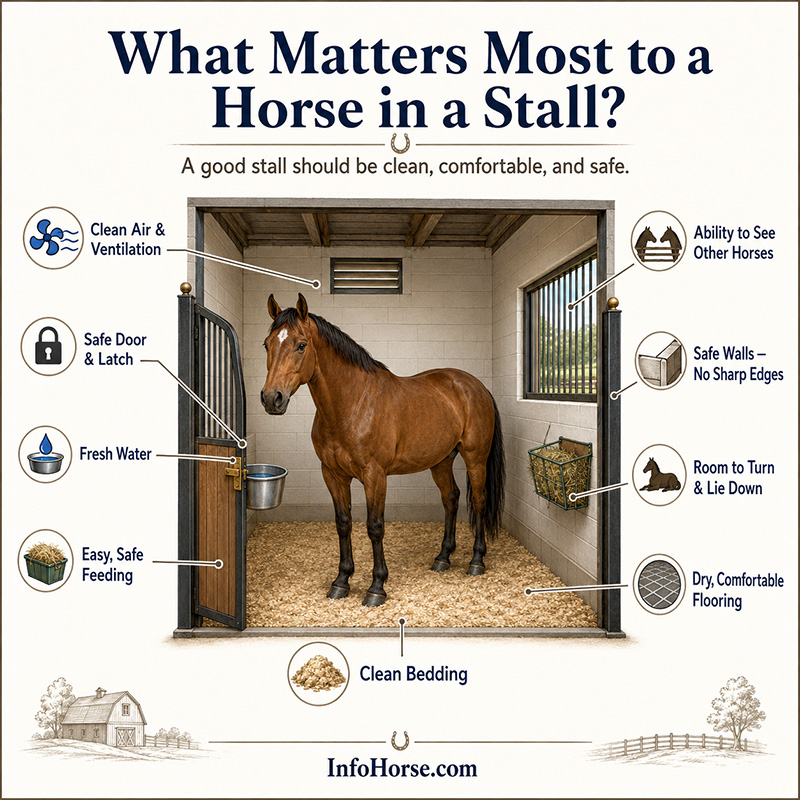
A good horse stall does not have to be expensive, but it does have to be thoughtful — clean, safe, and built around what the horse actually needs. That means a door opening wide enough that a nervous horse is not squeezing through a hole and a latch he cannot open but you can work with one hand in the dark with gloves on; a way for the horse to see the aisle and his neighbors; feed and water you can manage without walking into the stall; ventilation that moves fresh air without putting a horse in a harsh draft all night; dry, well-drained, secure footing; and walls strong enough to contain a frightened horse, not just a quiet one.
Twelve by twelve has become the familiar American size and works reasonably well for many average-sized riding horses, while a large Warmblood, a draft horse, a mare with a foal, or a horse who tends to circle before lying down may benefit from considerably more room.
I was walking through an old boarding barn recently that had probably been standing for more than fifty years.
Nobody was going to photograph it for an architectural magazine.
The stall walls were wood and plywood. Somebody had welded the stall doors together years ago, and they were still doing their job. The barn aisle was wide. Most of the stalls were either 12 by 14 or 14 by 14. The horses could see each other. Hay and grain could be fed from outside the stalls. Several stalls had small individual turnouts through doors in the back, and those same openings helped keep fresh air moving through the barn. Big doors at both ends stayed open except during bad weather.
And the barn was clean.
The horses looked comfortable.
I remember standing there thinking: Whoever laid this place out understood horses.
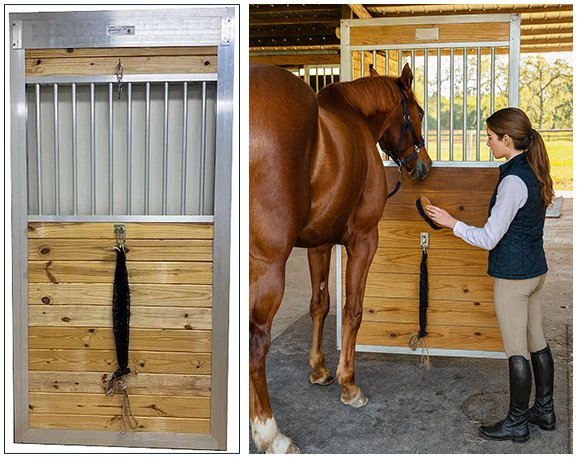
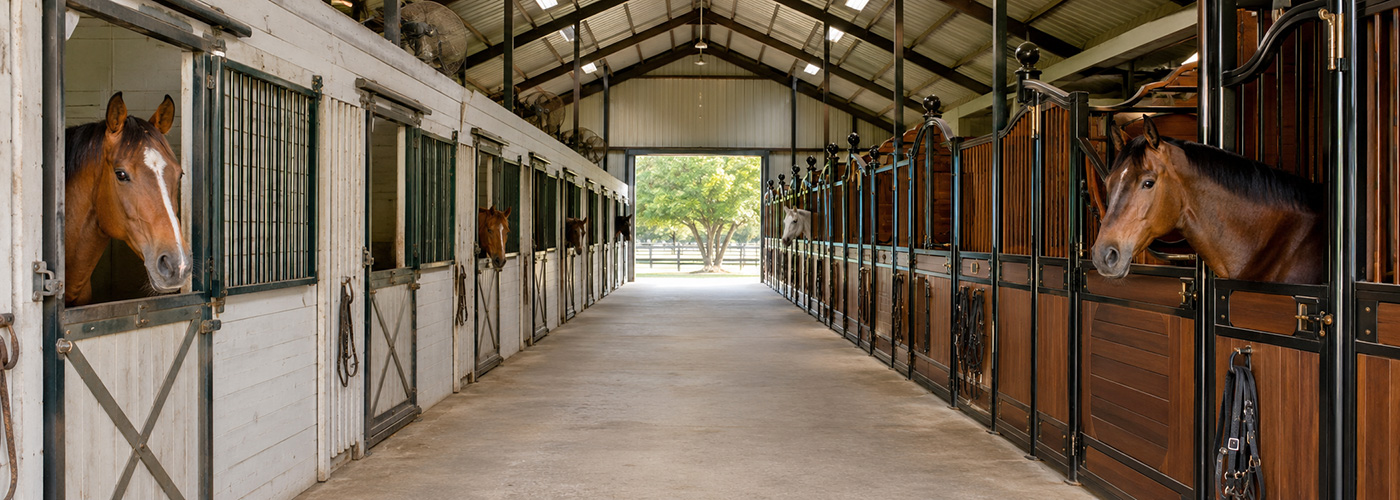
Earlier that same day, I had been looking at the work of another custom horse stall builder for InfoHorse.com. Beautiful stalls. Heavy steel. Finished wood. Hardware that looked like it belonged there instead of something somebody found in a coffee can on the workbench.
Two completely different ends of the horse barn spectrum.
And both got me thinking about the same question.
What actually makes a good horse stall?
I have always thought - Once I've met your horse, I know quite a lot about you.
I don't say that to be clever. I've walked through a lot of barns over fifty-some years, and it's true every time. Horses are our mirror. The condition we keep them in says something about us, whether we mean it to or not.
Here's the thing, though. That doesn't mean the barn has to be fancy.
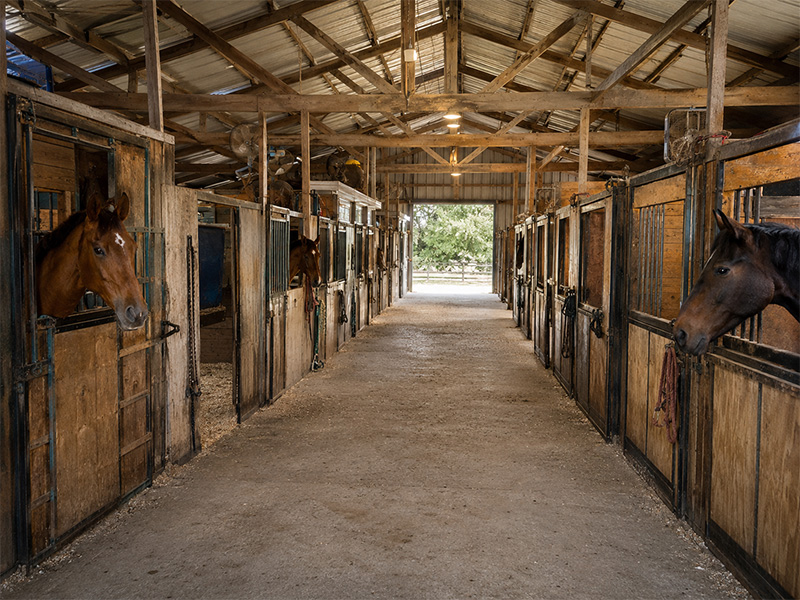 Some people build stalls out of nearly anything. Salvaged pipe corral panels, plywood, lumber that was already on the property, whatever they had available the year they got their first horse. All kinds of people own horses, and they should. Your horse property doesn't have to look like a magazine spread.
But there's no excuse for it being dirty or unsafe.
That's not a money problem. That's an effort problem.
I can walk into a modest three-stall barn with dirt floors and know in about ten seconds whether the owner cares, just by how it smells, how the horses look, and how they stand in the doorway watching me.
Money buys you nicer.
It doesn't buy you clean, and it doesn't buy you safe.
A good horse stall doesn't have to be expensive. But it does have to be thoughtful.
What Is the Safest Horse Stall Door?
This is where a lot of stalls fail before you ever get to bedding, flooring or feeders.
A stall door that's too narrow, that swings into the wrong place, that has sharp hardware sticking out, or that has a latch a clever horse can flip open with his lips is an accident waiting on a schedule.
I generally like sliding stall doors because there is nothing hanging open into the barn aisle for a horse or a person to run into. That doesn't mean every swinging door is unsafe. It means you need to think about where that door goes when it opens, how securely it latches and what happens when things aren't going according to plan.
Because sooner or later, they won't.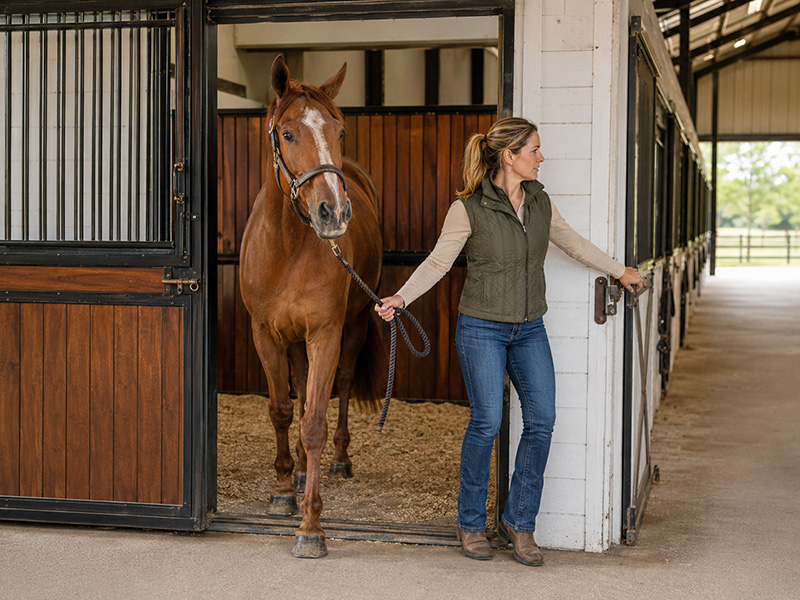
The opening needs to be wide enough that a nervous horse doesn't feel like he's squeezing through a hole. The latch needs to be secure enough that the horse can't open it, but simple enough that you can operate it with one hand while the other hand is holding a lead rope.
And don't judge the latch while standing comfortably in the barn on a sunny afternoon.
Imagine using it in the dark. In January. With gloves on. While a horse is dancing beside you because the other horses have already been turned out.
If your horse can open it and you can't manage it in the dark with cold fingers, it's the wrong latch.
Can Your Horse See Out of the Stall?
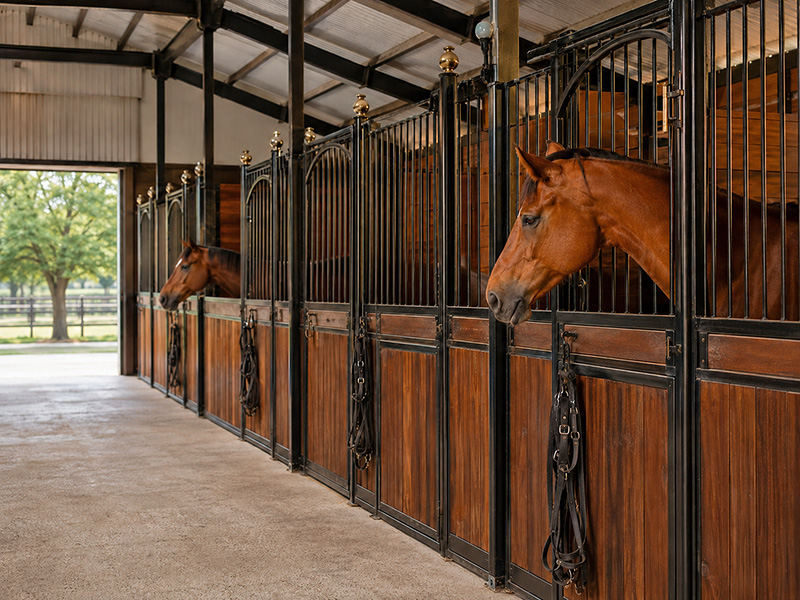
Most horses are social animals. They want to know where the other horses are and what is happening around them.
I like stalls that allow a horse to see into the aisle and, where appropriate, see neighboring horses. Grill work, an open upper section, a yoke opening or some other safe design can give the horse a connection to the rest of the barn without sacrificing the strength of the stall.
That doesn't mean every horse needs exactly the same setup.
A stallion may need more separation. An aggressive horse may need a solid partition between him and a neighbor. A horse recovering from an injury may need a quieter environment. Sometimes horses simply don't like each other, and forcing them to stare at one another over a divider all day isn't doing either one a favor.
The stall needs to fit the horse.
But in a normal boarding or private barn, I like seeing horses able to look out, watch people going by and know where their friends are.
When I walk into a barn and see relaxed horses with their heads over the doors quietly watching what's happening, that tells me something.
Can You Feed the Horse Without Walking Into the Stall?
 This one's practical, not romantic, but it matters every single day.
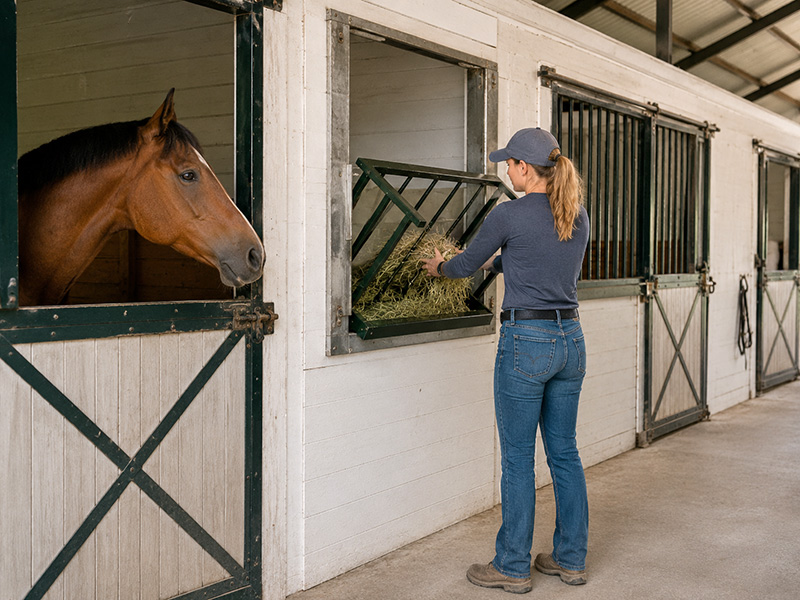
Can you put hay into the stall from the aisle? Is there a grain door? Can you reach the water system without crawling around underneath the horse?
If you have to enter every stall with every meal, twice a day, you've created more work and more opportunities for something to go wrong.
Most horses are perfectly polite at feeding time.
Until you own one that isn't.
A pushy horse, an impatient youngster or a normally quiet horse who decides tonight that he absolutely must get to the grain bucket before you do can turn a simple feeding chore into something you didn't plan on.
A well-designed feed opening or exterior-load feeder allows you to get the job done without entering the horse's space every time.
It's one of those features you may not think much about when you're looking at stall brochures.
Live without it for a few winters and you'll understand.
What About Hay Feeders and Slow Feeders?
Hay feeding deserves some thought too.
There are a lot of ways to feed hay in a stall. Some people feed from the floor. Others use wall feeders, hay racks, bags or slow feeders.
I don't think there is one answer that works for every barn.
What matters to me is that the setup is safe, doesn't have obvious places where a hoof can become trapped, and lets the horse eat comfortably without constantly breathing a face full of dust.
Anything hanging in a stall needs to be looked at from the horse's point of view.
Can a horse get a foot through it?
Can he catch a halter on it?
Could it become dangerous if it breaks?
Horses have a talent for finding the one possibility you hadn't considered.
How Should Water Be Provided in a Horse Stall?
 Water is another thing that sounds simple until you start thinking about how often you deal with it.
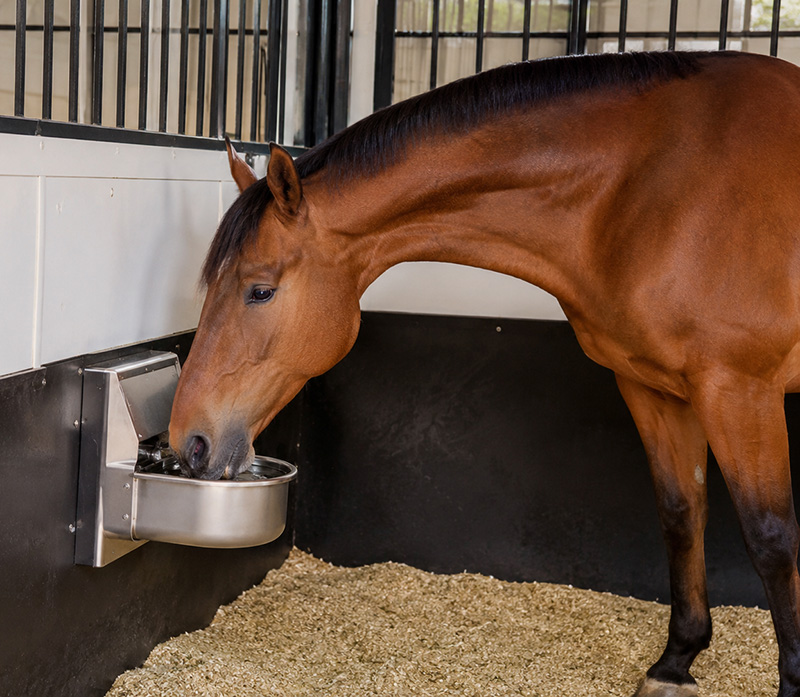
Buckets work. Automatic waterers work. Heated buckets can be useful where freezing temperatures are common. All of them have advantages and disadvantages.
With buckets, it's easy to see how much a horse has consumed, but you're carrying water and cleaning buckets.
Automatic waterers reduce the daily labor considerably, especially in larger barns, but you still need to check them. Automatic doesn't mean forget about it.
Whatever system you use, it needs to be positioned where the horse can comfortably drink and where the horse isn't likely to trap a leg, chew something he shouldn't or get tangled in electrical cords.
And heated water equipment deserves extra attention. A horse shouldn't be able to reach the cord.
If a horse can reach an electrical cord, eventually you'll own the horse who decides to find out what it tastes like.
Can You Breathe in the Barn?
This may be one of the most important questions in the entire article.
Walk into your barn first thing in the morning before the stalls have been cleaned.
Take a breath.
What do you smell?
If the first thing that hits you is ammonia, remember that the horse has been standing there breathing it for hours.
A barn doesn't need to be warm and airtight to be comfortable. In fact, sealing a barn up too tightly can create its own problems when you trap moisture, dust and stale air inside.
I like barns that breathe.
That old boarding stable I mentioned at the beginning had large doors at both ends. They stayed open much of the time. Several stalls also had doors opening toward small turnout areas. Air could move through the building.
It wasn't sophisticated.
It worked.
Good ventilation can come from large aisle doors, windows, roof vents, cupolas, properly designed openings and fans. The exact system depends on the barn and the climate.
The goal is fresh air without putting a horse directly in a harsh draft all night.
There's a difference.
And don't judge air quality only by whether you can see dust floating around. Your nose often tells you the story first.
What Makes a Horse Stall Easy to Clean?
Ask yourself honestly whether you'll still appreciate the stall design at 6 a.m. when it's fifteen degrees and you haven't had coffee yet.
Stall design either makes cleaning easier or turns it into a chore you start resenting.
Can you get a wheelbarrow close?
Is there a muck-out door?
Are you carrying manure halfway through the barn before you can dump it?
Does the stall have corners that constantly trap wet bedding?
Can you move through the aisle with a loaded wheelbarrow without squeezing around tack trunks, gates and door hardware?
A wide barn aisle matters more than people realize.
Not because it looks impressive.
Because horses, wheelbarrows, feed carts, tractors, veterinarians, farriers and people all eventually have to use the same space.
That old barn had a nice wide aisle.
Again, somebody thought about it.
What Is the Best Horse Stall Flooring?
Flooring is really an article of its own.
Rubber mats over a properly prepared compacted base are common. Mats over concrete are common. Some barns use packed clay. Others use specialized rubber flooring or pavers.
Every system involves trade-offs between cost, cushion, drainage, maintenance and longevity.
What matters most is what happens six months after the stall is finished.
Does urine drain or collect?
Do the mats shift?
Are you constantly trying to fill holes under them?
Is the surface slippery?
Does the horse have enough bedding and cushion to lie down comfortably?
Whatever you choose, the goal is pretty simple.
Dry footing.
Good drainage.
Secure footing.
A reasonably comfortable surface.
And something that doesn't turn into a swamp by February.
What Is the Best Bedding for Horse Stalls?
Bedding is another subject where everyone seems to have a favorite.
Wood shavings are common. Pelleted bedding is popular in many barns. Straw is still used in some areas and situations. Other materials are available depending on where you live.
I don't think the name on the bag matters as much as what the bedding actually does.
It should help absorb moisture, give the horse a comfortable place to stand and lie down, and be practical enough that you'll keep the stall clean.
Dust matters too.
A horse spends a lot more time with his nose near the floor than we do.
The fanciest bedding in the world isn't helping much if the stall is wet underneath it or the barn is full of airborne dust every time somebody picks up a fork.
What Should Horse Stall Walls Be Made Of?
Wood, steel, masonry, composite materials and combinations of them can all be used successfully.
I'm less interested in the material than I am in what the horse can do to it.
Look at the stall from knee level.
Look for sharp edges, broken boards, exposed screws, nails, wire, gaps or anything else that could catch a hoof.
Then look higher.
Can a horse rear and get a leg over something?
Could two horses reach one another and fight through an opening?
Is there hardware sticking into the stall?
A horse stall should be strong enough to contain a frightened horse, not just a quiet one.
That's an important distinction.
Most stalls look perfectly adequate while the horse is standing there eating hay.
The real test comes when something scares him.
How Big Should a Horse Stall Be?
Twelve by twelve has become the familiar American stall size because it works reasonably well for many average-sized riding horses.
But that doesn't mean twelve by twelve is automatically the right answer for every horse.
The old boarding barn I walked through had a number of 12-by-14 and 14-by-14 stalls.
They felt good.
A large Warmblood, a draft horse, a mare with a foal, or a horse who tends to circle before lying down may benefit from considerably more room.
Ponies may need less.
A horse expected to spend only a few hours in a stall has different needs than one recovering from an injury who may be confined for weeks.
Build for the horse in front of you when you can.
Fourteen by fourteen isn't necessarily overbuilding.
Sometimes it's just paying attention.
Don't Forget About Electrical Safety
Electricity and horses deserve respect.
Barn lights, fans, heated buckets, automatic water systems, clippers, extension cords and outlets all become part of a working horse barn.
Wiring should be protected.
Outlets should be where horses can't reach them.
Fans need to be mounted securely and kept away from curious noses.
Permanent barn electrical work is not the place I'd try to save a few dollars by having somebody “figure it out.”
Barns contain dust, hay, bedding and animals.
Think about that combination.
A Stall Should Work for Emergencies Too
One thing people don't always think about when planning stalls is what happens when the day isn't normal.
Can you get an injured horse out easily?
Could a veterinarian work in the stall?
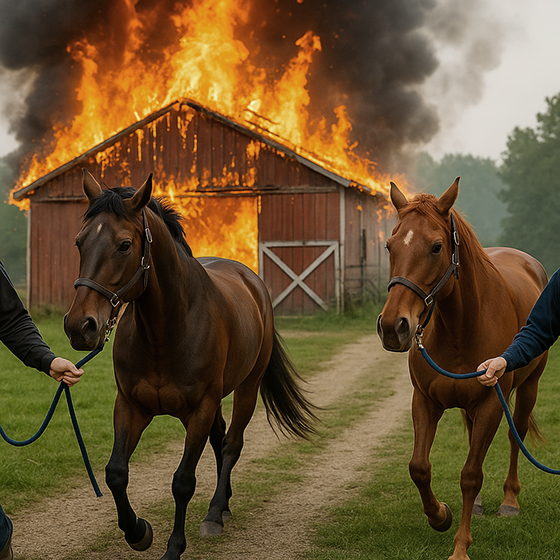
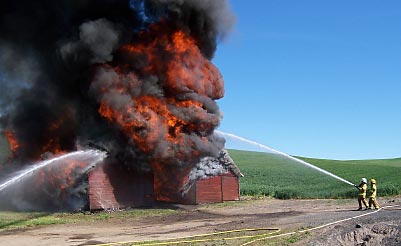
Could you move a horse quickly if there were a fire?
Can emergency personnel get through the aisle?
Can you open doors without moving three tractors and a stack of hay first?
You don't build a barn expecting an emergency.
You build it so an emergency doesn't become worse because nobody thought about one.
From Basic to Beautiful
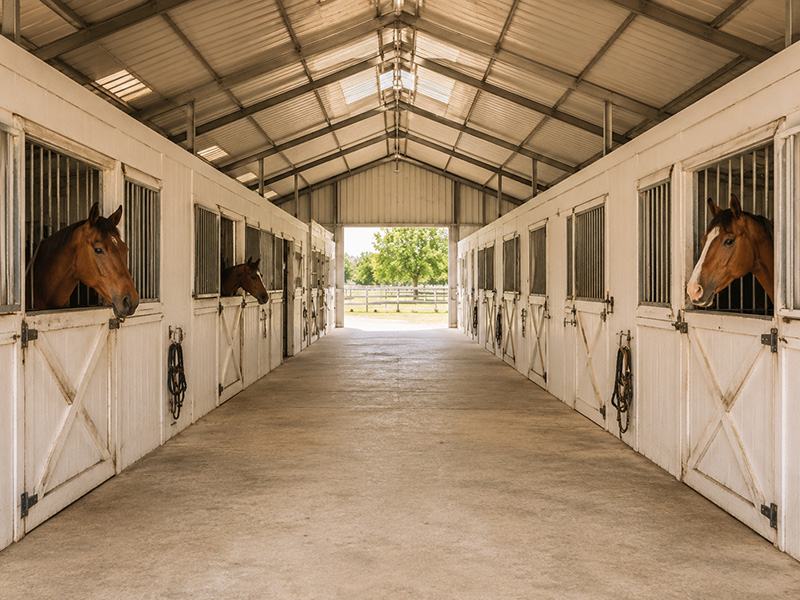
A clean stall with decent footing, safe walls, good ventilation, a smart feeder setup and a latch that works is a stall doing its job.
It doesn't need to be beautiful to be right.
And then there's the other end of it.
I've also reached the age where I really appreciate people who still know how to build things.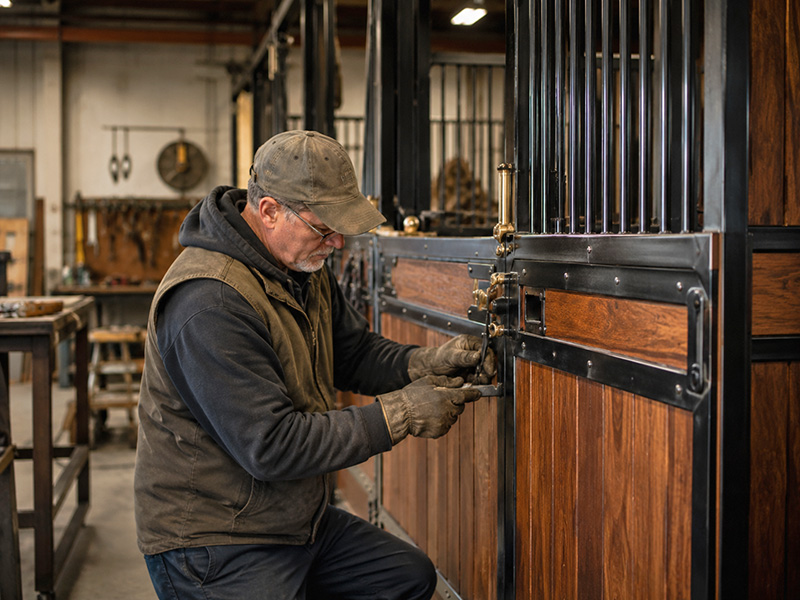
Some of the custom horse stall companies we list on InfoHorse.com have been family owned for generations. There's pride in that work, and you can see it.
You see it in a door that slides smoothly.
You see it in a weld that's finished properly.
You see it in wood fitted into steel instead of simply screwed to it.
You see it in hardware designed around a horse instead of adapted from something else.
And you see it in the details somebody thought about because they've built thousands of stalls and learned what works.
There is real craftsmanship in a beautiful horse barn.
There's nothing wrong with wanting that.
If you're fortunate enough to be building a new barn, renovating an older one or finally creating the horse property you've imagined for years, working with an experienced stall builder can save a lot of mistakes.
They've already solved problems you haven't thought of yet.
And many of these businesses deserve more appreciation than they get.
They're family companies. Welders. Fabricators. Designers. Craftsmen. People who have spent decades learning how to build something strong enough for a horse and beautiful enough that somebody is proud to walk into their barn every morning.
You don't have to own stalls like that to take good care of a horse.
But I'm glad there are still people building them.
The Best Horse Stall Isn't Necessarily the Most Expensive
That's probably what I came away thinking about after walking through that old boarding barn.
Somebody built those stalls half a century ago.
Maybe they didn't have a big budget.
Maybe they welded the doors themselves.
Maybe the plywood went up because plywood was what they could afford.
But they made the stalls large enough.
They made the aisle wide.
They created ventilation.
They gave the horses access to one another.
They designed the barn so horses could be fed from outside the stalls.
And fifty years later, people are still keeping horses there.
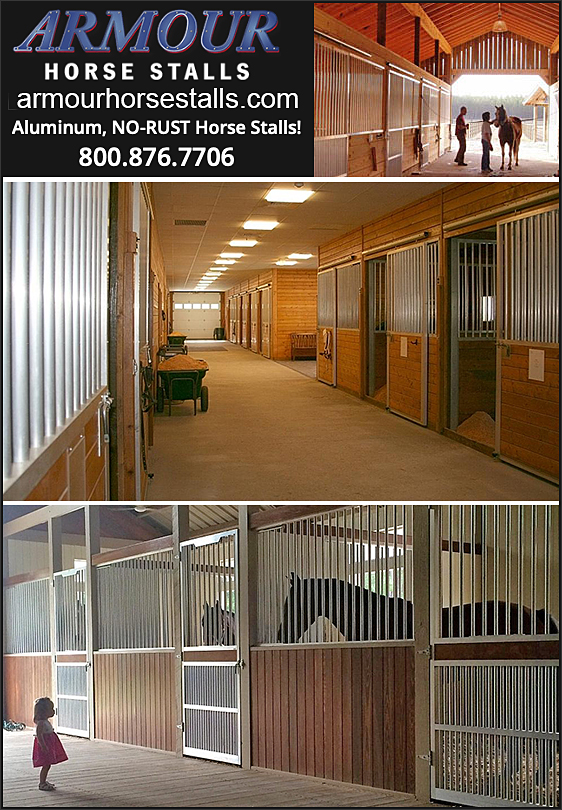
That's worth something.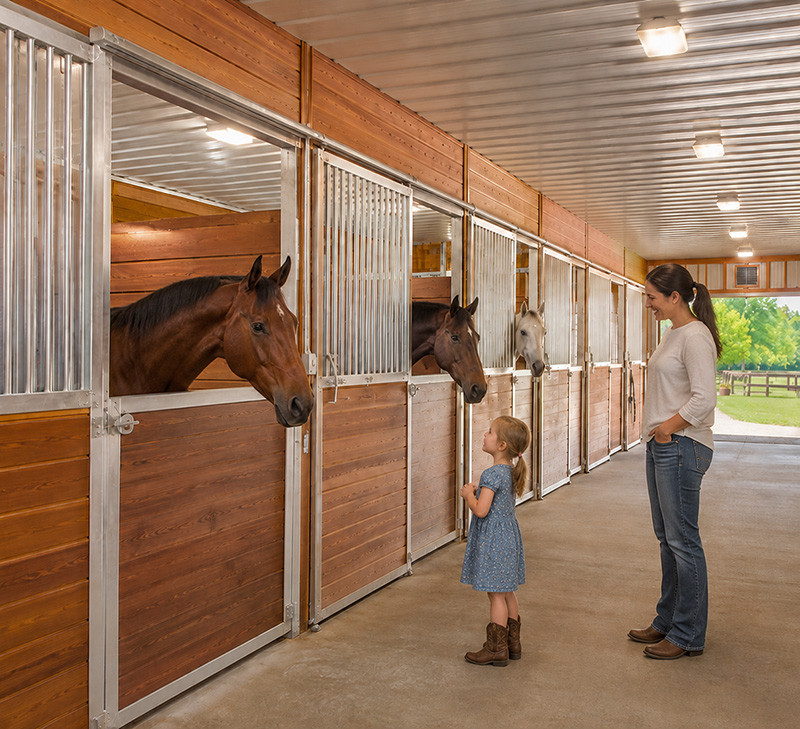 Our friends at Armour Stalls
At the other end of the spectrum, a beautifully engineered custom stall system can take those same basic ideas and refine them into something extraordinary.
Both can be good horse stalls.
Because ultimately, the horse doesn't care how much you paid for the stall.
He cares whether he can breathe.
Whether he can lie down comfortably.
Whether he has clean water.
Whether he can see another horse.
Whether the footing is dry.
Whether something sharp is going to catch him when he turns around.
And whether somebody comes through the door every day who cares enough to keep the place clean.
The Bottom Line
If your horses come in at night the way mine do, that stall needs to be clean, comfortable and safe.
It needs to work for the horse.
And it needs to work for you.
You should be able to get him in and out without a fight. Feed him without a wrestling match. Give him water without dragging hoses all over the barn. Muck the stall without dreading it. And walk away at night knowing there isn't something in there likely to hurt him before morning.
Make what you have work.
Efficiently.
Comfortably.
Safely.
And someday, if you get the chance to replace those old homemade stall fronts with something beautiful that a craftsman built to last another fifty years, you'll probably appreciate those too.
I know I do.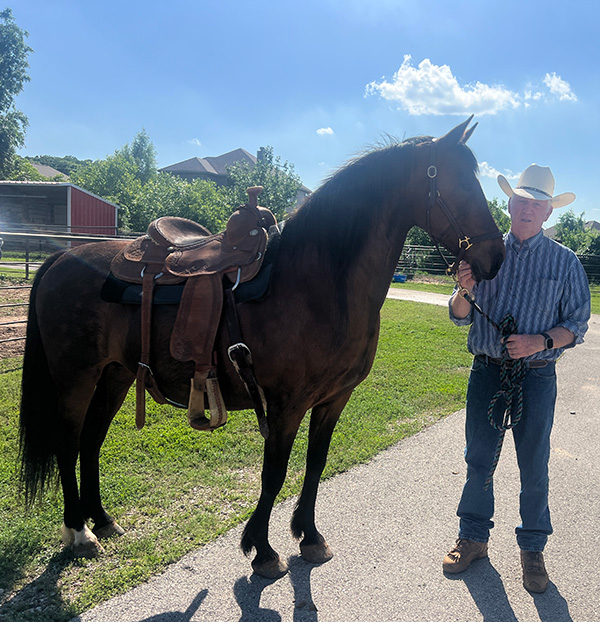
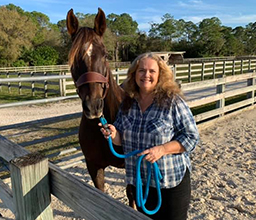
Bob with Zoey