

Managing The Small Acreage Horse Farm
Article by Karen Elizabeth Baril
Managing horses on small acreage comes down to careful planning and good land stewardship: practice rotational grazing, designate a sacrifice dirt paddock, and keep horses off pastures during winter, spring growth, and after heavy rains. Store hay off the ground on wood pallets in a separate building from the barn, and compost your manure—the average horse generates 40 lbs. of it per day, plus 15-20 lbs. of bedding. An equine land expert can help you site fencing, barns, and paddocks to cut costs and improve drainage from the start.
If money was no option, wouldn’t we all be living on a expansive farm? I see acres and acres of green grassy fields, a state of the art indoor arena, and miles of adjacent trails. Alas, in my tiny home state of Connecticut, large acre tracts are few and far between. If they do exist, they’re so pricey, that we’d have to be descendants of the Rockefellers to even think about purchasing one.
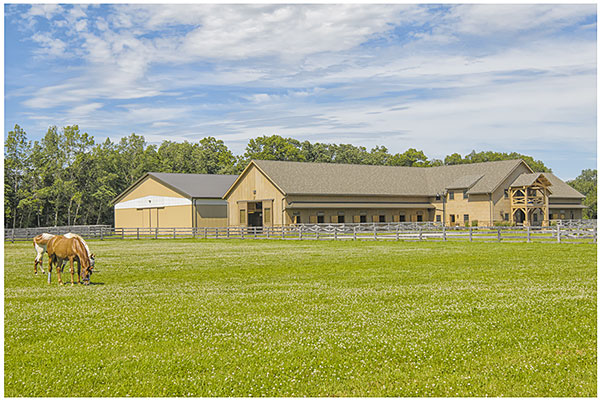
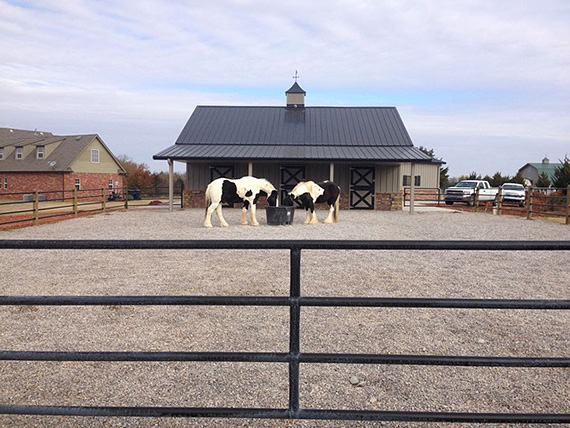
Our small farm measures just a little over six acres, our neighborhood boarding and training facility sits on just ten acres. We make it work. The boarding facility is always buzzing with activity, but it’s clean, tidy, and the horses all seem happy with their living arrangements. The owners have made it work through excellent planning and good land stewardship. Here are some tips for managing the small acreage farm.
Measure Twice, Cut Once. Master carpenters live by that standard rule; “measure twice, cut once.” In other words, they focus on good planning and attention to detail before making a single saw cut. A similar adage should hold true for the small farm owner. Even if you are not starting from scratch, enlisting the help of an equine land expert or equine architect can reap enormous benefits.
Your architect will study the lay of the land, taking into account topography, drainage issues, existing trees, and even neighboring property lines. The equine architect will draw up a plan for fencing and placement of barns and other outbuildings, often reducing the overall costs of building in the long run. Site planning might save you steps, reduce the amount of roads or driveways needed, save you money on fencing, and utilize better drainage.
She’ll help you decide where to store hay, where to put your compost pile, where to build equipment storage, vehicle parking, and riding arenas. She’ll even help you plan your paddocks and fields. The more detailed your plan, the easier it will be to stick to budget.
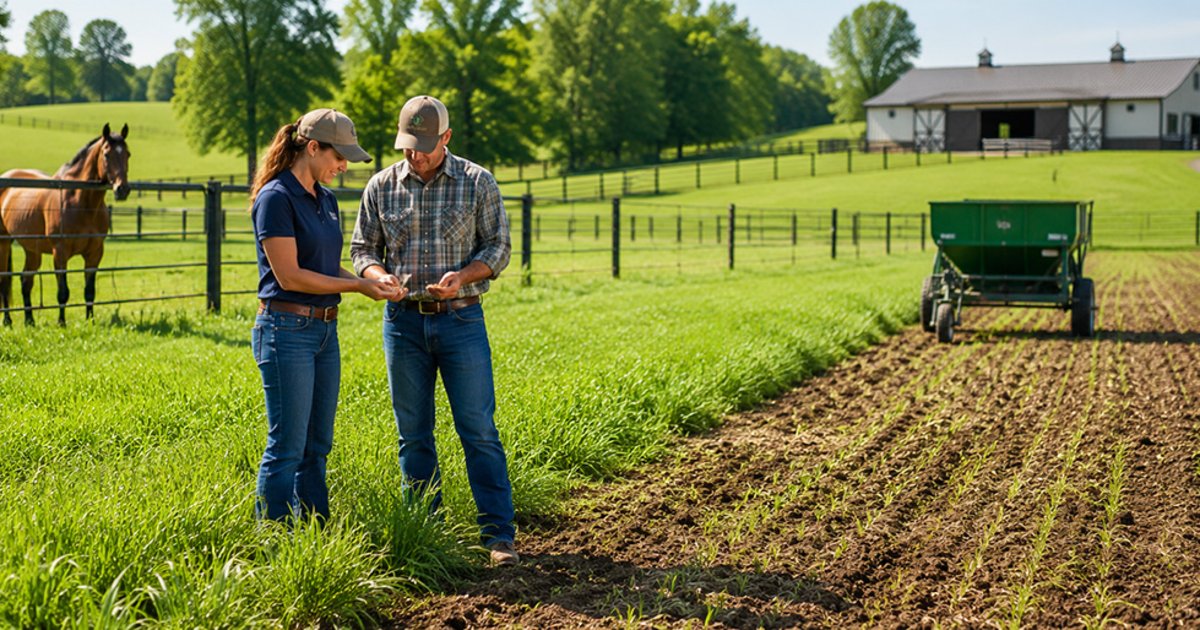
Preserving Pastures. If you’re lucky enough to have a grass field, you’ll want to keep it healthy by caring for it as if it were a living entity. That means you’ll follow best practices for managing pasture. 'Practice rotational grazing. Most farm owners use a quality electric tape or braided rope to divide pastures. Look for fencing that has Ultra-violet (UV ) protection and, preferably, one that uses stainless steel wire.
Stainless steel offers longevity and better conductivity over copper wire. 'Designate a sacrifice dirt paddock. 'Mow any weed patches that measure more than 2 x 3 feet and use herbicides safely, if necessary. 'Overseed in the fall to replenish the field. 'Keep horses off the field during periods of stress; i.e. winter, during spring growth, and after heavy rains.
Hay Storage It’s unlikely that your small acreage can provide enough quality hay or grass for all of your horses even if you choose to hay one field. Chances are you’ll have to purchase and store hay for the winter. Store your investment under cover, preferably in a separate building from the barn to avoid fire risk. Any outbuilding used for hay storage needs a few simple design elements; a roof that does not leak, good ventilation, and easy access to the barn.
Do not store hay on the ground or on cement, both of which will wick moisture into your costly investment. Stack hay on wood pallets, telephone poles, or even rubber tires to keep it off the ground. Do not park tractors, automobiles, lawnmowers, or anything with an engine in or near the hay shed due to the risk of fire.
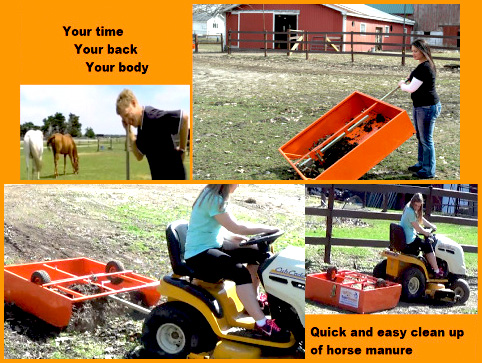
Manure Management The average sized horse generates 40 lbs. of manure per day. Add 15-20lbs. of material (bedding or shavings) to that and it’s easy to see why managing that manure pile is a priority. The best thing you can do on a small farm is compost it. Your neighbors will pay you top dollar for well-composted manure. They’ll also thank you for keeping odors and flies to a minimum; a healthy manure pile attracts virtually no flies and emits no odor. Here’s how to compost efficiently.
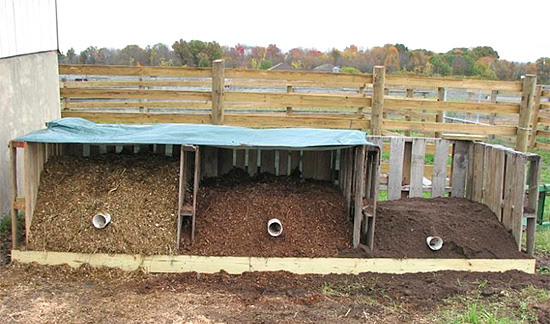
' Provide your compost pile with air. Insects, earthworms, and all those hard-working microbes that help to break down your horse's manure need air to survive. They're what we call aerobic organisms. If you don’t have a traffic to turn the pile, install PVC pipes cross -ways to circulate air into the pile. If it's a smallish pile you can even turn it with a pitchfork. If there's an odor, your pile is suffering from anaerobic decomposition, an abundance of organisms that thrive on a lack of air. Expect the flies to move in post-haste. Without air, the pile will still decompose, but it will smell bad and take many, many years to do so.
' Keep it fairly moist, but not wet. Moisture content should be between 40-60 percent. Test for moisture by grabbing a handful of the dirt and squeezing. It should feel like a damp sponge, neither dripping nor dry. Add water if it's dry, cover it with a tarp if it's getting too much rain.
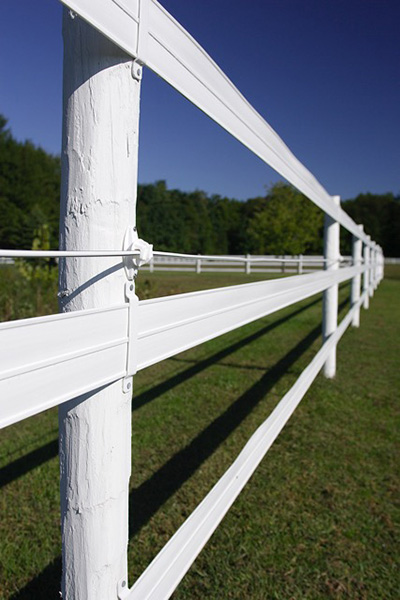
Invest in Safe Fencing Small acreage farms rub shoulders with their neighbors. Safe, strong, smart fencing pays for itself in peace of mind. Flex Fence® is engineered for equine safety. It’s constructed of a heavy duty proprietary brand of polyolefins coating three strands of high tensile wire. The fence is designed to be highly visible, offers up to a 4,200 lb. break strength, and flexes 6”-8” on impact.
Flex Fence® is designed to be used as a three or four rail fence, yet combines perfectly with our Raceline® (coated wire rail) or Shockline® (coated electric rail) as well. It offers a unique bracing system that guarantees the fence will stay taut and is easy for the capable DIY-er to install.
Flex Fence® is available in three widths---5.25”, 4.25”, and 3.75” and offers your choice of white, brown, or black rails. The fence is so durable and strong that one of our customers had several trees fall on it and was amazed that the fence “popped right back to where it originally was,” once the trees were removed.