

Horse Training - Reading The Signs
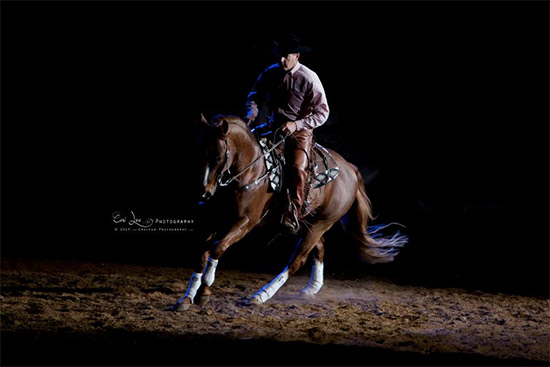
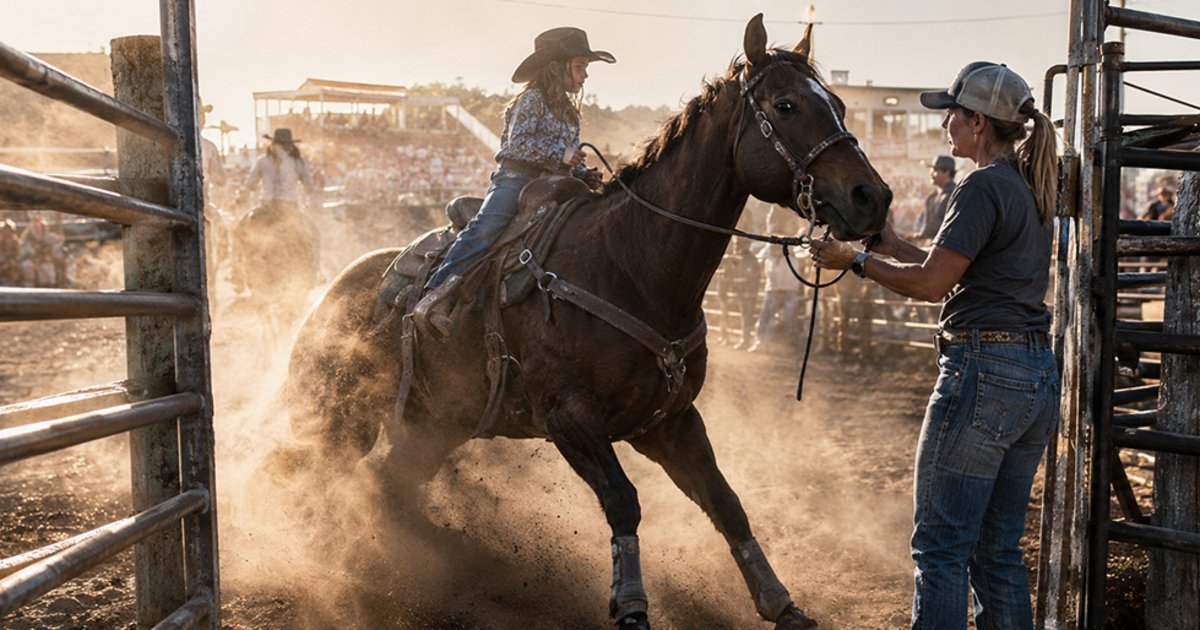
Recently a woman brought her horse by for a lesson. She was hoping to get some advice on how to help her horse act less spooky and more relaxed. She spent a few minutes warming her gelding up on the ground and then mounted. After walking a few circles she asked the horse to trot. Her horse appeared a little anxious and my rider was clutching tight with both reins in an effort to keep him slowed down. It looked to me like she was using the reins in an attempt to control her horse but also to balance herself to stay on. It was an obvious wreck waiting to happen.
Do you ever lope your horse? I asked. Not that I thought that it was a good idea at that moment. No, I just walk and trot. I haven't had the nerve to lope yet. She replied. I didn't blame her. Things didn't look too good. She went on to say, He'll also be spooky and jump if I move my hand when I'm on his back. For a moment she released the death grip she had on the reins and reached down to pet him on the neck. Sure enough he saw her hand out of the corner of his eye and jumped sideways. See what I mean? She asked.
Yes I do. Why don't you find a place to safely step off. I politely, yet firmly told her. I then went on to say that things were looking a little too shaky and asked if I could spend the rest of the session working with and evaluating her horse. Observing her riding the emergency brake while sitting like a statue in fear that her horse might spook and never feeling confident enough to lope, I feared that someone was going to get hurt. There were just too many red flags in this situation. She seemed more than relieved with my suggestion and so after switching to my tack I began to check out the horse myself.
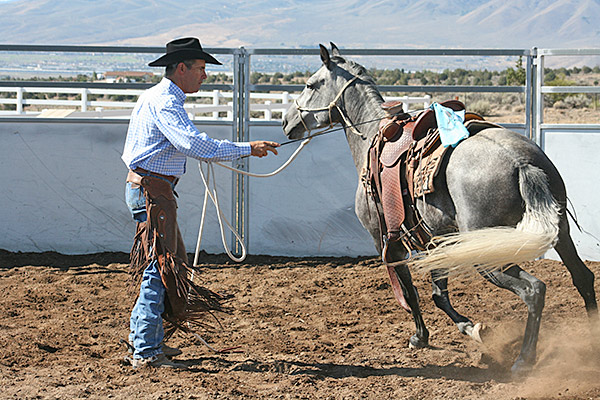
As I started groundwork this horse was pretty uncomfortable. I took the saddled gelding to the round pen. I began with some groundwork on-line with the flag to get his feet loosened up. I then turned the horse loose and lunged him in both directions at the trot and lope. I needed to see this horse go through the full range of motion in a relaxed manner. He needed to prove that he could trot, lope and turn without grabbing himself or being worried. Once these tests are passed, he might be a horse I would consider mounting and riding.
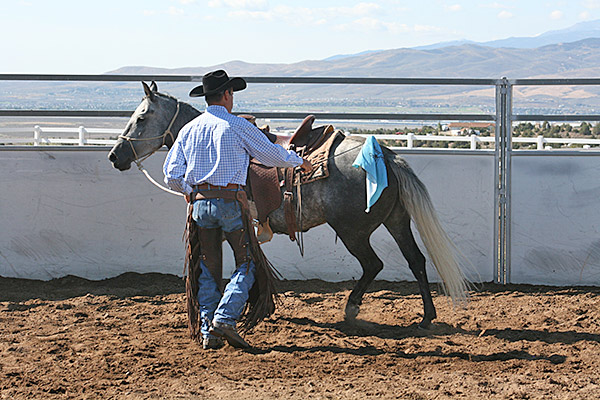
Now this colt is starting to move around more relaxed. I mounted and began to move the horse around at the trot. I was determined not to pull back on both reins. I did a series of bending exercises, into and away from the fence, using only one rein at a time. In this exercise there's nothing for the horse to pull against. All the while I was helping him become more supple and think down to his feet. I also moved around in the saddle while periodically reaching down to rub him on his shoulders and also reaching back to rub him on his rump as well. I didn't want to sit up there like a statue waiting for something bad to happen.
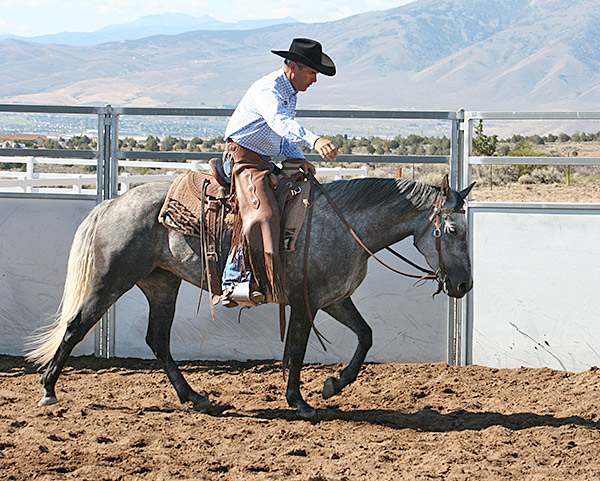
Moving my hand in and out while keeping a loose rein. Now with him somewhat more relaxed and moving his feet, I brought up more energy and asked him to lope. Without the previous preparation, he probably would have run off or bucked. However, he loped off reasonably well for a horse who had been ridden several times over the past two or three years yet had never been allowed to experience this three beat gait.
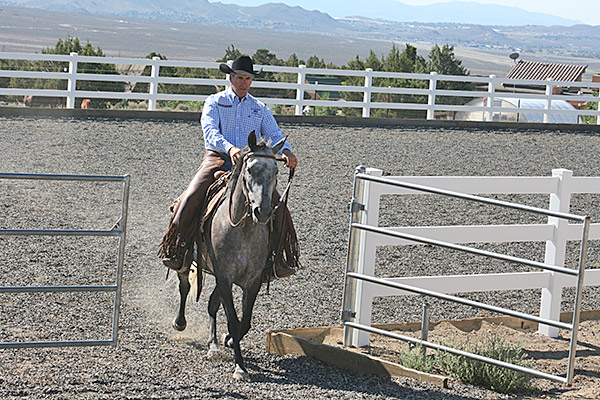
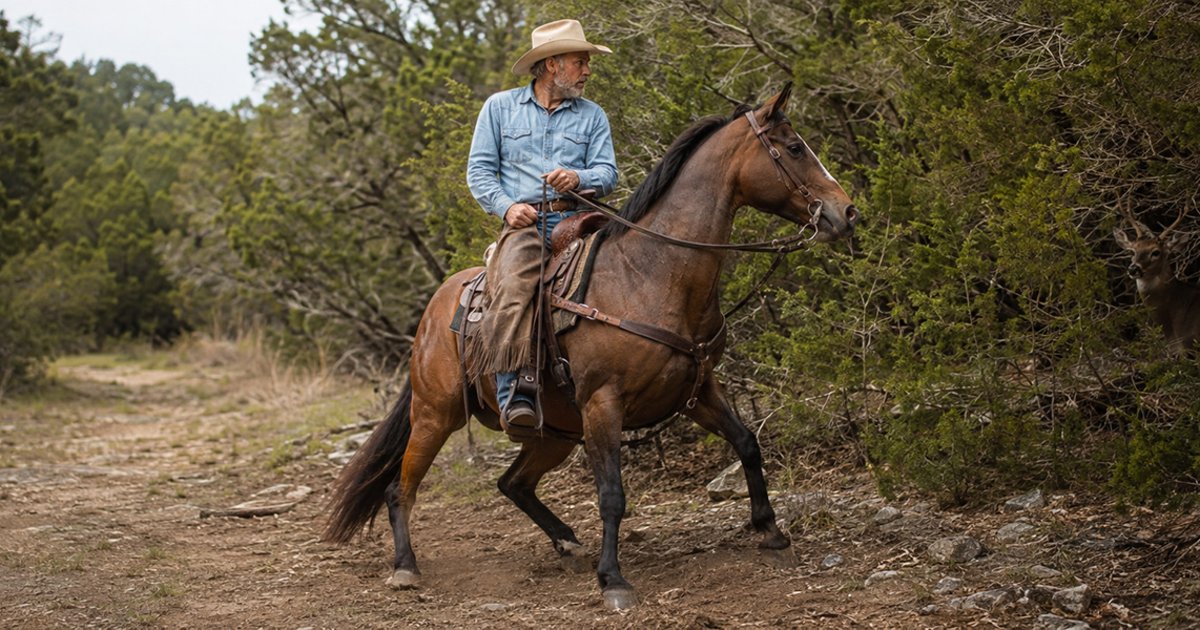
Traveling outside the arena with a loose rein. I asked the owner to open the gate and let me take the horse out for a tour. I then proceeded to trot him all around the barn, haystack, hitching rails and trailers. My goal was to get him so busy doing productive things he did not have time to do unproductive things.
After about thirty minutes invested, I told her, This is what this horse needs to do every day. I think you've just been sneaking by this horse. If you continue with this same approach, something bad is going to happen. She humbly yet gratefully agreed. Whether she accomplishes this on her own or seeks professional help, she promised to follow through with this new regiment.
Does any part of this story sound similar to what’s going on with you and your horse? It's important that you read the signs and be proactive in your approach. Working with horses can be a great experience and a lot of fun. However, they can also be dangerous if we fail to read the signs. Horses need confident, strong leadership and clear direction. That's our job as the rider. That's horsemanship!
Richard Winters Horsemanship WintersRanch.com