
Helping Horse Owners Make Informed Decisions
Understanding Horses for Better Horse Training
Sponsored Article

Understanding Horses for Better Horse Training

By Ron Meredith · Career

Looking to understand horses the right way?

Sponsored Content

Understanding Horses for Better Training Results
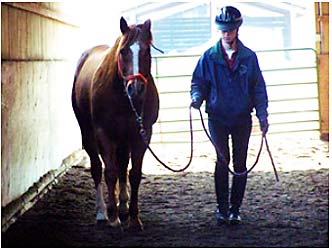
Horse Logic Horse Training

Good horse training is boring to watch. It looks like nothing is happening. by Ron Meredith

Many people are impressed by training methods that are nothing more than a blatant series of attacks on the horse because they are dramatic to watch. However, physically dominating a horse does not teach him anything. To train a horse, you must use mental strength, not physical strength.

Training horses starts with understanding how their minds work. You have to understand what is logical to the horse. The horse's mind does not work the same way as yours. They do not associate events or a sequence of actions in the same way we reason that things are related. To train a horse, therefore, you have to understand how horse logic works and base your training on that.
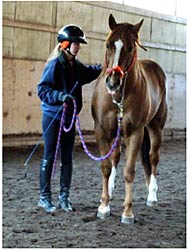
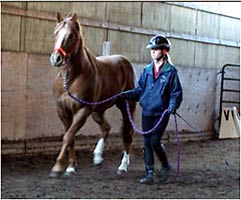
Horses need to feel safe.
Horses are prey animals. They are in an undesirable position in the food chain and they know this. Their eyes are on the outside of their heads so they can see danger coming from any direction. When we approach a horse, it has no way of knowing what our actual intent is. It can only observe our actions and make a decision that it is safe to stay put or safer to flee. When a large cat approaches a group of gazelles as a hunter, the whole herd will start running and try to escape until one of them is killed. Once its hunt has been successful, the cat's tail goes down and its muscles relax. Now it can pick up its kill and walk directly through the herd and the gazelles will just go on grazing. The cat's body language has changed from a tense alertness that telegraphs the message "there is a hunter among us" to a more relaxed, non -threatening posture that merely says "there is a cat walking among us" and the herd responds accordingly.
Quiet acceptance.
So your first communication task in training is to get the horse to quietly accept you as a "cat walking in the herd" rather than as a "cat hunting within the herd." From a horse logical viewpoint, you do not want to be seen as an attacking predator. Your next communication task, once the horse has quietly accepted you into its "herd," is to be the horse in control of the herd. Stallions do not run their herds. All they are concerned with is who gets the next mare. The lead mare controls the herd and makes the decisions. She controls the herd through body language that the other horses clearly understand.

At Meredith Manor, we get a horse to accept us as part of its "herd" and then we use body language to get and keep its attention and to establish ourselves as the lead mare. We first use horse body language to play with the horse, then we use body language to get and keep the horse's attention. Now we can add body language that creates a corridor of pressures that start to shape the horse's behavior. We create the desired shapes on the ground, then we transfer the concept of corridors and shapes into our under saddle work. When done correctly, the entire system is very logical to the horse. There is no need for physical restraints or physical punishment and the horse never feels "attacked."

Let me give you an example of how myth understandings about training happen when people substitute human logic for horse logic. When a horse is scared or upset, it tenses and its head goes up. Human logic says that to create the desired shape (a lower head carriage), all you have to do is tie the horse's head down until the horse "understands." However, if the horse is tense because the training methods were scaring or confusing it, this will only make the problem worse. From a horse logical standpoint, the tie down is only another threat or attack. If the trainer's techniques were horse logical in the first place so that the horse remained relaxed, its head and neck would eventually have the desired shape without the need for mechanical aids.

People who train by presenting the horse with a task then punishing the animal in some way when it doesn't "get it" are on the wrong track. They think they are teaching the horse a lesson. But the horse understands their "correction" only as an attack, a threat. No real learning takes place. By fighting with a horse, the only thing you are teaching it is that the biggest, baddest one wins. You give the horse no clues about how to do things methodically and logically.
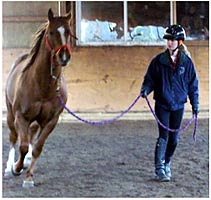
Training without fear.
It is also important for trainers to realize that horses do not understand or recognize human feelings. But our human feelings often create conflicts for us and our horses. If we don't plan our actions ahead when training, our actions will be guided by feelings and instincts. Since man is a natural predator with an instinct for combat, the very first thing young males often do when frustrated is to fight. And the more scared they are, the more willing they are to fight. When people make a big fuss in front of others, posturing about how they are handling this big, dangerous horse, very often it is because they are afraid you are going to realize they are not really in control.

Training is just like swallowing a big ball of string. It would be impossible to swallow it all at once. But if you eat it an inch at a time, break the task down into really small bits, it is easy. Getting the horse's attention is the first bite of the string we call training. Most of the “mythunderstandings” about training come about because people try to swallow too big a chunk of string. You must go bit by bit, using a methodical series of actions to get the horse's attention and direct the horse's attention without threatening or attacking him. Training a horse involves dominating him mentally, not physically. And you must systematically introduce new shapes or tasks to him in a way that is logical to the horse according to his natural instincts rather than your human instincts and logic.
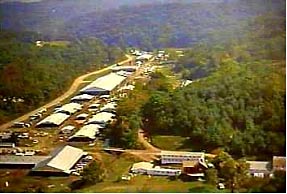
Mereditth Manor
Meredith Manor International Equestrian Centre Meredith Manor is an equestrian trade school dedicated entirely to producing professional riders, trainers, instructors, and farriers for the horse industry. All programs and courses are designed specifically to prepare you for a successful equine career. Our programs range in length from 3 to 18 months, and our students spend 6 hours a day in primarily hands-on, skill based classes with additional time spent in the barns and with the horses. Students don't have to excel in academic, classroom based classes to be successful in our programs, but they must have a passion for horses and a dedication to having a successful equestrian career. Meredith Manor's name and reputation are known by serious horse people throughout the world. Students from the ages of seventeen to sixty-three have attended the School from every state and many foreign countries. Meredith Manor strives to provide a climate of learning in which each student may identify and accomplish his or her goals. We have continuously researched the horse industry, designed the facilities, and developed the educational programs that will give our students the training, experience, and confidence needed to have successful, life-long careers with horses!
Meredith Manor Logo
Ron Meredith has over forty years' experience as president of the school and has developed it from its humble beginnings of six students in 1963 to its current world class level. Because of his outstanding contributions to the horse industry and specifically to equestrian education, he has received a number of distinctive recognitions including an Honorary Doctorate of Equestrian Studies. Dr. Meredith has held seven AHSA judges' cards and has trained top level horses and riders in the cutting and reining world.

Contact: Meredith Manor International Equestrian Centre 147 Saddle Lane Waverly, West Virginia 26184 Phone: 800-679-2603 Email: info@meredithmanor.edu Website: www.meredithmanor.edu/

Sponsored Content — Contact information provided by the sponsor
Key Article Takeaways
  • Understanding Horses for Better Training Results Good horse training is boring to watch.
  • Training horses starts with understanding how their minds work.
  • Training is just like swallowing a big ball of string.
  • Training a horse involves dominating him mentally, not physically.
  • However, physically dominating a horse does not teach him anything.
Questions readers commonly ask:
Why does Ron Meredith say good horse training is boring to watch?

Per Ron Meredith: 'It looks like nothing is happening' — true training relies on subtle communication, not dramatic displays. Showy training methods that look like 'attacks on the horse' may impress audiences but don't actually teach. Effective training is incremental, patient, and visually quiet. The drama happens in the horse's MIND, not in the visible interaction.

Why doesn't physical dominance teach a horse?

Per Ron Meredith: physical dominance produces compliance through fear, not understanding. The horse learns to avoid the pressure but doesn't learn what you actually want. As soon as the dominance presence goes away, the trained behavior degrades. Mental strength — clear communication of cause and effect — produces lasting learning the horse retains in any context.

How does a horse's mind work differently from a human's?

Per Ron Meredith: horses think in pictures and patterns rather than words and abstractions. They make associations through repetition and emotional state. They don't understand 'why' — only 'what comes next.' Effective trainers communicate in the horse's mental framework: clear cause-effect chains, consistent emotional state, predictable outcomes that build trust over time.

What's logical to a horse vs. what's logical to a human?

Per Ron Meredith: horses prioritize safety, herd connection, and resource access; humans prioritize task completion, time efficiency, and outcomes. The mismatch causes most training conflicts. When you ask a horse to do something that registers as 'unsafe' in their logic, they resist — even if your human logic says it's fine. Understanding horse-logic lets you frame requests in ways that make sense to them.

How long does it take to learn 'horse logic' as a trainer?

Per Ron Meredith: years of conscious observation and practice. Watching horses interact with other horses (herd dynamics, body language, response patterns) builds the foundation. Working with multiple horses (not just one favorite) exposes you to varied patterns. Mentorship from experienced horse-logic-fluent trainers accelerates the process. There's no shortcut — but the investment pays off across every horse you'll ever work with.

Ann Pruitt
Contact Ann Pruitt
InfoHorse.com