

Equine Joint Health; Prevention is Key
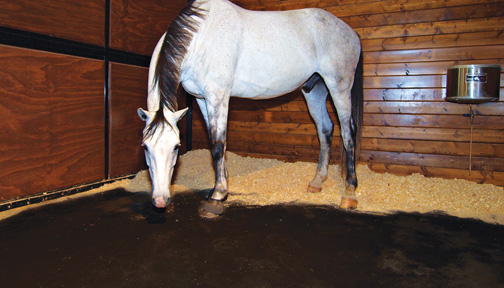
The key to management is early detection, but therein lies the challenge. DJD progresses so slowly that it takes a keen observer to notice the early symptoms.
Article by Karen Elizabeth Baril
Protecting a horse’s joints starts with early detection and everyday prevention: researchers estimate that 60 percent or more of all equine lameness traces to osteoarthritis, and many cases of degenerative joint disease could have been prevented. Key measures include a realistic exercise and training program that never goes beyond your horse’s capabilities, regular farrier attention to avoid hoof imbalance, a preventative joint supplement for at-risk horses, footing suited to your discipline, and low-concussion flooring in barn aisles and stalls. Good sleep matters too—a stall comfortable enough for the horse to truly lie down and rest is an often-overlooked piece of joint health.
Equine Degenerative joint disease (DJD), also known as osteoarthritis, is a catch-all phrase for a host of joint issues. Researchers estimate that a whopping 60 percent or more of all lameness can be attributed to osteoarthritis. It’s a progressive condition resulting from a breakdown in cartilage and underlying bone. DJD can strike any horse, whether in competition or not, impacting his movement and in some cases, even his ability to lower his head and neck to graze comfortably.
The key to management is early detection, but therein lies the challenge. DJD progresses so slowly that it takes a keen observer to notice the early symptoms. Pain and sensitivity to a particular joint are obvious, but off and on stiffness, bumps or swelling, and decreased performance are also signs of early onset. Though the condition usually occurs in the stifles, hocks, knees, fetlocks, and pasterns it can also effect the spine.
Your veterinarian may use one or more of the following tools to diagnosis your horse’s problem. ➢A physical exam with flexion testing and possibly nerve blocks to pinpoint the origin of pain. She’ll give the nerve blocks in ascending order, from the ground up to isolate a potential problem.
➢Radiographs provide your vet with a two-dimensional image of the limb or joint. X-rays are a useful tool to determine if there’s been a breakdown in joint cartilage. If so, the spaces between the joints will appear narrower than they should.
➢Magnetic Resonance Imaging (MRI) is another useful tool in diagnosis. Your horse must be anesthetized for the procedure due to the length of time needed for the exam, about three hours. Evaluations are limited to the head, neck, and limbs due to the limited size of the MRI. This is a costly procedure, but is an effective diagnostic tool.
➢Computed Tomography (CT or Cat Scan) is used in conjunction with other radiographic imaging, but recently it has proven useful in diagnosing issues with the stifle, coming close to the image quality of the MRI.
➢Arthroscopic surgery allows a thorough examination of the equine joint. In arthroscopy, your horse is placed under general anesthesia and put into a prone position. Arthroscopic surgery is minimally invasive and relatively safe. Small incisions, just large enough for the scope and camera are made in your horse’s skin. The surgeon navigates the scope into the joint capsule. Once in the joint, the surgeon can remove bone chips or loose cartilage, if necessary. There are usually no side effects from this procedure and it carries minimal risk. Once again, though, it’s costly.
➢Nuclear scintigraphy or bone scan is especially useful for diagnosing less obvious problems and for areas that are harder to image by traditional means due to soft tissue mass, like areas in the shoulder and stifles.
Prevention First Researchers believe that many cases of DJD could have been prevented. The following is a checklist of measures you can take now to preserve your horse’s joint health.
'Design and follow a realistic exercise and training program for your horse. Think long-term when thinking competitively. Never go beyond your horse’s capabilities. This is hard to do at times if you’re following the advice of an enthusiastic trainer, but commit to being your horse’s best advocate.
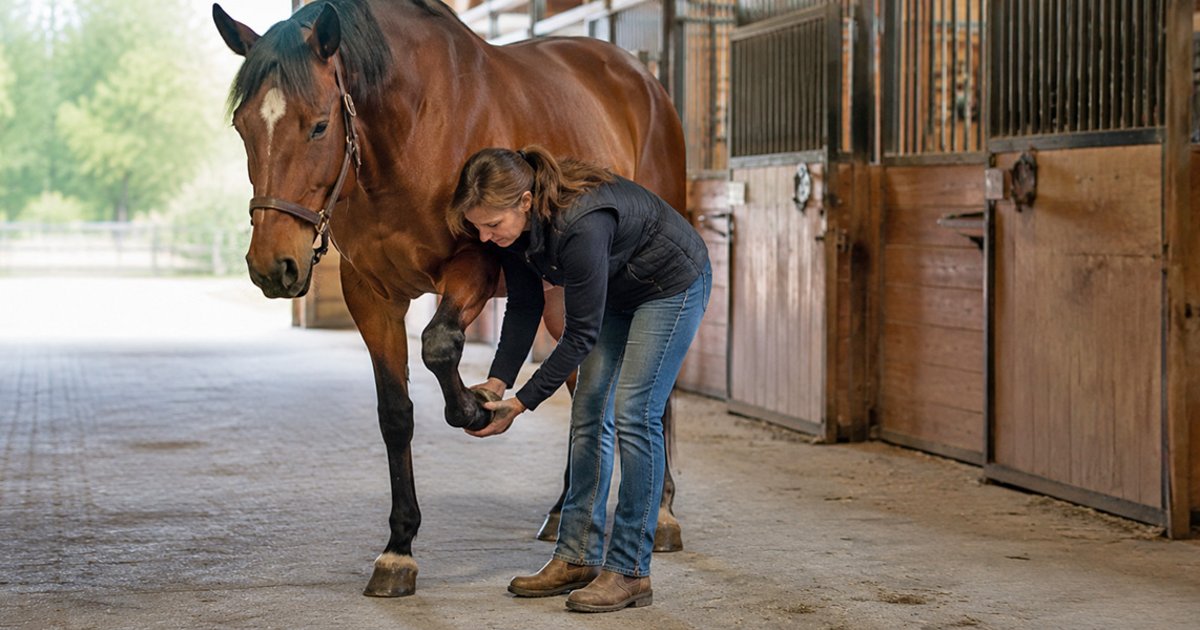
'Provide regular farrier attention. Uneven or too long hooves can result in imbalance that can lead to joint disease.
'Consider a preventative joint supplement if you think your horse is at risk.
'Train only on the surface that is designed for your sport. Very deep footing might not be appropriate for your discipline and, conversely, too hard a footing can result in concussion to the joints.
'Pay careful attention to the footing in the barn aisle and stall as well. Invest in low concussion barn aisle flooring and stall mattresses or mats to offer joint protection.
Joint Health and a Good Night’s Sleep Sleep is critical to equine joint health, yet it’s one of the areas we often fall short on when thinking of prevention. Horses experience similar stages of sleep as their owners; including slow wave sleep and rapid eye movement sleep. Missing any of these deep sleep stages for more than a day or two puts your horse at risk for all sorts of health issues, including joint pain. Unfortunately, many horses don’t get enough rest, either because they’re not in a suitable herd environment or because their stalls are just not that comfortable to lie down in.
Be sure your horse feels safe in his herd. Although occasional bickering is normal, if your horse is frequently bullied, he won’t feel comfortable resting outdoors. Inside the barn, your horse’s stall should be large enough for him to lie down comfortably. Stall mats, or better yet, non-shifting stall mattresses are a great investment in the future of your horse’s joint health. We love the Thuro-Bed Mattress System for the following reasons:
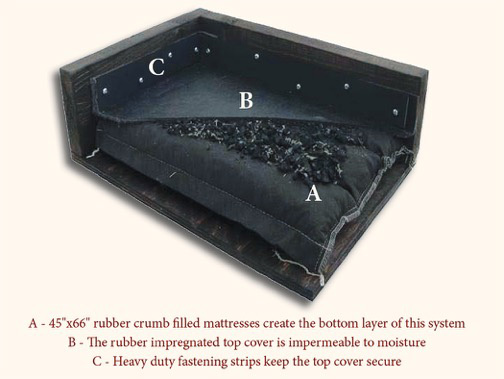
'The Thuro-Bed Mattress System reduces stress on all joints.
'Unlike most stall mats, the Thuro-Bed Mattress System won’t shift. Easy to install with a water-proof top cover that fastens and secures the mattress all the way around the stall wall.
'12-cells on each mattress. The cells are filled with rubber crumb so there is no foam to break down and no compaction. 'A '” thick water-proof top cover.
'The system is wrinkle-free and will never shift.
'Custom options to fit any stall.
'Field tested under all ages, breeds, size, and temperament as well as under various shoeing options.
'It comes with a three-year warranty.
One of the many benefits we’ve seen with the stall mattress system is that horses spend more time truly resting and sleeping, which is essential joint health. A side benefit of the Thuro-Bed Mattress System is the reduced cost in bedding. Customers tell us they use 75 percent less bedding than without the stall mattress system, cutting expense, the size of the manure pile, and even dust and ammonia levels in the stall.