

What To Do If Your Horse Has Cataracts
Article from horsecataracts.com
If your veterinarian confirms cataracts—a film that begins as a small mass in one or both eyes and gradually expands until it obstructs vision—there are two main paths: cataract surgery, which removes the cataract and restores vision, or Can-C eye drops, formulated with the antioxidant N-acetyl carnosine to control the inflammation researchers identified as the cause of cataract formation. Surgery involves considerable expense and some risk, while the drops offer a non-surgical option; studies in dogs and humans found the drops effective in 90 percent or more of subjects, and horse-owner feedback over eight years has been favorable for roughly 9 out of 10 horses.
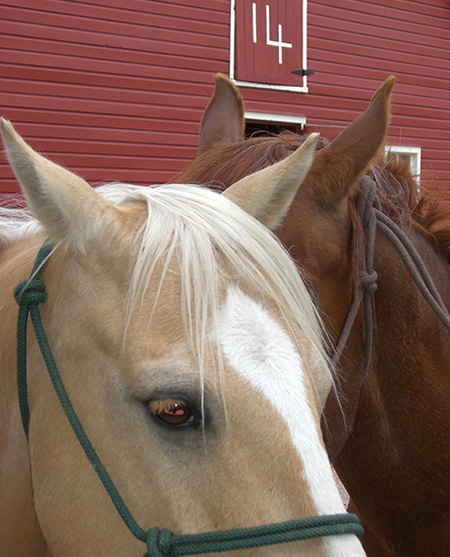
Cataracts are a thin film that covers your horse’s eyes. They initially begin as a small mass in the middle of one or both eyes and gradually expand in size. As a cataract expands, your horse will likely be able to see out of the periphery of their eye where vision is unobstructed. Vision is completely obstructed when the cataract covers the entire eye and your horse becomes blind.
Why do Cataracts Form?
Researchers initially asked the question: what is the difference between animals that have cataracts and those that do not? Dogs were used to answer this question. After a very long search, they determined that there was only one difference between the two. Dogs with cataracts had no N-acetyl carnosine which is one among many natural antioxidants found in the bodies of dogs and humans. Since this antioxidant acts to reduce inflammation throughout the body, researchers concluded that cataracts develop because of excessive inflammation.
Their logical next step was to formulate an eye drop which contained N-acetyl carnosine. Initial investigations were disappointing. Researchers then began refining this anti-oxidant. One special grade in particular did wind up showing favorable results in about 90% of the subjects studied. Once inflammation was controlled, they found cataracts in a majority of cases did show improvement.
What About Cataract Surgery as a Treatment? Once your vet has determined that the reason for a loss in sight is because of cataracts, they will preview for you the option of cataract surgery which involves removing the cataract. This option involves considerable expense and of course poses some risks to your horse. It will, however, restore vision. As long as inflammation remains until control, the problem is unlikely to reoccur.
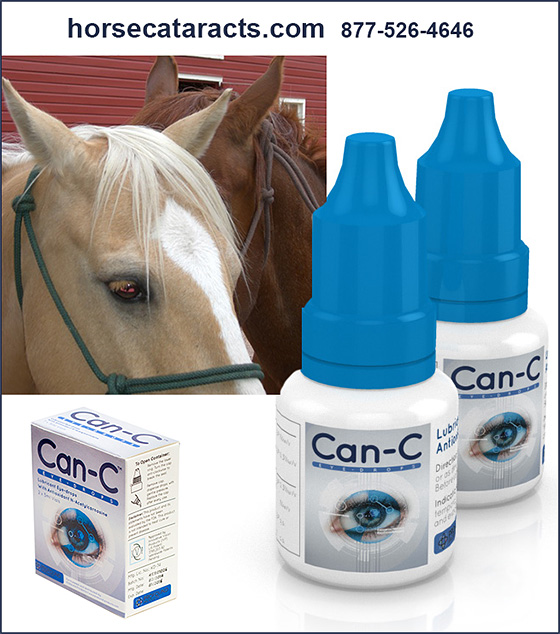
Are Other Treatment Options Available? The answer is yes. This treatment comes in the form of an eye drop formulated by Dr. Babizhayev PhD, the researcher who initially determined that reducing inflammation in the eye was the key to reversing cataracts. The eye drop that was formulated is called Can-C.
Is There Research that has Evaluated the Effectiveness of Can-C for Horses? No there is not. There are a number of studies using dogs and humans. These studies show that application of the drops as directed are effective in 90% or more of the subjects selected for study. Researchers concluded that the drops were effective for all mammals.
Anecdotal Evidence on the Effectiveness of Can-C for Horses I have been sharing information about Can-C with horse owners for eight years now and am pleased to report that the overall feedback from horse owners has been positive. Following the pattern seen with dogs and humans, results have been favorable for approximately 9 out of 10 horses. Can-C does not help reverse cataracts for all horses, but the odds of success are certainly in your favor.
For more information visit: horsecataracts.com Robert 877-526-4646 [email protected]