

Why Your Senior Horse Is Losing Weight and the Feeding Fix That Works
A senior horse losing weight is almost never thin simply because he’s old—weight loss is a symptom with a specific cause, most often dental problems, PPID (Cushing’s disease), gastric ulcers, parasites, chronic pain, or a dominant herd mate pushing him away from feed. Before changing feed, schedule a veterinary dental and wellness exam to identify the real problem. Once the underlying cause is addressed, most owners begin seeing improvement within 30 to 60 days on a feeding program built around highly digestible fiber, added fat, and smaller, more frequent meals.
If you've got a senior horse losing weight, here's the first thing to get straight: don't blame the calendar.
"He's just getting old" is one of the most expensive assumptions in the horse business because it sends good horse owners straight to the feed room to dump more grain into the bucket. And most of the time, that doesn't solve the problem.
A senior horse losing weight is telling you something specific. Your job is to figure out what.
The weight didn't come off because he suddenly needed another scoop of sweet feed. It came off because something underneath changed. The good news is that once you identify the real cause, many older horses regain condition surprisingly well.
Let's start where experienced horse owners start.
Why Is My Senior Horse Losing Weight All of a Sudden?
Weight loss is a symptom, not a diagnosis.
Before changing feed, rule out the most common causes.
Dental Problems
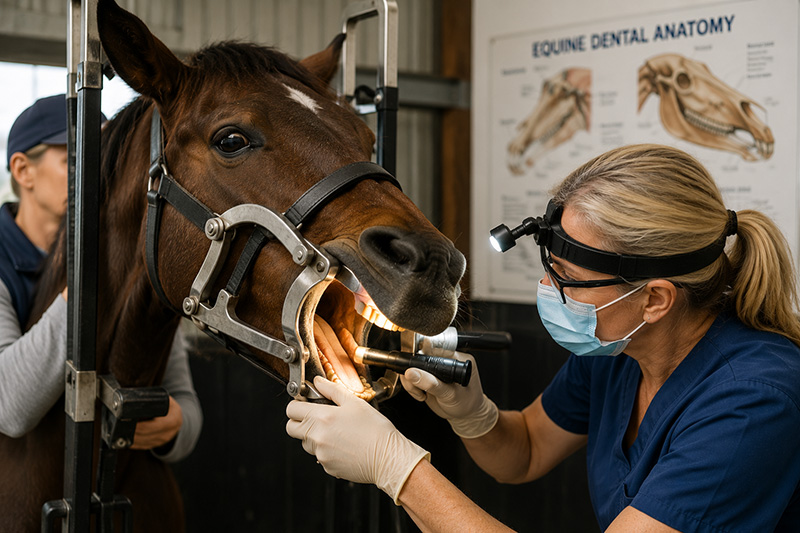 This is the number one culprit.
A horse's teeth wear down throughout his life. Eventually, sharp points, missing teeth, loose molars, worn chewing surfaces, or uneven wear patterns can make it difficult to grind hay properly.
A horse that cannot chew effectively cannot extract nutrition efficiently.
Common signs include:
• Dropping partially chewed hay (quidding)
• Slow eating
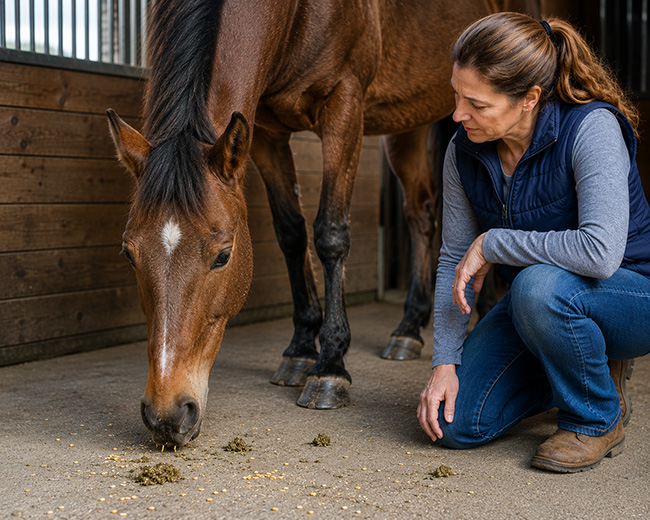 • Dropping grain
• Tilting the head while chewing
• Hay packed into the cheeks
PPID (Cushing's Disease)
PPID is extremely common in older horses.
One of the earliest signs is often muscle loss over the topline and hindquarters.
A horse with PPID may appear thin across his back and rump while still carrying a large belly. Many owners don't recognize the disease until much later when the classic long hair coat develops.
Gastric Ulcers
Ulcers can reduce appetite and nutrient utilization.
Older horses under stress, dealing with chronic pain, frequent travel, or changes in routine can develop ulcers just like younger performance horses.
Parasites
A significant parasite burden steals nutrition directly from the horse.
A fecal egg count performed by your veterinarian is often more effective than guessing with a deworming schedule.
Chronic Pain or Disease
Arthritis, kidney disease, liver disease, chronic infections, and dental pain can all contribute to weight loss.
If a horse hurts every day, he often loses condition regardless of what you feed him.
Is Another Horse Stealing His Groceries?
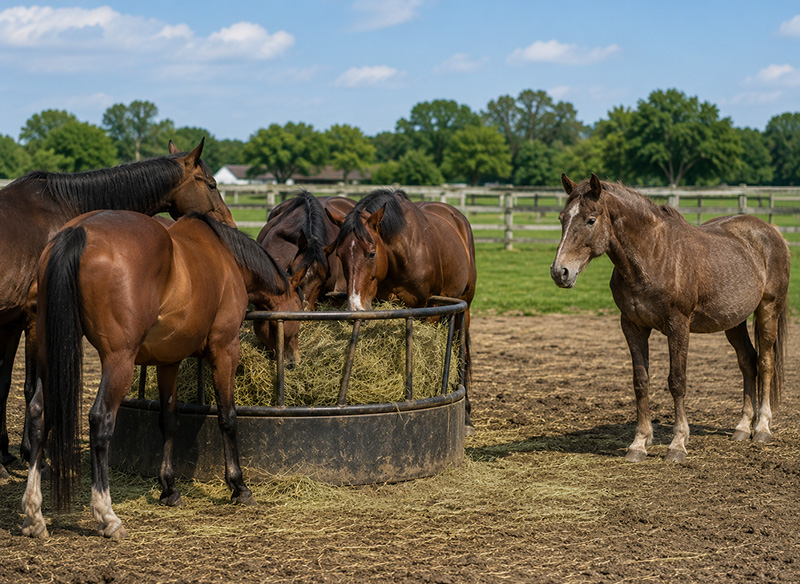 Sometimes the problem isn't the feed.
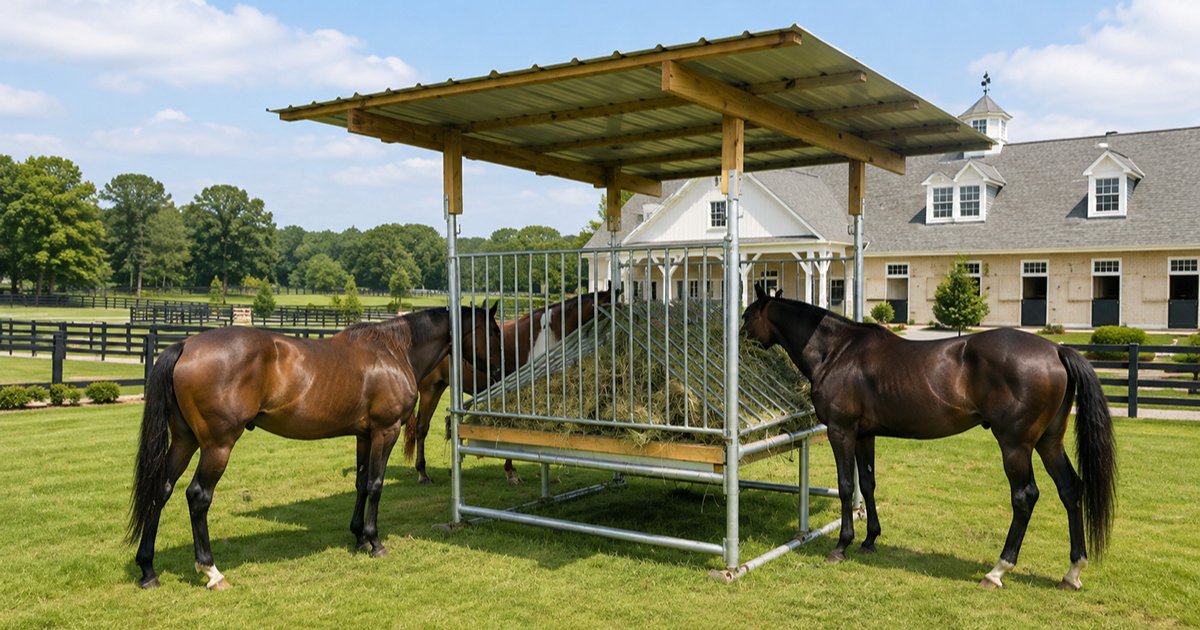
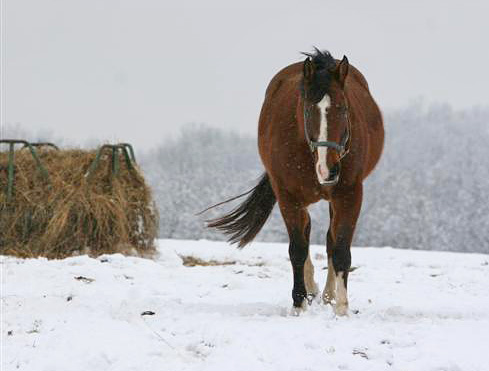
Senior horses often lose social status within the herd and may be pushed away from hay feeders, grain tubs, or round bales by younger, more dominant horses.
Watch your horse during feeding time.
You may discover he isn't getting nearly as much feed as you think.
Why Does My Senior Horse Always Look Hungry?
Many owners notice their older horse constantly searching for food.
Sometimes he truly needs more calories.
Sometimes he can't properly chew the forage available to him.
PPID, parasites, poor teeth, and certain digestive disorders can all create the appearance of a horse that is always hungry but continues losing weight.
A horse that seems hungry all the time while continuing to lose condition deserves a veterinary evaluation.
Weight loss in an old horse is a question, not an answer. Adding grain before you've asked the question is how you spend a fortune feeding the wrong problem.
— Bob Pruitt, InfoHorse.com
How Much Weight Loss Should Concern Me?
More than most owners realize.
Because you see your horse every day, gradual weight loss can be surprisingly difficult to notice.
Watch for:
✓ More visible ribs
✓ Prominent hip bones
✓ A flatter topline
✓ Loss of muscle over the hindquarters
✓ A saddle that suddenly fits differently
✓ A weight tape showing steady decline
Even a loss of 50 to 100 pounds over several months can signal a significant underlying issue.
Monthly weight records are one of the simplest ways to catch problems early.
What's the First Thing I Should Do Before Changing Feed?
Specifically, schedule:
• A thorough dental examination
• A general wellness examination
• Bloodwork if recommended
A proper dental exam means a veterinarian using a speculum and examining the back molars where most problems occur.
The single best thing you can do at home costs nothing:
Watch your horse eat.
Many feeding problems become obvious when you simply spend ten minutes observing a meal.
Learn to Use Your Hands, Not Just Your Eyes
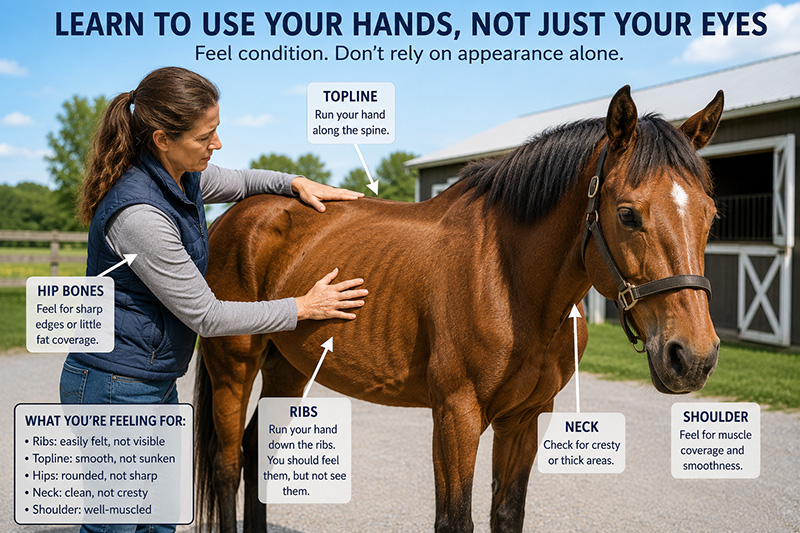 Winter coats hide a lot.
Run your hands over:
• Ribs
• Topline
• Neck
• Shoulder area
• Hip bones
This is the foundation of body condition scoring.
What your hands feel is often more accurate than what your eyes see.
Is My Horse Losing Fat or Muscle?
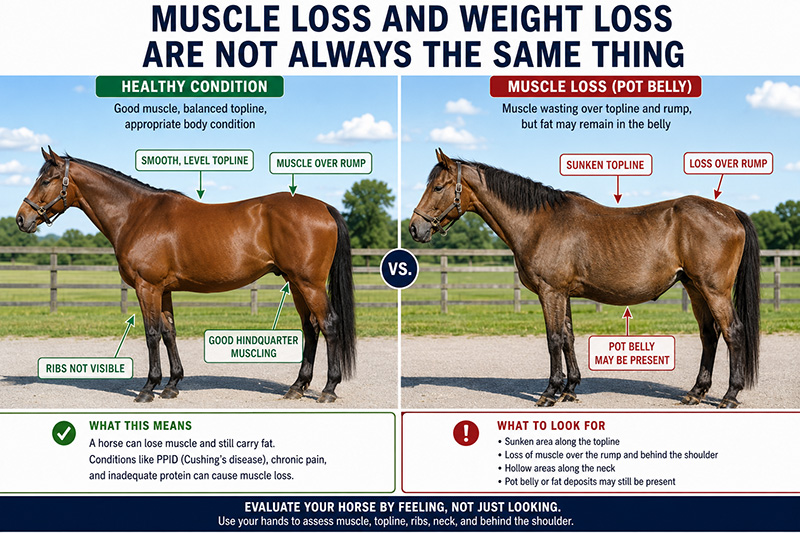 This distinction matters.
Many owners focus on visible ribs.
Veterinarians often focus on muscle loss.
Common locations where muscle loss appears first:
• Along the topline
• Behind the shoulder
• Over the rump
• Along the neck
PPID, chronic pain, inadequate protein intake, and other medical conditions frequently cause muscle loss before obvious fat loss occurs.
Adding more calories may not solve a muscle-loss problem unless the underlying cause is addressed.
How Should I Feed a Senior Horse to Put Weight Back On?
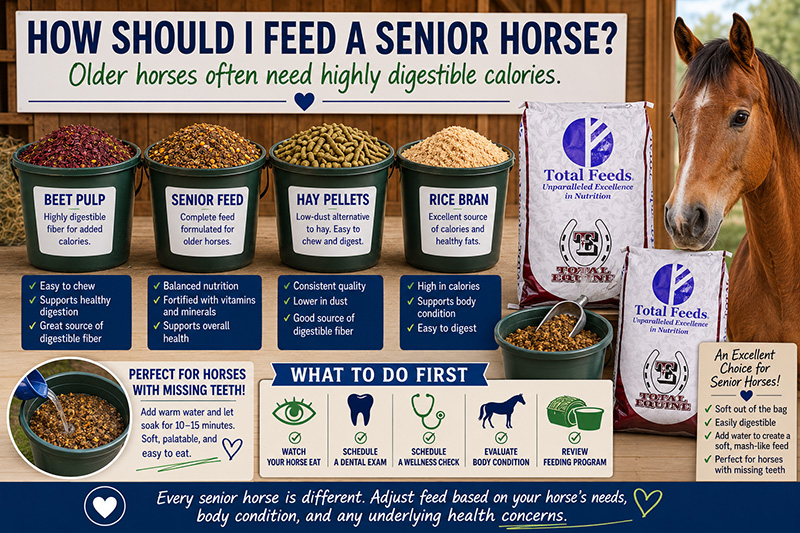 Once medical problems are addressed, feeding becomes much simpler.
The goal is to make every bite count.
Older horses digest nutrients less efficiently than they did in their younger years.
A quality senior feed typically contains:
• Highly digestible fiber
• Added fat
• Beet pulp
• Soy hulls
• Dehydrated alfalfa
• Enhanced vitamin and mineral levels
These ingredients provide safe calories without relying heavily on starch and sugar.
Feeding Strategies That Work
Feed Smaller Meals More Often
Three or four smaller meals are usually easier for an older digestive system to handle than two large feedings.
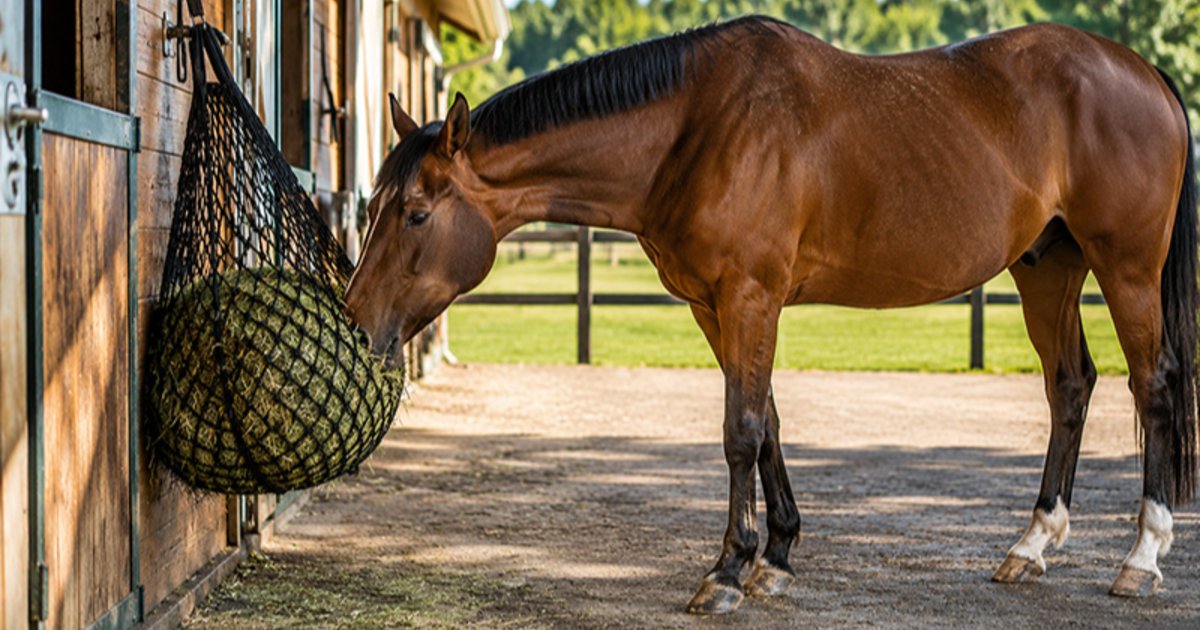
Provide Constant Access to Forage
Horses are designed to eat continuously.
Free-choice quality hay or pasture often improves body condition dramatically.
Feed Enough Total Calories
Many "hard keepers" are simply underfed.
Most senior horses need approximately 2% to 2.5% of their body weight daily from all feed sources combined.
Weighing feed is far more accurate than guessing.
What If My Senior Horse Can't Chew Hay Anymore?
This is where many owners get confused.
A horse's digestive system requires fiber.
If he cannot chew long-stem hay, he still needs forage.
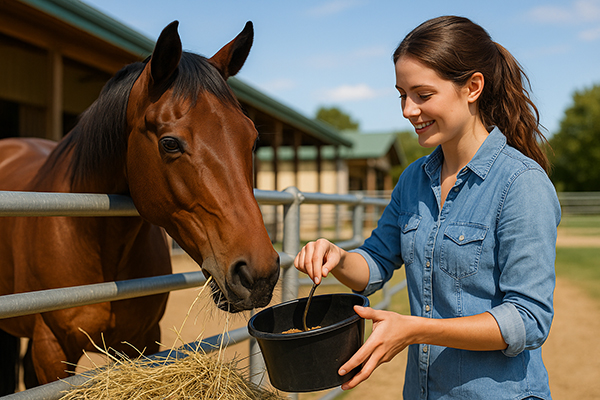
Soaked Hay Cubes
Hay cubes can be soaked into a soft mash.
Soaked Hay Pellets
Hay pellets provide digestible forage without requiring extensive chewing.
Complete Senior Feeds
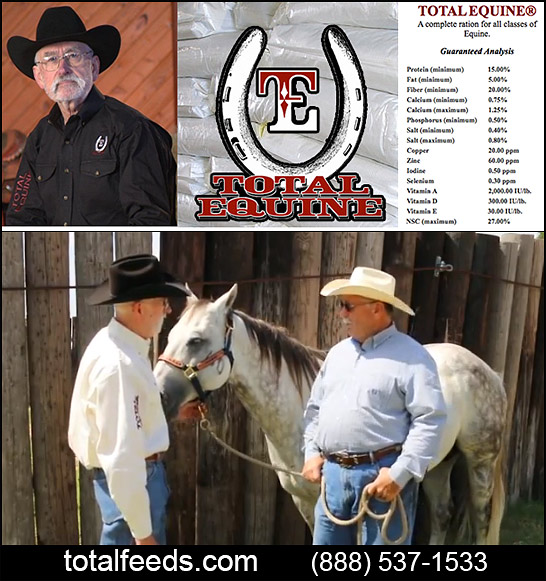
Many complete senior feeds like Total Equine contain enough fiber to replace hay entirely when fed according to label directions.
Why Soaking Helps
Soaking:
✓ Makes feed easier to chew
✓ Increases water intake
✓ Reduces choke risk
✓ Helps reduce impaction risk
In winter, warm water often improves acceptance.
In summer, prepare fresh mash each feeding to avoid spoilage.
A horse with no teeth isn't a horse who can't eat — he's a horse who needs his hay served as soup. Get the fiber in soft and he'll surprise you.
— Ann Pruitt, InfoHorse.com
Can Dehydration Cause Weight Loss?
Indirectly, yes.
Older horses frequently drink less water.
Poor hydration may contribute to:
• Reduced appetite
• Slower digestion
• Increased impaction risk
• Less efficient nutrient utilization
Providing warm water during winter and feeding soaked feeds can significantly improve hydration.
How Do I Add More Calories Without Dumping in Grain?
Once your horse is eating well and medical issues have been addressed, fat is usually the safest place to add calories.
Good options include:
• Vegetable oil
• Stabilized rice bran
• High-fat senior feeds
Introduce fat gradually over one to two weeks.
Adding large amounts suddenly often reduces feed acceptance.
Common Feeding Mistakes That Keep Senior Horses Thin
Mistake #1: Feeding More Sweet Feed
More grain does not fix dental disease, ulcers, PPID, or parasites.
Mistake #2: Feeding Too Few Meals
Older digestive systems perform better with multiple smaller meals.
Mistake #3: Not Measuring Feed
Most owners underestimate how much—or how little—they are feeding.
Mistake #4: Ignoring Forage Quality
Poor hay produces poor results regardless of quantity.
Mistake #5: Waiting Too Long to Call the Vet
Weight loss is easier to reverse early than after significant condition has been lost.
Are Supplements the Answer?
Sometimes—but only after the real problem has been identified.
Supplements can support:
• Digestive health
• Hoof quality
• Coat condition
• General wellness
They do not treat:
• PPID
• Dental disease
• Ulcers
• Parasites
• Chronic organ disease
If your horse is losing weight because something is wrong medically, supplements cannot solve that problem.
They belong in a healthy horse's management plan—not as a substitute for diagnosis and treatment.
When Should I Call the Vet?
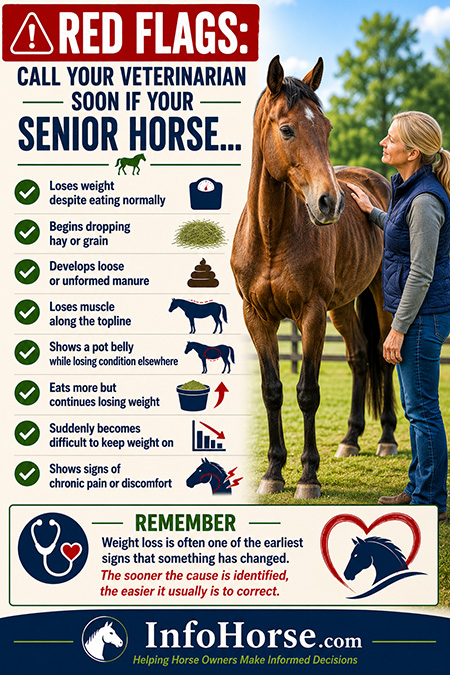 The answer is simple:
Before you start re-feeding.
The earlier weight loss is investigated, the easier it usually is to correct.
Don't wait until ribs are showing.
Don't wait until the topline disappears.
Don't wait until feeding changes fail.
Frequently Asked Questions
Can a senior horse gain weight again?
In many cases, absolutely.
Once dental issues, disease, parasites, and nutritional deficiencies are addressed, older horses often regain condition surprisingly well.
What is the best feed for a senior horse that can't chew hay?
Complete senior feeds, soaked hay cubes, and soaked hay pellets are among the most common solutions.
Is beet pulp good for senior horses?
Yes.
Beet pulp provides highly digestible fiber and is commonly included in successful weight-gain programs.
How long does it take a senior horse to gain weight?
Most owners begin seeing improvement within 30 to 60 days, although significant restoration may require several months.
Can Cushing's disease cause weight loss?
Yes.
PPID commonly causes loss of muscle and body condition, especially over the topline and hindquarters.
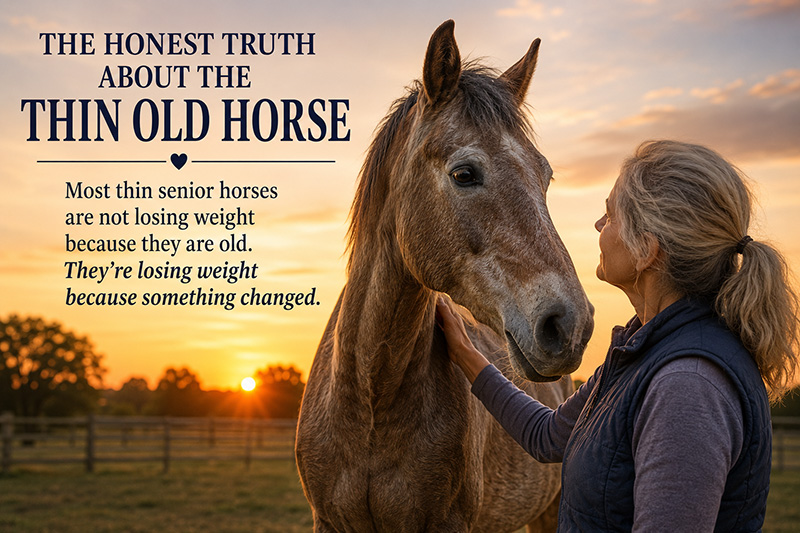 The Honest Truth About the Thin Old Horse
Here's the most important thing to remember:
Most thin senior horses are not losing weight because they are old.
They're losing weight because something changed.
Maybe it's their teeth.
Maybe it's PPID.
Maybe they're getting pushed away from the hay feeder.
Maybe they're simply not receiving enough digestible calories.
Find the reason, address the problem, feed appropriately, and many older horses come right back.
You've taken care of him for years.
He's still trying.
Give him the nutrition, medical care, and attention he needs, and he may surprise you with just how much good life he still has ahead of him.
When you're ready to compare senior feeds, weight-support products, veterinarians, equine dentists, and other trusted horse-care resources, InfoHorse.com can help you make informed decisions for your horse's future.