

Winter Horse Care; What Do Horses Really Need to be Healthy?
Article by Karen Elizabeth Baril
Horses in winter need shelter, daily grooming, safe turnout, and fresh water—and a few of those can never be compromised. A well-designed, sturdy run-in shed on high, dry ground, cleaned every day with its opening facing away from the prevailing winds, keeps most horses healthy without a full barn, and most healthy horses fare well without blankets even when temperatures dip below freezing. Water is the biggest winter challenge: the most common veterinary emergency call in winter is colic, often due to dehydration, because horses drink less when the water is too cold for comfort.
We all love to spoil our horses. After all, that’s part of the fun of owning horses, right? But, winter horse care can get overwhelming fast, especially in the dead of January when you’re chopping ice off buckets. Even your hand warmers don’t seem to be working like the package promised.
Yes, horse owners are tough, there’s no doubt about it, but winter weather sure tests our resolve. Here’s a little good news; during the coldest months, it’s okay to take the pressure off your horse-keeping, so long as you’re still taking care of the necessities.
So, what do horses really need in the winter? In this month’s article, we share a few responsibilities you can let slide in cold-weather months and one or two that should never be compromised.
Shelter is critical for your horse, especially in winter, but you don’t need an 8-stall fully outfitted barn to keep him healthy or safe. A well-designed and sturdy run-in shed works well for most horses, providing the location is high and dry. Be sure to place the run-in shed so that the opening faces away from the prevailing winds in your area. Anchor the shed to prevent a wind catastrophe.
Just like his stall, the run-in shed needs to be cleaned every day. No compromising here, but the run-in shed means your horse has more freedom of movement, which helps to keep his gut healthy. Install gutters and pipe drains to divert rain water from the shed. This avoids mud and ice at the entrance and keeps rain water away from the foundation. Keep in mind that even a small outbuilding can shed up to 600-gallons of water for every inch of rain that falls.
If your horse will share his shed with a companion, be sure they get along well enough to share space happily. Run-in sheds should be constructed wider than they are deep to prevent the more dominant horse from trapping his buddy in the rear of the shed.
Turnout doesn’t have to be limited just because the days are shorter. If you’re like me, you tend to bring your horses in when the sun goes down, but it’s not necessary. Horses can see quite well in the dark and they fare well in the cold. Even frosty temperatures aren’t generally a problem for them; in fact, your horse feels quite comfortable in temperatures that force you to put a few extra layers on.
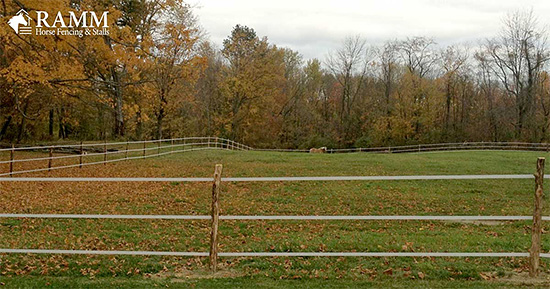
Winter turnout does present a few challenges, though. You’ll want to fence off ponds or waterways that freeze in winter to avoid the risk of horses falling through the ice. Use a highly visible electric rope or tape fence like Pro-Tek 1.5” with a low impedance solar charger for these areas. A Power Wizard 6 V Solar Charger offers an easy battery check and a power saver mode. The Power Wizard 6V is easily mounted to a tree or fence post. It’s energy efficient and environmentally friendly.
Fencing off ponds and areas of water that freeze is one of those no-compromise tasks. Tragically, reports of horses slipping through ponds in winter is not uncommon. Never assume your horse is smart enough to stay off the ice. Even wild horses drown in iced over lakes and ponds.
You don’t need to fuss with blankets. Most healthy horses fare quite well without blankets even when the temperatures dip below freezing. There are some exceptions to this rule and you should use your good sense to decide if your horse needs a blanket. If your horse cannot keep himself warm; senior horses, underweight horses, and poor doers fall into this category, you should consider blanketing.
Keep in mind that no horse is equipped to manage wet and cold weather so on those rainy winter days or in sleet and freezing rain, your horse will need a rain sheet at minimum. Blankets should be expertly fitted to avoid painful rubs, especially at the shoulders and withers. Remove your horse’s blanket daily to check for blanket rubs.
Daily grooming is one of those no-compromise chores, but you don’t have to be as meticulous as you are in the summer when trimmed manes and fetlocks are all the rage. As you groom, inspect your horse for minor injuries or winter-weather problems like frostbite, especially around his muzzle and ear tips. Remove snow balls from your horse’s hooves. Water is another no-compromise necessity. The most common veterinary emergency call in winter is for colic and colic in winter is often due to dehydration. Horses drink less water in winter, mostly because the water temperature is too cold for comfort. Just like you, horses don’t find ice-cold drinking water on a chilly day all that appealing.
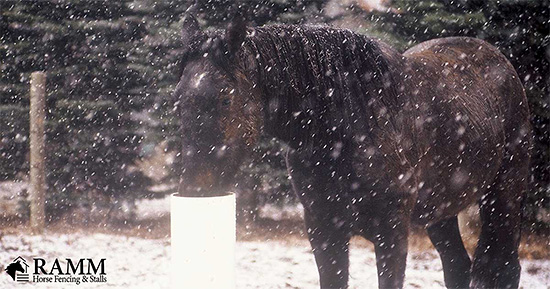
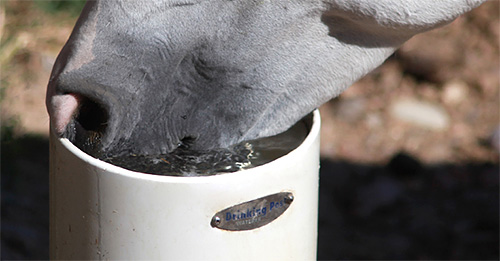
Because outside water is your biggest winter challenge we recommend the Drinking Post Waterer which can be installed anywhere you have a pressurized water line or can add one, including in pastures or along double fence lines. Because the Drinking Post Waterer acts like a hydrant, it never freezes, never overflows, never needs to be emptied, and eliminates mud and ice around the watering area.
The Drinking Post Waterer is a horseman’s dream come true:
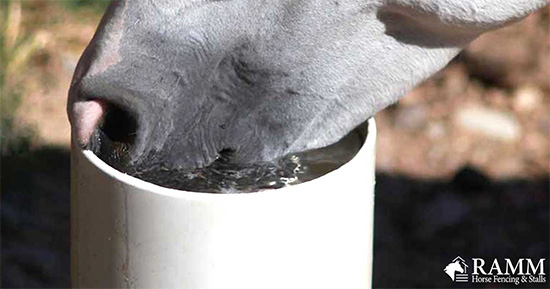
' It ensures 50' fresh drinking water on demand. You don’t have to do a thing. Even if the power goes out. ' It eliminates the toxic algae problem in troughs and buckets because water does not sit in the bowl. ' Because it works as a hydrant, it requires no electricity so there is no risk of shock. The unit continues to work even during a power outage. ' There are no buckets or troughs to empty.
' There is no standing water so, in warm weather, the Drinking Post Waterer does not attract mosquitoes or other disease-carrying vectors. ' There is no ice to crack. No buckets to fill. No frozen hoses to struggle with. One last word about water. Inside the barn, you can skip a day or two of scrubbing buckets in winter. There is little chance of algae or bacteria in very cold weather so give yourself a break here. Limit this chore to once a week.
Whether you live in the northeast, the northwest, or all points in between, new technology, like the Drinking Post Waterer, make winter horse-keeping manageable, maybe even fun!