


When a horse comes off fresh spring pasture and onto stored hay, something invisible changes in the feed bucket. The vitamin E that green, growing grass delivers so generously begins to disappear, and most owners never see it happen. Daily, Natural Vitamin E from Equine Balanced Support was built to close exactly that gap, replacing the antioxidant that hay quietly loses with a form the horse's body actually recognizes and uses.
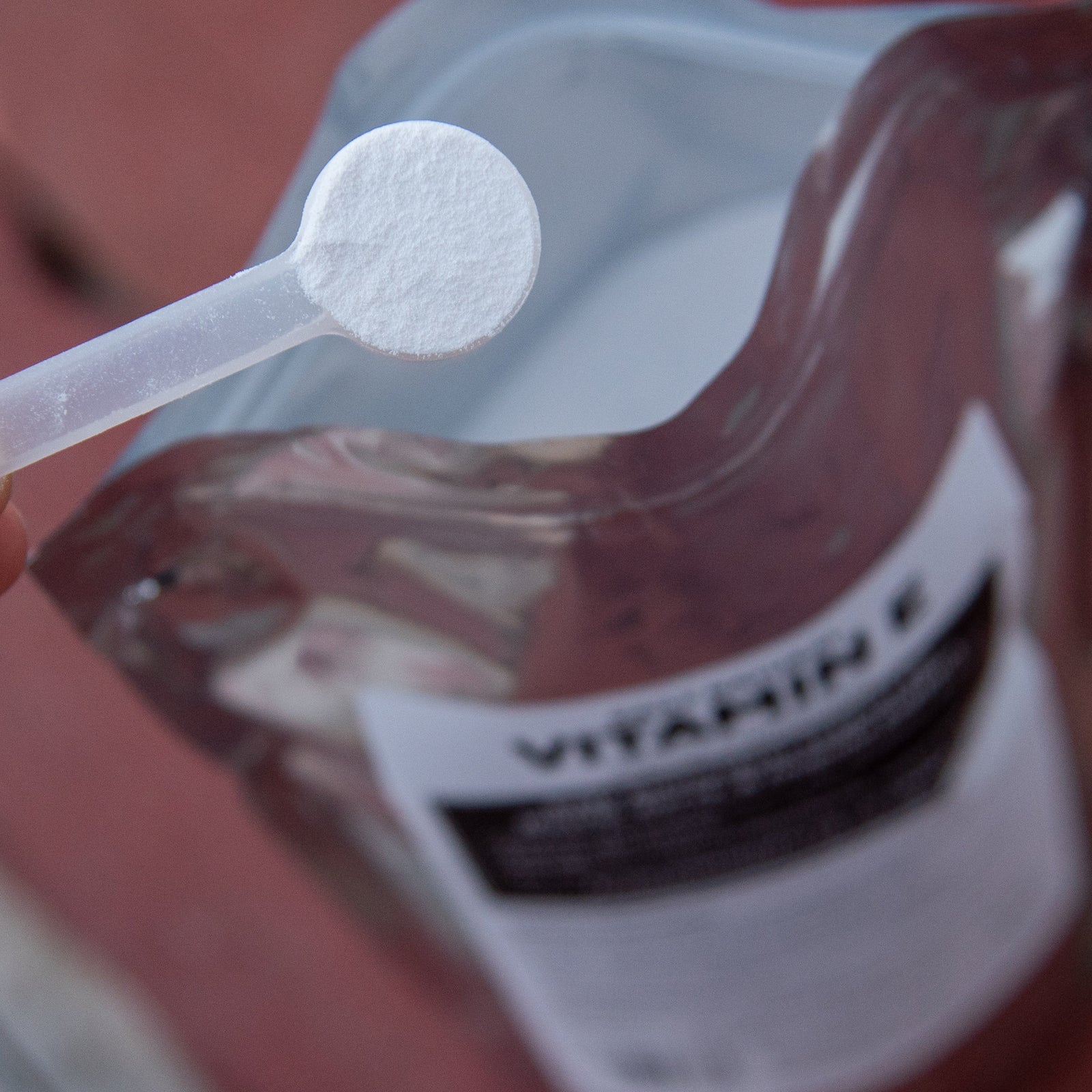
Equine Balanced Support is research-backed equine nutrition with a clear point of view: feed horses in a way that respects their physiology, then back every claim with the science. This supplement reflects that philosophy in a single, focused job, done with the right ingredient at the right dose. There are no fillers, no artificial additives, and no added sugar in the pouch, just an easy-to-mix powder you top-dress on feed once a day.
Not all vitamin E is the same molecule. Synthetic vitamin E (the dl-alpha form) is a mixture of eight different shapes, only some of which a horse can fully use. Natural vitamin E, the d-alpha form used in this product, is the single shape the body is built to absorb, transport, and hold onto in tissue. Research summarized by Equine Balanced Support points to natural d-alpha being up to twice as bioavailable as its synthetic counterpart, meaning more of what you pour into the bucket actually reaches muscle and nerve.
Each serving delivers 2,000 IU of natural vitamin E as d-alpha-tocopheryl acetate, an acetate form that work cited from Michigan State University and Rutgers University found gives steady, reliable increases in blood levels rather than sharp spikes and crashes. The result is a daily antioxidant your horse can count on, not a roller-coaster.
Vitamin E is the horse's front-line, fat-soluble antioxidant. It protects cell membranes from the everyday oxidative wear that comes with movement, metabolism, and stress, which is why it sits at the center of three systems at once. It supports muscle by guarding the membranes of working muscle fibers, it supports nerve and neuromuscular function by protecting nervous-tissue integrity, and it supports the immune system's ability to respond and recover.
When that protection runs short, the signs are easy to miss until they add up: muscle stiffness after light work, a topline that won't fill out, slower recovery, dulled immune defense, and in more serious cases the neurologic changes tied to vitamin-E-responsive conditions. Catching the shortfall early is far easier than chasing the symptoms later.
The horses most at risk are the ones living the lifestyle modern boarding makes normal. Any horse without regular access to fresh, growing pasture is a candidate, because dried hay is the problem, not the answer. Equine Balanced Support notes that hay can lose a large share of its vitamin E within weeks of harvest, and that even green-looking hay may be functionally empty of it after months in storage.
That puts hay-fed horses, hard-working performance horses under high oxidative stress, horses recovering through immune or muscle challenges, and horses managed for neuromuscular concerns all in the same group: they benefit from a dependable daily source. Seasonal transitions matter most of all, since vitamin E drops sharply the moment a horse moves from pasture back to hay in late summer and fall.
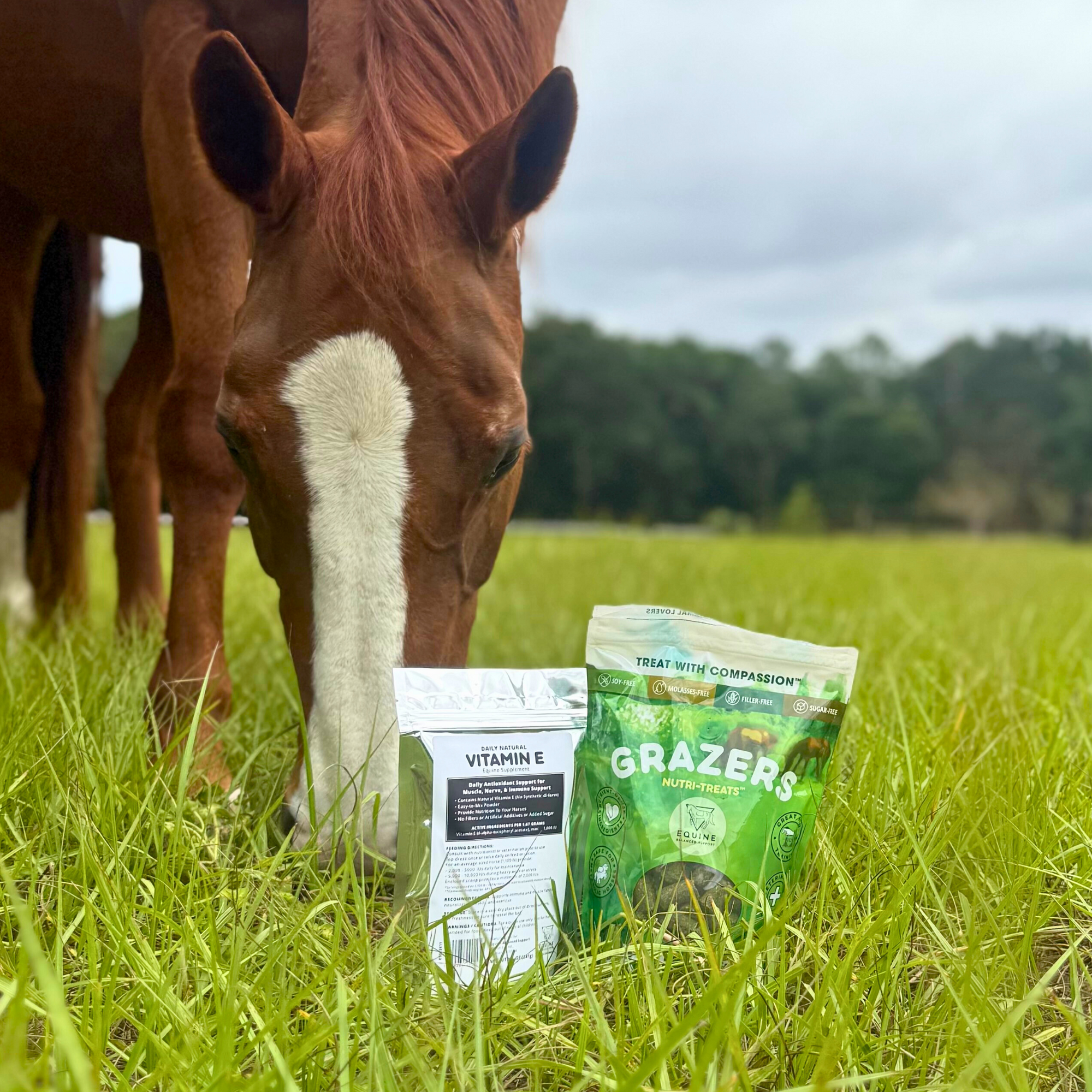
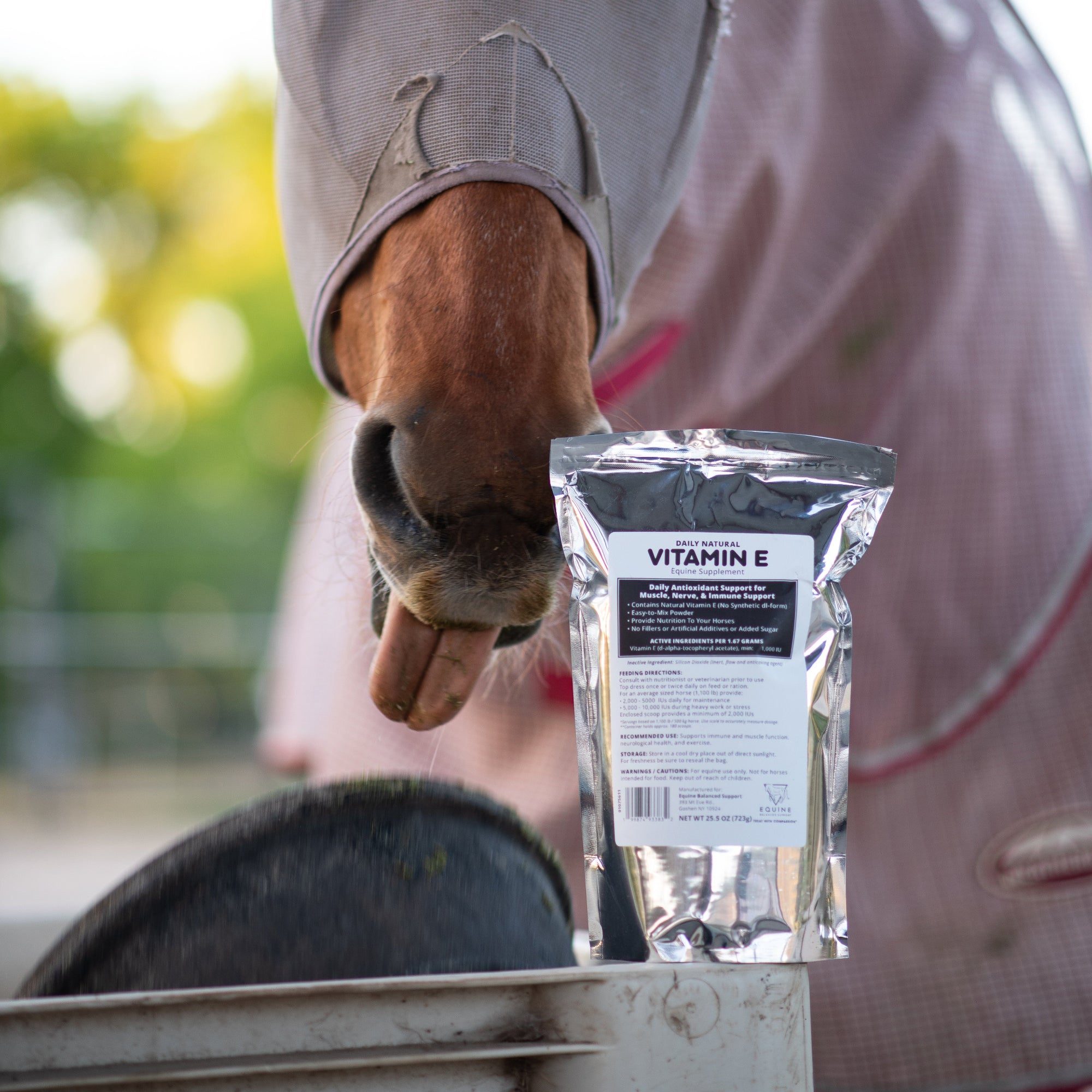
Feeding is simple and forgiving. The supplement is an easy-to-mix powder you top-dress onto feed once a day, and the enclosed scoop is sized so a single level scoop delivers about 2,000 IU. For an average 1,100 lb horse, one scoop covers daily maintenance; smaller horses under roughly 440 lb take a half scoop, and larger horses over 1,100 lb take a scoop and a half. When a veterinarian calls for therapeutic levels, the same powder scales up to 5,000 to 10,000 IU per day.
It ships in a resealable, light-protective pouch, which matters because vitamin E breaks down in light and air. Store it cool, dry, and dark, keep it sealed between feedings, and you protect the very antioxidant you are buying. As Equine Balanced Support recommends, it is worth checking serum vitamin E through an accredited lab around seasonal changes so you can confirm the dose is doing its job.
Synthetic vitamin E (dl-alpha-tocopherol) is a blend of eight isomers, only some of which a horse can fully use. Daily, Natural Vitamin E uses the single natural d-alpha form, which research cited by Equine Balanced Support shows is up to twice as bioavailable, meaning it is better absorbed, more efficiently used, and held longer in tissue.
Each level scoop delivers about 2,000 IU of natural vitamin E as d-alpha-tocopheryl acetate. An average 1,100 lb horse takes one scoop daily for maintenance, smaller horses take a half scoop, and larger horses take a scoop and a half. Veterinarian-directed therapeutic dosing can reach 5,000 to 10,000 IU per day.
Fresh, growing pasture is rich in vitamin E, but hay loses much of it during curing and storage, sometimes up to most of its content within weeks. Equine Balanced Support notes that even green-looking hay may be functionally devoid of vitamin E after a few months, so horses on hay-based diets without fresh grazing are at real risk of a quiet shortfall.
Vitamin E is the body's primary fat-soluble antioxidant. It supports muscle by protecting working muscle-fiber membranes, supports nerve and neuromuscular function by guarding nervous-tissue integrity, and supports immune resilience and recovery. It works by neutralizing the oxidative stress produced during exercise, metabolism, and illness.
Yes. Equine Balanced Support builds the formula on published equine-nutrition research, citing work from institutions including UC Davis, Michigan State University, Rutgers University, and the University of Connecticut on the bioavailability and steady serum response of natural d-alpha-tocopheryl acetate in horses.
Common early signs include muscle stiffness after light work, difficulty building or holding a topline, slower recovery, and weakened immune response. More serious deficiency can show up as neuromuscular changes, which is why blood testing for serum vitamin E around seasonal transitions is worthwhile.
No. The formula is a clean, focused powder with natural vitamin E as the active ingredient and silicon dioxide as an anti-caking agent. There are no fillers, no artificial additives, and no added sugar, which makes it suitable to layer onto a forage-first feeding plan.
Vitamin E degrades in light and air, so the supplement ships in a resealable, light-protective pouch. Store it in a cool, dry, dark place, reseal it after every use, and use it within about six months of opening to keep the antioxidant potency you are paying for.
About this listing: Product and service details on this page, including any results described, are provided by Daily, Natural Vitamin E. InfoHorse.com verifies the business behind every listing — for decisions about your horse's health, talk with your veterinarian.
Explore more from the InfoHorse.com directory
Explore expert guides on topics related to your business
By Bob Pruitt
By Ann Pruitt
By Ann Pruitt
By Ann Pruitt
By Teri Clark
By Ann Pruitt