I myself, am a farrier of 18 years and I uses thermal cams in all of my daily practices.
A 200lb person on a horse with a poorly fit saddle is the same as a human carrying a poorly fit backpack, it’s going to cause soreness somewhere.
The benefits that have come from thermal cameras are outstanding.
I’m here to give the short and to the point version of how thermal cameras have been used with equine for many years now, by myself and a few others.
It has become so simple now to evaluate the horse with thermal tech that it is definitely a go to for me.
What Is Causing My Horse To Be Lame?
The benefits that have come from thermal cameras are outstanding. By: Link Casey Son & Owner, Casey & Son Horseshoeing School BWFA President Certified Master Farrier, Master Educator
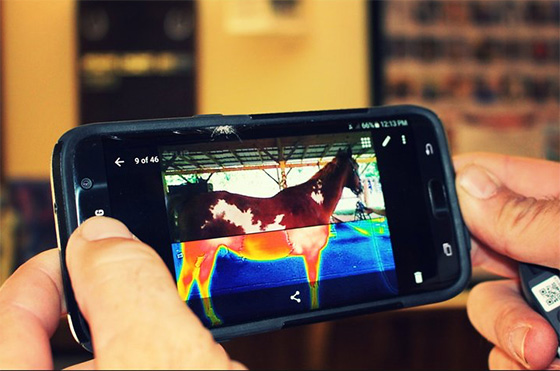
A hoof abscess is one of the most common causes of lameness in horses, but the problem isn’t always in the feet—a horse worked without a proper warm-up can pull a muscle in the shoulder, back, or hip, and a poorly fitting saddle creates pressure points that cause soreness and movement problems. Infrared thermal imaging can pinpoint the trouble spot precisely, showing exactly where an abscess or inflamed area is so the proper corrective procedures can be based on visible facts rather than an educated guess.
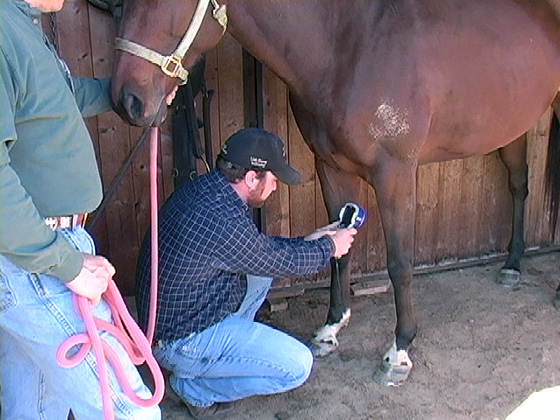
The uses of Infrared Thermal Imaging technology in the world of equine can be very long and drawn out. I’m here to give the short and to the point version of how thermal cameras have been used with equine for many years now, by myself and a few others. The benefits that have come from thermal cameras are outstanding. I myself, am a farrier of 18 years and I uses thermal cams in all of my daily practices.
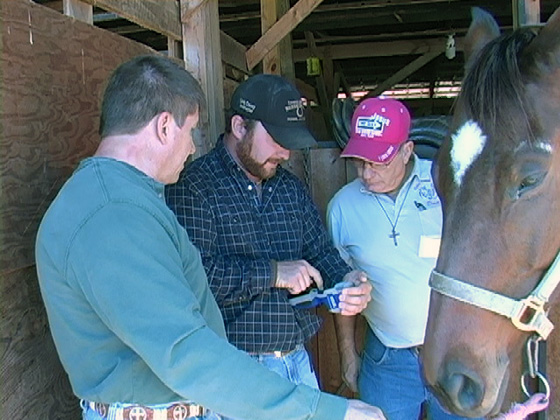
Being the owner of the Casey Horseshoeing School, in affiliation with the Farriers’ National Research Center, I also use thermal cams in the teaching process with my students. It has become so simple now to evaluate the horse with thermal tech that it is definitely a go to for me. The old saying is “no horse is trimmed or shod better than the human eye”. I say, why not make the human eye better.
Taking half an hour evaluating the horse looking, poking and prodding is a thing of the past. Do I still examine how a horse moves and read the feeling in its face to see how much pain or discomfort it’s in?
Of course, I do! I always make a visual determination about every horse I see but, with thermal tech the problems that a horse may have or not have, can be found to a precise point. Then the proper corrective procedures can be performed based on actual facts that can be seen, not a just a good educated guess. What do I mean by this you ask?
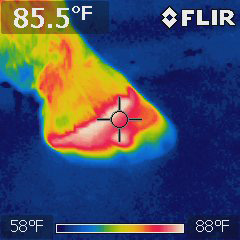
For instance, your horse may develop an abscess, which is one of the most common lameness issues. I can determine exactly where the abscess is, pop the abscess to immediately relieve its discomfort and have the horse standing in comfort in a matter of a few minutes instead of spending more time searching for it by using basic hoof testers or other common tools.
The use of thermal devices is NOT only limited to hoof lameness. As an equine professional, the most popular question I get is about movement problems and saddle fit. When a horse isn’t moving properly it is not always due to the feet. Just like so many of us humans that pull muscles or have soreness is our muscles, a horse can have the same. You work a horse every day for a week without the proper warm up and flexing period, it may pull a muscle in the shoulder, back or the hip just to name a few.
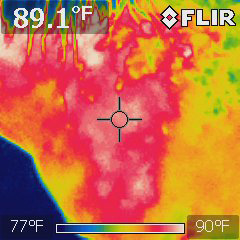
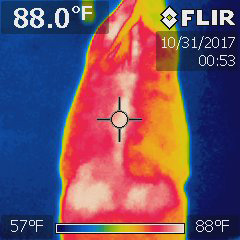
A thermal scan can show exactly where the inflamed area is and then the proper recovery procedures can take place. So many problems I see in the horse being sore, is in the saddle. If your saddle doesn’t fit, you ARE going to have problems with that horse. A 200lb person on a horse with a poorly fit saddle is the same as a human carrying a poorly fit backpack, it’s going to cause soreness somewhere. Thermal scans of the back of the horse, after the saddle has been cinched and sat in will show precisely what pressure points are causing a movement issue in the horse. Improper Saddle Fit Inflammation)
Thermal technology is not just a luxury for the high-end performance horse. In my opinion, it should be used on every single horse from the common trail horses to most prestige of show horses. If you consider your horse your friend or some even a family member, thermal tech will benefit them in every viable way in keeping them comfortable and living a long happy life.
A Happy Horse = Happy Owner!
Want to learn more about Thermal Imaging? Sign up for an Equine Flexion Therapy Course, today! EFT is a system that can help a farrier become a better farrier. It is a system that can be done in conjunction with a farrier business and as equine specialty. The more educated a person is, the better farrier they will be. A great service for owners… provided by farriers….who should know balance and movement and equine anatomy at its best. Click Here to find out more!
💬Questions Readers Commonly Ask (FAQ)
What should I do if my horse comes up lame and I can't pinpoint why?
Per Link Casey Son, Certified Master Farrier and BWFA President: start with a thermal imaging scan before spending half an hour with hoof testers and prodding. The thermal camera shows inflammation as a hot spot, and that hot spot tells you whether the problem is in the hoof, the muscle, the back, or under the saddle.
Per the article: in a hoof abscess case — one of the most common lameness issues — the camera locates the abscess precisely, the farrier pops it, and the horse is standing in comfort within minutes rather than over the course of a long, frustrating exam. Visual assessment of how the horse moves and what its face is telling you still matters; thermal imaging adds a layer of facts on top of the educated guess. Schedule a thermal-equipped farrier or vet for any unexplained lameness that isn't responding to basic hoof care.
How do I know if my horse's lameness is in the hoof or somewhere else?
Per Link Casey Son: not all lameness is hoof lameness. The most common questions in his practice are about movement problems and saddle fit, and many horses come up sore from pulled muscles in the shoulder, back, or hip — the same way humans pull muscles when worked hard without a proper warm-up.
Per the article: the practical sequence on an unclear lameness is visual assessment first (how the horse moves, the look in its face, where it's guarding), thermal scan second (which inflamed area lights up — hoof, back, shoulder, hip?), then targeted intervention based on what the scan shows. A horse worked hard for a week without flexing and warm-up may simply be muscle-sore; the thermal scan distinguishes that from a developing hoof abscess so the wrong treatment isn't applied.
Is thermal imaging only worth it for high-end performance horses?
Per Link Casey Son: thermal technology is not just a luxury for the high-end performance horse. In his opinion, it should be used on every horse — common trail horses up to the most prestigious show horses.
Per the article: if you consider your horse a friend or family member, thermal imaging benefits them in keeping them comfortable and living a long, healthy life. The economics work the way most preventive horse-care economics work — catching a problem early (a developing abscess, a saddle pressure point, a sore back from poor flexion) costs less in vet bills, lost ride days, and competition cancellations than waiting until the horse is visibly limping. The article's framing is straightforward: a happy horse equals a happy owner, and thermal imaging is one of the cleanest tools for keeping the happy horse comfortable.
What's the difference between hoof pain, saddle pain, and muscle pain in a horse?
Per Link Casey Son: the three present similarly — a horse not moving right — but originate in different places.
Hoof pain often traces to abscess, crack, bruise, or sole penetration. The hoof feels unusually warm, the pulse at the fetlock pounds, and the horse goes suddenly lame.
Saddle-fit pain shows up as back soreness after work. A poorly-fit saddle creates pressure points; thermal scans of the back after the saddle is cinched and ridden show those points precisely.
Muscle pain from over-work, no warm-up, or skipped flexing shows up in the shoulder, back, or hip as inflammation that wasn't there the day before.
Per Equine Physiotherapy by Balanced Equus (a current InfoHorse advertiser): targeted physiotherapy is the natural follow-on once a soft-tissue source is confirmed; the thermal scan tells you where to focus the work.
How do I prevent saddle-fit problems from causing chronic back soreness?
Per Link Casey Son: so many of the sore-horse problems he sees trace back to the saddle. A 200-pound rider on a horse with a poorly-fit saddle is the same as a human carrying a poorly-fit backpack — soreness shows up somewhere.
Per the article: the practical prevention step is a thermal scan of the back after the saddle has been cinched and sat in. The scan shows precisely what pressure points are causing movement issues. If hot spots appear in predictable locations (under the front of the panels, behind the withers, along the spine), that's the signal to reflock, re-fit, or replace the saddle before the back develops chronic soreness. Schedule a saddle-fit thermal check at any change — new saddle, new horse, change in horse condition or muscling, or any sudden behavioral resistance to work.
📋
Recommended Products
Curated picks from across InfoHorse.com — most relevant first