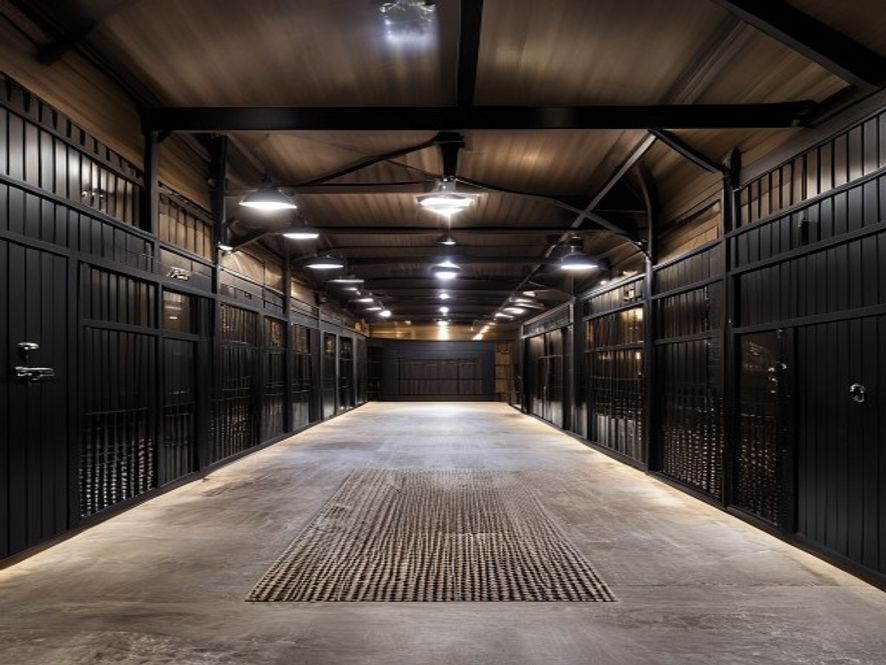


A great arena does not call attention to itself; it lets the horse trust the next stride. Dressage riders feel footing in rhythm, balance, and willingness to sit. Jump riders feel it at the base of the fence, in turns, and on landing. Barn owners feel it in maintenance, water, dust, and repair bills. Good footing has to serve all three.
A pretty surface can still be wrong. Too deep can tire soft tissue and make the horse push through mud. Too hard can jar joints and discourage confidence. Too dusty can irritate lungs and coats. The right answer depends on discipline, base, drainage, maintenance, climate, and use.
The Bridleway rule: Judge footing by how the horse travels over time, not by how impressive the arena looks in a real-estate photo.
Feel comes from the whole system
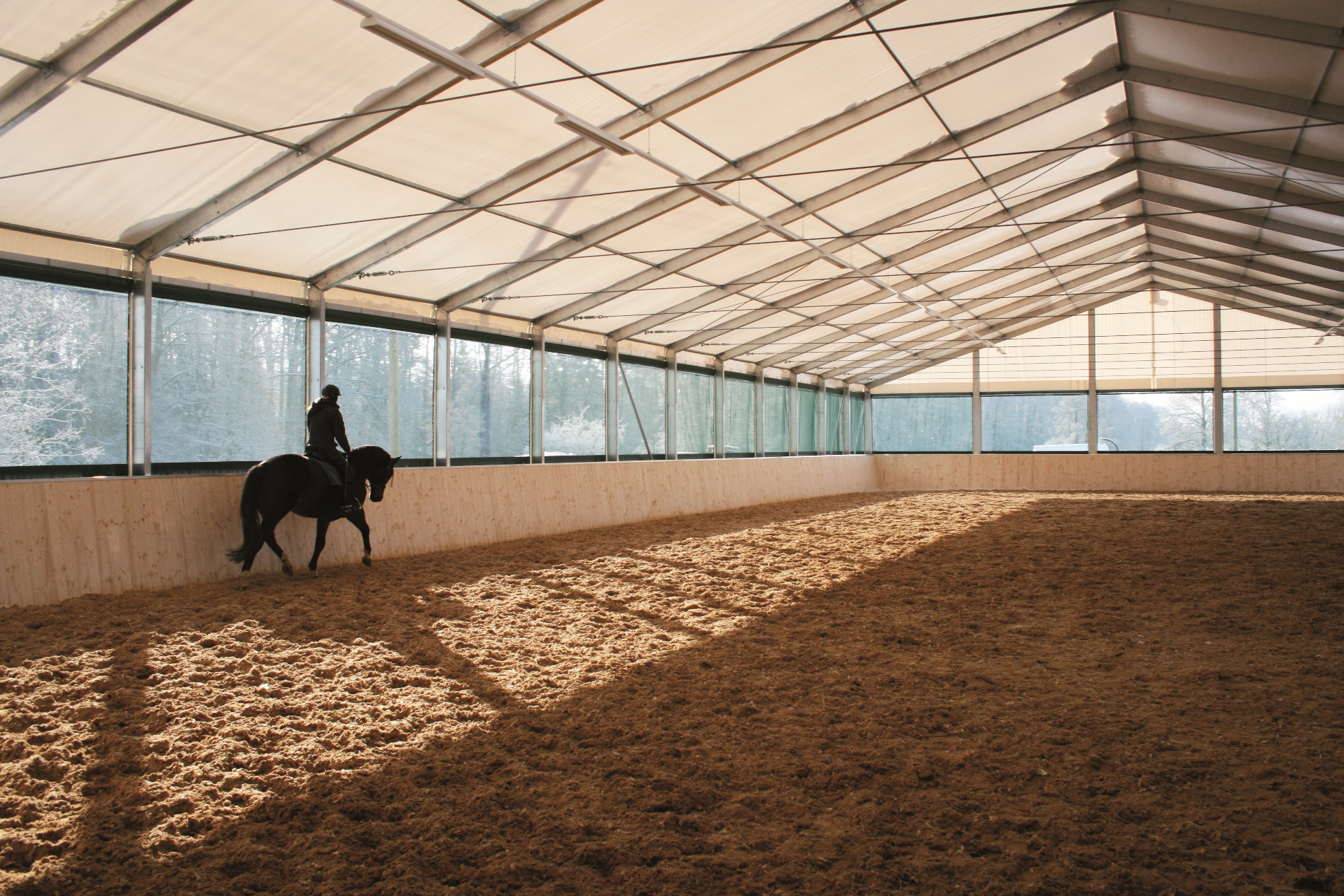
Riders often talk about footing as if it is one material, but a good arena is a system. Base, drainage, surface blend, watering, dragging, weather, and traffic all shape how it rides. A premium textile, sand, or fiber cannot perform well forever without maintenance.
Dressage riders tend to notice whether the horse can push, sit, and stay regular. Jump riders notice takeoff, landing, and cornering. A trainer watching several horses over several days may notice the most honest pattern.
Dust, moisture, and depth are daily signals
Dust is not just an aesthetic problem. It affects lungs, eyes, coat, and the whole feeling of care in a facility. Moisture helps bind some surfaces, but overwatering or poor drainage can create slickness, holes, or inconsistent depth.
Depth changes quickly in busy arenas. Hoofprints, landing zones, gate areas, and corners tell the truth. If riders avoid a corner, if horses trip, or if the surface rides differently every day, the maintenance plan needs attention.
A good daily read
Footing feels consistent across the arena, hoofprints are reasonable, dust is controlled, and horses finish work without unusual fatigue.
A warning read
Deep pockets, slick corners, heavy dust, hardpan, puddles, or a horse that changes stride to protect itself.
Drainage is invisible until it is not
A beautiful top layer cannot rescue a failing base. Drainage, slope, and base construction decide whether water leaves, pools, freezes, or turns the surface inconsistent. That is why expensive footing conversations should start below the top inch.
For private barns, the best plan is realistic use math. How many horses, what disciplines, what weather, indoor or outdoor, how often dragged, who waters, and what level of show preparation happens at home? The answer changes the product.
| Footing signal | What riders may feel | What to inspect |
|---|---|---|
| Too deep | Horse labors, loses impulsion, tires early, or changes stride. | Landing areas, corners, drag settings, depth consistency. |
| Too hard | Shorter stride, reluctance to sit, more concussion feel. | Base exposure, compaction, watering schedule, old surface breakdown. |
| Too dusty | Coughing, eye irritation, dull coat, poor air quality. | Moisture plan, additive condition, ventilation, traffic volume. |
| Inconsistent | Confidence changes from one side or corner to another. | Drainage, low spots, gate areas, holes, maintenance logs. |
Footing choices affect soundness.
If horses become sore, uneven, reluctant, or unusually tired, involve your veterinarian, farrier, trainer, and footing professional. Do not make major surface changes on guesswork alone.
What riders are asking before they buy, show, or change the routine
The useful question is often more ordinary than the polished product copy. Riders and parents want to know what will help the horse feel better, what will keep the rider safer, what is worth paying for, and what can wait. The better buying habit is to translate each worry into a check you can repeat at the barn.
Keep these questions open
- What makes arena footing good for dressage?
- What makes arena footing good for jumping?
- How do I know if footing is too deep?
- Is dust in an arena dangerous?
What serious buyers should ask before paying
Ask for maintenance requirements in plain English. How often should it be watered? How often dragged? What equipment works? What happens in your climate? How does the surface age? How do you repair high-traffic areas?
The best vendors do not sell a magic surface. They explain a system, help you understand tradeoffs, and give the barn a maintenance plan that someone will actually follow.
The premium test
A premium arena makes ordinary schooling calmer. Horses trust the turn, riders stop negotiating the surface, and maintenance feels planned rather than panicked.
What to ask the professional before you spend more money
A polished English-riding decision still benefits from a second set of expert eyes. Before buying the upgraded version, changing equipment, adding a new product, or blaming the horse, bring a clean question to the trainer, veterinarian, fitter, farrier, barn manager, or product specialist.
| Ask | Why it helps |
|---|---|
| What problem are we solving first? | It separates comfort, safety, training, rule, and presentation questions. |
| What evidence would change the plan? | It keeps the decision from becoming brand loyalty or barn rumor. |
| How will we know this worked? | It turns the purchase or routine into an observable horse-care test. |
How to use this guide this week
Pick one checkpoint from this guide and use it before or after three rides this week. Write down what you saw, what the horse felt like, and whether the answer changed after a lesson, a harder school, or a show-day simulation. Good horsepeople do not need perfect guesses. They need repeatable observations.
Simple record: Keep a tiny note in your phone: date, horse, work, what changed, and what you will ask your trainer or professional next. Patterns are where ordinary barn notes become useful horsemanship.
Research note: This Bridleway guide was shaped from Practical Horseman, British Horse Society horse-care guidance, r/Equestrian reader discussions. Forum and Reddit discussions were used only to understand common rider questions, not as veterinary, legal, or rule authority.