

Treating Sarcoids in Horses: A Whole Horse Approach
This article is sponsored by Holistic Equine Wellness. I found this product on my own, contacted the maker myself, and had been treating my mare with it for months before there was any advertising relationship. Everything I say about it here is what I have seen with my own horse.
How I Got Zoey
This may not make sense to everyone, but I feel my horse Zoey was picked for me by the horse I lost after twenty five years, named Dream. I can't explain that logically, so I will just say it and move on.
I would never advise you, our friends, to find a horse the way I did. Here is the way I do advise you to buy a horse. Horse Pre-Purchase Exam: What Findings Mean. There are several other articles on this site where I give guidance on making a new horse a good match for your situation.
I didn't follow any of my own advice. Not because I knew something, but because I felt something. I saw a classified ad from a small Morgan Horse farm and I just knew. The end.
From Texas, I bought a fourteen year old Morgan broodmare living in Alberta, Canada. Impossible to explain. She was and is the perfect horse for me.
Why a Show Mare Sold for Six Thousand Dollars
Zoey has fantastic breeding. A Morgan show horse who delivered three foals for her breeder. She stands fifteen two hands, near the top of the size range for a Morgan, and I am six foot two, so we fit each other.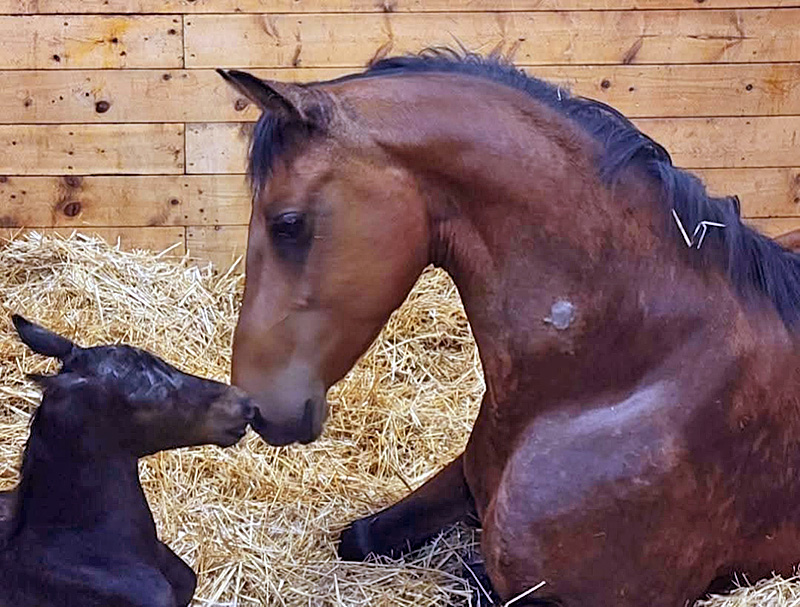
She was listed at six thousand dollars. A mare with her breeding and characteristics would normally start at twenty thousand and go up from there.
So what was the problem. Zoey was a show horse who couldn't be shown, because of a couple of skin imperfections called sarcoids.
I am not showing Zoey. Except for two blemishes she is a beautiful Morgan show type mare. She has filled all the holes left by losing Dream. The sarcoids are the reason I could afford her.
Get Your Veterinarian to Look First
Before you treat anything, have your veterinarian look at it and tell you what it is.
Most sarcoids are diagnosed by appearance rather than by biopsy. That is not a shortcut. Veterinary literature reports that a diagnosis made on clinical appearance alone is correct in roughly eighty two percent of cases, and that taking a biopsy carries a real risk of aggravating the lesion and setting off aggressive growth. So the exam is usually the vet looking, not the vet cutting.
But that eighty two percent is a trained eye, not a horse owner's eye. The rest of the time it is something else. A melanoma, a squamous cell carcinoma, a summer sore, a wart, an allergic reaction. Some of those need a completely different approach and some of them need it quickly. If the problem is a skin cancer, time matters.
One look from your vet costs you very little and it settles the question.
Six Kinds of Sarcoid
There is more than one kind, and the kind matters, because they behave differently and they respond differently.
Veterinarians describe six forms. Occult sarcoids are flat, gray, hairless and roughly circular. Verrucous sarcoids look warty or scabby. Nodular sarcoids are firm lumps under the skin. Fibroblastic sarcoids are fleshy and often ulcerated and bleed easily. Mixed sarcoids are a combination. Malevolent sarcoids are the most severe and spread locally through the tissue.
Most sarcoids show up on the head, especially around the eye, and on the ears, the chest, the lower legs, the belly and the sheath area. They also like old scars and wound sites.
If somebody has been asking you what that round bare gray spot on your horse's neck is, that is the occult form, and it is the mildest of the six.
What Your Options Are
Here is the honest landscape. No treatment works every time on every horse, and every method on this list has a recurrence rate. This is not a condition with a clean answer.
Watchful waiting.
Veterinarians call it benign neglect. Small, quiet sarcoids that are not near the eye, not under tack, and not being rubbed will often sit unchanged for years, and a few regress on their own. Some vets recommend leaving a small one alone specifically because poking at it can set it off. That is a real medical position and not indifference.
Surgical removal.
Cutting the sarcoid out is the oldest approach and the one most owners think of first. It also has the worst reputation. Published recurrence rates after surgery alone run from fifteen percent all the way to eighty two percent, and lesions that come back often come back faster and worse than the original. Most veterinarians today will not cut a sarcoid without pairing it with something else.
Laser removal.
A carbon dioxide laser vaporizes the lesion and seals as it goes. Results are better than plain surgery. One study of fifty nine horses treated this way found eighty one percent still clear after a year.
Cryotherapy.
Freezing the tissue. The same study reported about sixty percent of horses clear at one year. It usually leaves white hair behind.
Banding or ligation.
A tight band cuts off the blood supply to a stalked lesion until it dies and drops off. This only works on the kind that hangs on a narrow stem.
Topical pastes and creams.
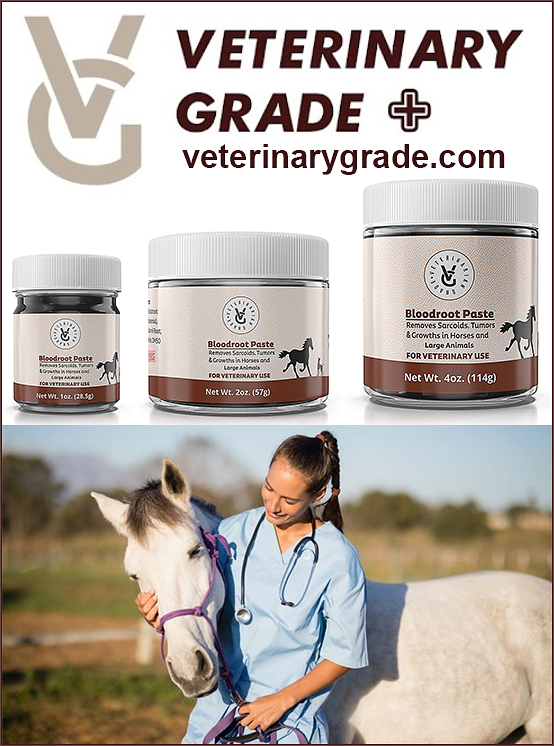
This group includes bloodroot based products and the chemotherapy topicals such as cisplatin and five fluorouracil. Bloodroot pastes are the most widely used sarcoid treatment among horse owners in this country, they are available at most feed and tack stores, and a lot of people have gotten real results with them. They work by breaking down the lesion tissue, so expect scabbing and expect the site to be sore for a while. Wear gloves. The one thing I will say firmly is to have your veterinarian confirm what you are treating and set the schedule before you start, especially anywhere near an eye. These products do what they are designed to do, and that cuts both ways.
Immune based treatments.
These work by getting the horse's own immune system to reject the lesion rather than destroying it directly. Injectable immunotherapy has long been used around the eye, where cutting is dangerous. Topical imiquimod and topical acyclovir are in the same family. All of them take months of steady application.
Radiation.
The most effective option in the literature for hard cases and difficult locations. It is expensive, it requires a referral hospital, and very few horse owners will ever use it.
Any of these may be the right answer for your horse. Talk to your vet. What follows is not a replacement for that conversation. It is what I chose and what I have seen.
What I Chose
I went to work trying to figure out the best way to diminish Zoey's sarcoids as soon as she got here.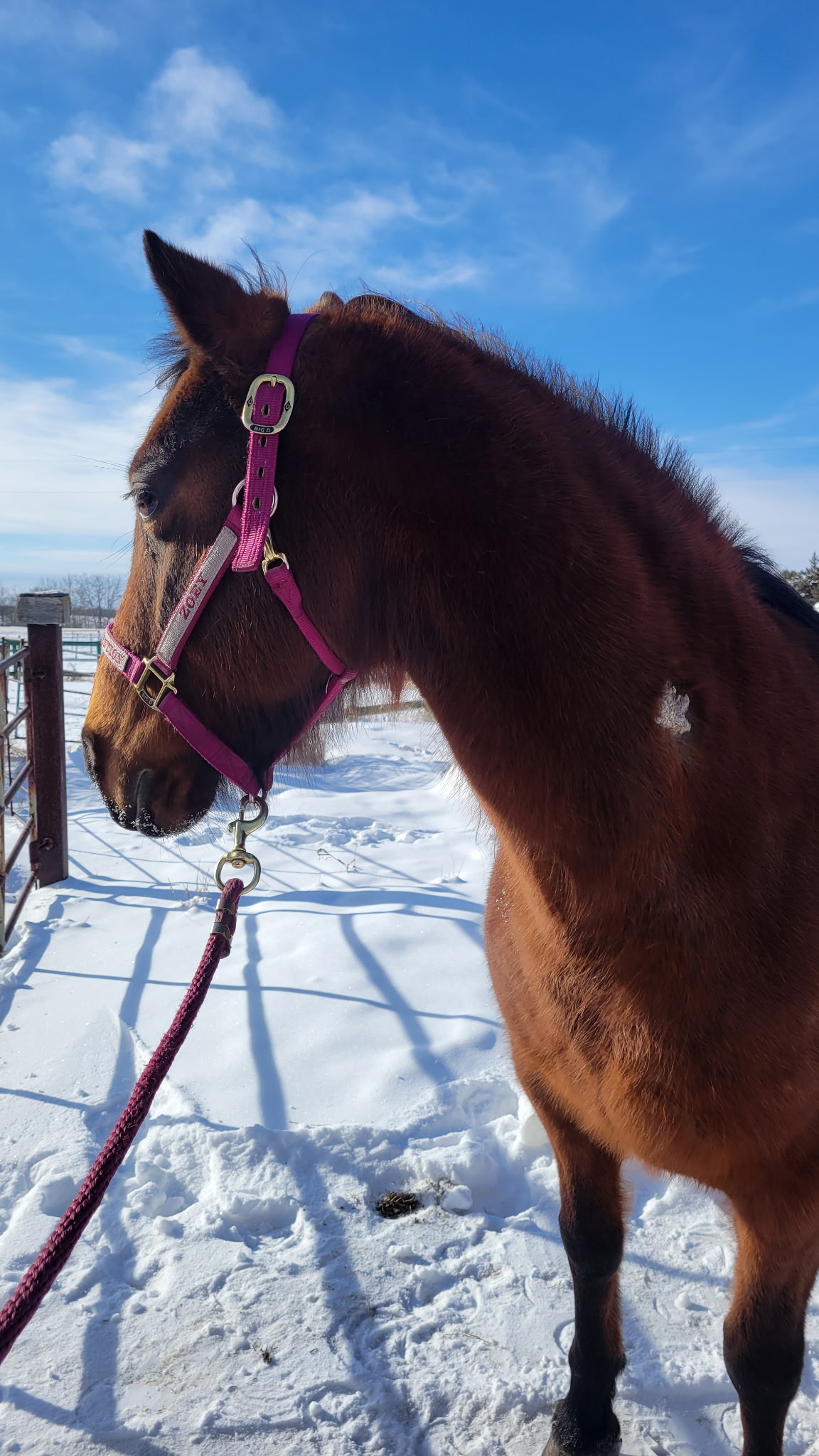
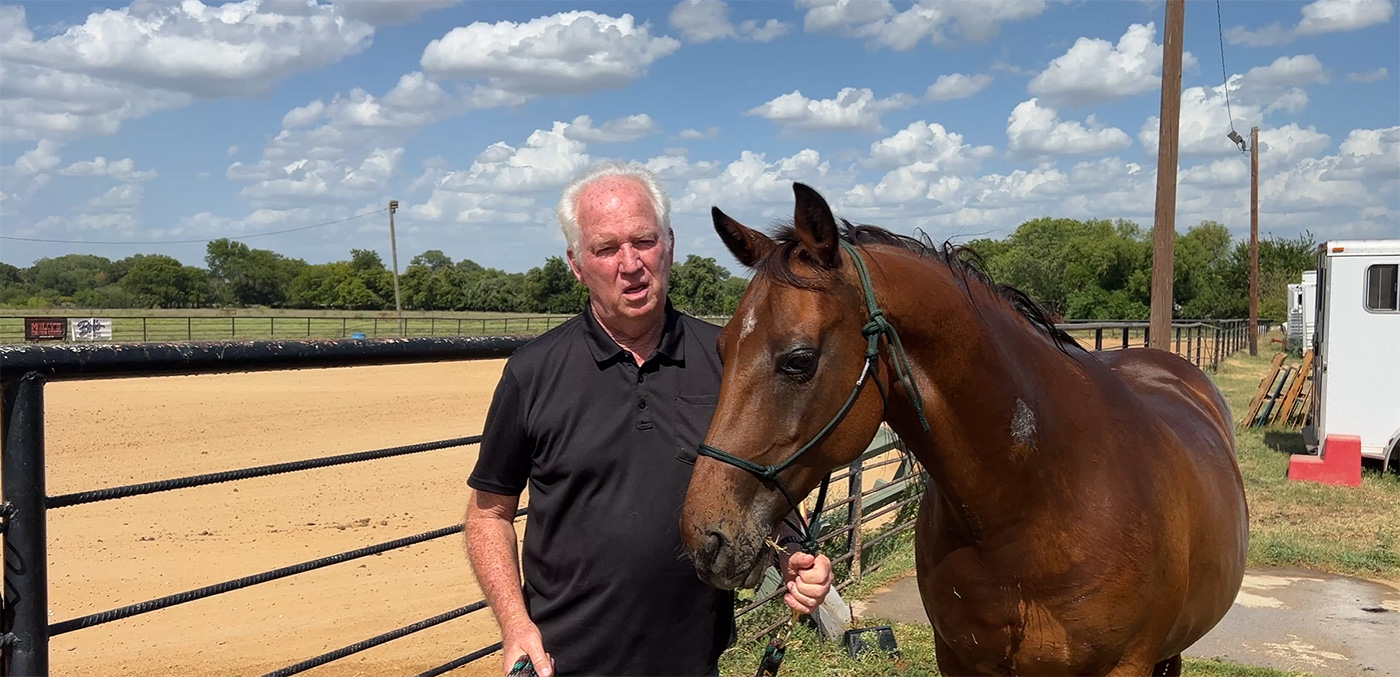
I found the product I am using by watching videos from a horse trainer and clinician named Tim Anderson, who was one of our former advertisers. He had good results with a horse sent to him for training. I contacted the manufacturer myself and started Zoey on their system.
The products carry a Balanced Eco Solutions label and are sold through Holistic Equine Wellness. It works from the inside and the outside at the same time.
It started with a consultation to identify what type of sarcoid Zoey has, and to look at her general health, because part of the work against a sarcoid depends on the horse's immune system being up to the job.
The immune support product is called, simply, Immune Builder.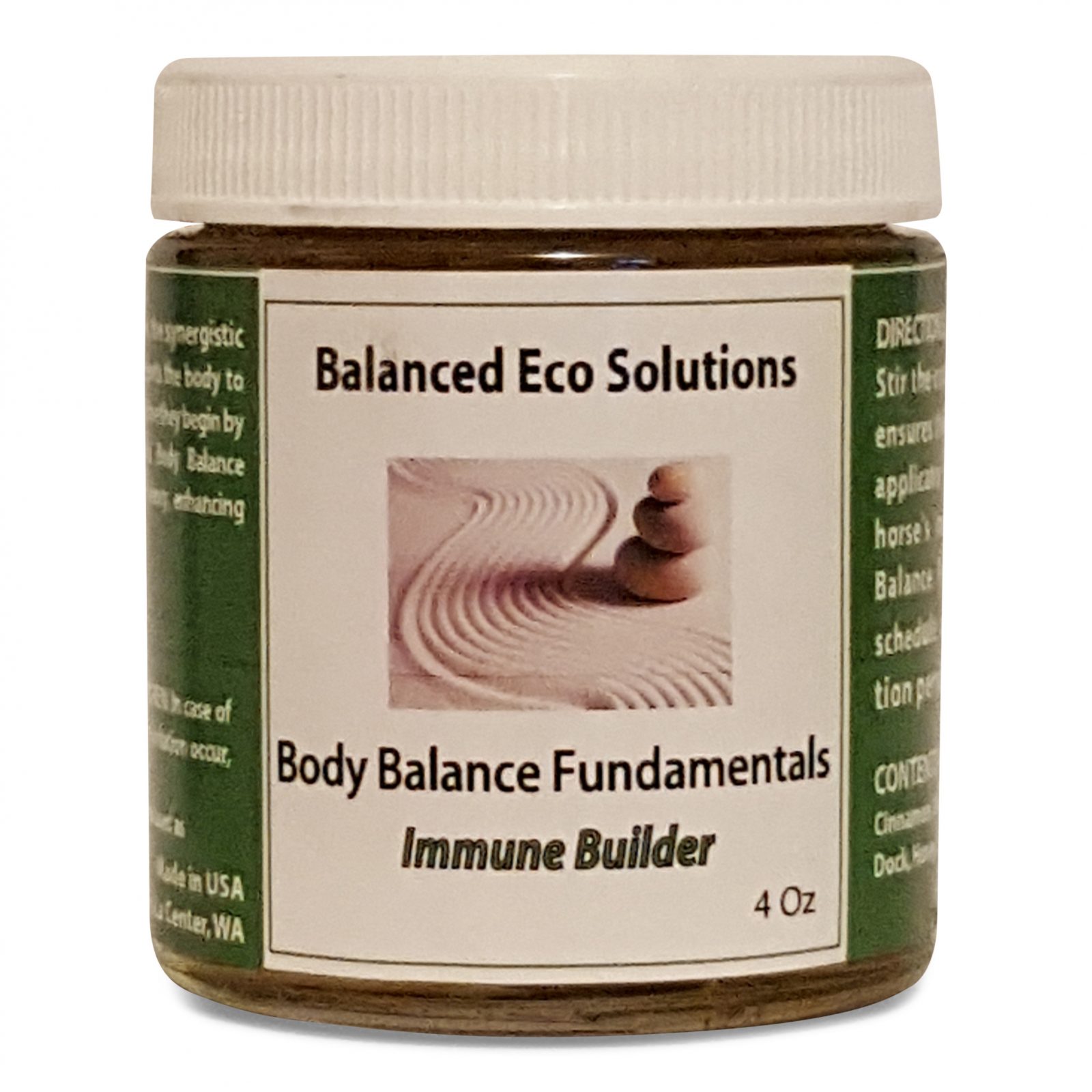
The lesion itself gets treated with a gentle cream called Body Balance SCF Two Formula, designed to assist the horse's own natural response.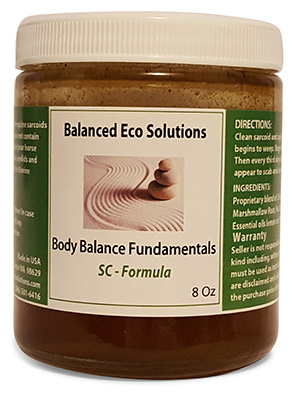
The reason this appealed to me is that the approaches most people know about work by removing the lesion, with a laser or with a paste. I wanted to try something that worked with the horse instead. That is a preference, not a verdict on the alternatives. It is gentle enough that applying it became just another part of the grooming that happens every day anyway.
Small Improvements
I want to be careful with the word results. What I have are small improvements. Both lesions are smoother than they were and both are slightly smaller. That is four months of daily observation with my own eyes and my own hands on my own horse. That is all I am claiming.
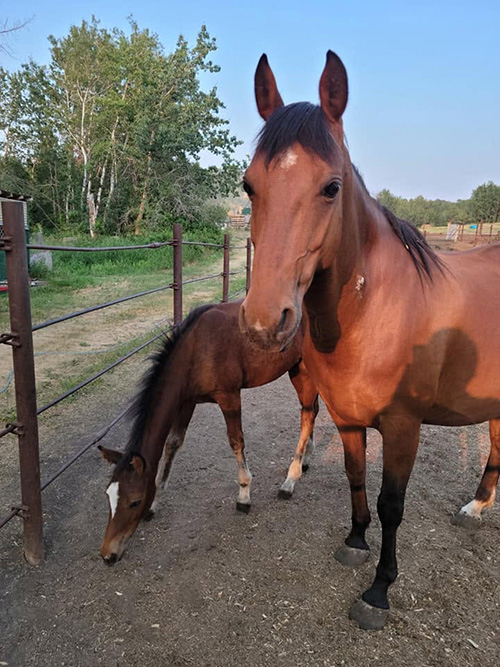 Here is what makes it worth telling you. Zoey's sarcoids were not new. She carried them for seven or eight years at the farm in Alberta. Well established, established enough to end her show career and cut her price to under a third of what her breeding should bring. Nobody treated them in all that time and they didn't go anywhere. That is a long, quiet baseline, and most people writing about sarcoids don't have one.
I will be honest about the limits of that. Sarcoids are unpredictable and some do settle down on their own, so nobody can prove to you that the cream did this rather than the lesions choosing this year to quiet down. I can only tell you what sat still for seven or eight years and what changed in four months.
There has been zero distress on Zoey through any of it.
If Yours Are New, Don't Wait
Here is what I would tell somebody standing where I was.
If you find a sarcoid on your horse and it is small, deal with it. Don't wait to see what it does. Veterinarians are consistent that early lesions respond better than established ones, and a small flat sarcoid you handle this year is a different problem than the same lesion four years from now, after it has thickened and put down roots.
Zoey's had a seven or eight year head start on me. I think that is exactly why I am counting progress in small changes instead of clean results, and why I went in expecting a slow road.
Benign neglect made sense for her breeder. She was a broodmare and the interest was in the foals. That is a legitimate decision and I don't fault anyone for it. But it is not the same decision you make about a horse you are going to look at every day for the rest of her life.
She Is Still a Beautiful Horse
These sarcoids may never be completely gone. I have made my peace with that. I am not showing this mare and I am not selling her, and a round mark on her neck does not change what she is by one inch.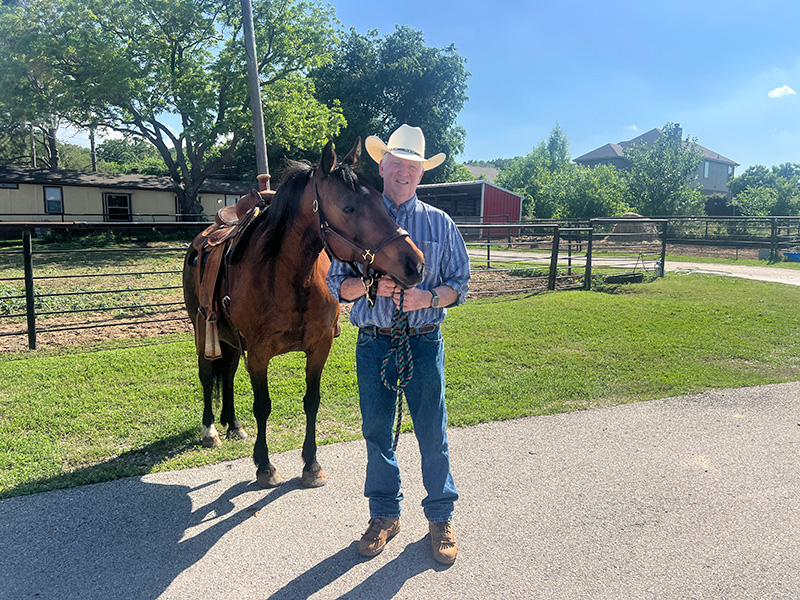
I get reminded of it regularly. Every time I post a video of Zoey on our YouTube channel, somebody asks what happened to her, or what that round spot on her neck is.
It is a fair question and this article is my answer. That mark is an occult sarcoid, the flattest and mildest of the six forms, and it is the reason a show mare with her breeding sold for a fraction of her value.
It is also the reason I got her. So I am not inclined to hold it against her.
There are a lot of horses out there with this same problem and a lot of owners wondering what to do about it. I am telling you about one way, not the only way. I am happy with our progress. Zoey and I have all the time in the world and we love our time together.
My best advice over all these years has never changed.
Enjoy your horses.
Article sponsor: Holistic Equine Wellness, treating the whole horse and not just a symptom.