



USEF, USDF, USHJA—What Do All Those Letters Actually Mean?
A Plain-English Guide to English Riding’s Alphabet Soup
By Bob Pruitt
I’ve watched a lot of new riders’ faces go blank at the entry table.
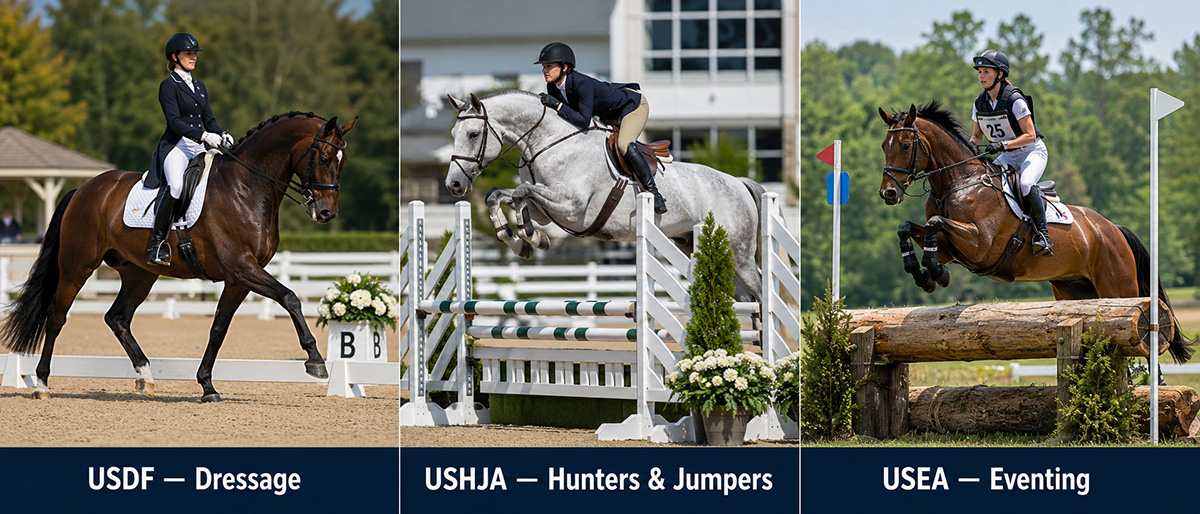
USEF is the United States Equestrian Federation, the national governing body that licenses competitions and maintains the national rulebook, while USDF, USHJA and Usea sit beneath it as the discipline organisations for dressage, for hunters and jumpers, and for eventing. Which of them you actually need depends on where you show and what you want your results to count towards, and your horse may need its own registration numbers alongside your membership.
They’ve got the horse trailered in, the tack cleaned, the nerves mostly under control—and then somebody hands them an entry form asking for their USEF number, their USDF number, their USHJA membership and three different numbers for the horse.
Nobody explains any of it. You’re just supposed to know.
So let’s fix that.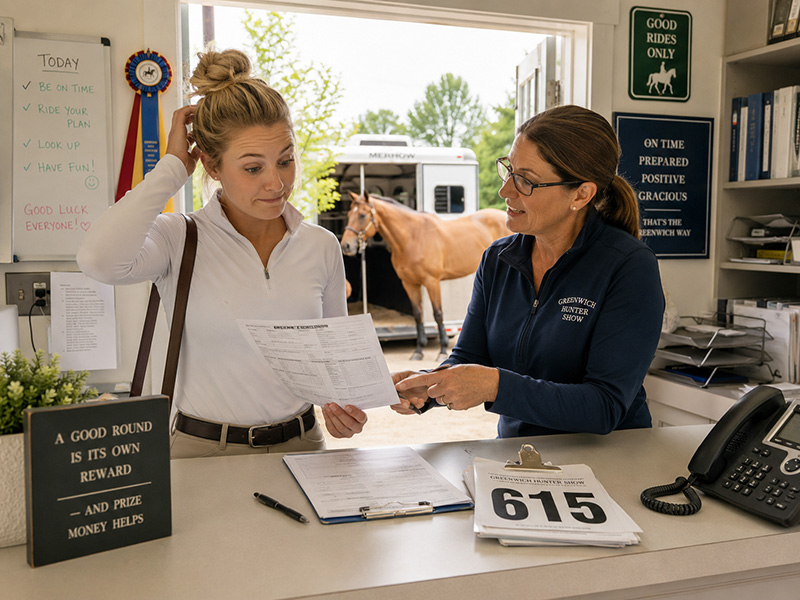
Here is who these organizations actually are, what they do and—more importantly—which ones you need to worry about.
USEF Is the National Umbrella
USEF stands for the United States Equestrian Federation, also known as US Equestrian.
USEF is the national governing body for equestrian sport in the United States. It governs or recognizes a broad range of breeds and disciplines, including dressage, eventing, hunter and jumper competition, driving, reining, saddle seat and many others.
USEF licenses competitions, maintains the national rulebook and oversees matters that cross discipline lines, including equine drug and medication rules, safety requirements, licensed officials, horse identification and SafeSport compliance.
Think of USEF as the roof over a large part of organized equestrian competition in this country.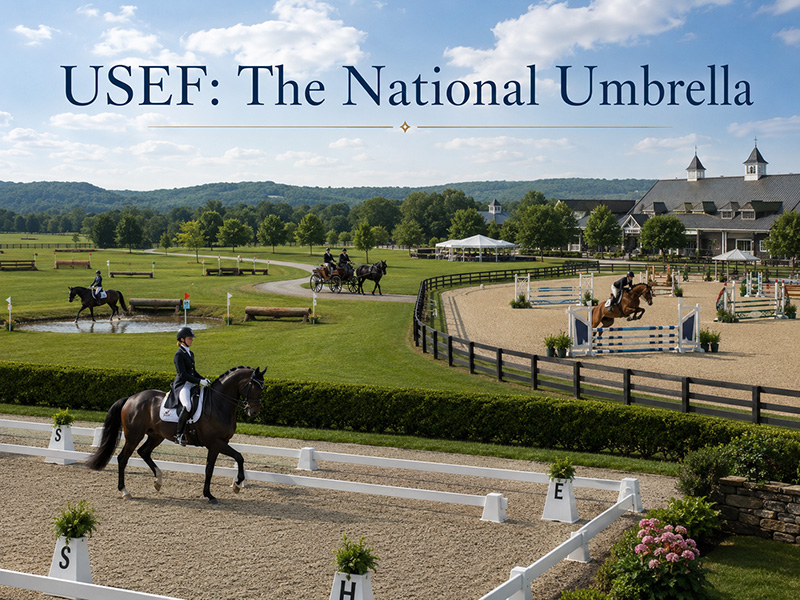
It does not matter whether you ride a hunter, a jumper or a dressage horse. If you enter a traditional USEF-licensed competition, you will generally need the appropriate USEF membership—or, where the rules permit it, you may be able to pay a one-show fee instead.
The exact requirement can depend on the competition, the classes entered and whether you are listed as the rider, owner, trainer or coach. That is why it is smart to check the prize list instead of assuming that every show follows exactly the same requirements.
It is also important to understand that not every horse show in America is a USEF competition. Schooling shows, local circuits, breed competitions and other organizations may operate under their own rules.
USDF, USHJA and Usea Focus on Individual Disciplines
Under that larger national structure are organizations that concentrate on the needs of particular disciplines.
They help administer programs, education, awards, regional activities and the details that make each sport different.
USDF: United States Dressage Federation
USDF is the primary national organization devoted to dressage.
National dressage competition is governed by USEF, while USEF and USDF work together on the national dressage tests used from Training Level through Fourth Level. USDF also administers rider medals, education programs, regional championships and many of the awards dressage riders work toward for years.
A dressage rider may need a particular type of USDF membership depending on the show and what the rider wants the scores to count toward.
The horse may also need a USDF Horse Identification number or Lifetime Horse Registration. The level of registration needed can depend on whether the rider is simply competing or is trying to earn qualifications, medals, championships or year-end awards. USDF award programs generally require the rider to hold the appropriate membership and the horse to have the required USDF identification or registration when the scores are earned.
In other words, being allowed to ride in a class and having that score count toward a national award are not always the same thing.
USHJA: United States Hunter Jumper Association
USHJA
is the USEF-recognized national affiliate for the hunter and jumper disciplines.
It serves hunter, jumper and hunter-seat equitation riders through competition programs, education, awards, rule development and regional and national recognition.
At most USEF-licensed hunter and jumper competitions, the horse must be registered with USHJA. Local competitions and some USHJA Outreach classes operate under different requirements.
One detail that confuses many owners is that USHJA horse registration and USEF horse identification or recording are separate records.
Since December 1, 2021, horse registrations, ownership transfers, leases and name changes have generally needed to be completed separately with both USHJA and USEF. Registering the horse with one organization does not automatically complete the paperwork with the other.
That is why a hunter or jumper entry form can ask for more than one number for the same horse.
Usea: United States Eventing Association
Usea is the official USEF sport affiliate for eventing.
Eventing combines dressage, cross-country and show jumping into one sport. Usea administers the recognized eventing system in the United States, including horse registrations, rider programs, education, awards, levels and development opportunities.
Usea membership and the appropriate horse registration are mandatory for Usea-recognized competitions. Unlike some disciplines, this is not something competitors should assume they can replace with a simple non-member fee.
Some introductory or Starter offerings may be listed with different requirements by an individual event, so read the event’s official entry information carefully. But for recognized Usea competition, the safe assumption is that both the rider and the horse need to be properly registered before entering.
Your Horse May Need Numbers, Too
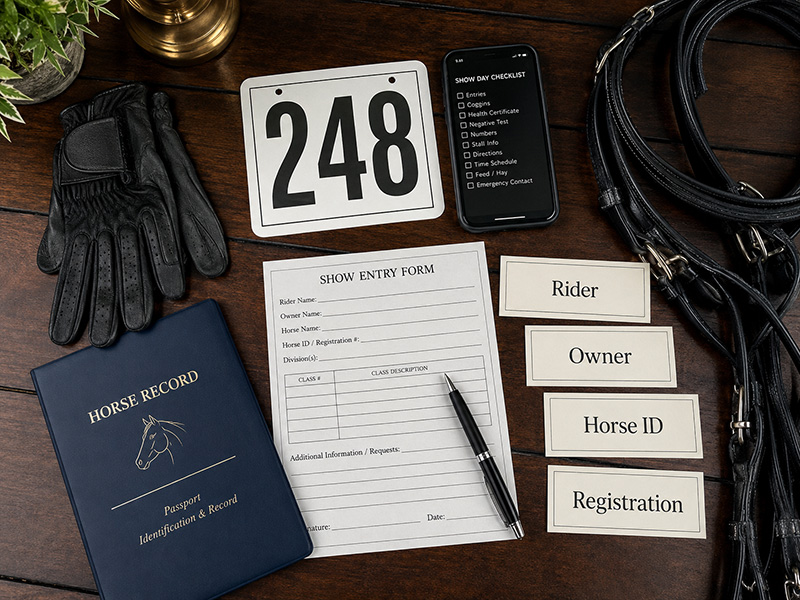
This is where the paperwork really begins to feel like alphabet soup.
Your membership number identifies you.
Your horse’s identification or registration number identifies the horse.
Those are not the same thing, and one number may not satisfy every organization.
Depending on the discipline and competition, your horse may need:
- A USEF Horse ID or USEF recording
- A USDF Horse Identification number or Lifetime Horse Registration
- A USHJA horse registration
- A Usea horse registration
The horse may also need an active recording rather than only a basic identification number if you want points, rankings, qualifications or awards to count.
Do not assume that because your horse appears in one organization’s database, every other organization automatically has the same information.
Before entering, look up both your own records and your horse’s records. Check the horse’s registered name, ownership, lease status and identification numbers. A small discrepancy that seems harmless at home can turn into a large headache at the show office.
Do You Need All These Memberships?

Here is the honest answer: it depends on where you show and what you want your results to count toward.
And yes, the costs can add up faster than most new owners expect.
Schooling Shows
Local, unrecognized schooling shows usually require none of these national memberships.
That is one of the reasons schooling shows are often the right place to begin. A new rider can learn how to warm up, enter a class, ride a test or course and handle the general commotion of a horse show without first buying several memberships.
USEF-Licensed Shows
At a traditional USEF-licensed competition, riders, owners, trainers, coaches and other participants may need the appropriate USEF membership.
In some circumstances, a person may be permitted to pay a USEF Show Pass fee rather than purchasing an annual competing membership. However, the Show Pass is not available for every class, division, program or role.
Discipline Memberships
Depending on what you enter, you may also need the matching discipline organization:
- USDF for dressage programs and recognition
- USHJA for hunter, jumper and hunter-seat equitation competition
- Usea for recognized eventing
The requirements are not identical across all three organizations.
Some dressage and showjumping competitors may have limited non-member or show-pass options, depending on the competition and program. Usea-recognized eventing generally requires current Usea membership and the proper horse registration.
Points, Awards and Championships
A rider may sometimes be allowed to compete without holding every membership needed for awards.
That does not mean the scores or points will count later.
If you hope to earn year-end awards, qualify for a championship, work toward a USDF medal or appear in national standings, you and your horse usually need to be properly registered when the result is earned. You often cannot join months later and ask the organization to make old results count retroactively.
That distinction matters.
There is a difference between:
- Being allowed to enter the ring
- Having the result recorded
- Having the result count toward points, awards or qualifications
Nobody enjoys the fee stack. It is real, and I would rather tell you that plainly than pretend the system is simple.
Ask your trainer before your first recognized show which memberships you and your horse actually need. Trainers and experienced show secretaries have handled this paperwork many times and can keep you from buying something unnecessary—or arriving without something required.
What Does “Recognized” Mean?
You will hear people talk about a “recognized show” and an “unrecognized show.”
A recognized show is approved or licensed by the organization governing that level of competition. It operates under that organization’s rules and can submit eligible results for official records, points, awards or qualifications.
A schooling or unrecognized show may look almost identical from outside the arena. It may use the same dressage tests, similar hunter courses or the same eventing phases.
The difference is mostly in the official structure behind it.
The unrecognized show may not require national memberships, and its results usually will not count toward national standings or recognized championship qualifications.
That does not make it a bad show.
A well-run schooling show can be one of the best places for a horse or rider to learn.
FEI Governs International Competition
FEI stands for Fédération Équestre Internationale.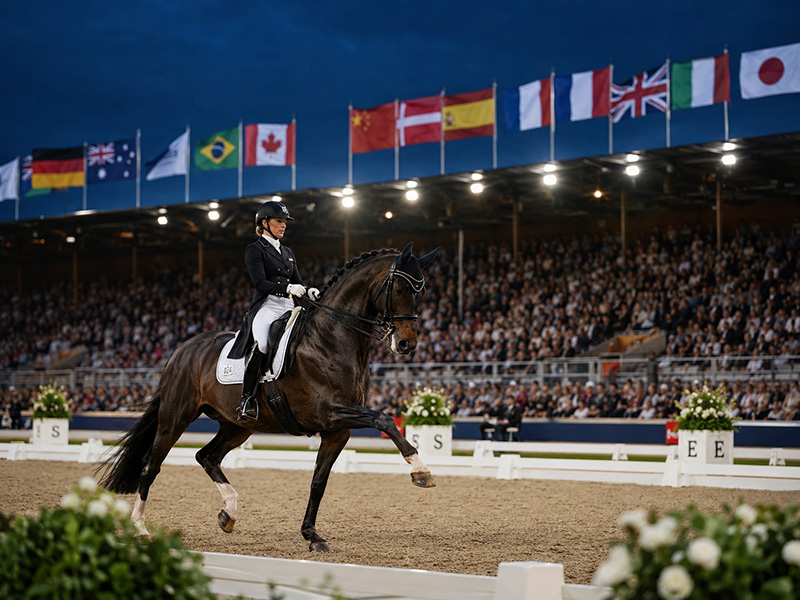
The FEI is the international governing body for equestrian sport. It oversees international competition in disciplines including dressage, para dressage, jumping, eventing, driving, endurance and vaulting.
The FEI is the organization behind international standards used at the Olympic Games, World Championships and other international competitions.
You may hear riders use the phrase “FEI level” when talking about international-standard tests or divisions.
In dressage, FEI tests include Prix St. Georges, the Intermediate levels and Grand Prix. In eventing and show jumping, FEI competition refers to internationally regulated levels and events.
Unless you are moving into international competition, the FEI is mostly something you need to recognize rather than an organization you will deal with directly during your first years of showing.
Pony Club and IEA Do Something Different
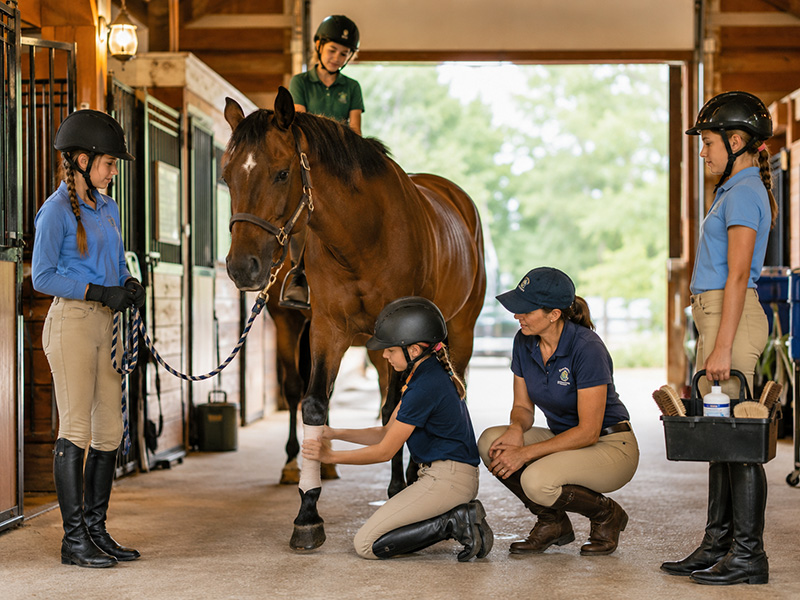
Pony Club and IEA often get thrown into the same pile of letters, but they are not simply additional national show memberships.
They serve a different purpose.
They help riders learn, develop and compete through structured educational or team programs.
USPC: United States Pony Clubs
The United States Pony Clubs, commonly called Pony Club, is an equine educational organization.
Its curriculum teaches both riding and horse management through mounted and unmounted instruction. Members develop at their own pace through standards of proficiency that include horse care, safety, stable management and riding skills.
Despite the name, members do not necessarily have to ride ponies. Pony Club now serves a wide range of ages and experience levels.
This is the kind of program that teaches a rider not only how to ride a dressage test or jump a course, but also how to recognize whether a horse is sound, wrap a leg, manage a stable and care for the animal when nobody is handing them the answers.
IEA: Interscholastic Equestrian Association
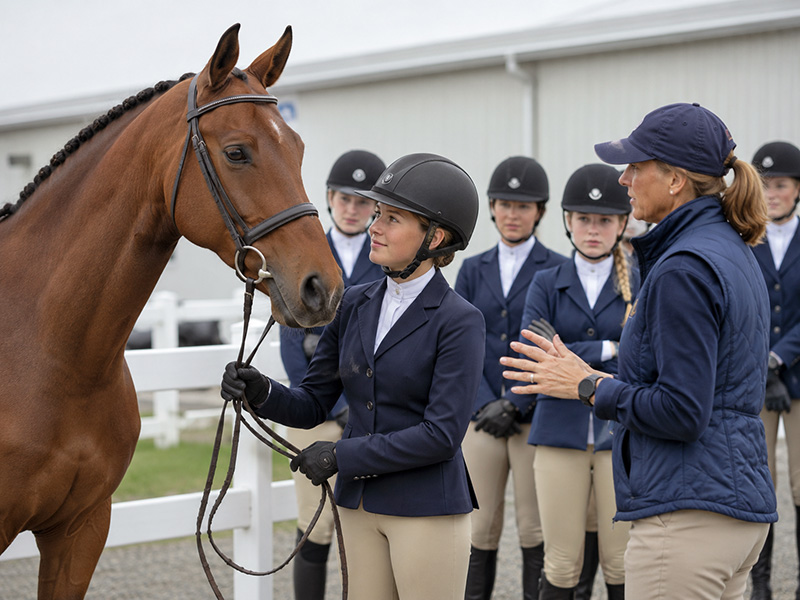
IEA stands for the Interscholastic Equestrian Association.
IEA provides team competition opportunities for school-age riders. In its traditional format, riders compete on horses selected through a random draw rather than bringing their own horses.
That catch-riding format tests whether a rider can adapt to an unfamiliar horse with very little preparation.
It also opens competition to students whose families may not be able to buy, lease, trailer and maintain a show horse of their own.
IEA is more like a school or club sport than the traditional owner-and-horse show circuit. It gives young riders a way to compete as part of a team while building the adaptable riding skills that can help them later in collegiate programs and other forms of competition.
The Plain-English Version
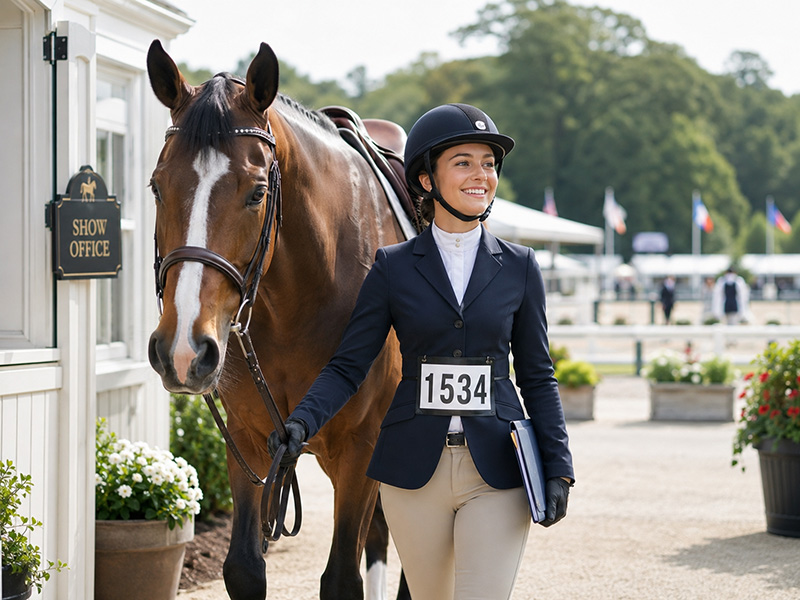
Here is the entire alphabet soup in one place:
USEF is the national governing body and licenses many of the country’s recognized equestrian competitions.
USDF focuses on dressage.
USHJA
focuses on hunters, jumpers and hunter-seat equitation.
Usea focuses on eventing.
FEI governs international equestrian competition.
Pony Club
teaches riding, horse care, stable management and horsemanship.
IEA gives school-age riders team-based, catch-riding competition opportunities.
And remember: your membership number and your horse’s registration number are two different things. Depending on the sport, both of you may need records with more than one organization.
Nobody hands you this list when you arrive at the barn.
Now you’ve got it.
Editor’s Note: Membership, horse-registration and competition requirements can change. Before entering a show, check the current prize list and confirm the rules with the appropriate organization, your trainer or the show secretary.