

Your First Schooling Show: A Guide for the Family Standing at the Rail
The night before the first show feels like the night before the first day of school.
It is not really fear of doing badly. It is the fear of not knowing the rules that everybody else seems to already know. Where do we park. Where do we stand. When is she supposed to go in. Did we just do something wrong. Is it all right to ask, or will asking be the thing that gives us away as the family who does not belong here.
Your kid is feeling a version of it too, though hers is simpler. She is afraid of looking foolish in front of people she likes.
Here is the thing that will take most of that away, and it is the thing nobody tells you. A schooling show is not an examination. It is a Saturday with your barn friends that happens to have a ring in the middle of it. 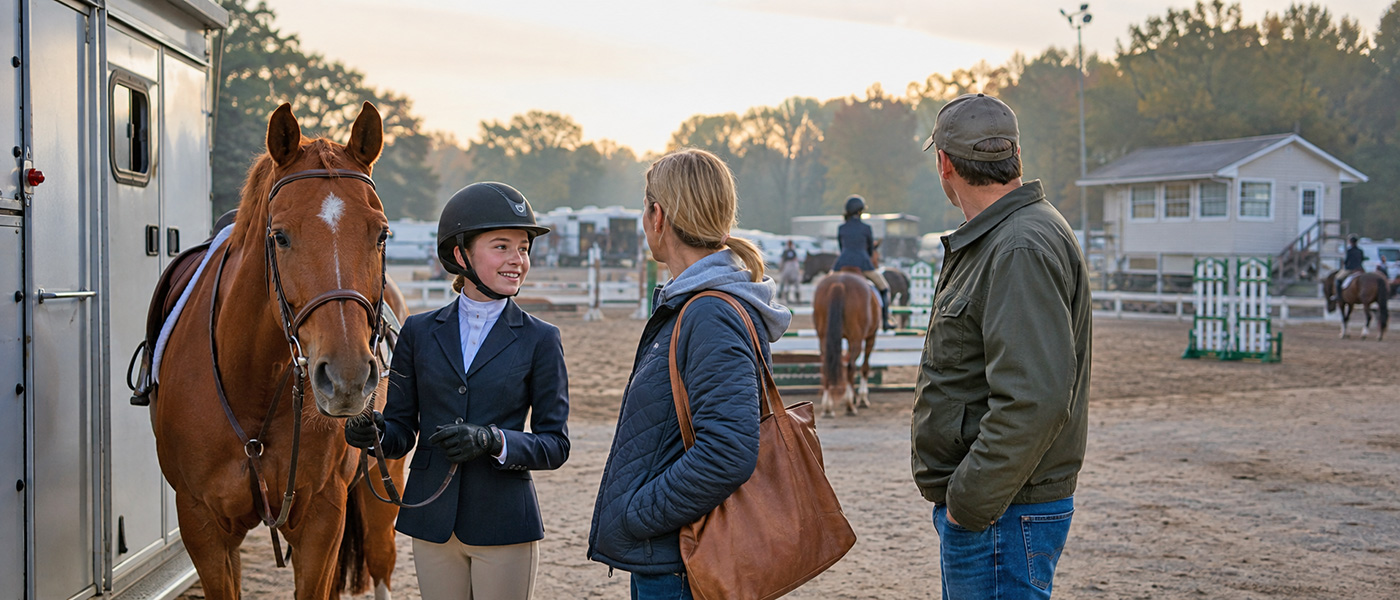
The competition is the occasion, not the point. Kids come to these because their friends are here and because they want to feel like they and their horse are getting somewhere together. Parents support it for the same two reasons. Understand that going in and the whole day changes shape.
Decide what winning means before you leave the driveway.
Most riders do not get a ribbon at their first show. If a ribbon is how you defined a good day, then the day was a failure before the truck was loaded, and your kid learns that showing is where you go to lose. That is how families quit after one season.
So name the win out loud in the truck on the way there, and make it something she can actually accomplish. He loaded quietly. She got in the ring. She remembered her course. She came out of there smiling. She took care of her horse all day. Any one of those is a real achievement and every one of them is within reach.
Say it plainly. Today we are here to get around and have a good time. Then hold yourself to it when the results come out, because she will be watching your face more than the pin card.
Your horse is having a first day too.
In all the excitement about your kid, do not lose track of the animal carrying her.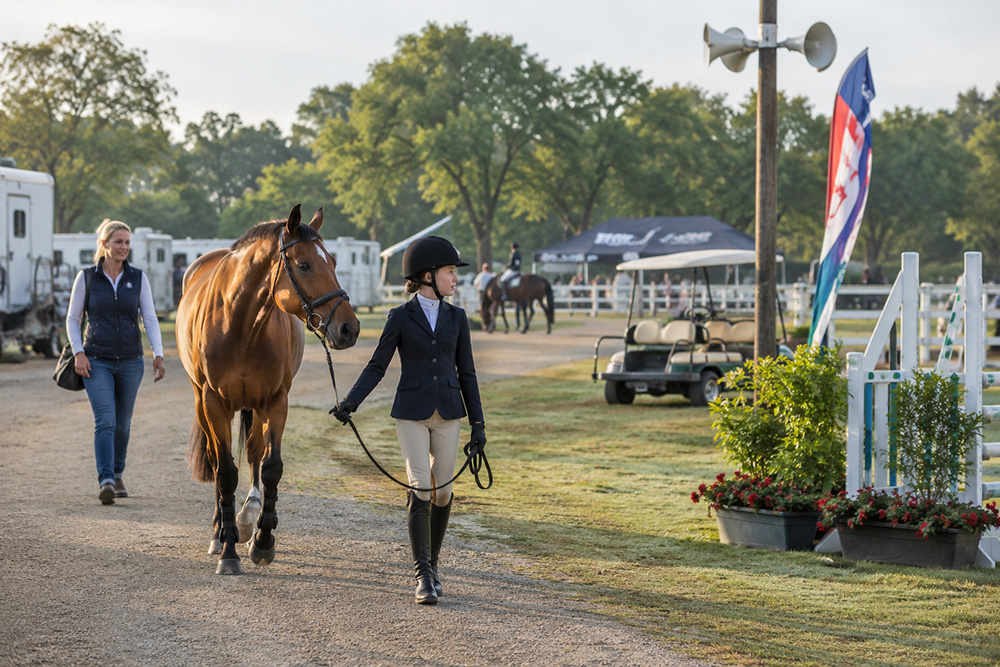
He hauled somewhere he has never been. There is a loudspeaker. There are horses he has never met, and a golf cart, and a ring with flowers sitting under the fences that were not there at home. He is a prey animal in a strange place with a nervous child on his back. He is going to be a different horse than the one you know from your own arena, and that is not misbehavior. That is a horse doing his level best in a situation he did not choose.
Get there early. Earlier than you think you need to. Then take him off the trailer and walk him. Not schooling, just walking, all over the property. Past the rings, past the food truck, past the flapping banner and the row of trailers and the place where the loudspeaker sits. Let him look at whatever he wants to look at and stand there until he is bored with it. Twenty or thirty minutes of that is worth more than an hour of drilling, and it is the single best thing you can do for the whole day.
Then praise him. Constantly and out of all proportion. Rub his neck when he walks past the scary thing. Tell him he is good when he stands quietly at the trailer. Feed him, water him, get his tack off and let him rest between classes rather than keeping him tacked and tied for four hours because it is easier.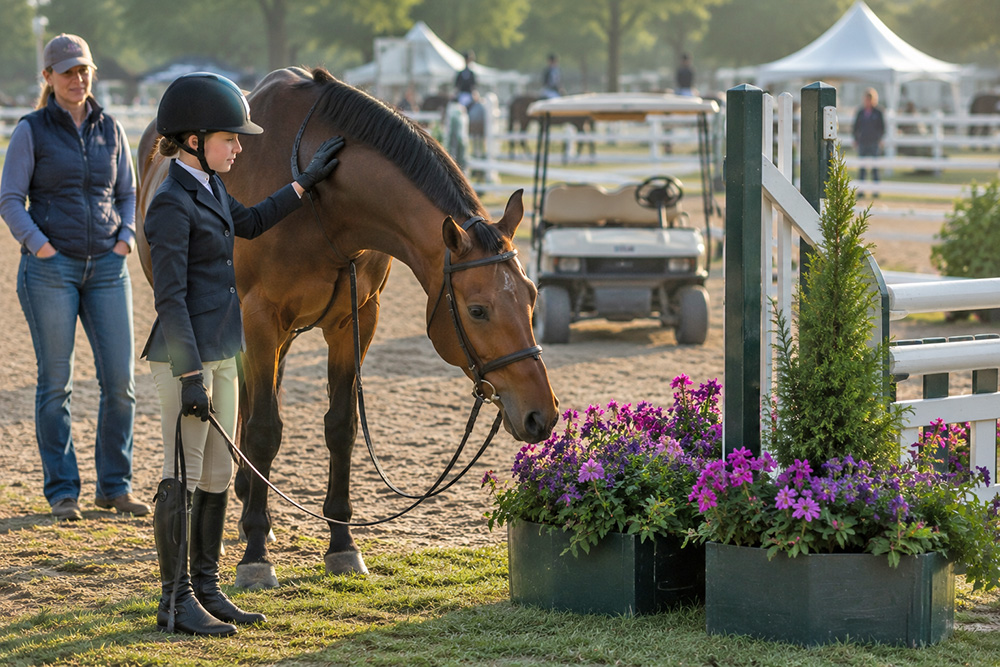
This may be his first show too, and horses remember. A horse who learns that a show is a place where he got hauled somewhere strange, got yanked on, got longed until his sides heaved, and got yelled at is a horse who will be difficult to load for the rest of his life. A horse who learns that a show is a place where he saw new things and everybody was kind to him will walk on the trailer for the next twenty years. You are not just getting through today. You are writing something into that horse that is going to stay there.
Walking the course.
At some point she will stand in the ring in her boots with the other riders and walk the course, and she will have no idea what she is supposed to be doing out there. Here is what she is doing.
She is finding out where the jumps are and in what order, so she can shut her eyes at the gate and see the whole route. She is looking for the tricky part, which is usually a turn that comes up faster than it looks. And in the lines, the places where two fences sit on a straight path, she is counting.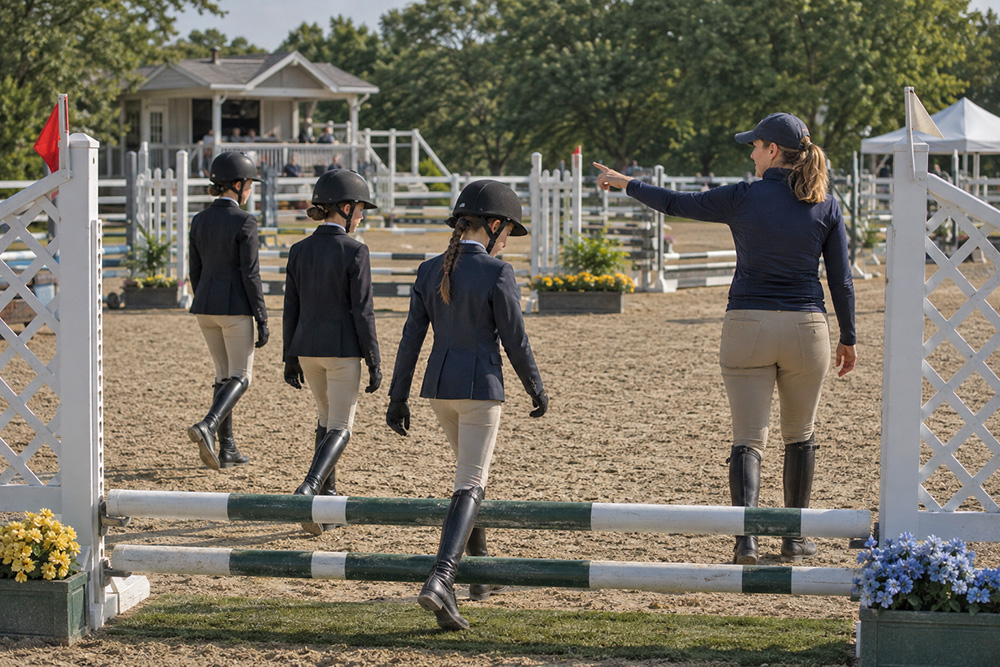
The counting works like this. A horse's canter stride in the ring is about twelve feet. Walk with your own step measured out to roughly three feet, which for most adults is a comfortable stride and for a kid takes a little practice, and count four of those steps for every one of his. Walk from the landing side of the first fence to the takeoff side of the second, and the number of horse strides is what she is meant to ride.
If her horse is short strided or long strided, her coach will tell her to add one or leave one out. That is all that adding a stride means. It sounds like jargon and it is really just arithmetic done with your feet.
Have her walk it twice if she can. Once to learn it, once to believe it.
Things will go wrong, and none of them are a catastrophe. Say all of this in advance and it becomes a normal day instead of a disaster.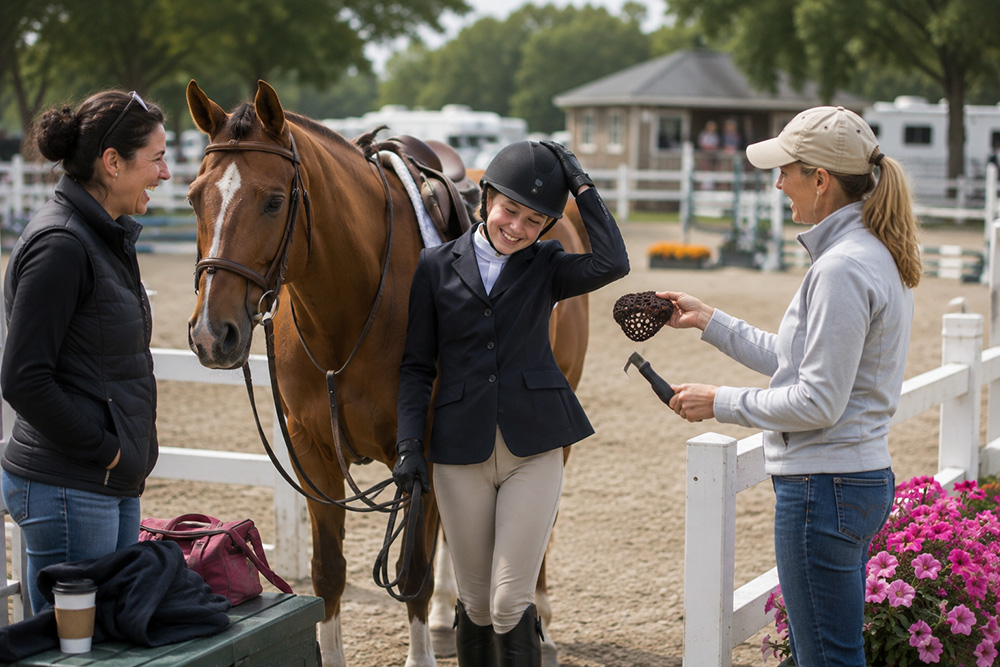
She will probably forget the course at least once. Everybody does, and at a schooling show somebody at the gate will usually help her. Something will be left at home, and the horse show world runs on borrowed hoof pick and spare hairnets, so ask. Your horse will spook at the corner nearest the trailers because that is where all the activity is. She may go off course, break to a trot, miss a lead, or get a bad distance in front of people. She may cry. A lot of kids cry at their first show, and it is almost never about the round.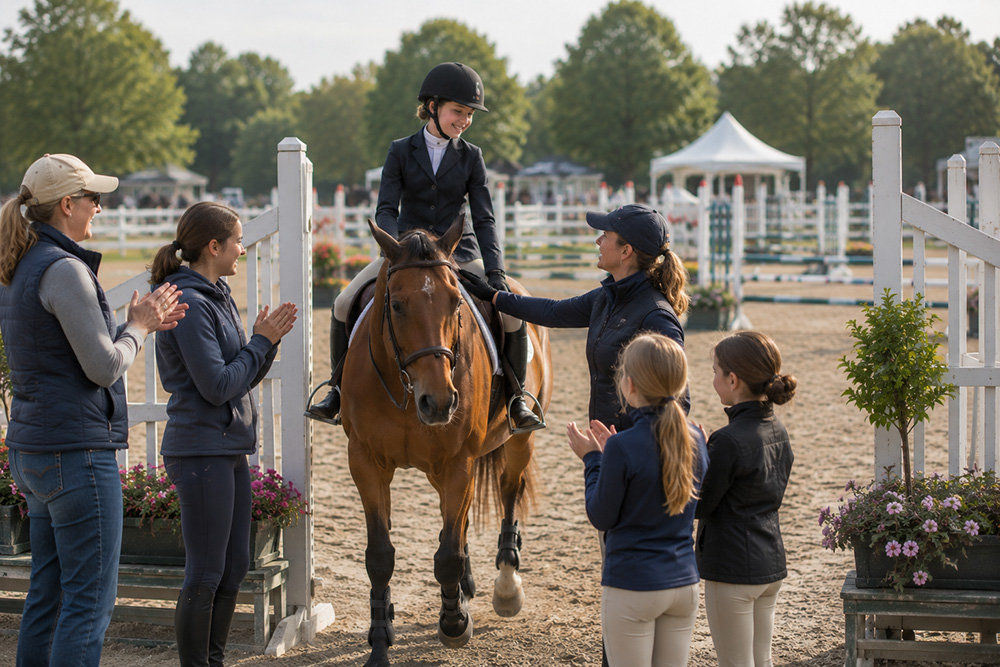
None of that is the end of anything. It is the price of the first one, and everybody at that show paid it themselves at some point.
What a good coach looks like on show day.
Your first show is the clearest view you will ever get of the trainer you hired, so pay attention.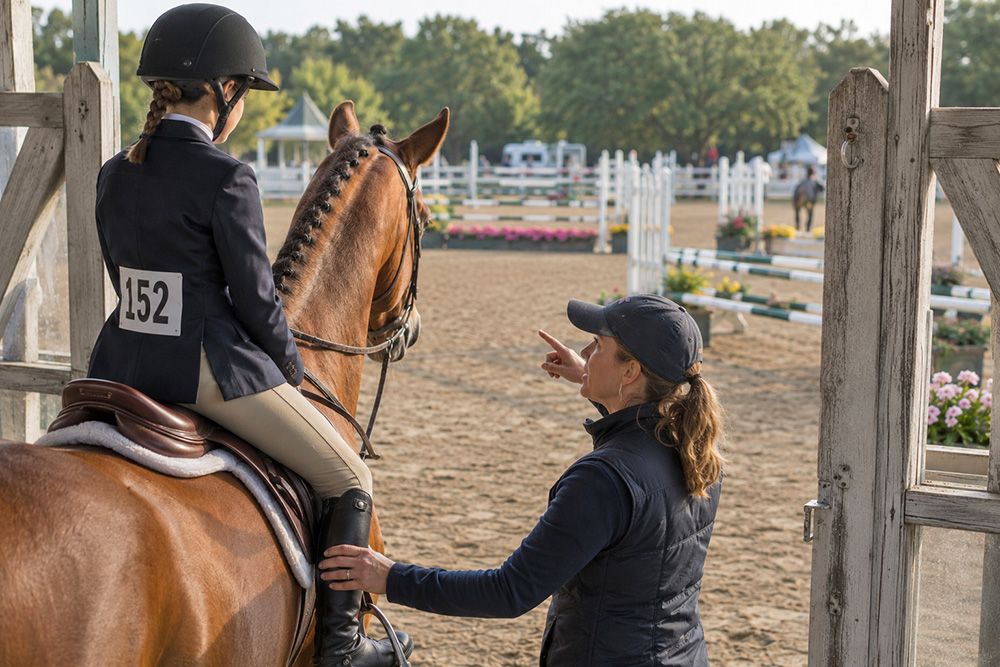
A good one is at the ring before your kid is. She has walked the course with the riders. She gives one useful instruction before they go in, not six, because a kid at the gate can hold exactly one thought. She does not coach from the rail in the middle of a round. And she is standing at the out gate when your kid comes out, and she says something kind first, no matter what happened in there.
If your coach is on the phone, if she disappears for an hour, if she is visibly disappointed in a child in front of other people, that is worth noticing. Not worth a scene at the show. Worth noticing.
How parents get pulled in.
You will show up at your first one knowing nobody and feeling like everyone else has been doing this for years. Most of them have.
The cure is work. Go find the show secretary and ask what needs doing. Somebody always needs a jump crew, a gate person, a runner, somebody to hand out ribbons or sit with a clipboard. Forty minutes of that and you will know six people's names, and you will have gone from the person standing awkwardly by the rail to the person who is part of the show. This is how it works at every schooling show in the country and it is the reason so many horse show parents end up on the volunteer list every year. Nobody plans it. It just happens the first time somebody hands you a clipboard.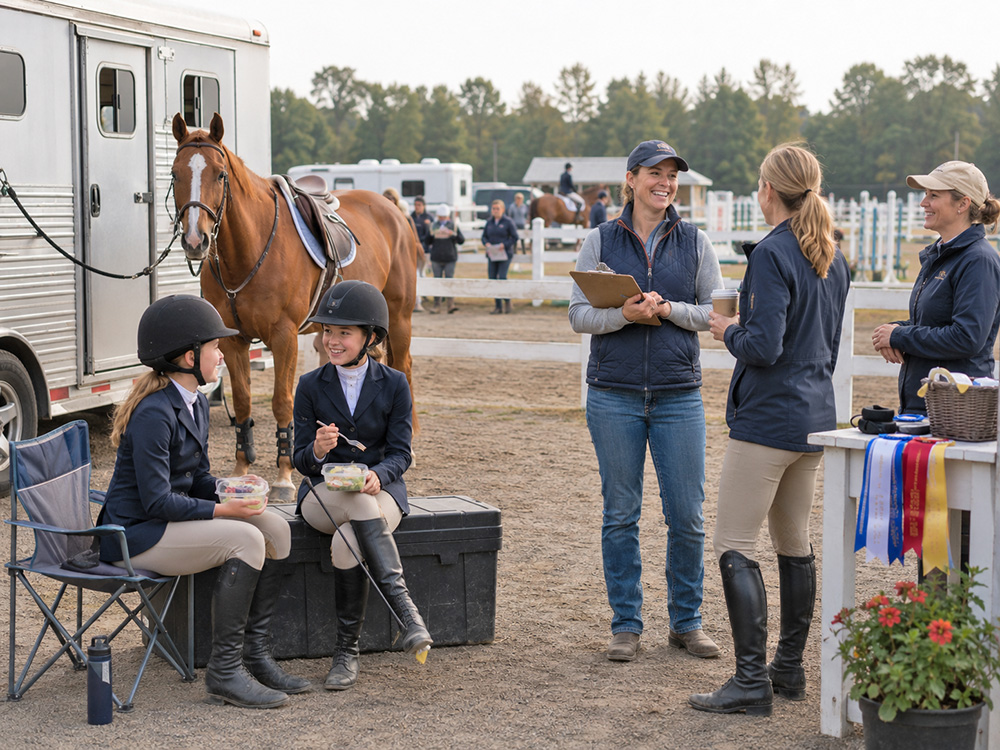
Be honest with yourself about one other thing. Some barns and some show circuits are cliquey, and you may run into a cold shoulder or two. That is real and it is not your imagination. But the first day of school felt that way too, and by the third or fourth show the same faces are parked next to you and the kids are sharing a trailer and eating lunch on a tack trunk together. Give it a few shows before you decide. And if the barn itself never warms up, that is the barn, not the sport. There are others.
The drive home decides whether there is a second show.
When the trailer is loaded and you pull out of the lot, you will have about ten minutes where your kid is deciding how she feels about the whole day.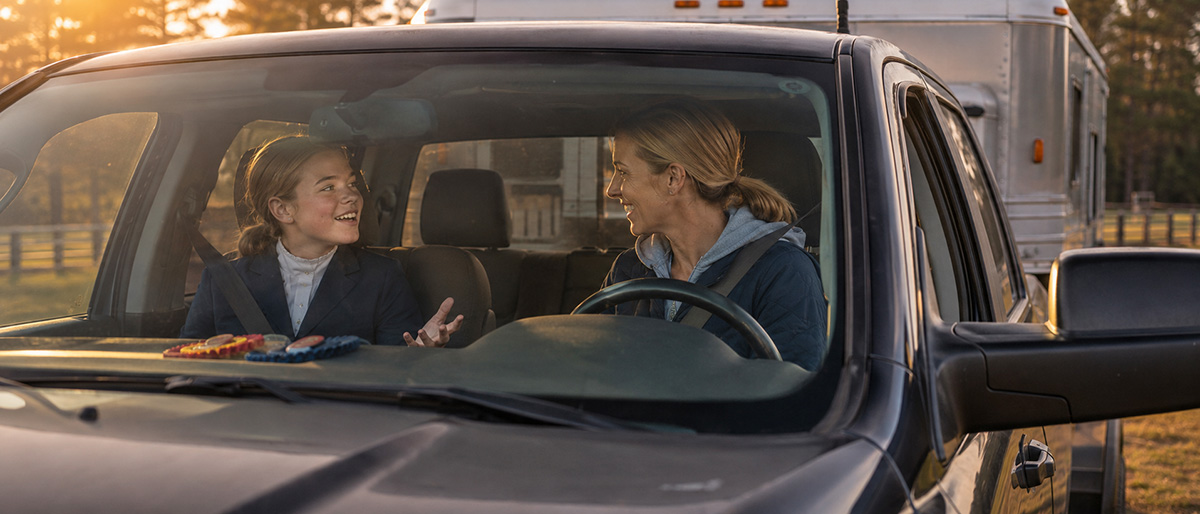
Do not review the round. Do not coach. Do not fix anything, even gently, even helpfully. There will be a lesson on Tuesday and the fixing belongs there.
Ask her what her favorite part of the day was. Then be quiet and let her answer.
Nine times out of ten it will not be the class at all. It will be something that happened at the trailer with her friends, or the way her horse stood so good for her, or the sandwich. That is the correct answer. That is the whole thing working exactly the way it is supposed to.
Frequently Asked Questions
What is a schooling show?
A schooling show is a local, unrated, lower cost competition that does not count toward national year end standings. Entry fees are a fraction of a rated show, the atmosphere is friendlier, and the mistakes are cheaper. It is where almost every rider should begin, and plenty of families happily stay at this level for years.
How early should we arrive?
Earlier than the schedule requires. Give yourself enough time to park, get the horse off the trailer, walk him around the whole property, find the office, pick up a number, and still have time to stand still for a while. A rushed arrival puts the nerves into the horse before anyone has ridden a step.
What if she forgets her course?
It happens to nearly everyone eventually. At a schooling show the gate person or the announcer will often help, and going off course is a fault, not a disgrace. Walking the course twice and closing her eyes at the gate to see it once through is the best insurance.
Do we need all new show clothes?
No. Schooling shows are deliberately forgiving about turnout. Clean, tidy, and properly fitted matters far more than new, and a well fitted helmet and safe boots matter more than either. Borrowing is completely normal and nobody at that level is going to think less of you for it.
How do I help my nervous child?
Give her one job instead of a feeling to manage. Telling a kid to relax does not work. Telling her that her job today is to keep an even pace and take care of her horse gives her something to actually do, and the nerves get quieter on their own once her hands are busy.
What if my horse has never been to a show?
Then his experience today matters as much as your rider's. Arrive early, walk him everywhere, praise him for everything, let him rest between classes, and be willing to scratch a class if he is genuinely overwhelmed. A horse who leaves his first show relaxed is worth far more to your family than a ribbon from a day that frightened him.