

What the Hunter Judge Is Actually Watching: Why a Clean Round Still Places Sixth
Here is the moment that turns a new hunter parent sour on the whole sport.
Your kid goes in. She gets around. No rails, no refusals, no drama. She comes out of the ring grinning and you are proud of her, and then the results come back and she is sixth.
Meanwhile, a round that looked no better to you—maybe worse—won the class.
You ask why, and everybody at the ring gives you a different answer. Most of those answers are vague, and a few of them make you feel like you should not have asked.
So you decide the whole thing is political, or that it comes down to who is spending the most money, and you are half angry about it for the rest of the season.
The hunter division is not arbitrary. It is subjective, which is a different thing, and it is subjective in a way that is consistent enough to learn.
Once you know what the judge is actually looking at, the results stop feeling random. You will still disagree with a pin card now and then. Every honest person standing at that ring does.
But you will understand what game is being played.
Everything in That Ring Is an Imitation of the Field Hunter
This is the piece that almost never gets explained, and without it none of the rest makes much sense.
The hunter division came out of foxhunting. Before it was a show division, it was a practical question.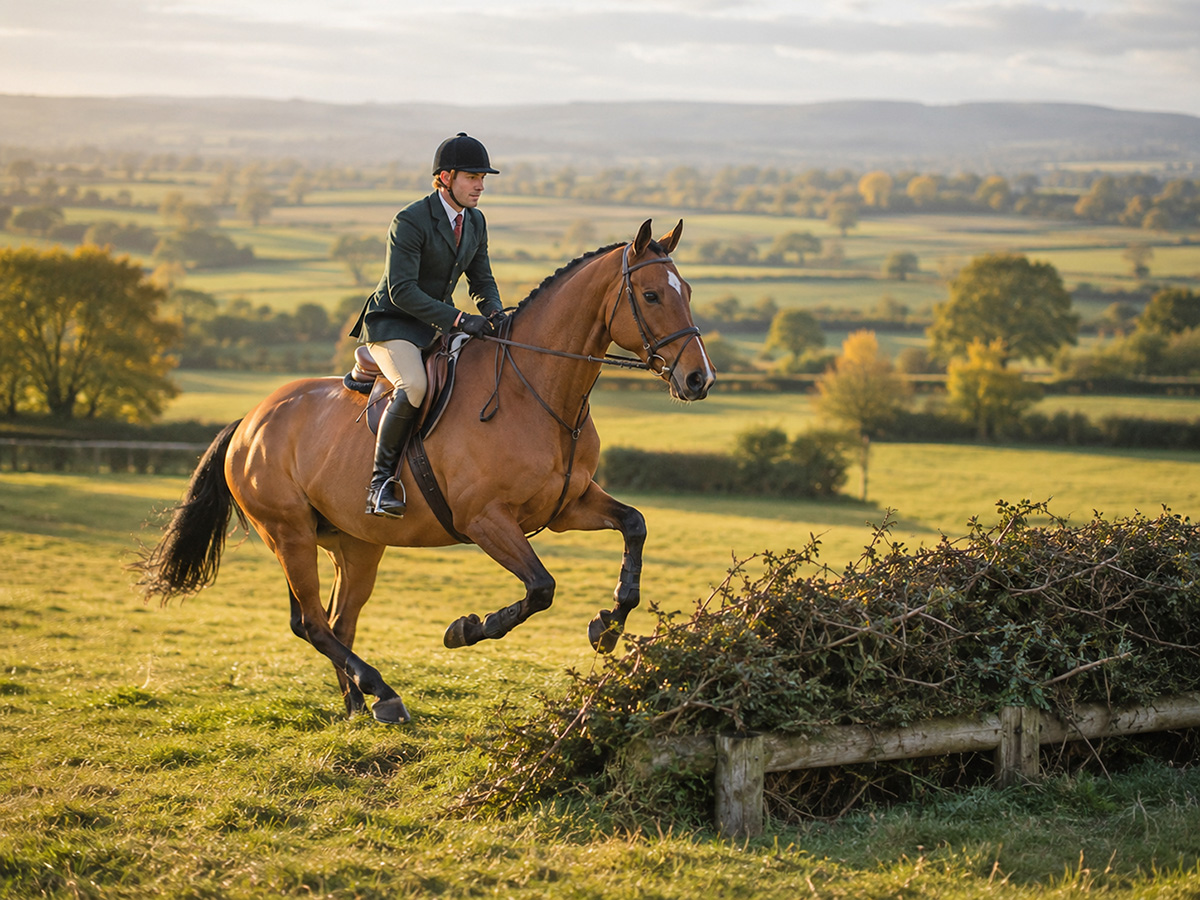
You are going to be on this horse for hours, crossing country where you cannot necessarily see what is waiting on the other side, jumping whatever fences come up along the way.
Which horse would you want underneath you?
You want one who covers ground efficiently without hurrying. One who takes a fence out of stride and does not stop to reconsider the whole arrangement. One who lands and carries on rather than landing and arguing.
You want a horse who does not fight your hand, does not need to be held together every stride, and does not spend the whole day making you work.
That is the standard.
Nearly everything the judge rewards in the modern hunter ring traces back to that idea.
When somebody says a hunter was “a pleasure to watch,” that is not simply a compliment about how pretty the horse looked.
It is a judgment about whether that horse appeared as though he would have been a pleasure to ride all day.
Hold that idea in your head while you stand at the rail, and much of the mystery begins to disappear.
The Judge Is Scoring the Horse, Not the Effort
This is the second thing new parents need to understand, and it is often the one that causes the most heartbreak.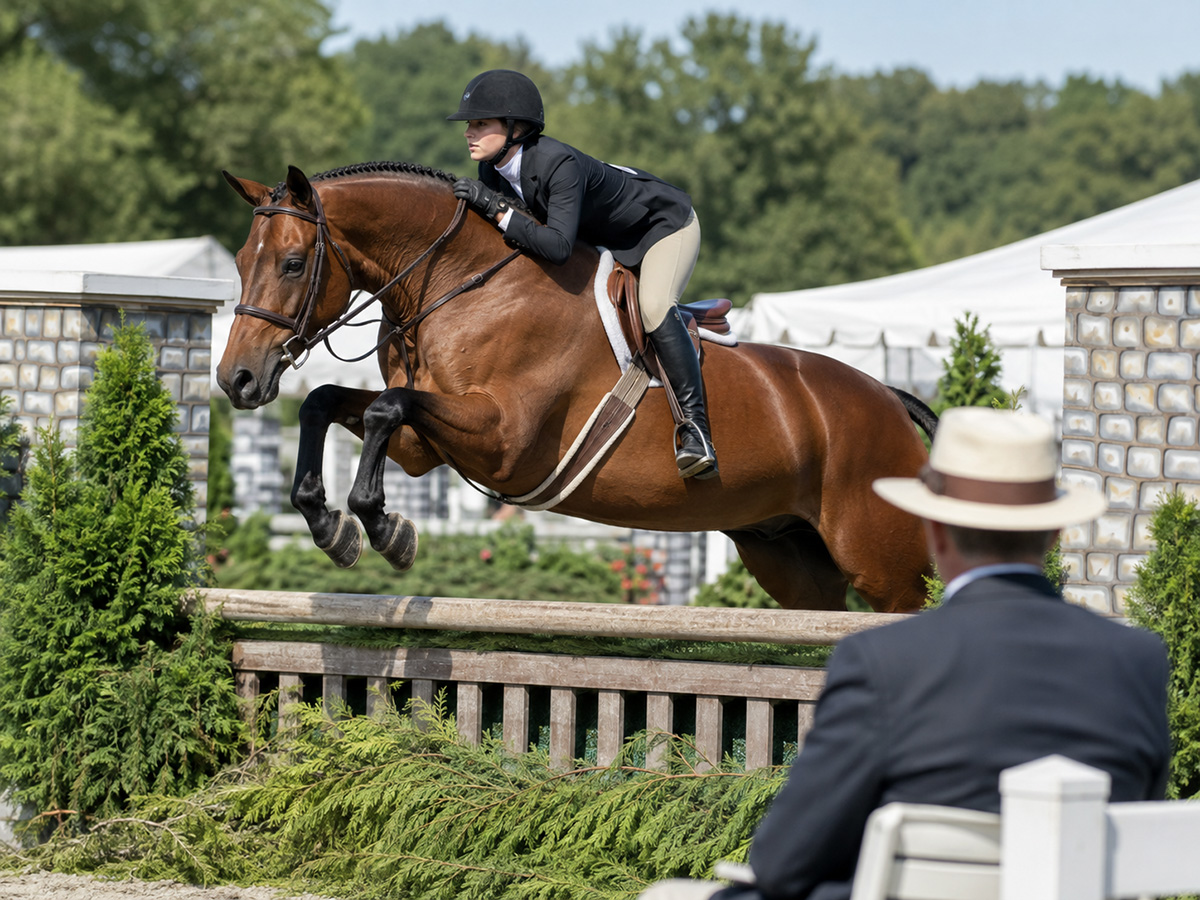
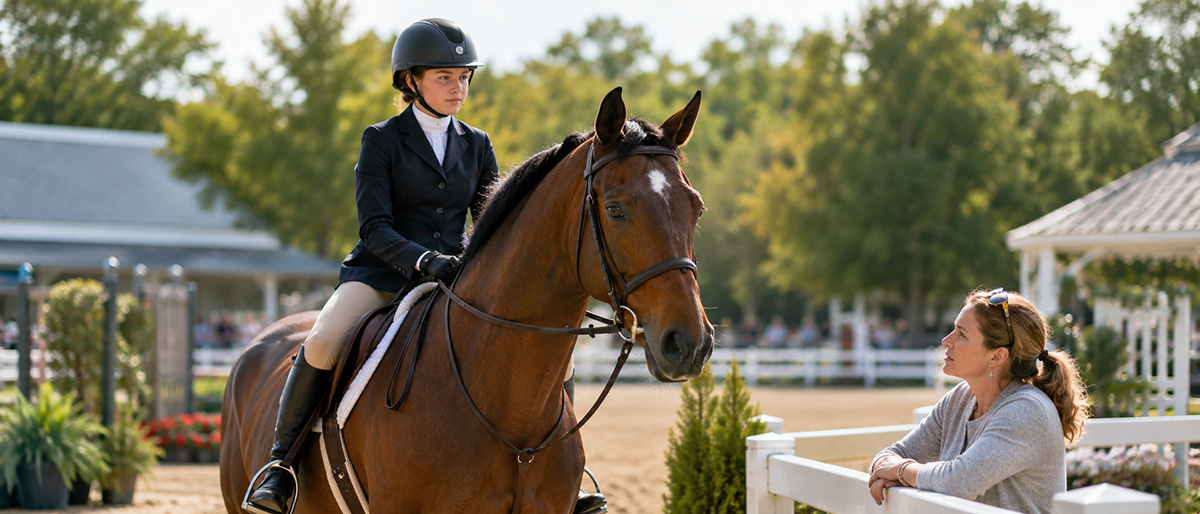
Parents naturally watch their own child and score the child.
You saw your daughter keep her leg on when the horse backed off. You saw her make a beautiful adjustment six strides before a fence. You saw her quietly correct a lead. You know how much work she put into getting that horse around the course.
The hunter judge is looking at something different.
In the hunter division, the horse is the athlete being judged. His way of going, jumping form, manners, pace and consistency are what matter.
The rider is supposed to be almost invisible.
A quiet, effective ride is extremely valuable because it produces a better hunter round, but the rider is not the primary subject of the class.
Which means something can happen that is very difficult for a parent to understand at first.
Your daughter can ride a beautiful, tactful and correct round and finish behind a horse who simply jumped better under a rider who appeared to do less.
That is not a criticism of your daughter.
That is the class judging what it was designed to judge.
If you want the rider's position, decisions and effectiveness to be judged, that is what the equitation division is for.
Hunters and equitation get confused constantly by families who are new to showing. Understanding the difference early will save you a lot of ringside frustration.
What Separates Second Place From Sixth
Hunter judges commonly think in terms of a numerical scale, often with exceptional rounds reaching into the upper eighties or nineties, very good rounds falling in the eighties, and respectable rounds with smaller mistakes falling below that.
You already know about the obvious faults.
A rail comes down.
A horse refuses.
A horse breaks gait.
There is a wrong lead that never gets corrected.
Those are easy to see.
But those obvious mistakes are often not what separates second place from sixth, because at many shows several horses in the class will complete clean rounds.
What separates those clean rounds are smaller things.
First is pace.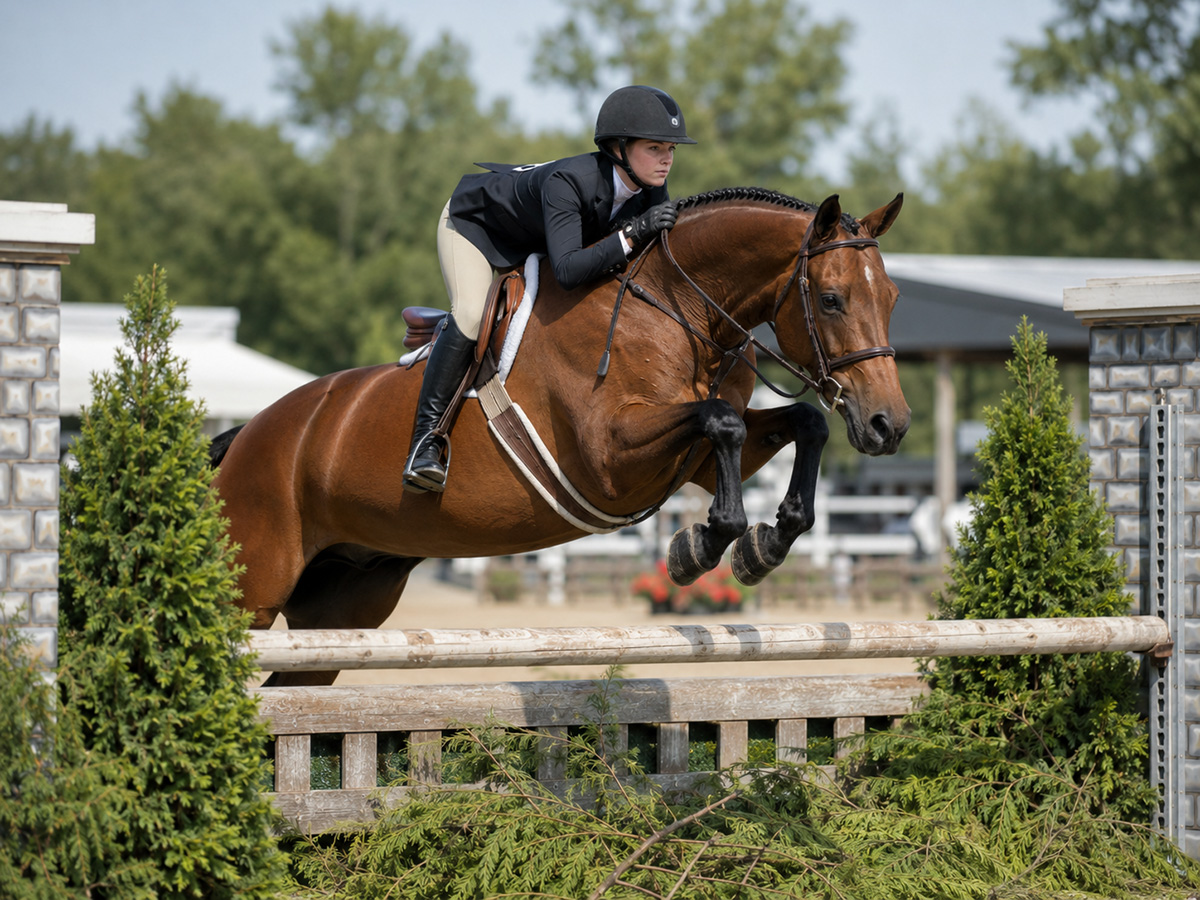
The ideal hunter round has one continuous, even rhythm from the first fence to the last.
A horse who speeds up down the lines and then has to be pulled back in the corners may still jump every fence cleanly, but he has lost some of the effortless quality the judge wants to see.
Then there are distances.
A horse who meets fence after fence out of a comfortable stride makes the entire course look easy.
Another horse may also leave every rail up but repeatedly get too close to the base of the fence, reach from a long distance, or flatten his body in order to get across it.
Both horses technically went clear.
They were not the same round.
Then there is the jump itself.
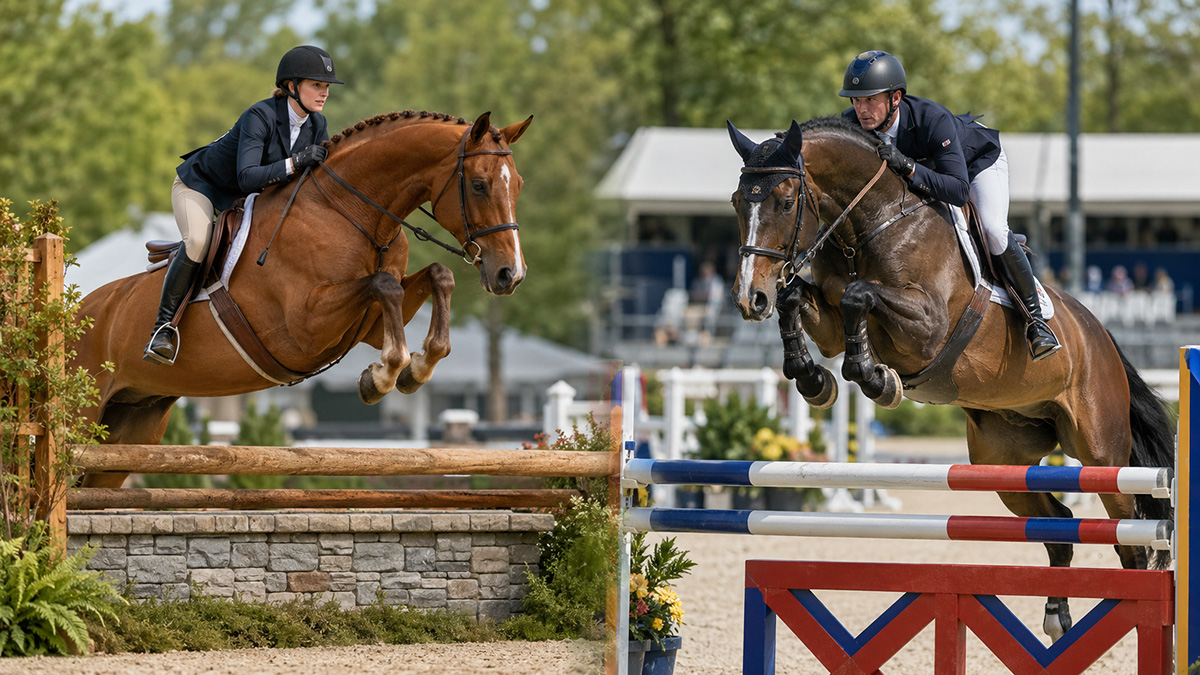
The classic hunter folds his front legs neatly and evenly, jumps square rather than twisting through the air, and uses his neck and back over the top of the fence.
And then there are all the things newcomers may not even realize the judge noticed.
Did the horse swap leads smoothly in the corner, or cross-canter for several strides?
Did he land quietly and continue in the same rhythm, or land and scoot away?
Did he stay relaxed?
Did his ears and expression suggest confidence and interest?
Did the rider have to reorganize him after every fence?
Most important: did the whole thing look easy?
That is often the answer when your child's clean round finishes sixth.
Nothing went terribly wrong.
Five other trips were simply smoother.
The Part Families Should Hear Early
The hunter ring rewards a very specific kind of horse, and at the upper levels horses with the qualities most valued in the division can become extremely expensive.
The successful hunter usually has a big, low, ground-covering stride. He has an attractive jumping style, tidy front legs and a naturally quiet way of carrying himself.
He looks as though he has plenty of time.
Some of that comes from training.
Some comes from fitness.
Some comes from excellent riding.
But a great deal of it comes from the horse himself.
You can improve a horse toward that standard.
You cannot completely train your way out of the horse you have.
A short-strided, quick, honest, hardworking horse may go around clean all day and still be beaten by a horse who covers the same course with a bigger stride and a more naturally impressive jump.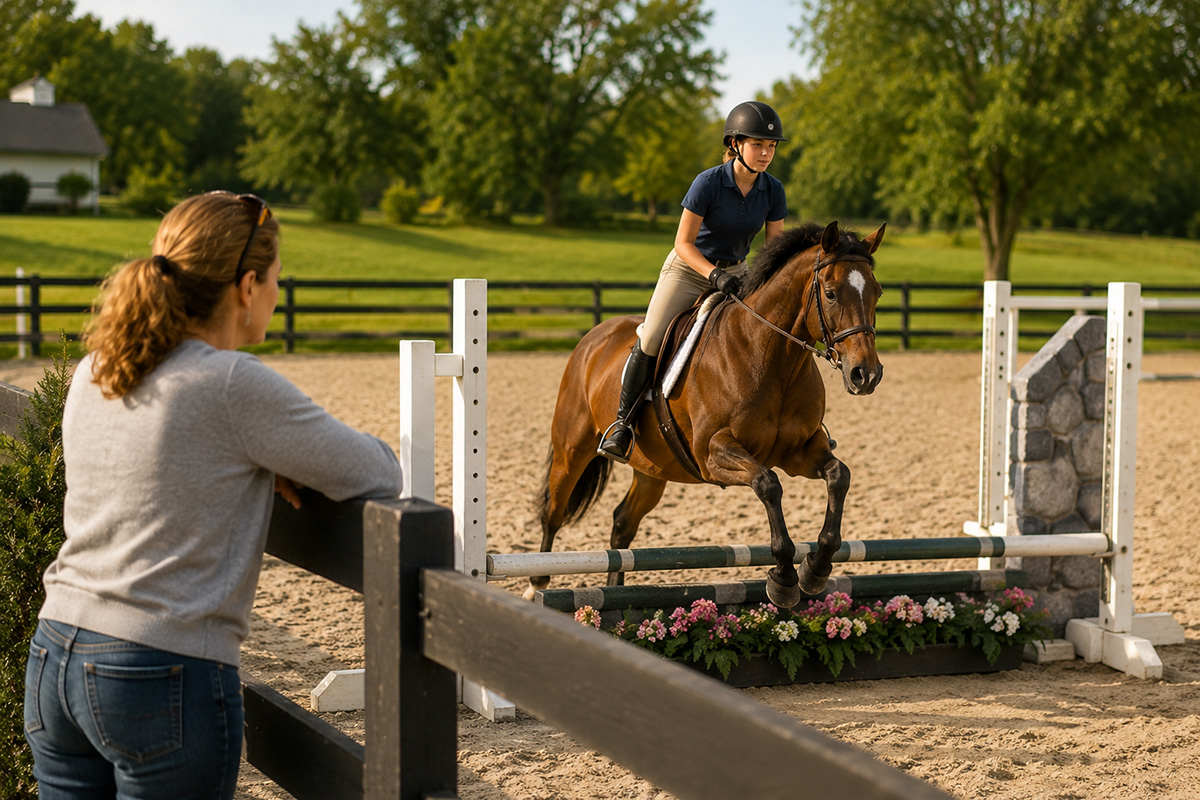
That does not mean there is anything wrong with your horse.
It certainly does not mean there is anything wrong with your child.
It means the division is measuring a specific set of qualities.
Families need to understand that before they spend several seasons—and potentially a great deal of money—trying to turn one kind of horse into another.
Set goals for the horse you actually have.
There is an enormous amount a child can learn from a good, honest horse even if that horse is never destined to win the biggest hunter division at the show.
There Is Also Pressure to Make Horses Quiet
This is another part of the hunter world that parents should understand.
Because quietness and consistency are rewarded, there can be pressure to make horses quieter.
Sometimes that pressure results in practices that are simply poor horsemanship.
A horse may be longed far too hard before a class so he is tired enough to be easier to ride. A young horse may be shown excessively because people are trying to manufacture the mileage and steadiness that normally come with time.
And historically, there have also been people who crossed a much more serious line by using medications or substances improperly to make horses artificially quiet.
That is one reason medication rules and testing exist.
I have no interest in running down a sport that many good horsemen love and that many horses enjoy.
But I have been around horses for more than fifty years, and there is a difference between a horse who is naturally calm and a horse who has simply become dull.
Parents should learn to recognize that difference.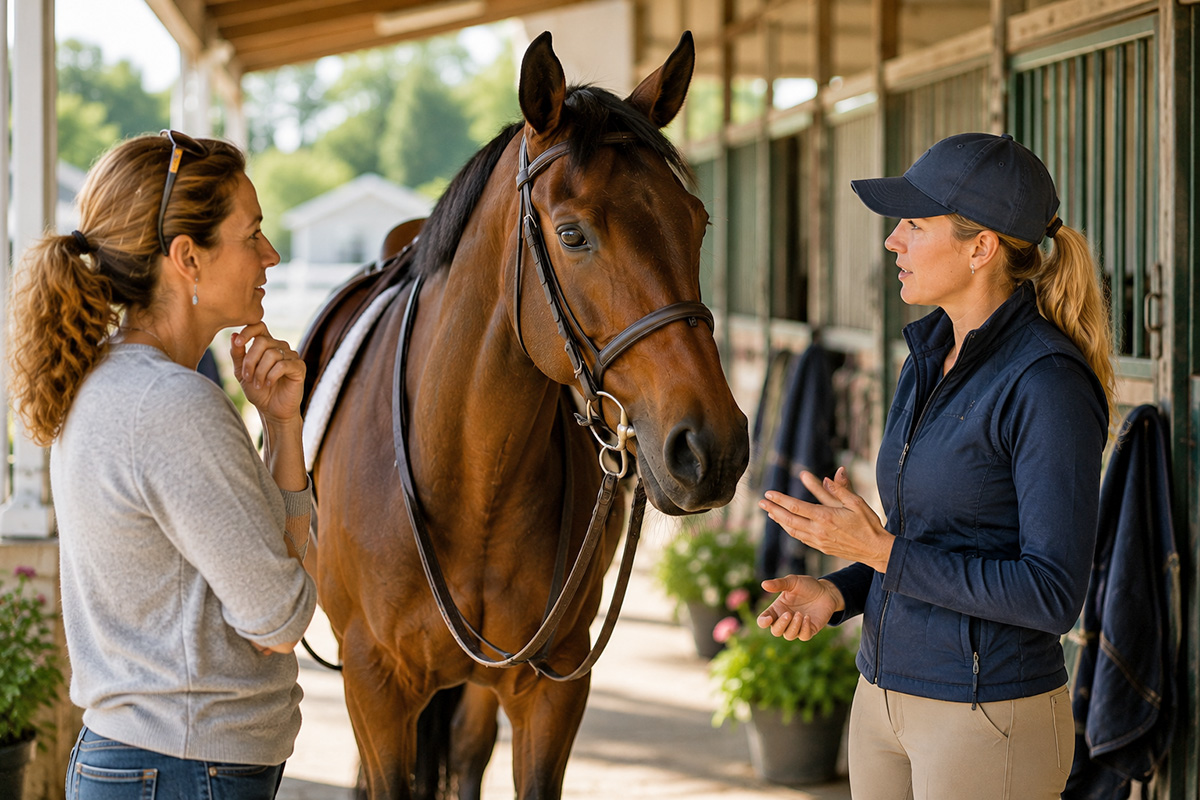
A genuinely calm horse is still present.
His eye is bright. He notices his surroundings. He responds appropriately when asked to move. His ears are interested in what is happening around him.
Quiet does not mean absent.
If your horse seems unusually dull, slow to respond, unfocused or physically exhausted, ask questions.
Ask your trainer what your horse is being given.
Ask what he receives before showing.
Ask why.
A good professional should be willing to answer those questions plainly.
If someone refuses to tell you what your horse is receiving, that alone is reason to keep asking questions.
You are paying the bills.
More important, it is your horse.
You have every right to know.
What to Do With All of This at Your Next Show
Here is one of the best ways to learn hunter judging.
Stand at the rail and watch an entire class before your child goes into the ring.
But this time, do not watch the riders.
Watch the horses.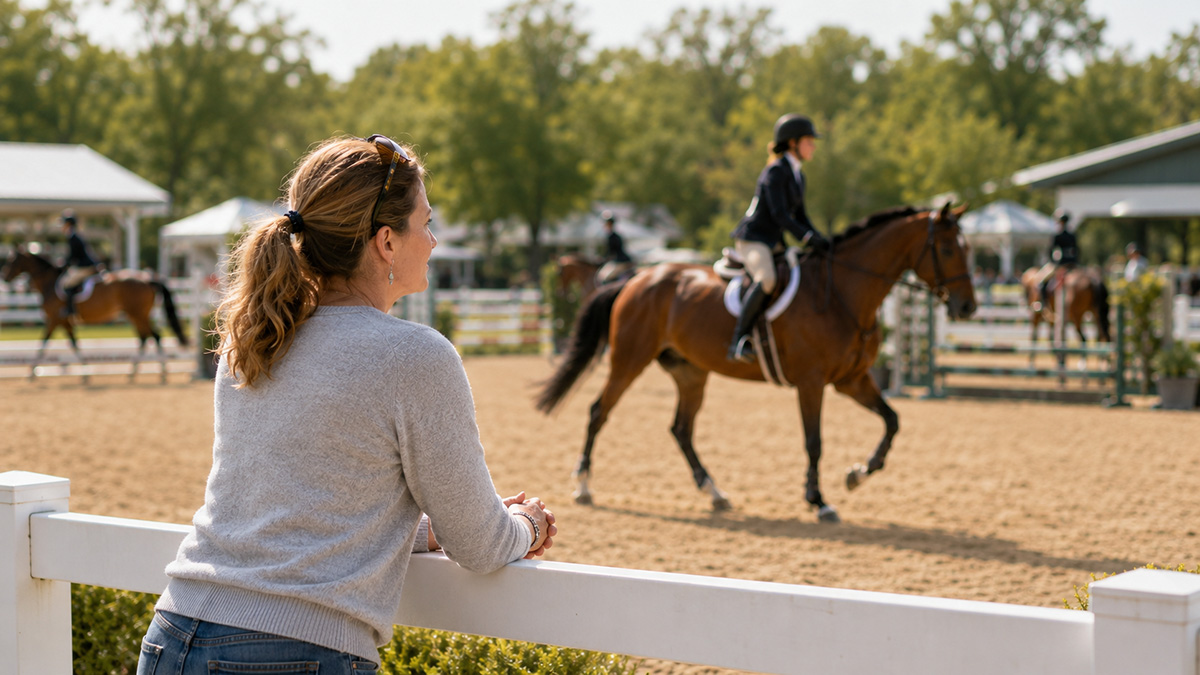
Watch the pace.
Which horse maintains essentially the same rhythm from the beginning of the course to the end?
Watch the fences.
Which horses seem to arrive at the jump naturally without the rider having to make a dramatic correction?
Watch the knees.
Watch the horse's body over the fence.
Watch what happens after he lands.
Which horse simply lands and continues, and which horse has to be reorganized before the next turn?
Watch the lead changes.
Watch the horse's expression.
Then try something.
Before the ribbons are announced, pick your own top three.
You will probably be wrong the first several times.
That is fine.
Do it again.
Somewhere around the fourth or fifth class, you may start getting surprisingly close.
And the day that happens, hunter judging stops looking like a mysterious collection of opinions and starts becoming something you can actually see.
Your child's job is to ride well and take care of her horse.
That part you already knew.
The judging is not beyond you.
It is one person's informed opinion about which horse, on that particular day and over that particular course, most closely represented the kind of horse you would have wanted to ride all day.
Frequently Asked Questions
What is the difference between hunters, jumpers and equitation?
Hunters judge the horse subjectively on style, manners, consistency and way of going. Jumpers are judged objectively by faults and time, so the fastest clear round can win regardless of whether it was particularly pretty. Equitation judges the rider's position, effectiveness and ability to produce a correct ride. Many riders compete in more than one of these divisions at the same show.
Why did we go clear and still not get a ribbon?
Because several horses may go clear in the same hunter class. Once the obvious faults are removed, the judge is comparing pace, jumping style, distances, lead changes, manners and the overall smoothness of each round. Going clear gets you into the conversation. It does not automatically win the class.
Can I train my horse to be a winning hunter?
You can improve almost any sound, willing horse. Correct flatwork can improve balance, rhythm, responsiveness and even jumping style. Fitness and good riding matter enormously. But you cannot completely manufacture natural stride length, jumping technique or temperament. Know the horse you are working with and set expectations accordingly.
What is a schooling show, and should we start there?
A schooling show is generally a local, lower-cost competition designed to give horses and riders experience without the expense and pressure of a major rated show. For many beginning riders and horses, it is exactly the right place to start. Mistakes are part of learning, and schooling shows give horse and rider the opportunity to make those mistakes while gaining confidence and experience.
Is a judge allowed to have a personal preference?
Yes, within the standards of the division. Hunter judging is subjective by design. Two qualified judges can watch the same class and place some horses differently while both decisions remain defensible. That does not mean there are no standards. It means judges may weigh excellent qualities and smaller imperfections somewhat differently.
How do I know if a horse has been over-medicated or otherwise made artificially quiet?
You may not know with certainty simply by looking, and you should be careful about accusing anyone based only on appearance. But horse owners should learn what genuine relaxation looks like. A calm horse remains responsive, aware and interested in his surroundings. If your horse appears unusually dull, weak, exhausted or slow to react, ask your trainer directly what the horse has received and why. Responsible professionals should be willing to answer clearly.