

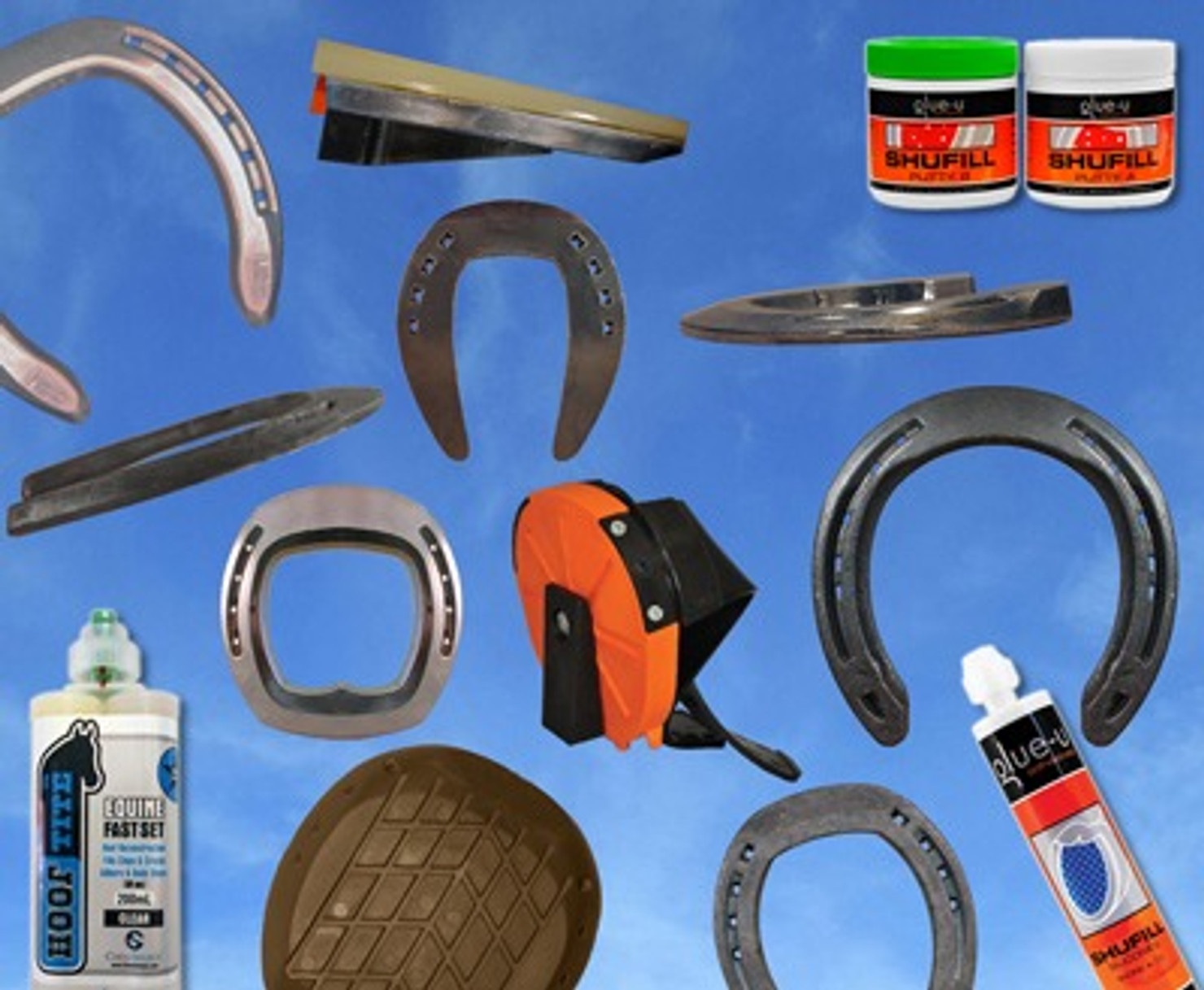
Edss (Equine Digit Support System) is a farrier-developed therapeutic shoeing system built to treat a wide range of lower-limb lameness conditions in horses. Rather than a single shoe, it is a coordinated set of components — a therapeutic shoe, a hoof pad, frog-support inserts, and adjustable wedge rails — paired with comprehensive instruction material. Together they let a farrier or veterinarian protect the coffin bone, restore support to the back of the foot, and make ongoing adjustments as a damaged hoof heals. Edss has long been regarded as one of the most effective tools available for managing difficult lameness cases and, in many instances, returning a horse to a pre-disease condition.

Edss is a modular treatment system rather than a one-piece product. A full kit includes a pair of Edss shoes, a pair of Edss pads, a set of frog-support inserts with screws, and a set of wedge rails with bolts. The shoe and pad work together to protect and elevate the heel; the frog-support inserts are durable, frog-shaped wedge pieces that attach to the ground surface of the pad to transfer weight-bearing support to the caudal — or rearward — portion of the foot. Used with Edss sole-support impression material, the inserts load the frog, increase blood circulation, and encourage healthier foot function.
The wedge rails are the system's adjustability engine: available in different heights and interchangeable across shoe sizes, they let the practitioner change the hoof angle and the tension on the deep digital flexor tendon without removing the shoe. That ability to fine-tune frog support and tendon tension over time is exactly what makes Edss so useful for the slow, staged recovery a compromised hoof requires.
The system is built for the hardest cases. Edss is applied to laminitis and founder, navicular syndrome, ringbone, underrun heels, and contracted heels, among other lower-limb pathologies. In laminitis and founder especially, where the coffin bone is at risk of rotating or sinking, the combination of frog support, heel elevation, and constant adjustability is critical: it offers protection to the coffin bone, supports the limb internally, and lets the practitioner respond as the foot changes day to day.
For acute founder cases, Edss also supports styrofoam support-block techniques, while the Edss/Steward Clog approach addresses navicular disease and other conditions that need caudal-foot support. T
Edss was developed by Gene Ovnicek, a farrier, clinician, and researcher recognized nationally and internationally and drawing on more than fifty years of farrier experience. Its foundation is research, not guesswork: Ovnicek's wild-horse hoof studies in 1986 and 1987 documented how feral horses naturally maintain healthy hoof form and function, and those patterns became the model for his work. He went on to collaborate with researchers including Dr. Robert Bowker of Michigan State University and to found the Equine Lameness Prevention Organization.
That same research first produced the World Race Plate; continued development then yielded a complete system for treating lower-limb pathologies, which became Edss. Established as a family business in 1995 in Columbia Falls, Montana — today operating from Penrose, Colorado — the company describes its mission as helping horse people succeed in hoof care through innovative information and equine products.
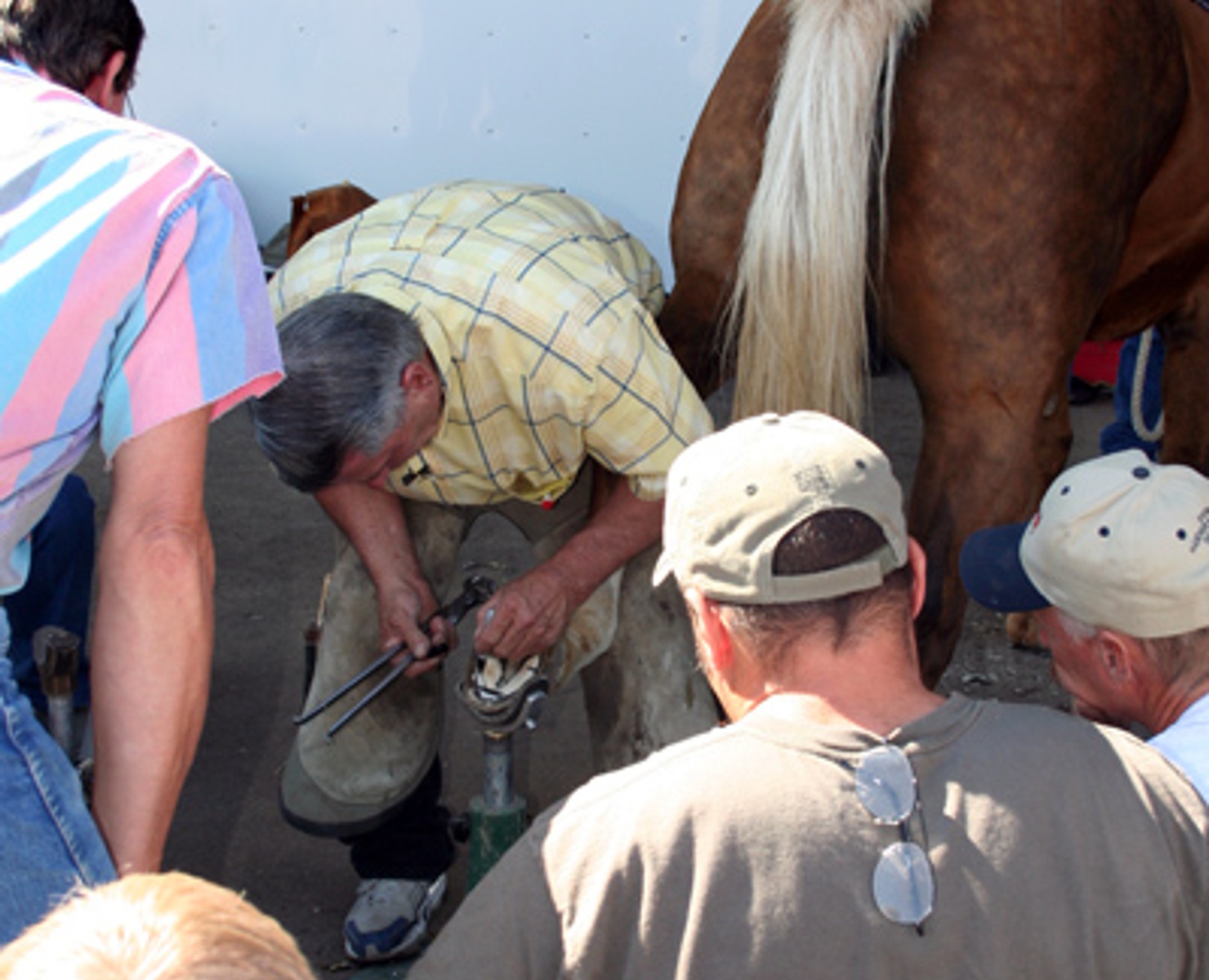
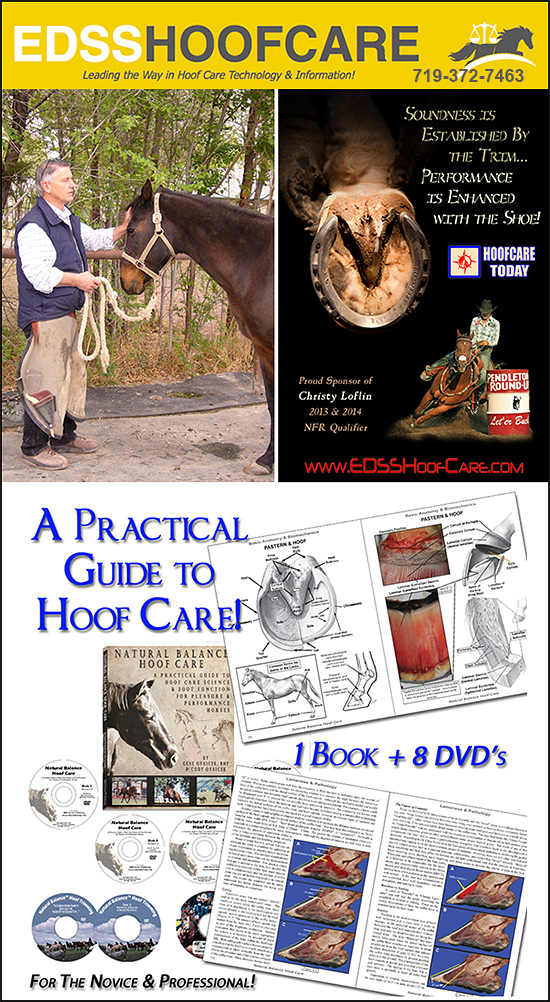
Edss has always been sold as a system and an education. The hardware only works when it is applied correctly, so the company backs it with comprehensive instruction material: printable application guides, instruction videos, books, and hands-on clinics, workshops, and farrier-school partnerships. The printable library alone spans an Edss Treatment System overview, hoof-care guidelines for shoe placement and preparation, a styrofoam support-block guide for acute founder, an Edss/Steward Clog guide for navicular cases, and quick-reference sheets on hoof balance.
The teaching centers on getting the basics right before the components ever go on. Practitioners learn to exfoliate and read the sole, locate the true frog apex, trim the heels to the functional sole plane, and place the shoe relative to the widest part of the foot for a balanced relationship around the coffin joint. With that groundwork, the shoes, pads, frog supports, and wedge rails can do their job — which is why Edss treats the instruction material as inseparable from the product itself.
EDSS is a therapeutic shoeing system — not a single shoe — made up of an EDSS shoe, a hoof pad, frog-support inserts, and adjustable wedge rails, supported by detailed instruction material. The components work together to protect the coffin bone, support the back of the foot, and allow ongoing adjustments while a lame or damaged hoof heals.
EDSS is applied to a range of lower-limb pathologies, including laminitis and founder, navicular syndrome, ringbone, underrun heels, and contracted heels. It is especially valued in laminitis and founder cases because it protects the coffin bone, supports the limb internally, and allows the frog support and tendon tension to be adjusted as the foot changes.
The frog-support inserts are frog-shaped wedge pieces that attach to the ground surface of the pad and transfer weight-bearing support to the rear (caudal) part of the foot, loading the frog to improve circulation. The wedge rails come in different heights and let the practitioner change the hoof angle and deep-digital-flexor-tendon tension without removing the shoe, so support can be fine-tuned over the course of recovery.
EDSS was developed by Gene Ovnicek, an internationally recognized farrier, clinician, and researcher with more than fifty years of experience. The system grew out of his wild-horse hoof studies in 1986 and 1987 and his later research and development collaborations, including work with Dr. Robert Bowker of Michigan State University.
It is built on evidence from feral (wild) horses. Ovnicek's 1986–87 studies documented how wild horses naturally maintain healthy hoof form and function, and those patterns became the model for EDSS. The system emphasizes that trimming the heels to widen the base of support and engage the frog is the key to sound biomechanics.
Because the hardware only performs when it is applied correctly. EDSS backs the system with printable application guides, instruction videos, books, and hands-on clinics and workshops, plus farrier-school partnerships. The printable library covers the full treatment system, hoof-care and shoe-placement guidelines, a styrofoam support-block guide for acute founder, an EDSS/Steward Clog guide for navicular cases, and quick-reference hoof-balance sheets.
The company was established as a family business in 1995 in Columbia Falls, Montana, following Ovnicek's wild-horse research in the late 1980s, and today operates from Penrose, Colorado. Over those decades EDSS has become a widely used standard for treating difficult equine lameness cases.
About this listing: Product and service details on this page, including any results described, are provided by Equine Digit Support System. InfoHorse.com verifies the business behind every listing — for decisions about your horse's health, talk with your veterinarian.
Explore more from the InfoHorse.com directory





Explore expert guides on topics related to your business
By Bob Pruitt
By InfoHorse Editorial Team
By Bob Pruitt
By Bob Pruitt
By Ann Pruitt
By Bob Pruitt