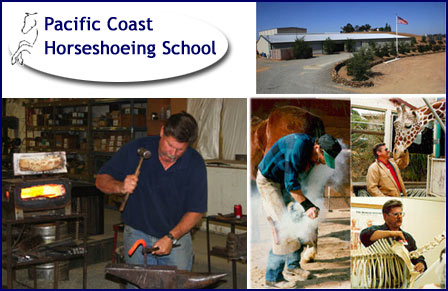

Pacific Coast Horseshoeing School with Bob Smith
First class facilities, top notch and well thought out instruction, and the support you need to become a successful Farrier.
Meet Bob Smith, Head Instructor...
"If you have made the decision to become a successful Farrier, you are going to need a school that gives you the best opportunity to make that goal. At Pchs, consideration for every aspect of your future success has been made to ensure that each of you receives the outstanding instruction and support you need for a prosperous future as a Farrier. "Bob Smith
Bob and his school maintain the feet of the hoofed animals at the San Francisco Zoo. Bob was recognized as the American Farrier's Association's Outstanding Farrier Educator for 1997. He is a graduate of California State University at Sacramento, and did graduate work in Farrier Science with Dr. Doug Butler at Sul Ross University, Alpine, Texas. He and his wife, Linda, own and operate Ironwood Equestrian Park, a popular training and show jumping facility in the Sacramento area. Bob is a Vietnam era veteran.
About Your Instructors:
Chuck Presnail is the forge instructor. Chuck brings to Pchs a wealth of teaching experience at both the University and Vocational Level. Along with being a professional educator he is an accomplished Farrier on the hunter/jumper show circuit. Chuck got under his first horse in 1972, in Michigan, and continues today with a small clientele of Grand Prix and performance horses.
How To Pick a Farrier School:
Don't pick a school based on location; pick a school based upon curriculum. You wouldn't marry someone just because they lived next door, close and convenient, why use that criteria to pick a school. Pacific Coast Horseshoeing Schools is one of the nation's leading Farrier Schools and we spare no effort to ensure the success of our students!
Here Are Key Factors To Keep In Mind...
Instructors: If your instructors are recent graduates of the school you need to rethink your choice. Unless you have supported a family, made the house payments and bought the groceries shoeing horses I don't think you are qualified to teach. Call the school and ask to speak to an instructor not the guy who owns the school or a secretary.
to practice: If you are going to be away from home to learn the art of horseshoeing you need the opportunity to practice after school and on weekends. The best way to get good is to practice and you have to be provided with the opportunity.
Schedule : If new people are arriving every Monday, someone gets shorted. The new student who is in a class above his/her head or the older student who has to listen to a repeat of old material instead of moving on to new material. An eight week program would have 8 different levels of students!
Horses: Pchs does not bring in rank, ill mannered, dangerous horses for students to shoe. You cannot learn how to balance a moving foot! Make sure the horses you work on at the school are going to be the same type of horses you plan on shoeing when you go home. Students need good quality horses that allow them to practice professional skills. The opportunity to shoe 10 horses per day means nothing if you can't shoe any of them because they are dangerous.
Consumer protection: Make sure you understand the refund policy of the school. What happens if you decide after the first week that shoeing horses is not for you? Will you get a full refund?
What Do Pchs Students Have To Say?
"The Italian Quarter Horse Association interviewed all U.S. schools. They sent me to the one they say is the best. The selection was very much appropriate." Leonardo Cagnolati, Grosseto, Italy
"I attended a six week program in the mid-west. After I graduated I returned home and was unable to compete. I was not capable of shoeing professionally. I enrolled at Pacific Coast Horseshoeing School and learned more in the first week then I did in the entire six week program."Matthew Frederick, Napa CA (707) 252-8372
"Pacific Coast Horseshoeing School has a very solid program with an extremely high success rate for its students." Kirk Atkins, resident Farrier at the University of California, Davis, Veterinarian Teaching Hospital
"I had heard that Pacific Coast Horseshoeing School was the best school in the United States. At 37 years old I could not afford to attend a marginal school. Pchs was even better than I heard." Glen Brazeau, Houston, British Columbia, Canada (604) 845-3141
"Bob and Chuck are very knowledgeable, but more importantly are willing and able to effectively teach their skills to others. They will give you as much as you are able and willing to learn." Tara Rich, Redding, California (530) 223-4058
Call Pchs Today And Start Your Future As A Farrier Tomorrow!
Pchs is for every student who wants a quality education as a Farrier. There is extensive course information on the Pchs website link available below.Bob wants to hear from each of you personally, to help you enroll and help you get started your new and exciting career as a Farrier-- so be sure to call today!
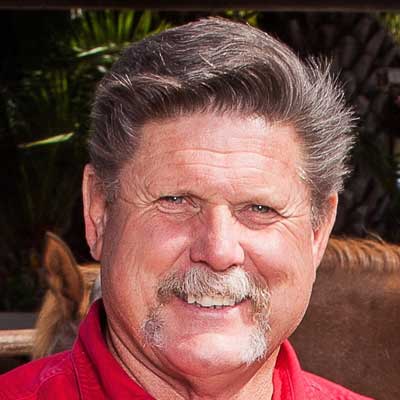
The school was founded in 1991 and is owned and taught by Bob Smith, a 2010 inductee into the International Horseshoeing Hall of Fame at the Kentucky Derby Museum in Louisville, Kentucky. Before teaching full time, Smith ran a busy shoeing practice out of Sacramento serving Grand Prix jumpers, dressage horses, cutting horses, and endurance competitors, and he still maintains the hoofed animals at the San Francisco Zoo. A California State University, Sacramento graduate and Vietnam-era veteran, he pursued graduate Farrier Science study under Dr. Doug Butler and authored the Iapf Foundation Credential Manual along with discipline-specific Hunter/Jumper and Dressage manuals.
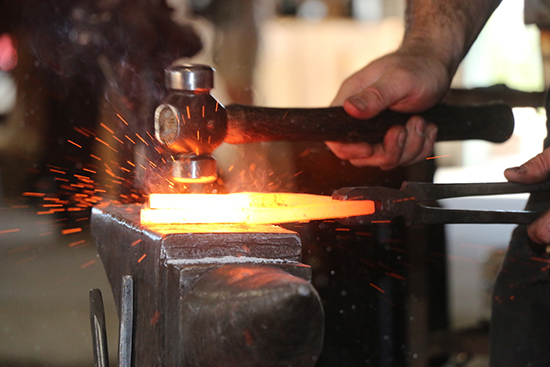
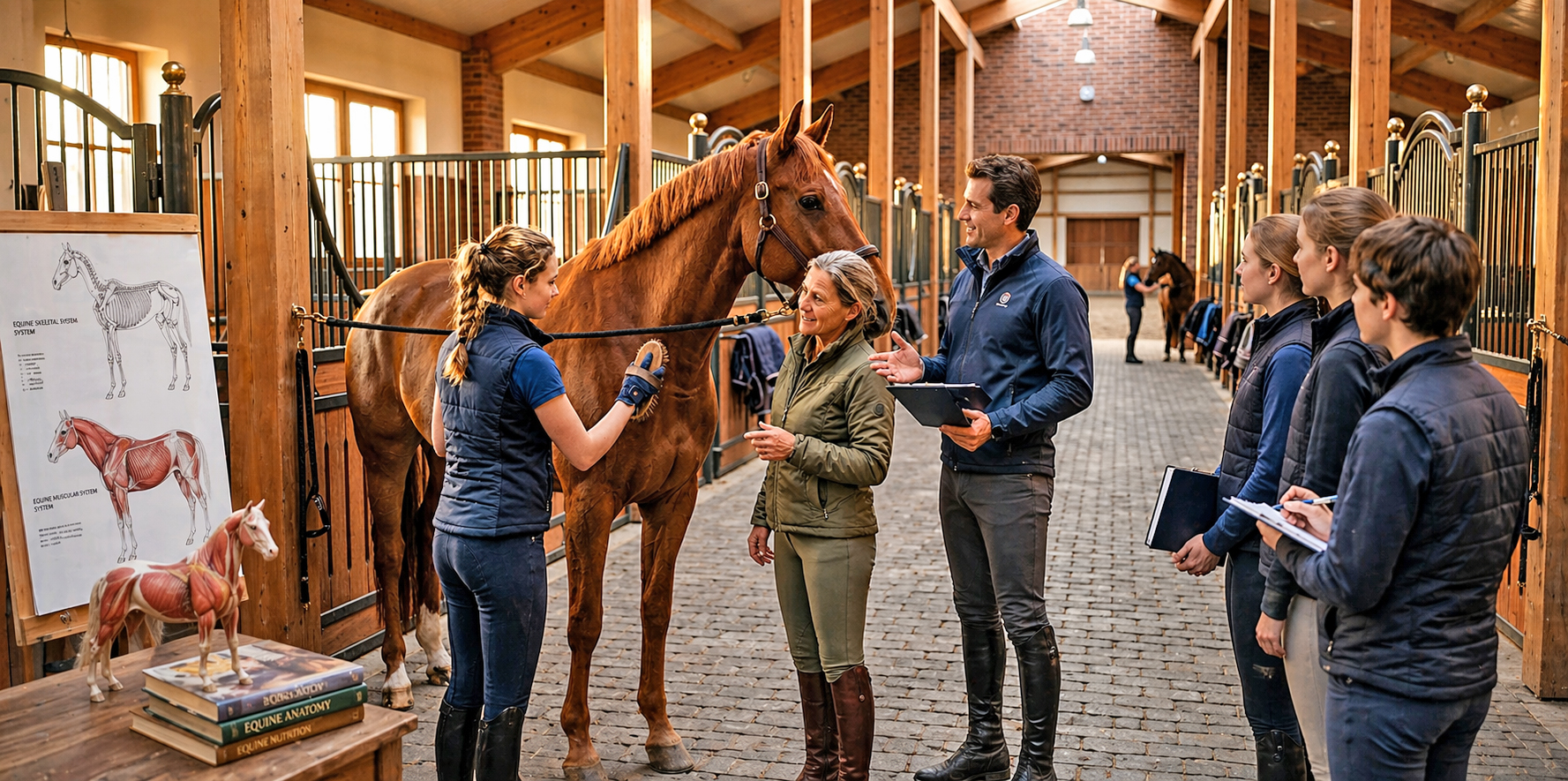
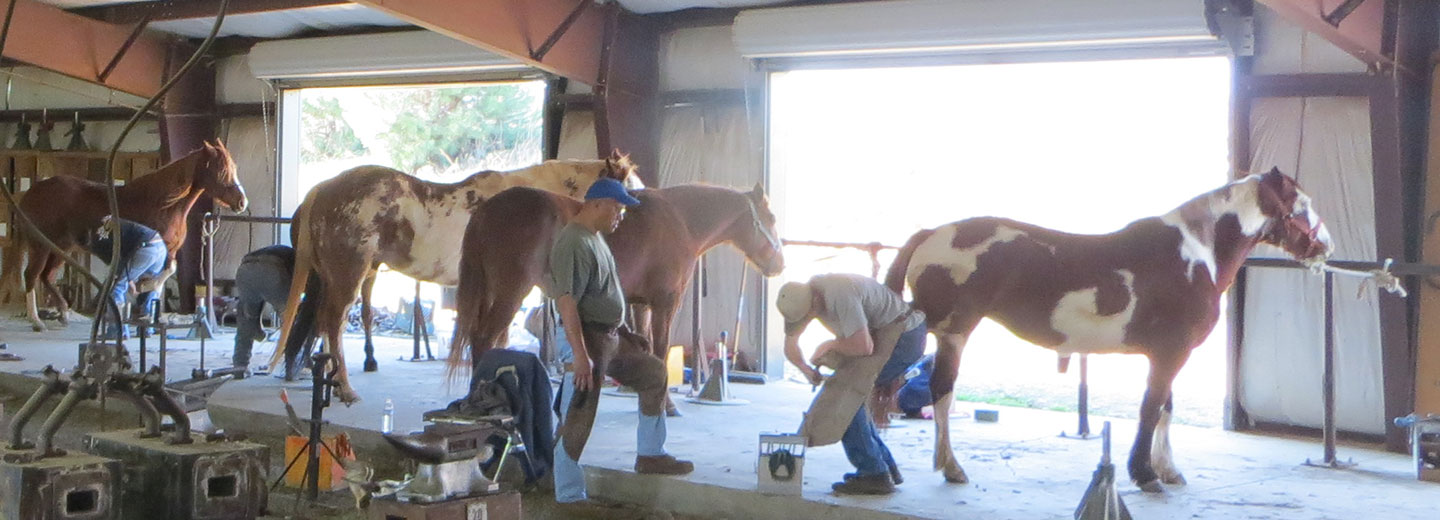
Pchs is an eight-week intensive that blends classroom theory, forge work, and hands-on shoeing of live horses. The curriculum is deliberately progressive: each lecture, demonstration, and shoeing is designed to build on the one before, so students move from anatomy and hoof balance to tool handling, forge fire, shoe shaping, and finished shoeing on real horses. Smith teaches discipline-specific approaches drawn from his own practice rather than generic technique, and the program he wrote serves as the official Foundation Credential of the International Association of Professional Farriers.
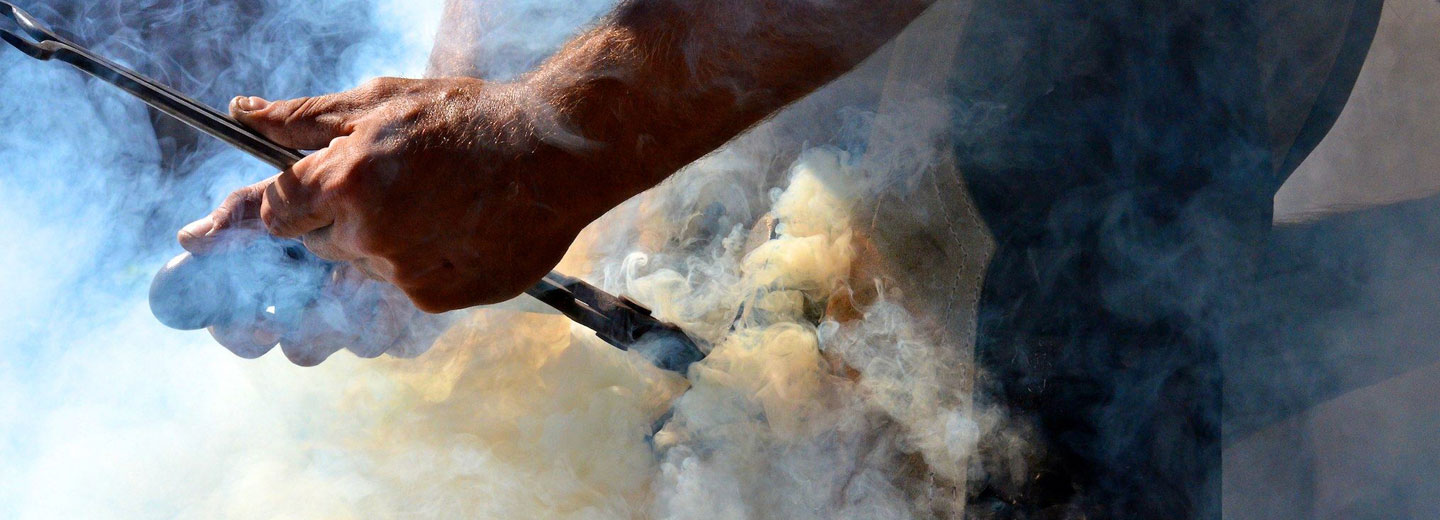
The Pchs curriculum is the official Iapf Foundation Credential, and the school is the sole California educational partner for the International Association of Professional Farriers. Pchs was the first school accredited by the American Association of Professional Farriers, the Canadian Association of Professional Farriers, and the Iapf. Every student receives Iapf membership upon enrollment, putting them inside the professional community before they graduate.
The purpose-built forge gives each student an individual station with its own anvil, forge, and tools, and it stays open from 7am to 8pm daily for extra practice. A climate-controlled classroom with modern audiovisual equipment supports the lectures, and a 24/7 video and book library lets students review techniques on their own schedule. On-campus dormitories add roughly 1,500 sq ft of common space with a kitchen, cable TV, a pool table, Wi-Fi, and central heat and air. The campus sits in Plymouth, Amador County, about 30 minutes from Sacramento and 75 miles from Lake Tahoe.
Per Kentucky Horseshoeing School: Mitch Taylor is a Certified Journeyman Farrier in the American Farrier's Association (AFA) and directs all instruction at KHS. Per the school: "Recognized throughout the farrier industry as a top clinician and educator."
Mitch's farrier-community credentials:
Per Kentucky Horseshoeing School: YES on both counts.
Accreditation: KHS is Nationally Accredited by the ACCSC (Accrediting Commission of Career Schools and Colleges). Per the school: ACCSC is committed to ensuring the integrity of educational programs as a means of serving the public interest and public accountability.
Federal Financial Aid programs available:
Per the school: applicants in need should apply for financial assistance at the same time they apply for admission. The Financial Aid Administrator assists with completing and submitting forms. "Please remember that loans must be repaid and should not be considered entitlements." A wide variety of scholarship opportunities is also available with different criteria.
Per Kentucky Horseshoeing School: the custom-designed 23,000 square foot facility includes:
Work areas equipped with:
Per the school: beginning and advanced forging classes / continuing education clinics are held in separate shops for further efficiency and ease of learning.
Per Kentucky Horseshoeing School: new modular housing options on the Richmond campus with options for both male and female students. A senior staff member resides on the KHS campus to supervise residential students.
Meals:
A lounge with TV, VCR, and a library of educational videos is available for student use.
Per Kentucky Horseshoeing School:
Per Kentucky Horseshoeing School, instruction is well-rounded with skills acquired through:
Curriculum emphasizes mastery of fundamental skills + balanced shoeing. Topics covered:
Per the school: shop and forge area, along with the video library, are open seven days a week — students are encouraged to further their skills on their own time.
Per Kentucky Horseshoeing School: located in the midst of Kentucky's fabled Bluegrass Region — the "horse capital of the world" — with more thoroughbred farms concentrated than anywhere in the world. Students get the opportunity to work on a variety of horse types and breeds, and may meet noted veterinarians, farriers, and equine experts who visit as guest lecturers.
Less than an hour's drive away:
Per Kentucky Horseshoeing School: KHS has been operating since 1973. Per the school posture: "Our small classes, high standards, and attention to detail has no equal. Since 1973, these are the elements that combine to make Kentucky Horseshoeing School the best choice for your farrier education."
To apply or learn more: (859) 575-4063, email [email protected]. Address: 3612 Lexington Road, Richmond, Kentucky 40475. Pricing varies by program length and financial aid eligibility; pricing as quoted is subject to change due to economic factors — confirm current tuition, dates, and financial-aid eligibility with KHS directly when applying.
The school is located at 3612 Lexington Road, Richmond, Kentucky 40475, in the heart of the Bluegrass region. The campus sits on 40 acres of rolling pasture and includes about 23,000 square feet of classrooms, forge shops, and instructional areas. On-campus dormitories let students live where they train.
You can reach KHS by phone at (859) 575-4063 or (859) 575-4068, or by email at [email protected]. The school also has a contact page and admissions team at khs.edu for catalog requests and campus tours. Admissions inquiries can be directed to [email protected].
Yes. KHS is Nationally Accredited by the Accrediting Commission of Career Schools and Colleges (ACCSC), a recognized accrediting agency. That accreditation is what allows the school to participate in federal financial aid programs. It also reflects a long-standing reputation as one of the premier farrier schools in North America.
Yes, KHS is an approved provider of federal financial aid for students who qualify. Students complete the Free Application for Federal Student Aid (FAFSA) at studentaid.gov using the school code 001602. Available aid can include Pell Grants, the Federal Supplemental Educational Opportunity Grant (FSEOG), and Federal Work Study (FWS).
KHS offers a Twenty-Four-Week Intermediate Farrier Course and a Thirty-Six Week Career Track Course, with a 48-week program announced as coming soon. Beyond the core courses, the school provides farrier apprenticeship placement, business education, and individual coaching through specialty courses. Each path is built around the Farrier Science curriculum.
The two primary programs run 24 weeks and 36 weeks, with a longer 48-week course on the way. Full-time enrollment is structured around 40 clock hours of instruction per week. The longer Career Track course gives students more time to build forge skills and refine technique before graduation.
The Twenty-Four-Week Intermediate Farrier Course is $21,000 in tuition plus a $2,000 lab fee, for a total of $23,000. The Thirty-Six Week Career Track Course is $30,000 in tuition plus a $3,000 lab fee, for a total of $33,000. The school notes that tuition prices are subject to change and cannot be guaranteed for unpaid tuition.
Students study anatomy, physiology, biomechanics, and equine locomotion in the classroom, then apply it through trimming, shoeing, shoe fabrication, forging, and welding. The curriculum also covers professionalism and business management so graduates can run a successful practice. The goal is to produce the very best entry-level farriers in the country.
Yes. Two days each week, students go out to trim the hooves of pasture horses that do not wear shoes, building hands-on experience on live animals. This is combined with extensive forge work and classroom lectures throughout the program. The mix of theory and real footcare reps is central to the KHS approach.
Mitchell L. Taylor, MS, CJF, AWCF, APF, is the Director of Education at KHS and directs all instruction. He has been an American Farrier's Association Certified Journeyman Farrier since 1982 and has over 40 years in the trade. His honors include three AFA "Educator of the Year" awards (2007, 2011, 2022), the 2012 AFA Clinician of the Year, and induction into the International Horseshoeing Hall of Fame in 2015.
Alongside Director Mitch Taylor, the faculty includes CJF Farrier Instructor Nate Smith and Certified Farrier instructors Javier Jimenez, Carter Warncke, and Bree Price. Adjunct faculty bring additional expertise, including Wayne Hipsley in animal welfare and safety and Robert Coleman, PhD, of the University of Kentucky in equine nutrition and horse management. Campus Director Ted Herr also assists with student placement.
Yes. The school has dedicated programs for the Montgomery GI Bill (Active Duty) and the Post-9/11 GI Bill, as well as Veterans Readiness and Employment (VA Vocational Rehabilitation). Veterans and eligible dependents should contact the school to confirm how their benefits apply. KHS works with students individually to package their available aid.
Yes. KHS points students toward several external scholarship opportunities, including the Jamieson Albright Farrier Scholarship, the Race For Education Scholarship, the Mike Rowe Works Ethics Scholarship, and the Imagine America High School Scholarship. The Imagine America award generally requires a GPA of at least 2.5, demonstrated financial need, and community service. The school's financial aid office can help identify which options fit your situation.
Yes, KHS offers modern on-campus dormitories so out-of-town students can live where they train. Dormitory options and pricing are not posted online, so the school asks prospective students to contact KHS directly for current details. Living on the 40-acre campus keeps students close to the forge shops and pasture work.
New classes begin on rolling start dates throughout the year, so the best step is to contact admissions early to confirm the next opening. You can call (859) 575-4063 or (859) 575-4068, email [email protected], or request the current catalog through khs.edu. Because class sizes are kept small, seats can fill quickly, so applying ahead of your target start date is recommended.
Explore more from the InfoHorse.com directory


Explore expert guides on topics related to your business
By Ann Pruitt
By Doug Butler
By Ann Pruitt
By Bob Pruitt
By Bob Pruitt
By Bob Pruitt