
Farrier Costs Explained: Trims, Shoes & How Often
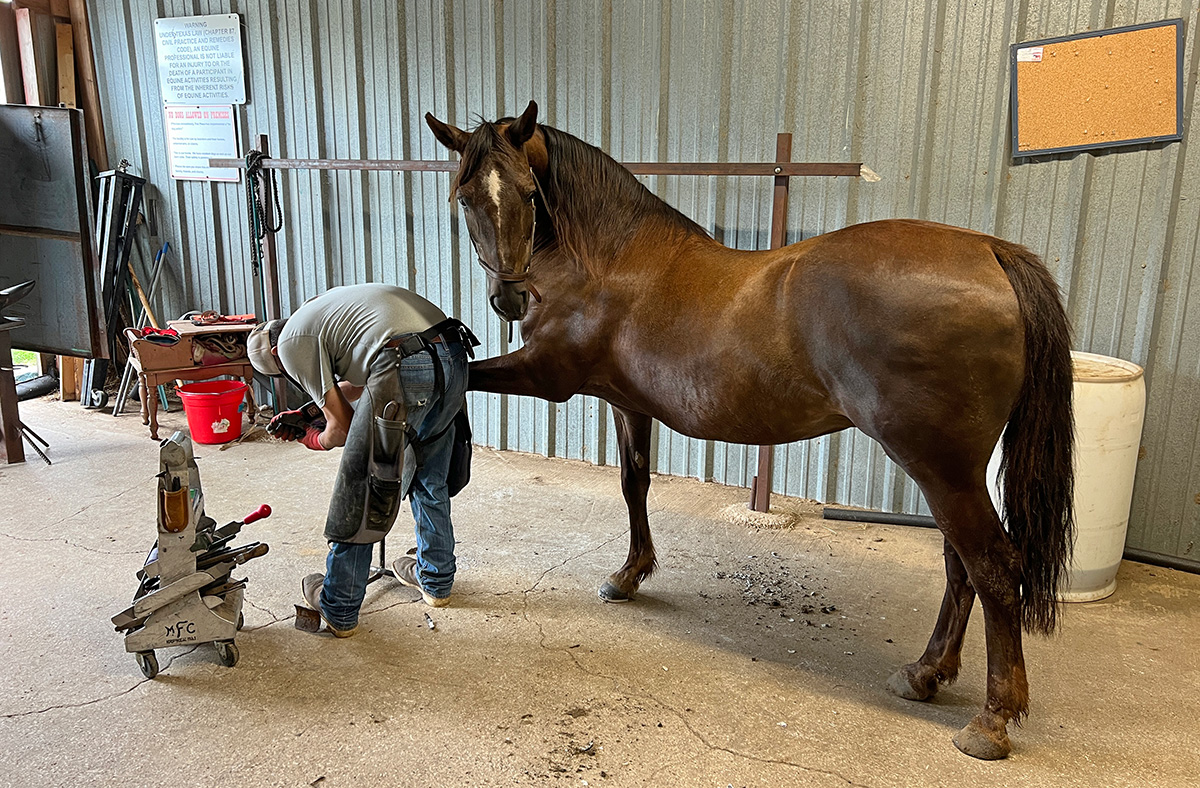
Why your farrier might be the most important decision you make for your horse.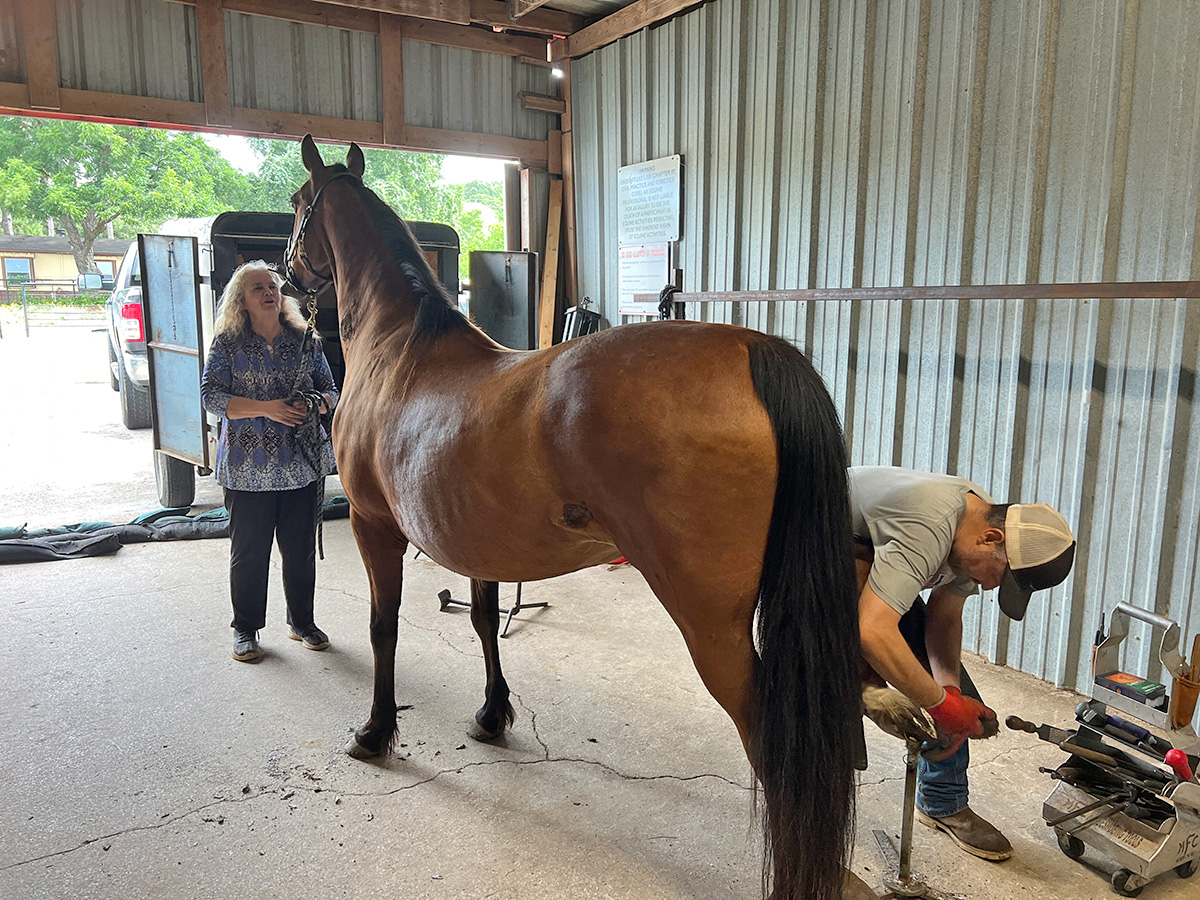
By Bob Pruitt
Updated June 25, 2026
Written from 50+ years of horse ownership and a lifetime of standing beside good farriers and watching them work.
The short answer is this: in 2026, a basic trim usually runs about $35 to $75, and a full set of four shoes usually runs about $120 to $190 at the national median — more in cities, show country, and high-cost areas. Most horses need the farrier every 6 to 8 weeks. Therapeutic shoeing for a problem hoof can run $175 to $350 or more. Over a year, a shod horse can easily average somewhere around $800 to $1,700 in farrier work.
But the price tag is the least important thing about your farrier.
There is an old saying every horseman knows: no hoof, no horse. It is old because it is true. You can have the best-bred, best-trained, biggest-hearted horse in the county, and if his feet go bad, none of it matters. He will not be sound enough to use, and worse than that, he will hurt.
The man or woman who keeps those feet right is your farrier. Choosing the wrong one to save a few dollars is one of the most expensive mistakes a horse owner can make.
So let’s talk about what farriers cost. Then let’s talk about the thing that matters a great deal more: how to find a good one.
What a farrier costs in 2026
 Farrier work generally falls into three buckets: trimming, shoeing, and therapeutic work. The price climbs with each one.
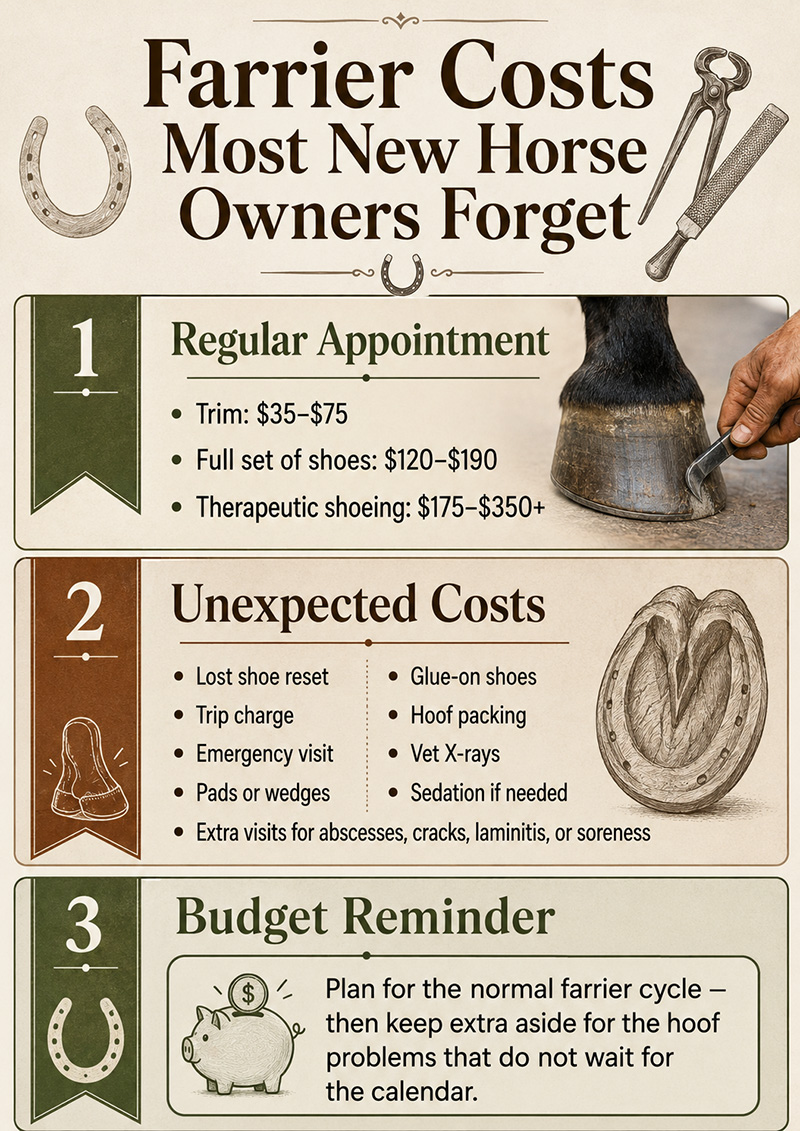
A basic barefoot trim usually runs $35 to $75. That includes filing, shaping, and balancing the hoof without adding shoes.
A full set of four shoes usually runs $120 to $190 at the national median. That means the horse is trimmed and fitted with four steel keg shoes.
A reset, where the farrier pulls the existing shoes, trims the feet, and resets shoes that are still in good condition, often runs $95 to $160.
Shoes with pads can run $160 to $250 or more, depending on the horse, the materials used, and the reason the pads are needed.
Therapeutic or corrective shoeing can run $175 to $350 or more per visit. That includes specialty work for horses dealing with laminitis, navicular issues, white line disease, hoof imbalance, or other soundness problems.
Geography moves these numbers more than most people expect. In a high-cost area, a city, or hunter/jumper show country, a full set of shoes can run $250 to $450. The same therapeutic case that might cost $200 in rural country can cost double that in places like south Florida, California, or other expensive horse regions.
At a normal 6-to-8-week cycle, a shod horse can run roughly $800 to $1,700 a year in farrier costs. A barefoot horse will usually cost considerably less, assuming the feet stay healthy and balanced.
How often does a horse need the farrier?
Here is a number to write on the barn wall:
Every 6 to 8 weeks.
Hooves grow whether you are paying attention or not, like fingernails that never stop. A shod horse usually needs the farrier on the shorter end — often every 5 to 7 weeks — because the shoes wear, loosen, and the hoof grows out from under them.
A barefoot horse can sometimes stretch closer to 8 weeks, and some horses may go a little longer under the right conditions. But that decision should be made by a good farrier, not by a horse owner trying to save money.
Young horses, horses with hoof problems, heavy horses, older horses, and hard-working show horses often need to be seen more often.
Whatever you do, do not stretch the cycle just to save money. A hoof left too long gets out of balance. Shoes loosen and twist. Cracks and chips start. Tendons, joints, and ligaments begin compensating for feet that are no longer carrying the horse correctly.
The dollars you “save” by skipping a cycle can come back as a vet bill. Every time.
The cheapest farrier in the county is often the most expensive one you will ever hire. You do not save money on feet. You only postpone what you may have to pay the vet.
The most important thing in this whole article: how to find a good farrier
Now we get to the part that matters more than any price in the table above.
A great farrier can help keep your horse sound for years. A poor one can lame a good horse and cost you a fortune trying to undo the damage.
So how do you find the right one?
I will tell you exactly how I do it, and I have never found a better way.
I ask the veterinarians.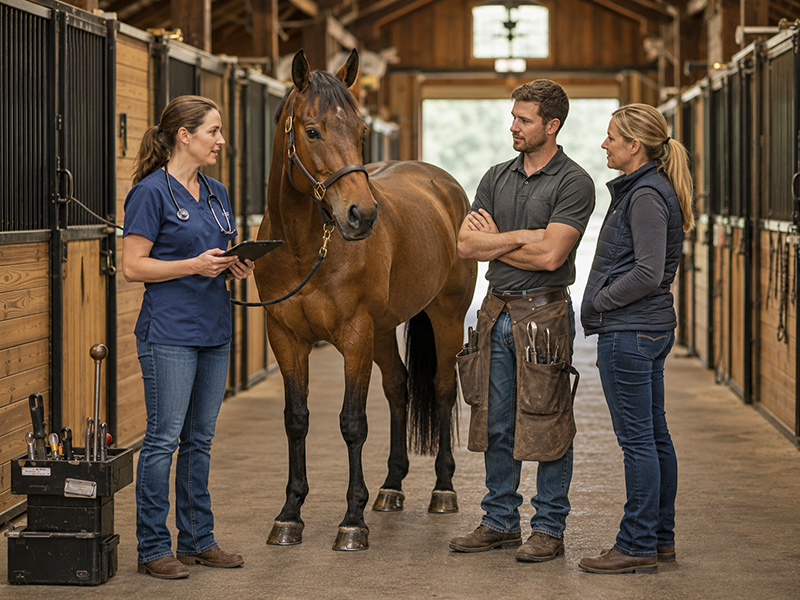
When a horse has a serious foot problem — a bad founder case, a navicular horse, a hoof that has gone wrong — the veterinarian has to work with a farrier. So I ask the vet straight out:
“When something goes wrong, who do you call?”
Then I ask another vet the same question.
Then I ask another.
When two or three veterinarians give me the same name, that is my horse’s farrier.
That is the whole secret.
The farrier the vets trust with the wrecks is the farrier I want working on my sound horse, keeping him sound.
Notice what that method is not. It is not looking for the cheapest name in the classifieds. It is not picking the person everyone at the boarding barn happens to use. It is not choosing the farrier who can come tomorrow just because he has an opening.
Veterinarians are not usually recommending the cheapest farrier. They are recommending the one whose work holds up when it matters most.
That is the farrier I want, and he is worth every dollar he charges.
Let me tell you how I learned this the hard way
I do not tell this story because I am proud of it.
I tell it because it cost my horse, and maybe it will save yours.
When I lived in Florida, I had a fantastic farrier. He was an older man, many years under horses, and he took beautiful care of Dream — my big Quarter Horse and Percheron cross. Dream was my heart horse. I had him for his whole life.
That farrier was veterinarian-referred. It was the right way to choose a farrier — the way I just told you to do it.
Then Covid came, and in the chaos of that time I moved to Texas to be near family. I found a stable that was acceptable, mostly because it was close to my house. And “close to the house” is how a lot of bad decisions start.
There was a boarder there who used a certain farrier, and I listened to that boarder instead of doing what I already knew to do. I let convenience replace judgment. I used that farrier to trim and shoe Dream.
He always told me Dream’s feet looked great. He always said Dream was doing fine.
The ground at that stable was rocky, and Dream was a big, heavy horse, so the farrier put leather pads under his shoes. At the time, that sounded reasonable.
But here is what that leather pad really did: it covered Dream’s feet so completely that I could not see them anymore. I could not see what was happening underneath. I trusted the reports instead of my own eyes.
By the time I noticed Dream was slightly off — his head bobbing a little more than usual when he walked — the trouble was already done.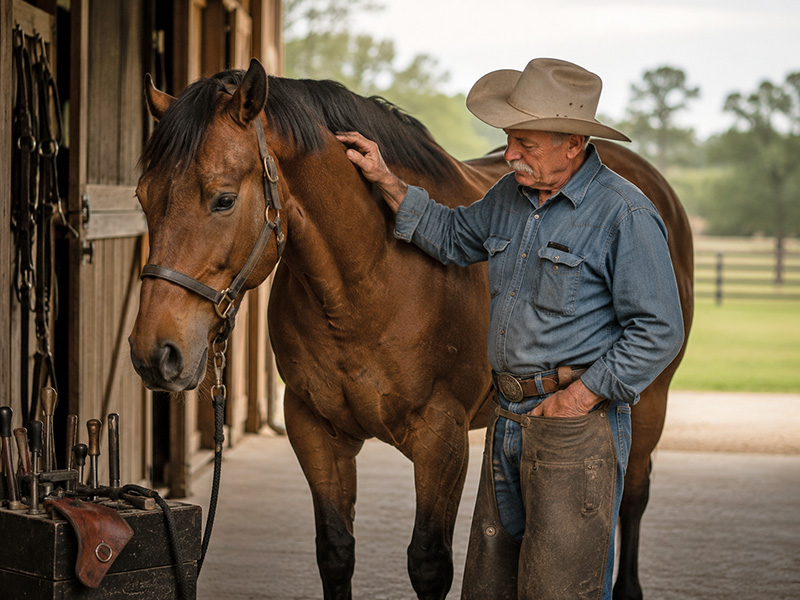
I called the vet. I called the farrier my wife was using for Sugar, our Morgan mare. The right people.
Just later than they should have been.
Here is the lesson I would press into the hand of every horse owner reading this:
I knew the right way, and I did not do it.
I let convenience and a friendly boarder’s recommendation stand in for a veterinarian referral and my own two eyes.
Do not ever let anything — a pad, a smooth report, a short drive, a cheap price, or a convenient appointment — come between you and actually seeing your horse’s feet.
You are the one responsible.
Use the veterinarians to find your farrier. Then keep your own eyes on those feet anyway.
A good farrier will welcome it.
The horse cannot tell you something is wrong until it already is.
Good hoof care does not end when the farrier drives away
What happens between farrier visits matters too.
A farrier can trim and balance the foot, but you still have to manage the horse between visits. That means watching for chips, cracks, heat, tenderness, thrush, loose shoes, changes in gait, or any sign that your horse is moving differently.
Pick up the feet regularly. Look at them. Smell them. Learn what is normal for your horse.
If your horse has shoes and pads, pay even closer attention. Pads can be useful and necessary, but they can also hide what is happening underneath. If a horse with pads starts moving differently, do not ignore it.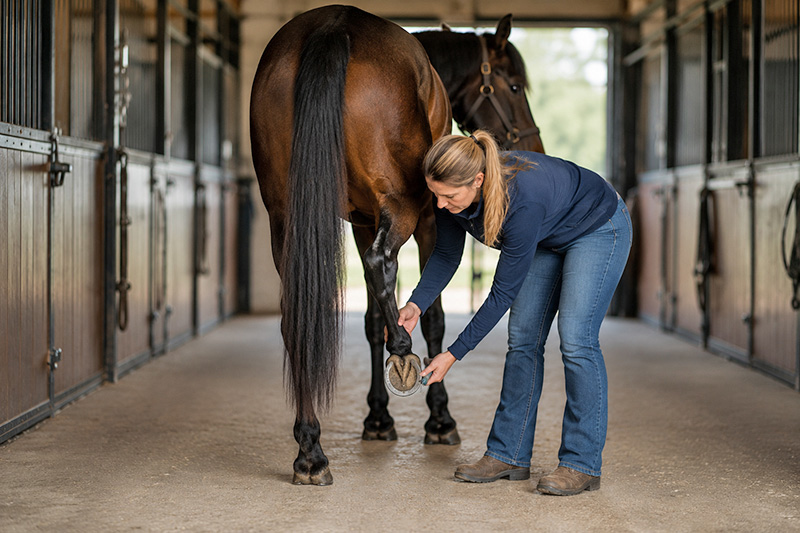
Good hoof dressing, clean footing, dry places to stand, proper nutrition, and a regular farrier schedule all matter. Hoof care is not one appointment every six weeks. It is a habit.
Qualifications and experience — what to actually look for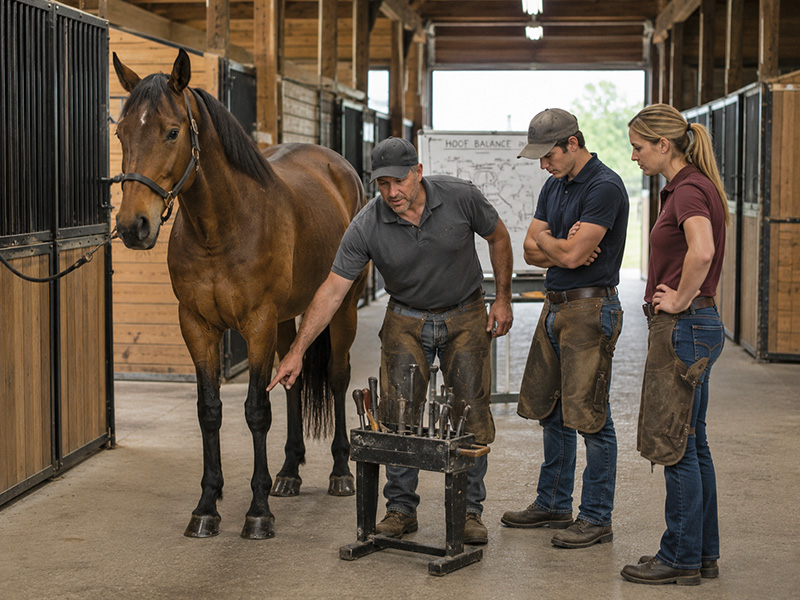
Beyond the veterinarian referral, a few things tell you that you are dealing with a professional.
Certification is one. The American Farrier’s Association certifies farriers at levels such as Intern, Certified Farrier, and Journeyman. Certification is not the only mark of a good farrier. Plenty of excellent old hands are not certified. But it is a verifiable credential you can ask about.
The International Association of Professional Farriers
Experience matters too. A farrier with decades under horses has seen things a younger farrier may not have seen yet. That kind of practical knowledge often shows in the work.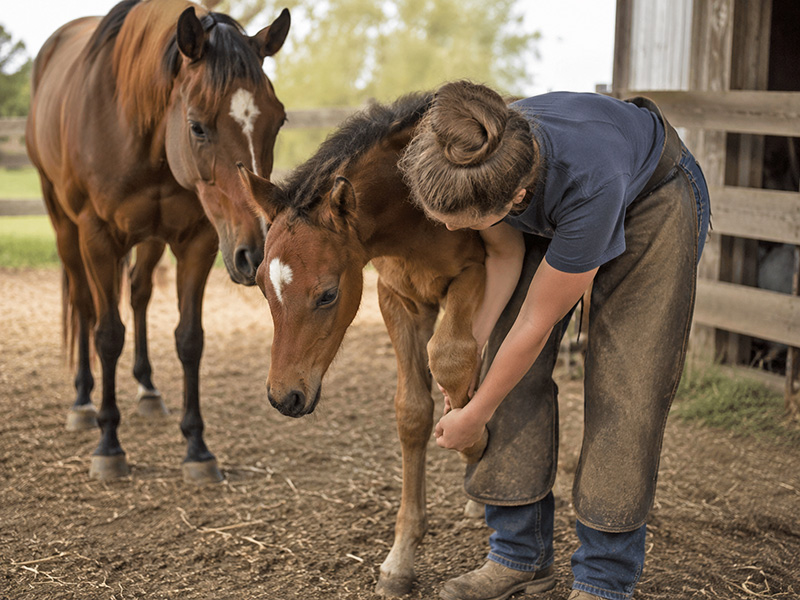
But do not just look at credentials. Watch how the farrier handles the horse.
A good farrier is calm. Patient. Firm when necessary, but not rough. He reads the horse. He knows when a horse is scared, sore, untrained, tired, or just being difficult.
The horse tells you a lot about the person holding the foot.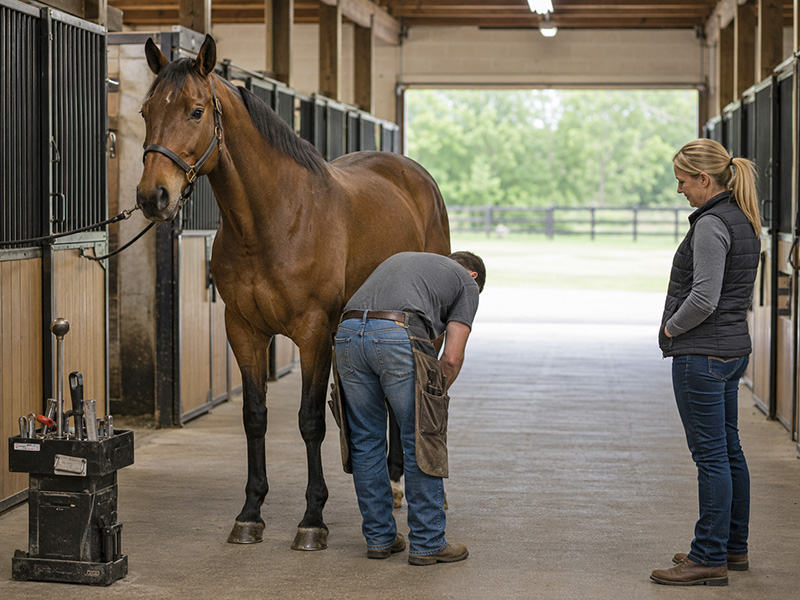
One more thing worth saying plainly: if a farrier’s price comes in 40% below everyone else in your area, do not celebrate. Ask why.
Real skill, real materials, good tools, travel time, and the patience to do the job right all cost money.
A bargain that seems too good usually is.
Trims, shoes, or barefoot?
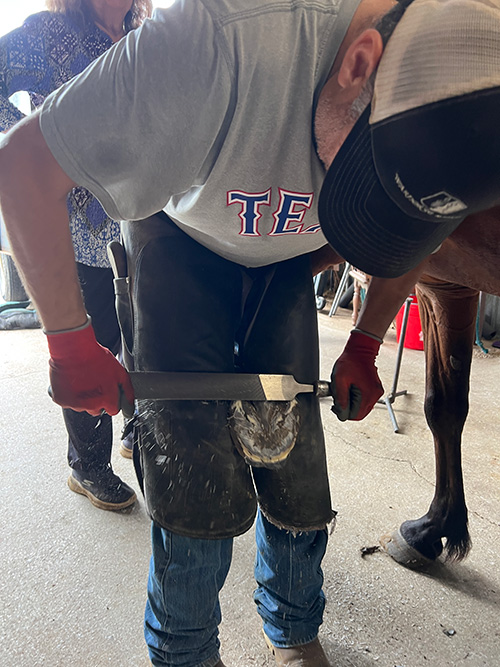 Whether your horse needs shoes depends on the horse and the work.
Many horses do beautifully barefoot. For the right horse, barefoot can be healthier for the hoof and easier on the wallet. A horse with good feet, good footing, and moderate work may never need shoes at all.
Other horses need shoes because of the job they do, the ground they work on, the way they wear their feet, or a hoof problem that needs support.
Some horses need front shoes only. Some need a full set. Some need pads. Some need therapeutic work for a season and then can go back to simpler hoof care.
That is a conversation between you, your farrier, and your veterinarian when needed.
Do not shoe a horse that does not need it.
Do not leave a horse barefoot that does need help.
That judgment is exactly the kind of thing a good farrier earns his fee making.
Farrier costs most new horse owners forget
New horse owners often budget for hay, grain, board, and maybe the vet. But farrier costs are just as regular as feed costs.
If your horse is barefoot and easy to maintain, your farrier bill may be fairly manageable. But if your horse needs shoes, pads, or corrective work, the cost can rise quickly.
You also need to think about emergency visits. A pulled shoe before a show, a hoof crack, a sudden lameness issue, or a shoe twisted sideways in the pasture can mean an extra farrier call between scheduled visits.
There can also be additional charges for travel, difficult horses, draft horses, corrective work, specialty shoes, pads, pour-in materials, or coordination with a veterinarian.
This is why it is wise to keep a little farrier money set aside, even if your horse is normally simple to maintain.
The farrier is not an optional expense. He is part of keeping the horse sound.
When to call the farrier before the next visit
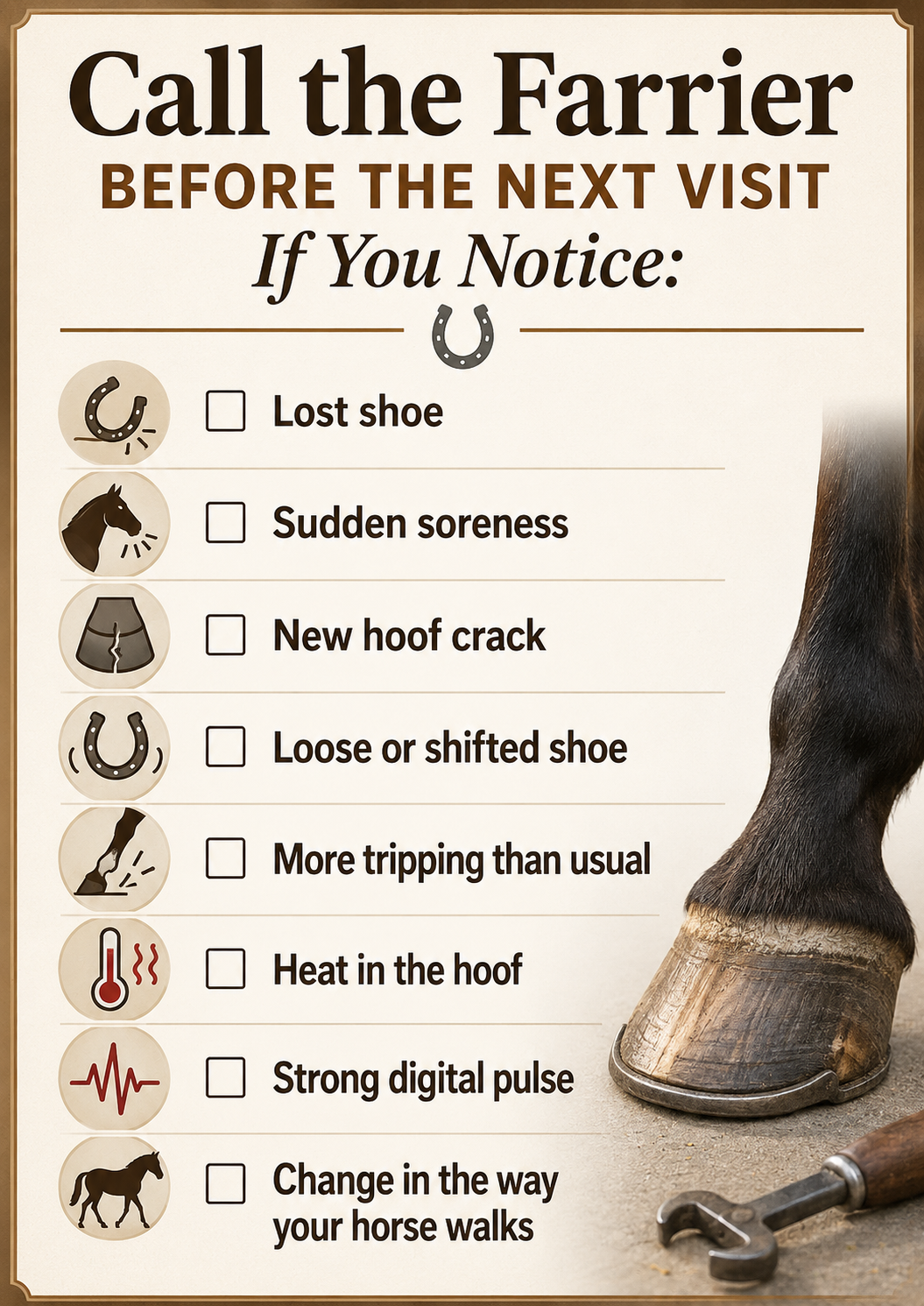 Do not wait for the next scheduled appointment if something looks wrong.
And if your horse seems truly lame, call your veterinarian too. Farriers and veterinarians should not be treated as separate worlds. The best hoof care often happens when the two work together.
Young horses need farrier care too
Foals and young horses should learn early that having their feet handled is normal.
A young horse does not need to be frightened, fought, or forced into a bad experience. He needs patient, steady handling and a good farrier who understands young horses.
The early farrier experiences matter. A horse that learns to quietly pick up his feet is safer for everyone for the rest of his life.
Sometimes a calm, patient farrier — man or woman — can make all the difference with a young horse. The goal is not just to trim the feet. The goal is to teach the horse that farrier work is part of life.
Do not wait until the feet are badly overgrown before introducing a young horse to the farrier. By then, the job is harder, the horse may be less prepared, and the first experience may be more stressful than it needed to be.
Good hoof care starts early.
Final thoughts
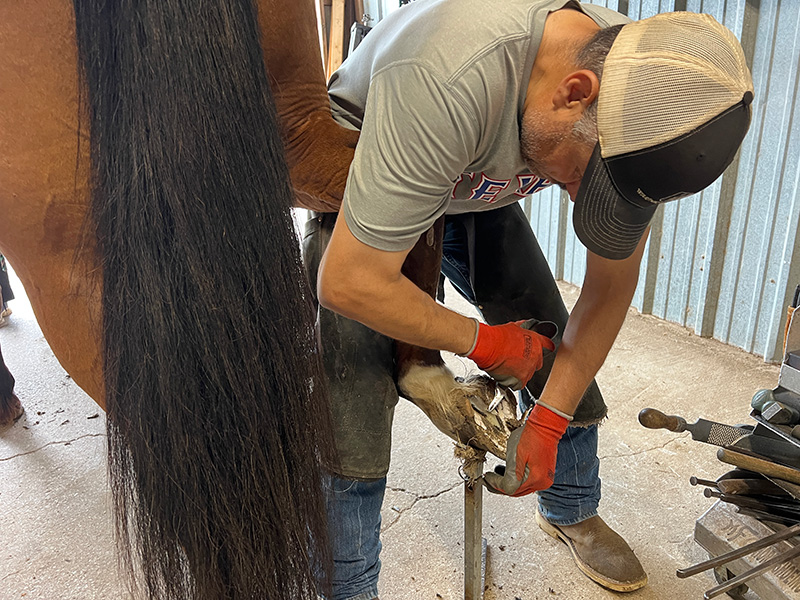 Farrier work is not the place to look for the cheapest answer.
A good farrier keeps your horse balanced, comfortable, and useful. A poor farrier can create problems that take months, or even years, to fix.
So yes, know the prices. Budget for them. Understand what trims, shoes, pads, resets, and therapeutic work can cost.
But do not make the price the main thing.
The main thing is this:
Find the farrier the veterinarians trust. Stay on a regular schedule. Watch your horse. Look at the feet yourself. And never forget that every ride, every job, every show, every trail mile, and every quiet day in the pasture starts at the ground.
No hoof, no horse.
And no good horse owner ever forgets it.
Key Takeaways
A basic trim usually runs $35 to $75, while a full set of shoes usually runs $120 to $190 at the 2026 national median.
Most horses need farrier care every 6 to 8 weeks, with shod horses often needing a shorter cycle.
Therapeutic or corrective shoeing can run $175 to $350 or more per visit.
Do not stretch the farrier cycle just to save money. Hoof problems can become much more expensive than the visit you skipped.
The best way to find a good farrier is to ask several veterinarians who they call when a serious hoof problem happens.
The cheapest farrier is rarely the best value. A very low price should make you ask questions.
Keep your own eyes on your horse’s feet, especially if shoes and pads are hiding the sole.
Good hoof care is a partnership between the horse owner, the farrier, and sometimes the veterinarian.
Frequently Asked Questions
How much does a farrier cost in 2026?
A basic barefoot trim usually costs about $35 to $75, and a full set of four steel shoes usually costs about $120 to $190 at the national median. Costs are often higher in cities, show areas, and high-cost regions. Therapeutic or corrective shoeing can run $175 to $350 or more per visit.
How often should a horse see the farrier?
Most horses need the farrier every 6 to 8 weeks. Shod horses are usually on the shorter end, often every 5 to 7 weeks, while some barefoot horses can go closer to 8 weeks. Young horses, show horses, older horses, and horses with hoof problems may need more frequent care.
How do I find a good farrier?
Ask several veterinarians who they call when a horse has a serious hoof problem. When two or three veterinarians name the same farrier, that is a strong recommendation. The farrier vets trust with difficult cases is the kind of farrier you want keeping your sound horse sound.
Is the cheapest farrier a good deal?
Usually not. Poor hoof care can create problems that cost far more to fix than the money saved on a cheaper visit. A farrier whose price is far below the local market may be inexperienced, rushed, or cutting corners. Good hoof care is worth paying for.
How much does it cost to keep a horse in shoes for a year?
A fully shod horse can average roughly $800 to $1,700 a year in farrier costs on a normal 6-to-8-week cycle. Costs may be higher if the horse needs pads, specialty shoes, therapeutic work, or more frequent visits.
What does AFA certification mean for a farrier?
The American Farrier’s Association certifies farriers at different levels, including Intern, Certified Farrier, and Journeyman. Certification can show a baseline of training and skill, though many excellent farriers are not certified. It is one helpful thing to ask about, but it should not replace veterinarian referrals and careful observation.
Can pads under a horse’s shoes hide hoof problems?
Yes. Pads can be useful, but they can also hide what is happening underneath the foot. If a horse with pads starts moving differently, becomes tender, or shows a change in gait, do not ignore it. Call your farrier and, if needed, your veterinarian.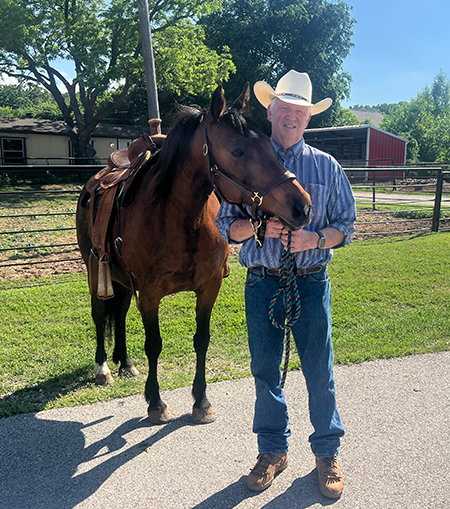
What Does Hay Cost? Feeding Horses at Today's Prices
How Much Does a Horse Cost?
How Much Does Horse Boarding Cost?
The Hidden Cost of Horse Ownership
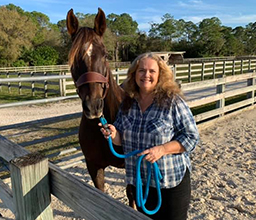
Bob Pruitt with his Morgan Horse Zoey