

Farrier Training , the Shoe Gal Kate M. Flynn goes to Pacific Coast Horseshoeing School
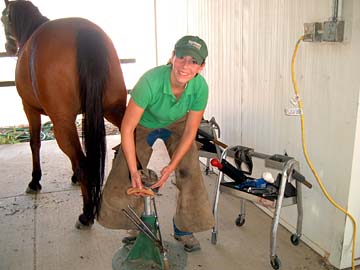
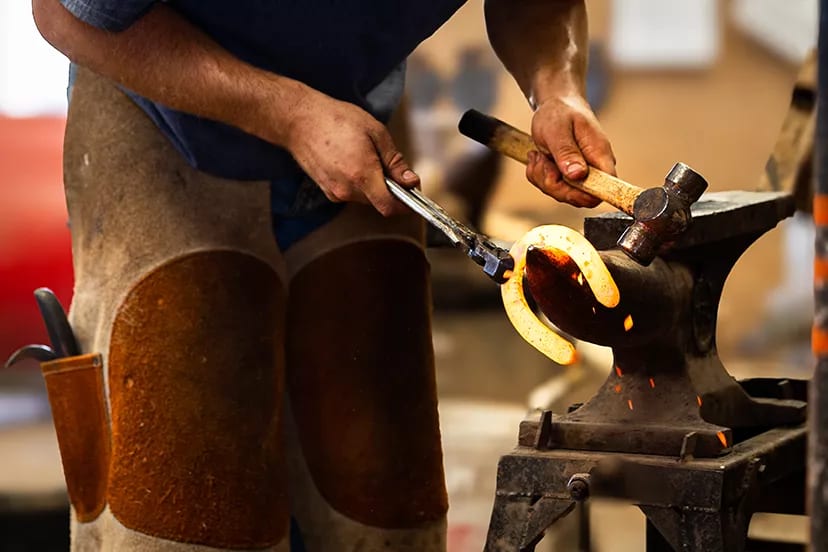
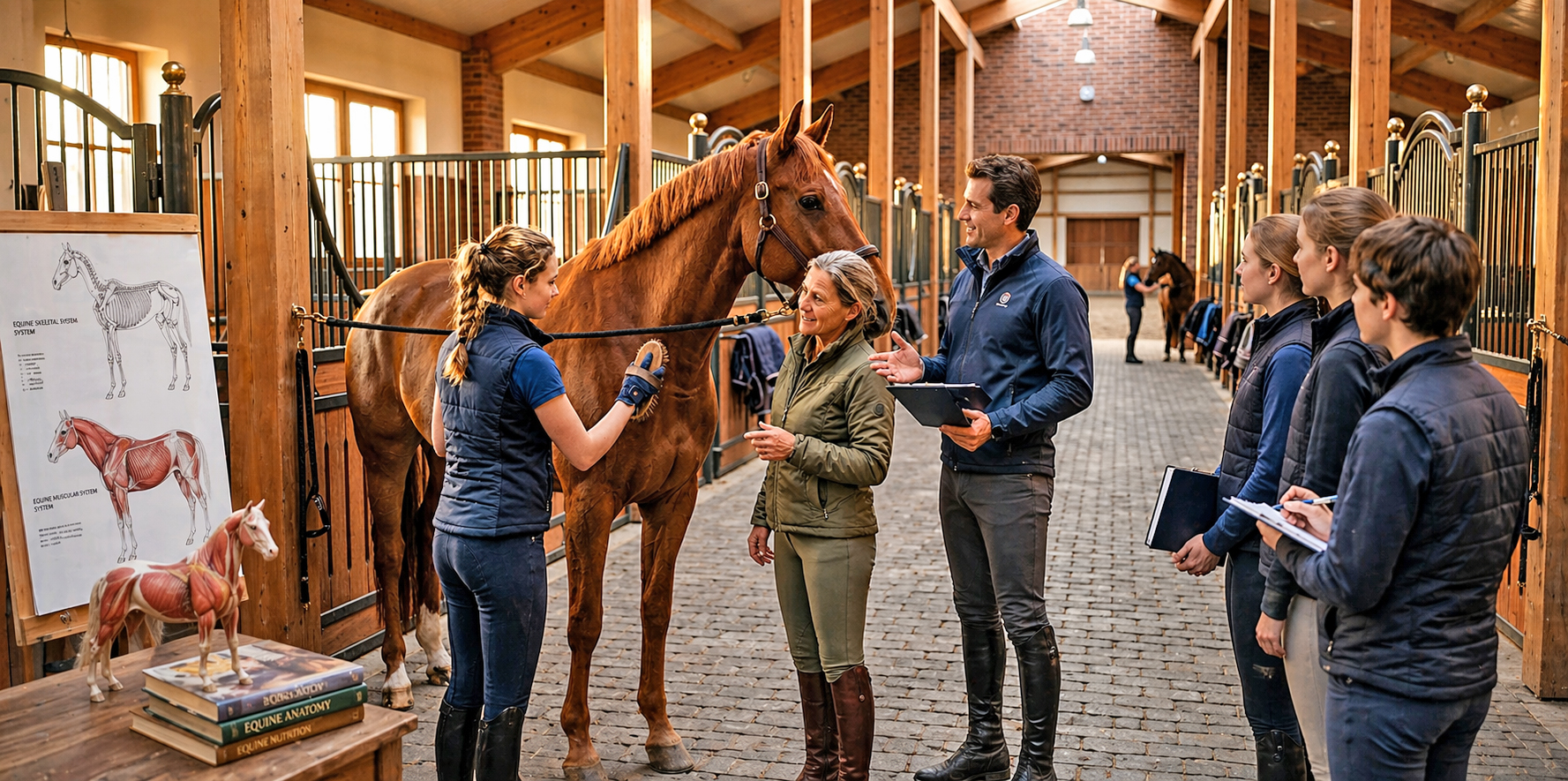
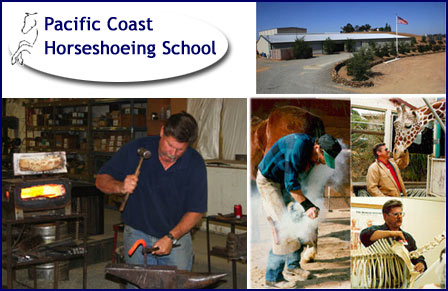
Horseshoeing school pairs hands-on forge work—learning to shape keg and handmade shoes to fit a horse’s foot—with shoeing practicals and classroom study on subjects ranging from anatomy to bookkeeping. At Pacific Coast Horseshoeing School in Sacramento, students also learn horsemanship, pride in their work, and how to run a business well, because succeeding as a farrier takes much more than knowing how to put shoes on a horse.
Nurse, teacher, or better yet just get married – these were the encouraged career choices for our mothers. Today the sky is the limit for women pursuing careers, selected by their merit and talent instead of sex. With so many options out there, and changing social dynamics, some, like me, dabble in a few things.
I received a bachelors’ degree in International Affairs, studied Italian abroad, and hold a commercial pilot license, yet none seemed to fit quite right. I wanted an interesting, different -every-day career, outdoors, and with independence. Could I find all that and include something that I was deeply missing – horses.
An encounter with a lady farrier, some brief research and I was boldly off to the Pacific Coast Horseshoeing School in Sacramento.
On the second day I was ready to bolt. During our forge work everyone else seemed to be at least making horseshoe shapes, whilst I was barely able to produce an obtuse angle in my piece of steel. “I can’t do this,” I told myself, “I am so far behind everyone else, this is not for me!” That afternoon, cancellation notice in hand, I trotted over to the chief instructor Bob Smith and expressed my intent.
Bob offered no swaying words, nor any reprisal, simply said that the decision was mine. As he spoke, something deep inside told me to settle down, quit my whining, and give this a real go. If I felt the same way at the end of the week, I could still leave but at least would have given it a real try. It turned out that staying was one of the best decisions I’ve ever made.
Like many things in this life, you get what you put into it. OK, so I realized that shoe making and forge work was my weak area. I buckled down and began making shoes, worked after classes on the forge, and sought counsel from my talented classmates. I got better and better each week, even with the additions of new, more complicated shoe assignments. By graduation I was confident in my ability to shape keg and handmade shoes to fit a horse. Naturally the forge work was only one subject among the shoeing practicals, and classroom portion. The work in the classroom, which topics varied from anatomy to bookkeeping, came easier to me. I also realized that although shoe making was important, there was much, much more to being a successful farrier.The Pchs curriculum really impressed me mainly because it did cover so much. How many other schools, trade or university, teach you not only the trade, but go beyond by teaching you how to be successful in your field? We left knowing that horsemanship, pride in your work, and running a business well was just as important as knowing how to put shoes on a horse.
I was fortunate to have been part of such a wonderful group of people: the cohesive, supportive unit the students formed is a time in which I’ll always look back on fondly. I keep in touch with my fellow students, and consider them dear friends. The fine education we received was brought to us by Bob & Chrissy Smith, Chuck Presnail, and John Williams. These talented instructors encouraged us every step of the way, and made it a quality journey with their humor and inspiration. Above all they taught us that you cannot go wrong when you invest in yourself.
Graduation from Pchs was bittersweet. I was eager and excited to start my business, and yet I would miss the people, education and adventures. I can’t believe what I would have missed out on by giving up, and making a fear-based decision. Although it was a bit scary, I’m incredibly thankful that I did take the big jump, and as Bob Smith said, built my wings on the way down.
Kate M. Flynn Flynn’s Farrier Service