

Accident Proof Your Horse Farm
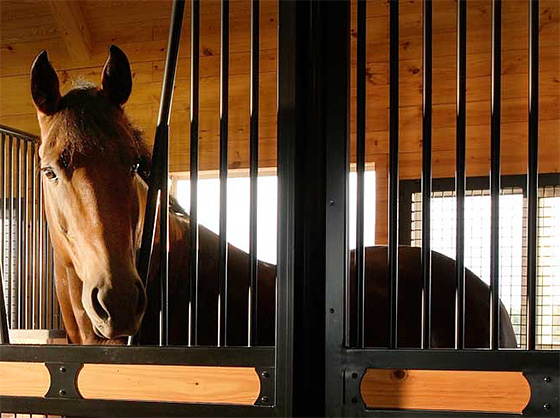
Most accidents on the horse farm can be avoided by making safety your number one priority! by Karen Elizabeth Bari
Most accidents and near misses on a horse farm can be avoided by making safety your number one priority—starting with your own attitude, since the same five hazardous attitudes the airline industry identifies in pilots show up in horse handlers too. On the physical side, declutter the barn aisle, keep aisles 12 feet wide with 48-inch stall doors, install non-slip interlocking rubber mats or pavers, choose stalls of 14-gauge or better steel with welds inside the grille channels, and use full-spectrum barn lighting, since incandescent bulbs are a fire hazard even in a metal cage. Finish with strong, quality fencing, because the question is not if your horse will challenge the fence, but when.
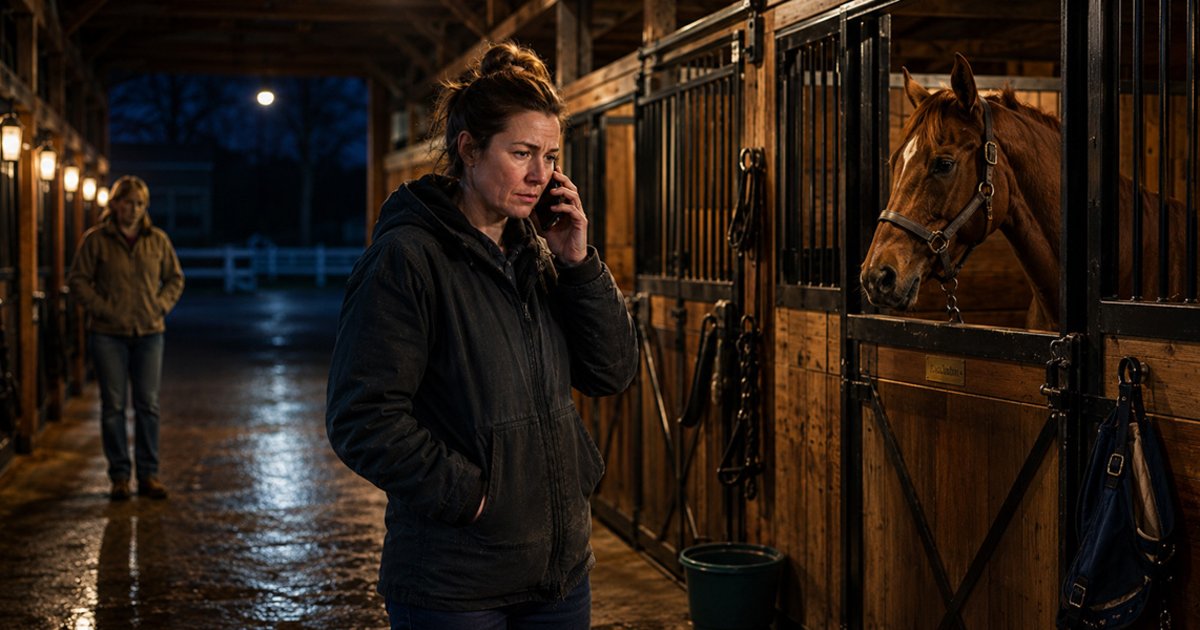
There’s nothing like a phone call that starts with…”Your horses are loose and they’re on my front lawn!” to make a perfectly good day go really, really bad. Loose horses can lead to tragedy as well as an expensive lawsuit. Most accidents and near misses on the farm can be avoided by making safety your number one priority.
Here’s how: Check your attitude. The airline industry defines five hazardous attitudes that can get pilots and their passengers into trouble. These risky attitudes aren’t exclusive to pilots, though. They show up in all sorts of situations, especially when it comes to handling horses. We’ve all met a horse handler with the following risky attitudes. In fact, throughout the years, we may even had one or two of them ourselves. Developing an awareness of what constitutes a risky attitude and knowing how to turn it around will help keep you and those around you safe.
Here are the five most common risky attitudes: Anti-authority attitude: “You can’t tell me what to do.” Replace with: “Rules are in place for a reason. Their purpose is to keep me safe.”
Impulsive: “Just do it. Now!” Replace with: “Let’s take a moment to think it through.”
Invulnerability: “It might have happened to that guy, but it sure won’t happen to me.” Replace with: “That guy probably had the same thought. It can happen to me.”
Resigned attitude: “Oh, what’s the use. I might as well not do anything.” Replace with: “I don’t have to give up. I can ask for help or work to improve my skills.”
Macho Thought: “I can do anything, even if it’s outside of my current skill level.” Replace with: “Why take a chance? Preparation is the key to success.”
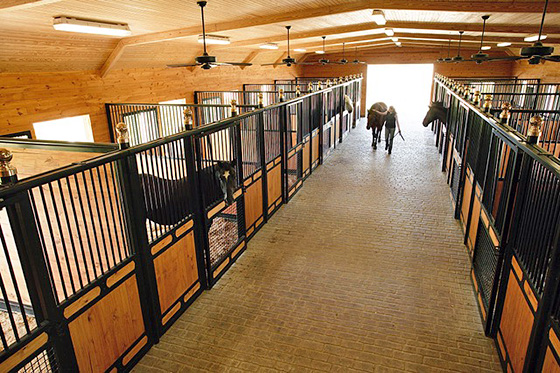
Tweak the physical layout. It would be great to design a facility from the ground up with safety and convenience in mind, but many of us have to work with an existing layout. Even so, there are several improvements you can make to reduce accident risk.
➢Declutter the barn aisle. One of the simplest and cheapest ways to increase safety is to have a place for everything and put everything in its place. This includes loose dogs and rough-housing children.
➢Avoid tight spaces. The standard for barn aisles is 12’ wide. This allows a horse and handler to turn around without bumping into stall doors and handles. Stall door width should be around 48” or 4’, standard throughout the industry. ➢Provide a cross-tie area off the barn aisle. If you lack space and can’t provide an area off the barn aisle be sure all horses are trained to stand on ties and limit distractions. Try not to tie horses at feeding time.
➢Install safe flooring. Concrete and asphalt can be slippery when wet or dry and brushed concrete is very rough on skin if a horse falls. Invest in interlocking mats or interlocking rubber pavers for the barn aisle and wash stall. Rubber pavers are fairly easy to install, offer an anti-fatigue footing, and they’re not slippery even when wet.
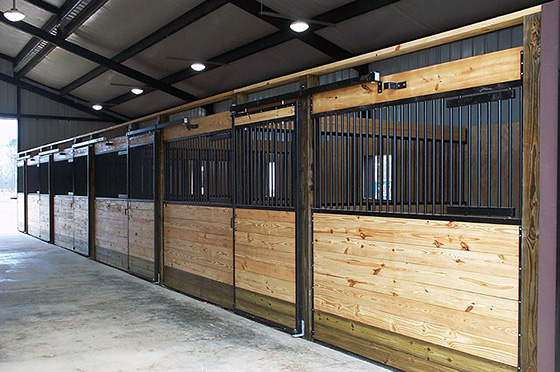
➢Invest in safe stalls. Stalls should be constructed of a 14-gauge or better steel construction for strength and durability. The welding process is critical for safety. Choose stalls with the welds on the inside of the grille channels. It makes for a cleaner look, but it’s also a safer construction. No bumps and lumps to snag a nose or lip.
➢Stall and barn lighting. Invest in full spectrum lighting designed for the agricultural and barn environment. Not only will it save you money in the long run, full-spectrum lighting is safe. Incandescent bulbs are a fire hazard in the barn even if housed in a metal cage. A full spectrum bulb consumes just 36 watts of energy yet produces up to 200 watts of light. The lamps last up to 13 times as long as a standard incandescent bulb. The better the lighting, the safer the environment.
➢Ventilation. You may not think of ventilation as a safety issue, but think about this: RAO (Recurrent airway obstruction) is one of the most commonly diagnosed respiratory diseases in horses. What causes RAO?; exposure to respirable particles in the barn and outdoor environment.
Keep your barn doors open, install a ridge vent if you don’t have one, think ventilation when purchasing stalls, and install horse barn ceiling fans. Quality fans operate efficiently, using less energy than a 100-watt light bulb.
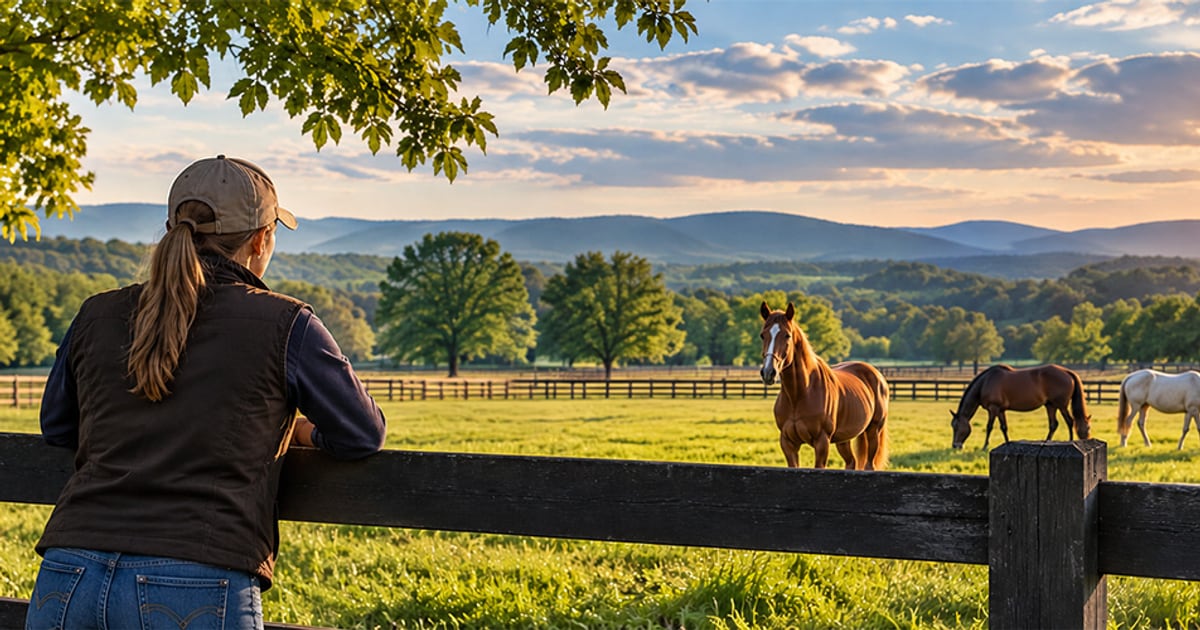
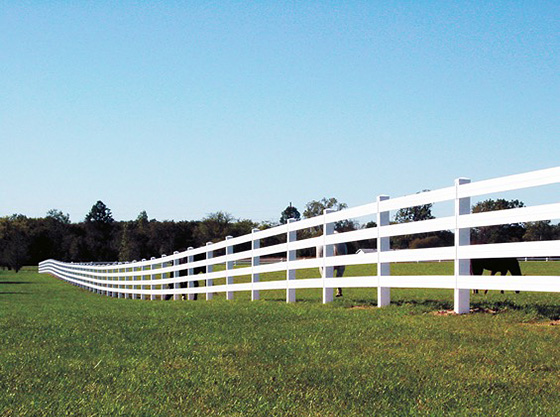
Fencing tips. We could write an entire article on fencing safety alone. The cardinal rule is to buy with a focus on quality and durability. Install strong fencing that is sure to contain your most challenging horse because the question is not “if” your horse will challenge the fence, but “when”. Perhaps it’s a big spook or simply that the grass looks greener on the other side…your fence needs to hold up to whatever your horses might dish out.
The traditional fencing material is, of course, wood and rail, but it is no longer the best long-term choice. Wood is costly over the long run and doesn’t hold up as well as other more modern options. Check out High Impact Flex Fence. This fence is changing the way we contain our horses. It’s beautiful and super sturdy. The High Impact Flex Fence comes in either a 4 or 5 inch rail width and is available in colors to match your fence design. It boasts UV Inhibitors and anti-microbial agents to protect your rails from the elements.
High Impact Flex Fence offers the gorgeous wood-rail look we crave without the maintenance and safety issues that wood board presents. It flexes on impact and is one of the safest fence choices on the market today. The widest rail boasts a 4860 lb. break strength per rail, yet flexes up to 6 inches on impact.
Purchase smart. Always think quality over dollar signs. Buy from a company with a proven long-term investment in the safety of your horses and their customers.